

A preventive maintenance program is a structured plan that schedules regular inspections, servicing, and repairs on equipment - before breakdowns happen. Instead of waiting for a machine to fail, your team maintains it on a fixed calendar or usage-based schedule. Organisations with strong PM programs reduce equipment downtime by up to 45% and cut repair costs by 30%, according to Reliable Plant. This guide walks you through exactly how to build one from scratch.
A preventive maintenance program is a proactive approach to equipment care. Rather than reacting to failures, your team works to a fixed schedule - inspecting, lubricating, cleaning, calibrating, and replacing parts before wear causes failure.
Think of it like servicing your car every 10,000 kilometres rather than waiting for the engine warning light. Applied to industrial equipment, the difference is enormous: fewer emergency breakdowns, longer asset life, lower repair bills, and a maintenance team in control - not constantly firefighting. A PM program is a system that defines what gets maintained, how often, by whom, and with what parts. When well-built and consistently followed, it becomes the most powerful driver of equipment reliability in your operation.

Before you build your program, you need to understand which type of PM fits each asset. The four main types are:
Most PM programs use a mix of time-based and usage-based triggers for the majority of assets, with condition-based or predictive maintenance reserved for the most critical equipment.
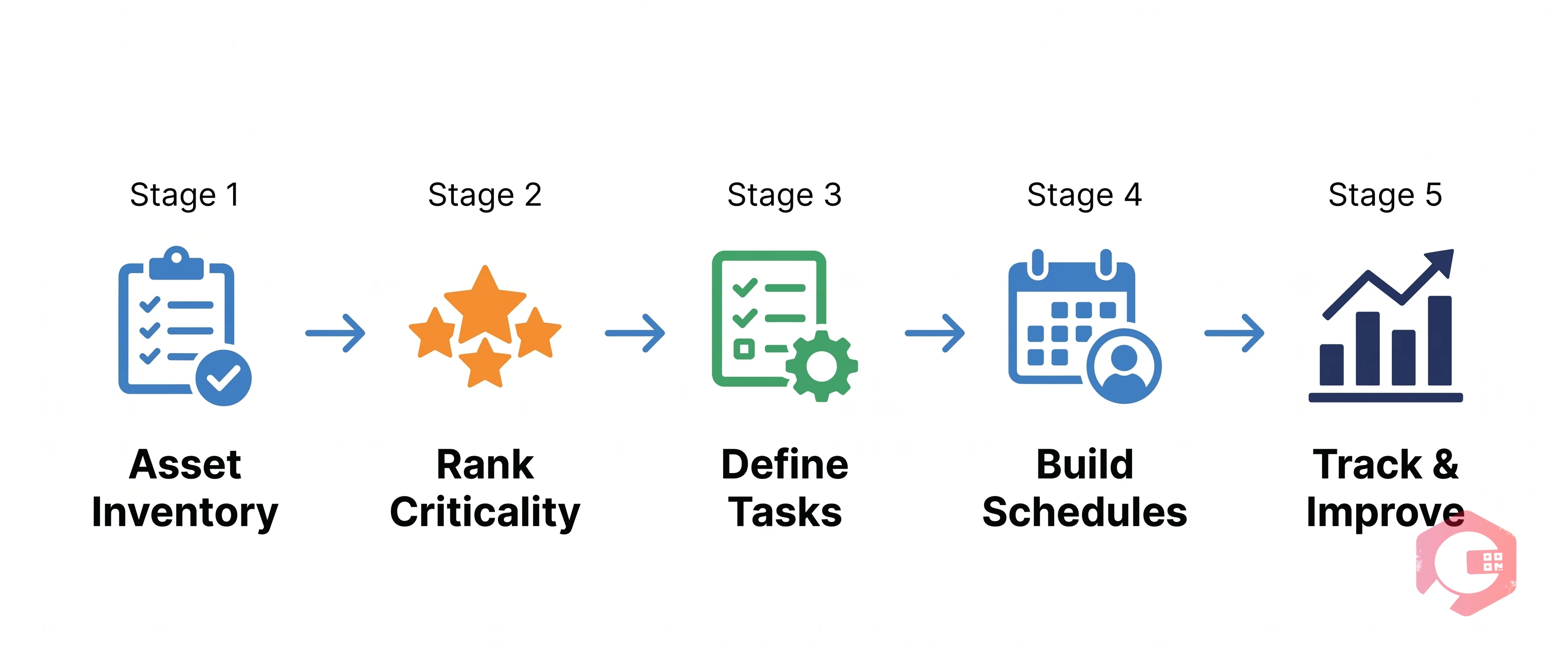
You cannot maintain what you have not documented. List every piece of equipment - machines, vehicles, HVAC units, electrical panels, and tools. For each asset record its make, model, serial number, location, age, and condition. This asset register is the foundation of your entire PM program. According to Plant Maintenance, teams that skip this step consistently struggle to build PM schedules that stick, because they never know what they are maintaining until something breaks.
Not every asset deserves the same attention. Score each asset 1-5 based on: likelihood of failure, impact on production when it fails, and time to repair or replace. Focus PM resources on high-criticality assets first - that is where the biggest ROI lives. A critical press line needs aggressive PM. A rarely-used backup pump does not.
For each asset, list the specific tasks it needs - lubrication, filter replacement, belt checks, calibration, electrical inspections. Pull from the manufacturer manual first, then add your team's hands-on knowledge of known failure patterns. Then assign a trigger to every task: a time interval (every 30 days), a metre reading (every 500 hours), or a condition threshold. Start conservative - you can always extend intervals once reliability data backs it up.
Map PMs across the calendar so workload is evenly distributed - not front-loaded into the first week of every month. Every task must have a named owner. Unclear responsibility is the most common reason PM programs fade: everyone assumes someone else will handle it. A preventive maintenance software like Cryotos automates schedule generation, sends technician reminders, and flags overdue tasks before they become missed PMs.
A PM program that is not measured slowly stops running. Track four metrics monthly: PM completion rate (target: 90%+), MTBF, MTTR, and the ratio of planned to unplanned work. If MTBF is rising and unplanned work is falling, your program is working. Use your CMMS reports to turn this review into a 30-minute monthly exercise, not a day-long data hunt.

A good PM checklist removes ambiguity - technicians know exactly what to inspect, measure, and record on every visit. Here is what every PM checklist should cover:

Most PM programs do not fail because of bad intentions - they fail because of predictable, avoidable mistakes. Here are the most common ones:
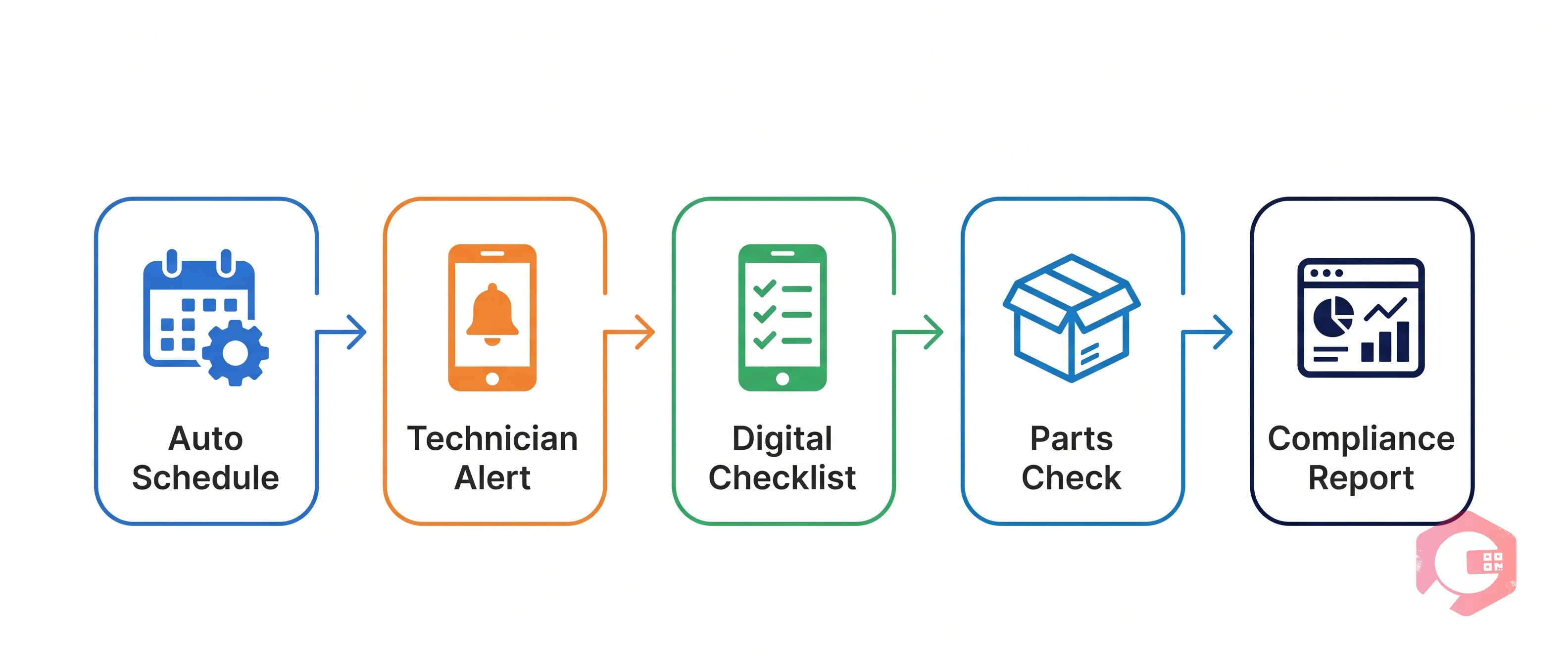
Building a PM program manually - in spreadsheets or shared drives - works until the volume of assets and tasks grows beyond what one person can manage. Cryotos CMMS automates every stage of the PM lifecycle, so your program runs consistently without constant manual effort.
Cryotos customers typically see a 30% reduction in unplanned downtime and 25% faster repair times within the first six months of running a structured PM program through the platform.
A preventive maintenance program stops equipment failures before they happen. By scheduling regular inspections and servicing at planned intervals, it reduces unplanned downtime, extends asset life, lowers repair costs, and shifts your maintenance team from reactive firefighting to planned, controlled work.
Start with a full asset inventory, then rank assets by criticality. Define the tasks each asset needs, set appropriate frequencies, build schedules, assign clear ownership, and track PM completion monthly. Use a CMMS to automate scheduling and reminders so the program runs consistently without manual chasing.
Every PM checklist should cover: a LOTO safety pre-check, visual inspection, lubrication and fluid levels, filter and belt condition, electrical checks, a performance test under load, and a record of parts used and time taken. Each item should require a specific action or reading - not just a checkbox.
Frequency depends on asset type, environment, and manufacturer guidance. Start conservative, then adjust based on actual failure data. Dusty environments, high temperatures, and heavy usage typically need more frequent PM. Review and refine frequencies every quarter.
Preventive maintenance follows a fixed schedule regardless of equipment condition. Predictive maintenance uses sensor data and historical patterns to forecast failures, triggering maintenance only when needed. Preventive is easier to implement; predictive is more precise but requires sensor infrastructure and data analysis.
Building a preventive maintenance program from scratch is one of the highest-ROI investments your maintenance team can make. The steps are clear: inventory assets, rank by criticality, define tasks and frequencies, build schedules, assign ownership, and measure results monthly. The difference between a PM program that works and one that fades is consistency - and consistency requires the right tools.
Cryotos CMMS automates the entire PM lifecycle - scheduling, technician notifications, checklist completion, and compliance reporting - so your program runs reliably without constant manual effort. Book a free demo today and have your first PM schedules running within the week.


Cryotos AI predicts failures, automates work orders, and simplifies maintenance—before problems slow you down.



