In today’s competitive manufacturing landscape, businesses must consistently improve efficiency to stay ahead. One of the most valuable metrics used to measure operational efficiency is Overall Equipment Effectiveness (OEE). OEE provides insights into how effectively a manufacturing process is being utilized, helping businesses identify inefficiencies and implement improvements.
This blog explores the significance of OEE, how it works, and the tools that can be used alongside it — such as TEEP, OOE, and Pareto Analysis — to further enhance production efficiency.
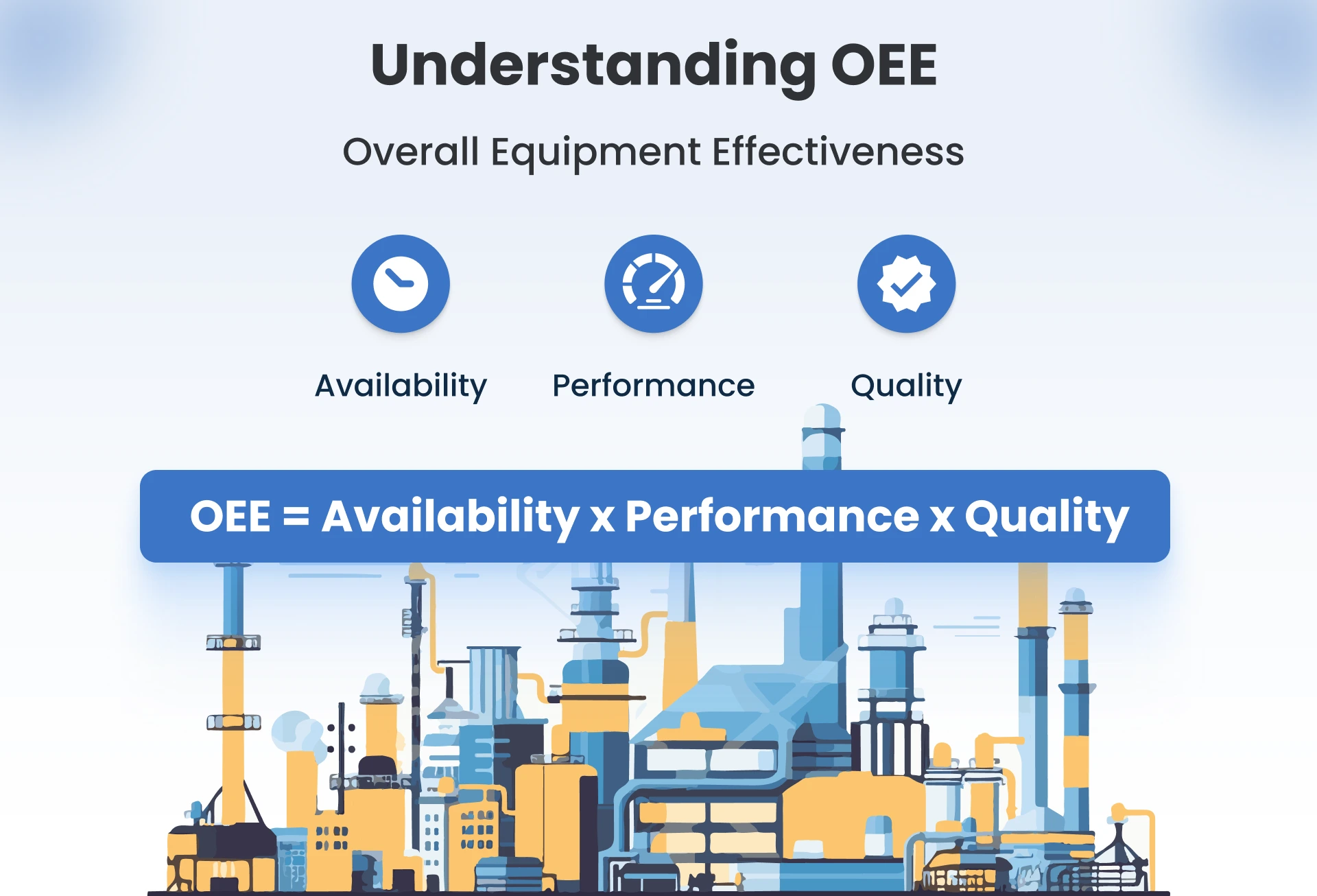
OEE is a key performance indicator (KPI) used to measure the effectiveness of manufacturing equipment. It represents the percentage of planned production time that is truly productive, accounting for three primary factors:
The formula for OEE is:
OEE = Availability × Performance × Quality
OEE operates on the principle of calculating total productive time against total available time, giving a percentage that shows how effectively equipment is performing relative to its potential. By breaking losses into the three factors of Availability, Performance, and Quality, OEE helps businesses pinpoint areas of inefficiency.
This measures the time the equipment is running versus the time it was planned to be running. Downtime due to breakdowns or maintenance reduces availability.
This measures how fast the equipment runs compared to its maximum possible speed. It helps identify slowdowns in production, often caused by machine inefficiencies or operator errors.
This factor measures the number of defect-free products produced versus the total number of products made. Higher defect rates reduce overall quality, thereby lowering the OEE score.
Incorporating the Internet of Things (IoT) into OEE tracking is revolutionizing the way manufacturers measure and optimize their equipment’s performance. These technologies provide real-time data and advanced analytics that help businesses gain a deeper understanding of their operations.
With IoT sensors embedded in machinery, manufacturers can track key performance indicators (KPIs) in real-time. These sensors send continuous data on machine performance, helping manufacturers immediately detect inefficiencies. IoT enables instant feedback, allowing quick adjustments to maintain optimal machine speed and output.
OEE provides several significant advantages for manufacturing operations:
Tracking machine utilization involves understanding how often equipment is being used compared to how much it could potentially be used. OEE plays a crucial role in this because it accounts for both availability and performance:
By calculating OEE regularly, businesses can assess how effectively their machines are being utilized and identify areas where performance could be improved.
Ready to measure your machine’s efficiency? Calculate your OEE using our free calculator here.
While OEE focuses on the percentage of time that production is truly effective, TEEP considers the total possible available time in a 24-hour period, including both planned and unplanned downtime. It measures the overall utilization of equipment — not just the productive hours.
Formula for TEEP:
TEEP = Operating Time ÷ Total Available Time (24 hours)

TEEP gives a more complete picture of machine utilization, especially when evaluating performance during non-operational hours.
OOE is closely related to OEE but also considers external factors that might affect overall performance, such as market demand or unforeseen operational constraints. OOE measures the effectiveness of not just the equipment but the entire operation system, giving a more holistic view of operational efficiency.
Pareto Analysis is a powerful tool in manufacturing that helps identify and prioritize problems by focusing on the few issues that cause the most losses. In the context of OEE, Pareto helps identify the most frequent causes of downtime and inefficiency.
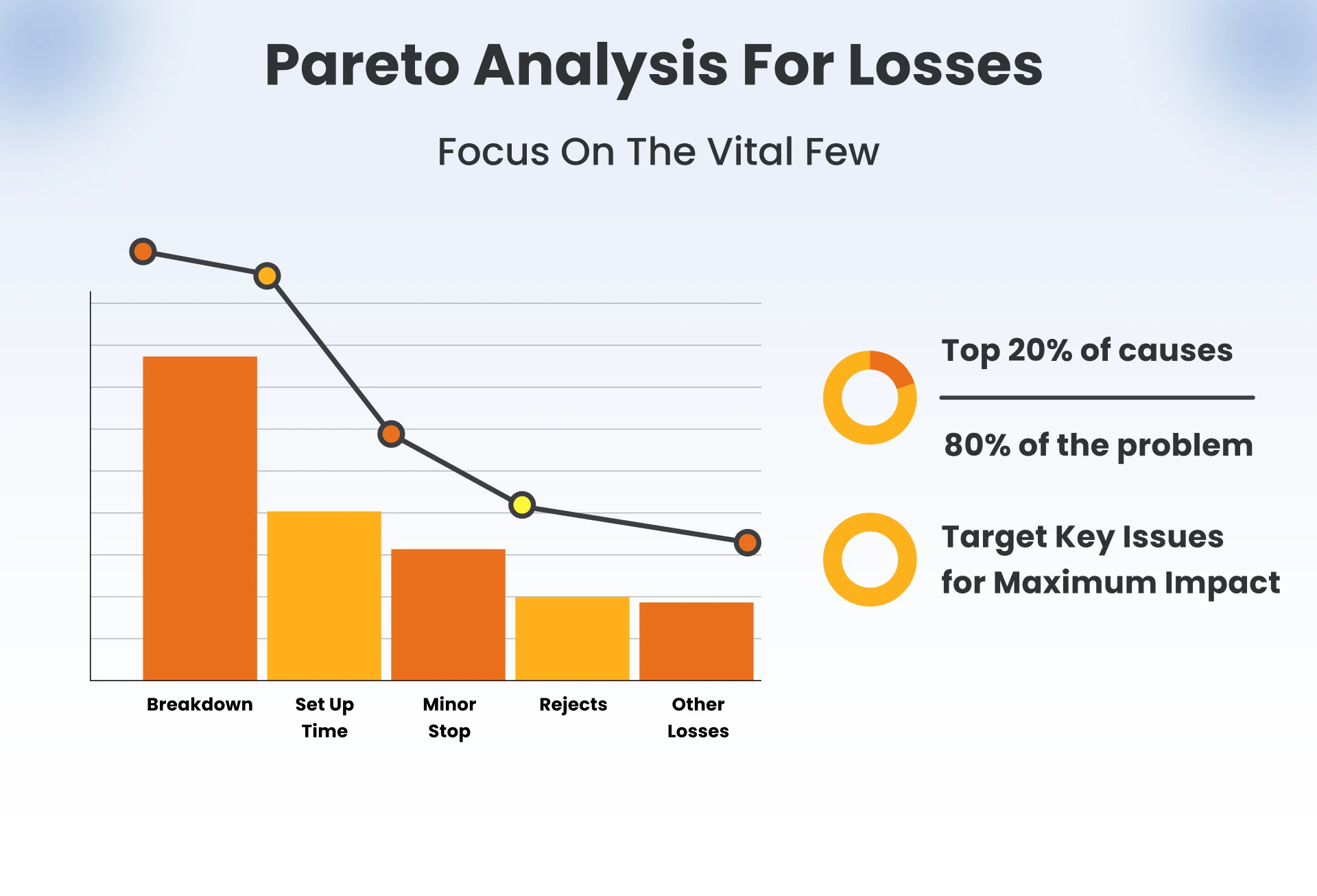
For example:
OEE is an indispensable tool for modern manufacturing, providing crucial insights into machine utilization, performance, and quality. By integrating TEEP and OOE with OEE, businesses can gain a broader understanding of their equipment’s efficiency and identify critical opportunities for improvement.
In summary:
By leveraging these concepts, businesses can continuously optimize their production processes, enhance operational effectiveness, and improve profitability.
Ready to unlock world-class OEE? Explore how Cryotos can integrate with your equipment to automate maintenance, capture real-time performance data, and eliminate costly downtime.




Cryotos AI predicts failures, automates work orders, and simplifies maintenance—before problems slow you down.