
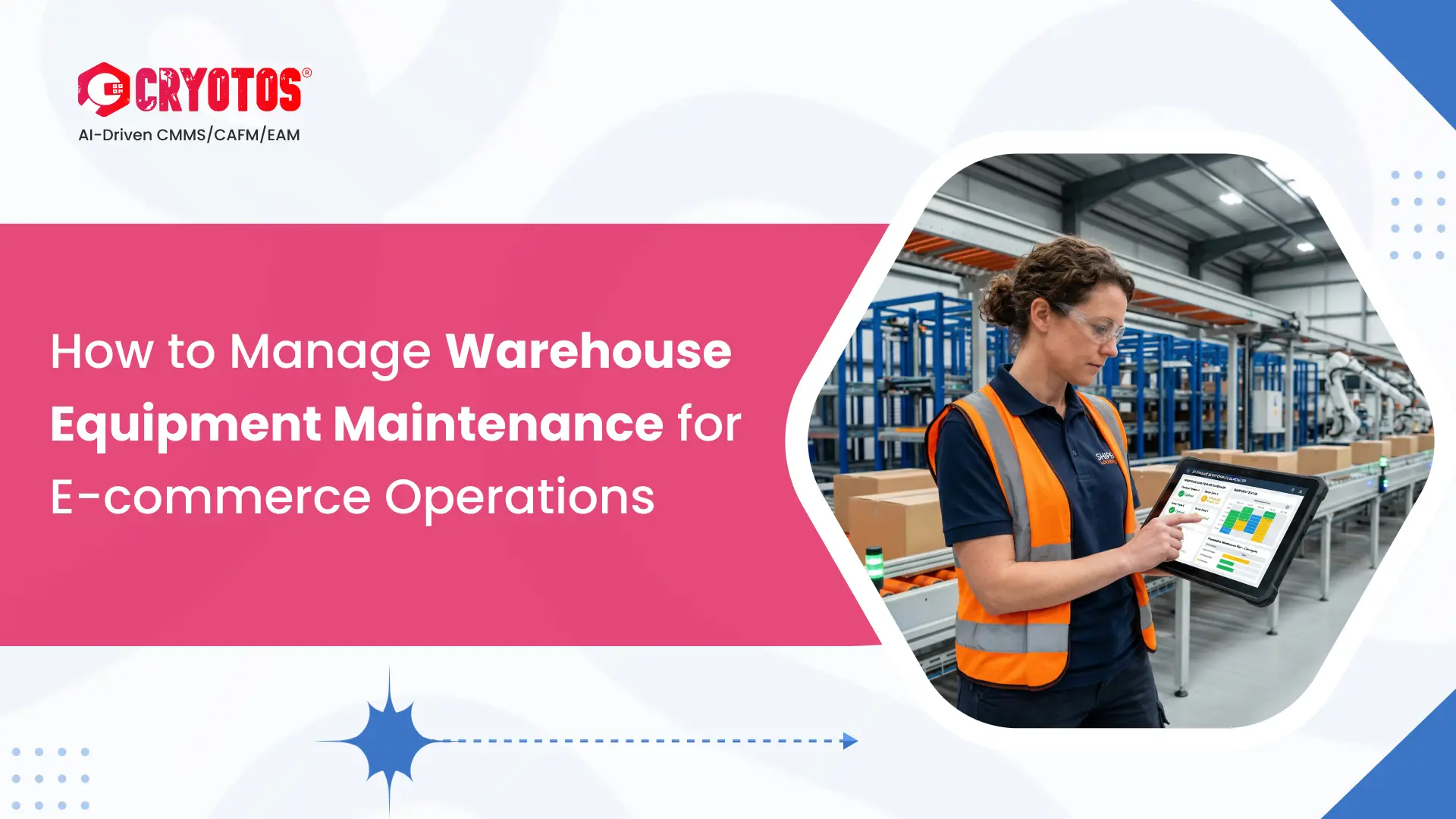
The conveyor belt system will stop operating at 11 PM in the evening before a major sale. Three hundred orders are queued. The maintenance team is scrambling. The delivery window is closing.
This is not a hypothetical scenario for e-commerce warehouse operators. It is the operational reality of running fulfilment infrastructure that never sleeps, under demand that is unpredictable, during peak periods that punish every unplanned stoppage with disproportionate revenue impact.
E-commerce operations encounter greater disruption from machine breakdowns than traditional warehouses because they experience a complete operational shutdown that begins with missed dispatch windows and continues through delayed shipments and failed delivery promises and ends with customer complaints that appear on social media before repairs finish.
The quality of equipment used in a warehouse determines whether a site can handle equipment failures or needs to stop working completely. It is the quality of the maintenance system behind it.
E-commerce depends on two main commitments of providing fast delivery services and delivering reliable services. Equipment downtime is not an option for same-day and next-day delivery services. All operational disruptions that occur when a forklift stops working, or a conveyor halts operation or a dock leveler fails during truck loading result in dispatch delays and extended delivery times and unshipped orders.
The stakes get much higher during peak periods. A conveyor failure on a quiet Tuesday is manageable. The same failure during a major sale event could mean thousands of unprocessed orders, a flood of customer complaints, and a drop in marketplace ratings that takes weeks to recover.
There's also a safety dimension that goes beyond operations. Forklifts, conveyor systems, loading dock equipment, and automated guided vehicles (AGVs) operate in fast-moving, high-density environments. A maintenance failure here isn't just an operational problem - it's a worker's safety risk. Documented maintenance records aren't just good practice in this environment; they're a regulatory requirement.
The warehouses that hold their fulfilment commitments year-round do so because they've built structured, proactive maintenance programs - not because they got lucky.
Every piece of equipment in a fulfilment warehouse has maintenance requirements. But the consequences of neglecting them vary widely - and for the assets that sit directly on the order of fulfilment path, the consequences are immediate and measurable.
The scheduled inspection and servicing need to be performed on hydraulic systems and tyres and brakes and mast chains, and battery systems. A forklift that fails during peak operations doesn't just stop one task - it creates a bottleneck that backs up everything downstream.
Belts, rollers, and sensors all wear over time, and e-commerce operations often run conveyors across multiple shifts without stopping. An off-tension belt, a seizing roller, or an out-of-calibration sensor can slow down the entire system dramatically.
The dock levelers and seals, and vehicle restraints sustain mechanical damage from every truck's arrival and departure. The dock creates immediate inbound and outbound bottlenecks that disrupt all orders waiting in the queue.
The law mandates structural integrity inspections to be conducted as a necessary requirement. The warehouse poses an extreme safety threat because damaged uprights and bent beams and overloaded bays present signs that rack collapse will occur.
A refrigeration or HVAC failure for businesses that handle temperature-sensitive products lead to operational disruptions while compromising product quality and triggering compliance breaches and creating expensive write-off situations
The scheduled maintenance of battery-powered equipment includes the inspection of navigation sensors and drive systems, and safety equipment. An AGV that fails to mid-shift in an active warehouse becomes a hazard and an obstacle.
Regular servicing of motors and sensors, and print heads is essential to maintain their operational accuracy. Customer returns and re-processing costs occur when orders get mislabeled, or packaging fails which would have been completely preventable.
The generator will experience a major breakdown at the most critical time which occurs during a power outage that happens during peak operational hours.
Even teams that understand the importance of maintenance run into the same operational obstacles. These aren't failures of intent - they're failures of system.
Maintenance difficulties that warehouse teams encounter occur in various forms. Maintenance records spread across paper logs, spreadsheets, emails, and handover notes make it impossible to get a clear picture of what's been done, what's overdue, and what's about to break down.
Without structured preventive maintenance, equipment runs until it fails. During peak fulfilment periods - exactly when equipment is under the most stress - that approach causes disproportionate damage.
When a forklift hydraulic pump fails at midnight before a big sale, having no spare on hand means emergency procurement at premium cost and extended downtime.
Information not formally documented is lost at shift handover. The incoming team doesn't know what was noticed, what was deferred, or what's developing - and faults that could have been caught escalated.
During peak operating times, a forklift that normally works six hours a day will increase its running time to twelve hours or more.The fixed calendar-based maintenance schedules don't account for that which leads to under-maintenance of equipment during periods when maintenance becomes critical
Regulations require documented evidence of equipment inspections and certification compliance. When that documentation is manual and fragmented, gaps appear - often discovered after the fact rather than prevented.
Not every strategy works for every asset. Here's how to think about which approach fits where.
The most effective approach requires businesses to choose between their two options which are either to pay for all work that must be done to fix things or to handle all expenses that arise from their decision to implement solutions.
The service schedule needs to be established according to pre-defined calendar schedules, which include weekly and monthly and quarterly time periods. The system offers a better solution than reactive maintenance, but it does not provide accurate results. A forklift that gets serviced every 30 days regardless of its operational hours needs maintenance according to its actual usage.
The system activates to start maintenance when a specific number of operational hours or cycles or trips has been reached. Calendar intervals miss the actual usage patterns of assets, which makes the system fail to measure utilization accurately for high-use equipment.
The system uses real-time sensor data that includes temperature and vibration and pressure and electrical readings to perform continuous equipment health monitoring. The system generates a maintenance alert when a parameter value goes beyond its established limit. The system detects emerging problems before they result in equipment failure while preventing unneeded maintenance on equipment that operates within its designated parameters.
Most e-commerce warehouses achieve optimal performance through their method of combining time-based safety inspections with usage-based forklift and conveyor maintenance and condition-based refrigeration system monitoring and AGV early fault detection.
The system requires all equipment to be listed in a single central database that includes equipment specifications and service records and criticality rating and maintenance schedule. The absence of this basic information leads to scheduling decisions which use incomplete data
Assets that sit directly on the critical path - primary conveyors, main forklifts, dock equipment - warrant higher maintenance frequency, priority spare parts access, and faster response times. Lower-priority equipment can be managed more conservatively.
Planned maintenance on critical equipment should never overlap with peak dispatch windows. Work with operations to identify natural quiet periods - shift transitions, off-peak hours - and build the maintenance calendar around those windows. Planned downtime during quiet periods costs next to nothing. Reactive downtime during peak periods costs significantly more.
For assets like forklifts and AGVs where utilization varies significantly, calendar-based scheduling is a poor proxy for actual wear. Implement PM triggers based on operating hours or cycles - not just dates.
The system requires identification of all high-critical asset components that will most likely fail and maintain a minimum buffer of stock. The availability of a replacement part in the facility determines whether a repair will take two or twelve hours.
The active technician on duty should not determine the performance standard for maintenance work. Every inspection and maintenance activity needs a defined checklist that covers every critical step and creates an auditable record.
The equipment repair process requires both repair work and complete response actions. The documentation process needs to record everything that failed, plus the reasons behind the failure and what detection methods could have detected the issue earlier. The asset that experiences a breakdown event for the same reason needs to undergo proper analysis after the first breakdown instance.
The requirements for forklift certifications and inspection certificates and LOTO compliance and PPE requirements exist as ongoing standards that need continuous monitoring from the time of certification until both future audits and present operational needs.
he maintenance management system needs to automate everyday tasks while identifying essential tasks and maintaining ongoing documentation throughout all maintenance activities at the multi-shift multi-asset warehouse. This is the purpose for which Cryotos CMMS was developed.
The warehouse assets are documented with complete details that include all specifications, the history of their services, the planned maintenance dates, and their importance level. Technicians scan the QR code on any asset to access its complete history and open work orders immediately - no searching, no delays before a repair starts.
The system establishes a schedule for preventive maintenance activities based on actual asset usage data which includes forklift hours and conveyor cycles and AGV battery cycles instead of using predetermined calendar dates. A work order gets created automatically when the system detects that a usage threshold has been reached.
The system creates work orders which need to be scheduled based on preventive maintenance tasks and IoT condition alerts and technician fault reports. The system assigns all work orders according to technician's availability and location without requiring any manual coordination.
Technicians can control work orders while they view manuals and finish checklists to complete their work from any mobile device throughout the entire building. The mobile app works offline - storing data locally and syncing when connectivity is restored - so full functionality is available in every corner of the facility.
Inventory control extends to track spare parts through their specific bin locations. The system sends an automatic alert to the procurement team when critical component stock reaches its established minimum threshold to prevent stockouts. The system automatically reduces inventory count for parts used in repairs when the work order completes.
The system connects to IoT sensors and SCADA systems and equipment monitoring devices to collect live condition data from conveyors and refrigeration units and AGVs and all other monitored assets directly into the maintenance system. The system generates an alert when a monitored parameter exceeds its threshold while also creating an automatic work order for necessary maintenance tasks.
The system records all equipment stoppages which include both planned and unplanned events by documenting the cause and duration and asset information and resolution details. The analysis of this data shows recurrent failure patterns while it identifies assets that cause excessive downtime and provides management with proof to choose between repair and replacement and schedule changes.
The work order system includes Lockout/Tagout procedures and Permit to Work approvals which ensure that maintenance activities follow safety protocols. The system monitors equipment certification and inspection deadlines by sending automated reminders which maintain compliance at all times instead of only during specific assessment periods.
The live dashboard enables warehouse managers to monitor equipment conditions and active work orders and PM compliance rates and downtime trends and maintenance expenses which refreshes every moment and works on any device while providing details down to the asset level throughout every warehouse.
E-commerce warehouse operations cannot tolerate equipment failures because they need to follow strict delivery schedules which extend beyond downtime periods used by other industries. A forklift down during a peak dispatch window, a conveyor stopped mid-shift, a dock leveler out of service when a truck arrives - each one is a fulfilment failure with immediate, measurable consequences for delivery performance and customer experience.
Structured, proactive warehouse equipment maintenance isn't an operational luxury. It's the infrastructure that makes fulfilment reliability possible - and the foundation that keeps workers safe, compliance records complete, and equipment running through the peak periods that define e-commerce performance.
Ready to see how it works at your facility? Book a 20-minute walkthrough with the Cryotos team today.



Cryotos AI predicts failures, automates work orders, and simplifies maintenance—before problems slow you down.



