

AMC expiry reminders are automated alerts that notify your maintenance team before an Annual Maintenance Contract or equipment insurance policy lapses. Without a reliable reminder system, contracts expire unnoticed, warranties become void, and compliance gaps appear — all before a single technician realizes anything has changed. This guide walks you through every step of setting up AMC and insurance expiry reminders, and explains how a CMMS makes the entire process automatic.
An Annual Maintenance Contract (AMC) is a formal service agreement between your organization and a vendor or OEM, committing them to scheduled maintenance, repairs, and parts coverage for a specific asset over a defined period — typically 12 months. AMCs are common for HVAC systems, elevators, generators, compressors, IT hardware, medical equipment, fire suppression systems, and any other asset where specialized servicing is required.
Equipment insurance policies work similarly: they cover repair or replacement costs within the policy window. Once either contract expires, the protection it provides disappears. Your maintenance team does not always receive an automatic notice from vendors or insurers, and renewal negotiations can take days or weeks. That gap — between expiry and renewal — is where financial and operational risk lives.
According to facility management research, over 30% of organizations have experienced at least one unplanned repair expense directly caused by an expired service contract. The problem is not a lack of intention to renew — it is a lack of visibility into when contracts expire and who owns the renewal process.
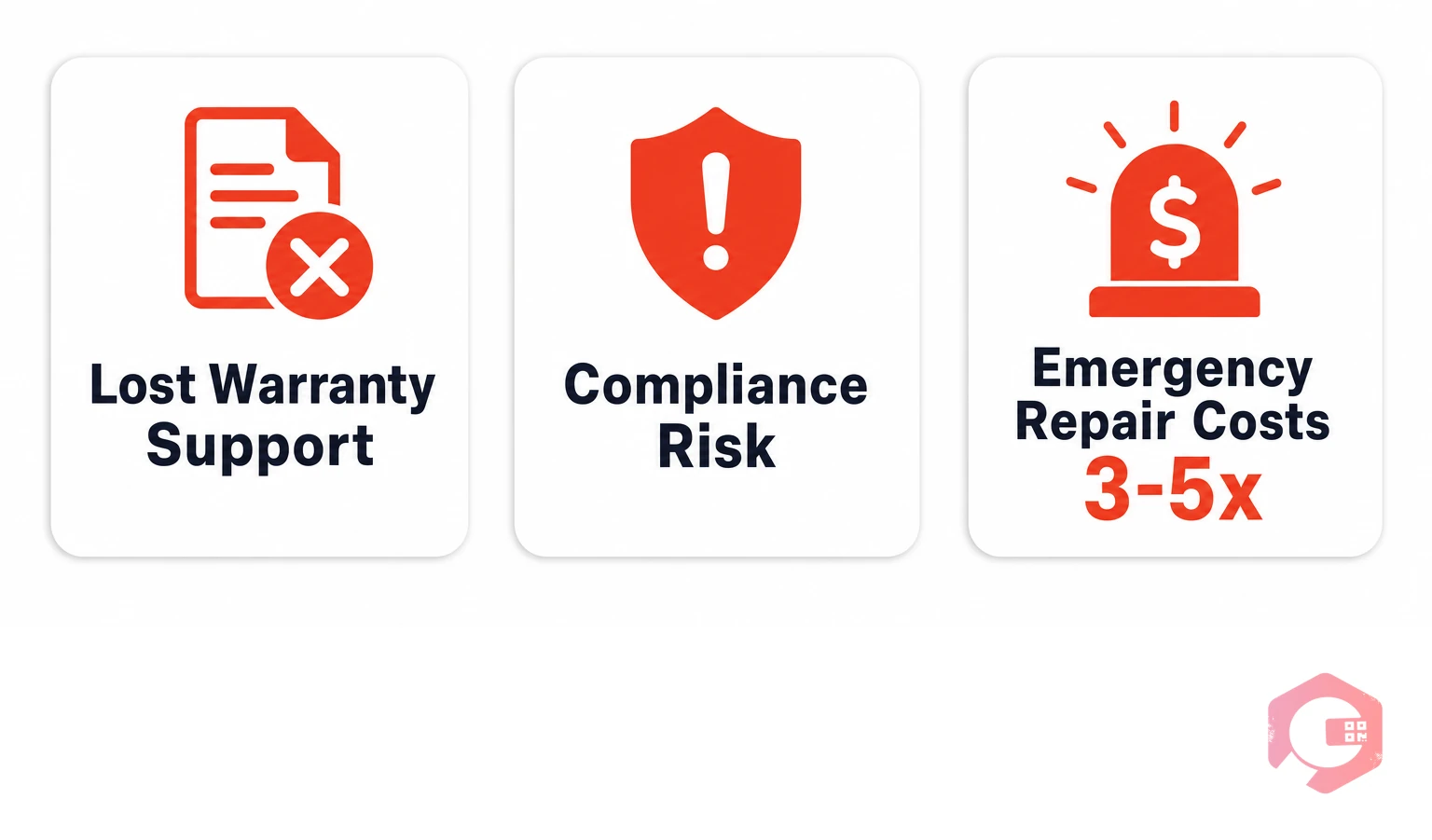
When an AMC or insurance policy lapses without a replacement in place, the financial and operational fallout tends to arrive quickly and without warning.
Many equipment OEMs tie warranty validity to active AMC coverage. If your AMC lapses even briefly, the manufacturer may refuse warranty claims for any defects that arise during that period — even if the underlying issue predates the gap. For high-value assets like industrial chillers, CNC machines, or medical imaging equipment, this exposure can reach hundreds of thousands of dollars.
Certain assets — fire alarms, pressure vessels, electrical panels, boilers, medical devices — must be serviced by certified vendors under active contracts to remain compliant with regulatory requirements. A lapsed AMC on these assets is not just a financial problem; it is a compliance failure that can result in regulatory penalties, failed audits, or a shutdown order. In industries governed by OSHA, ISO standards, or sector-specific regulations like Joint Commission for healthcare, the documentation of active service contracts is mandatory.
Without an active AMC, breakdowns become pay-per-incident repairs at spot-market labor and parts rates. Emergency repair costs for industrial equipment typically run three to five times higher than covered repairs under an active contract. Add in production downtime — which can cost between $25,000 and $75,000 per hour in manufacturing — and a missed renewal quickly becomes one of the most expensive administrative oversights a maintenance team can make.

Before you build your expiry tracking system, it helps to be precise about the different contract types you need to manage. Each has its own coverage scope, expiry timeline, and renewal process.
Your asset tracking system should maintain a record of all four contract types for each asset, with separate expiry dates, vendor/insurer contacts, and renewal lead times for each.
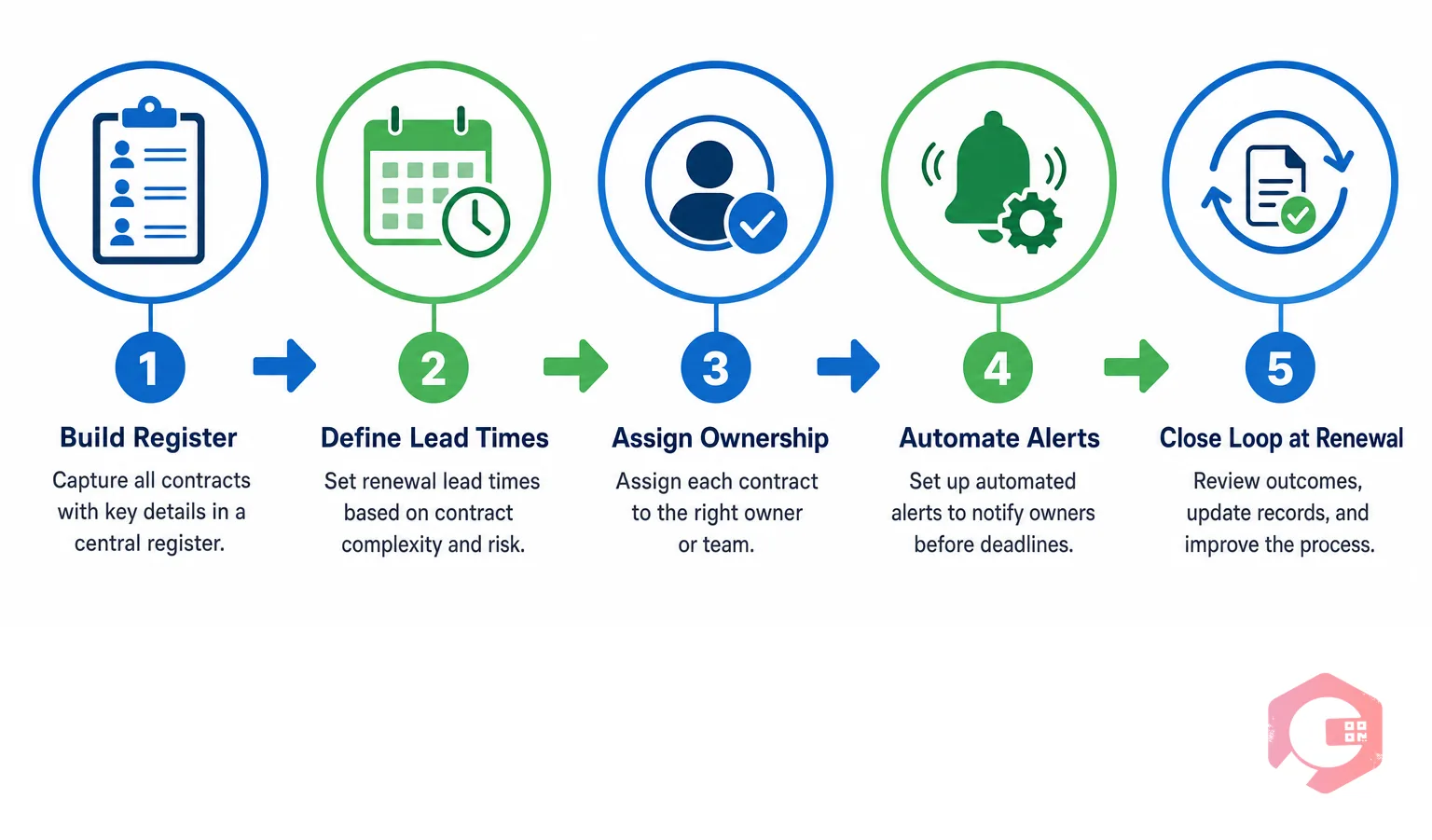
Getting a reliable reminder system in place requires more than setting a calendar event. Here is the full setup process, from building your contract register to closing the loop at renewal.
Start by creating a complete register of every active contract linked to your assets. For each entry, capture the asset name and ID, contract type (AMC, CMC, insurance), vendor or insurer name, contract start date, contract end date, renewal value, and the name of the internal owner responsible for renewal. If you manage hundreds of assets, import this data in bulk using a CSV upload into your asset maintenance management software.
A single reminder on the day of expiry is almost always too late to act on. Best practice is a three-tier reminder schedule: a 30-day advance notice to initiate renewal negotiations, a 7-day notice to confirm renewal is in progress or escalate if not, and a 1-day final alert to the asset owner and facility manager. For high-value or compliance-critical assets, add a 60-day first touchpoint to account for longer procurement processes.
Every contract needs a named owner — the person accountable for ensuring renewal happens before expiry. Beyond the primary owner, define an escalation path: who receives the 7-day reminder if the 30-day action has not been completed? This is typically the maintenance manager or facility head. For insurance renewals, the finance or procurement team may need to be included in the escalation chain.
With your register built and reminder schedules defined, configure your CMMS to handle the notification workflow automatically. In Cryotos, the Expiration Reminder feature allows you to attach contract end dates to individual assets and configure multi-tier alerts via email, mobile push notification, and WhatsApp. Each alert can include the contract details, remaining days to expiry, assigned owner, and a direct link to the work request for initiating renewal. No manual tracking or calendar management required.
When a contract is renewed, update the asset record immediately with the new start and end dates. This resets the reminder cycle automatically and keeps your register accurate. If a contract is cancelled rather than renewed, flag the asset accordingly and trigger a review of whether alternate coverage is needed. Closing the loop on every renewal — not just the ones that go smoothly — is what keeps your register reliable over time.
Manual spreadsheets can technically store contract expiry dates, but they cannot watch the calendar and send alerts, escalate to the right person when action is overdue, or link renewal tasks to asset maintenance history. A CMMS does all of this natively.
In Cryotos, each asset in the system can carry multiple contract records — AMC, CMC, warranty, and insurance — each with its own expiry date and reminder configuration. When a contract approaches expiry, the system automatically generates a work request assigned to the named owner, complete with the asset details and renewal instructions. The Email and WhatsApp notification builder lets you customize the content of each alert, so maintenance managers receive a clear, actionable message rather than a generic calendar reminder.
For organizations managing multiple sites or hundreds of assets, the Multiple Organization Management module in Cryotos consolidates all contract expiry data into a single dashboard, so facility heads can see at a glance which contracts are expiring in the next 30, 60, or 90 days across every location. This visibility is what transforms AMC management from a reactive scramble into a planned, budgeted activity.
The Report Builder also allows teams to generate contract expiry reports on a scheduled basis — weekly or monthly — which can be shared with procurement, finance, and senior management for budget planning and vendor negotiations.

Once your reminder system is running, a few operational practices will keep it accurate and effective as your asset base grows.
An AMC (Annual Maintenance Contract) typically covers scheduled preventive maintenance visits only, with parts and emergency repairs charged separately. A CMC (Comprehensive Maintenance Contract) covers both scheduled maintenance and emergency repairs, often including parts up to a specified value. CMC contracts cost more upfront but reduce exposure to unexpected repair bills for critical assets.
A three-tier schedule works well for most organizations: 30 days before expiry to initiate renewal negotiations, 7 days before to confirm progress or escalate, and 1 day before as a final alert. For compliance-critical or high-value assets, a 60-day initial reminder allows enough lead time for competitive tendering or procurement approvals before the existing contract lapses.
Yes. A CMMS like Cryotos allows you to store multiple contract records against each asset — including AMC, CMC, warranty, and insurance policies — each with its own expiry date, renewal owner, and automated reminder schedule. This means a single asset record can trigger different alerts for different stakeholders: the maintenance manager for AMC renewal and the finance team for insurance renewal.
A lapsed AMC typically means any breakdown during the gap is billed at time-and-materials rates, which are significantly higher than contracted rates. Depending on your OEM agreement, it may also void warranty coverage for defects that emerge during the uncontracted period. For compliance-critical assets, a lapsed AMC may also create a regulatory gap that needs to be documented and remediated.
Managing AMC and insurance expiry reminders manually — through spreadsheets, sticky notes, or individual calendar entries — works when you have ten assets. It breaks down at a hundred. Preventive maintenance software like Cryotos CMMS handles this automatically: every contract expiry date is tracked, every reminder is sent on schedule, and every renewal is logged against the asset record — so your maintenance team spends time on work that matters, not on chasing contract deadlines. Explore how Cryotos can help your team stay ahead of every AMC and insurance renewal.




Cryotos AI predicts failures, automates work orders, and simplifies maintenance—before problems slow you down.



