
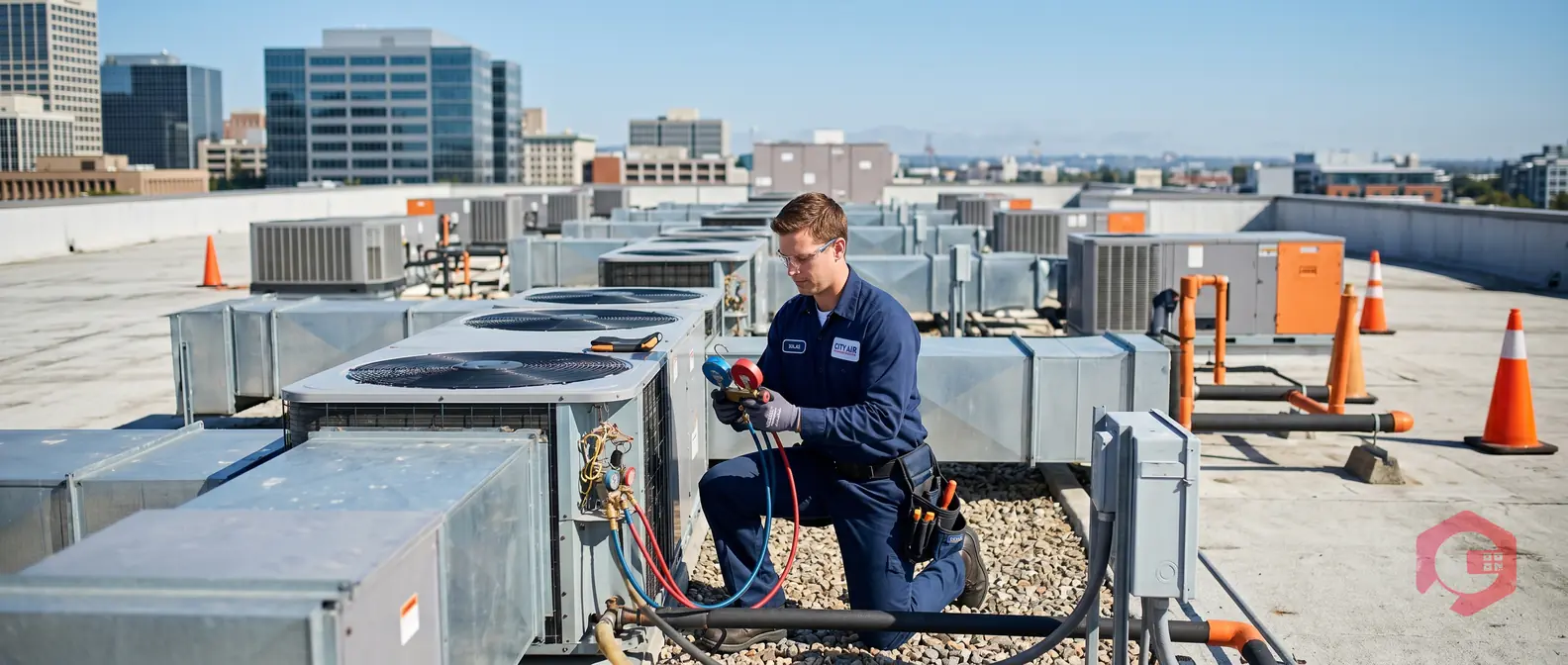
HVAC preventive maintenance is a scheduled program of inspections, cleaning, adjustments, and part replacements carried out on heating, ventilation, and air conditioning systems before failures occur. According to the U.S. Department of Energy, a well-maintained HVAC system uses 15-25% less energy than a neglected one. Buildings that run structured PM programs also cut unplanned HVAC breakdowns by up to 70%, keeping occupants comfortable and utility bills predictable.
If you manage a facility, own commercial real estate, or oversee a maintenance team, this guide gives you everything you need: a clear task list, a seasonal scheduling matrix, cost benchmarks, and a step-by-step framework for building a program that actually holds up over time.
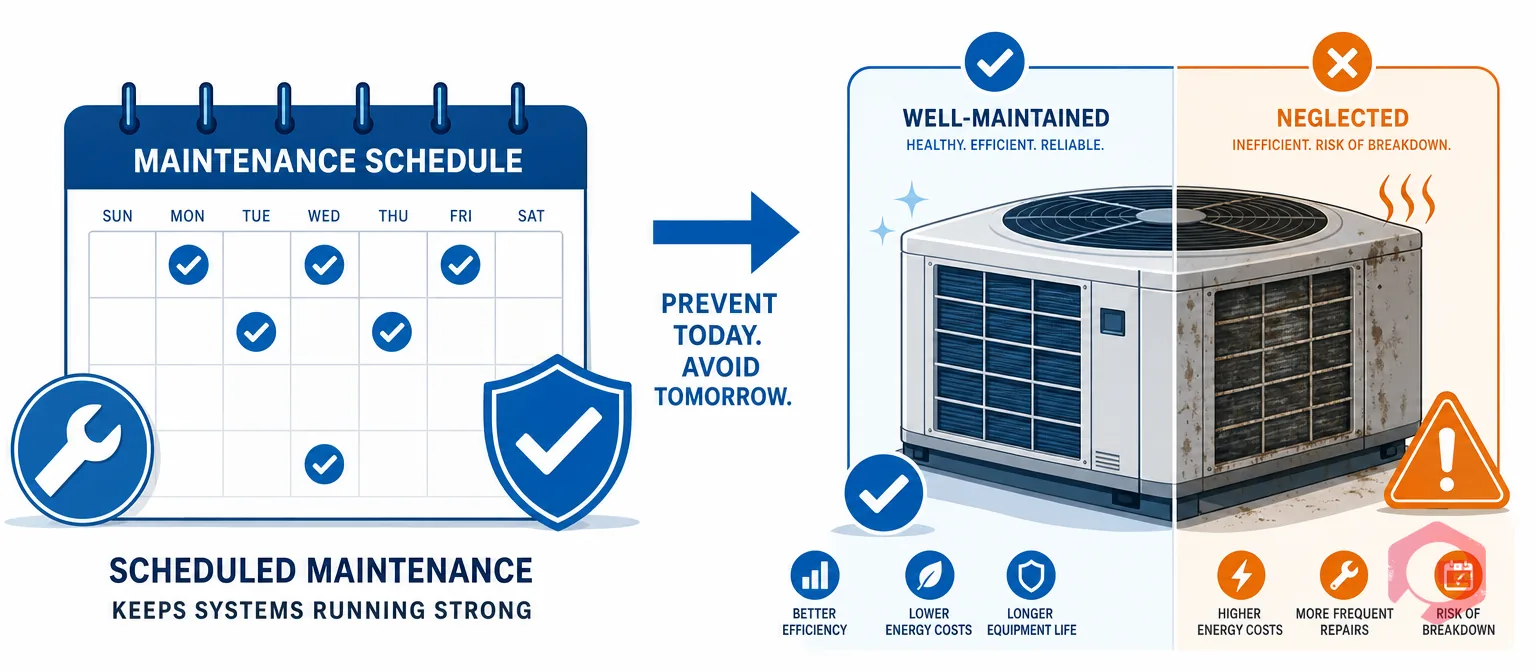
HVAC preventive maintenance is the practice of servicing your heating, ventilation, and air conditioning systems on a fixed schedule - regardless of whether anything appears to be wrong. The goal is to catch problems early, extend equipment life, and keep systems running at peak efficiency.
Think of it the same way you think about changing the oil in a vehicle. You don't wait for the engine to seize. You follow a schedule based on time or usage, because the cost of prevention is a fraction of the cost of a breakdown.
Reactive maintenance - fixing HVAC equipment only after it fails - costs 3 to 9 times more per repair than planned preventive work, according to data from the Building Owners and Managers Association (BOMA). That gap widens once you factor in emergency technician rates, expedited parts shipping, and lost productivity during downtime.
Beyond direct repair costs, a failed HVAC system in a commercial building can trigger tenant complaints, lease violations, or regulatory citations - particularly in healthcare, food service, or data center environments where temperature and air quality are tightly regulated.
HVAC systems account for roughly 40% of total energy consumption in commercial buildings, according to the U.S. Department of Energy's Commercial Buildings report. That makes HVAC the single largest lever you can pull to reduce operating costs - and preventive maintenance is the mechanism that keeps that lever working.
Dirty air filters alone can increase HVAC energy consumption by 5-15%. Refrigerant leaks and fouled coils push that number higher still. A study published by ASHRAE (the American Society of Heating, Refrigerating and Air-Conditioning Engineers) found that buildings following structured PM programs consistently operate HVAC systems at 20-30% lower energy cost compared to buildings relying on reactive repairs.
For a mid-sized commercial facility spending $80,000 per year on HVAC energy, that's a potential saving of $16,000-$24,000 annually - from maintenance activities that typically cost a fraction of that.
The average commercial HVAC unit is designed to last 15-20 years. Facilities that skip routine maintenance commonly replace systems in 10-12 years. That 5-8 year difference represents hundreds of thousands of dollars in premature capital expenditure. Lubricated bearings, clean coils, and correctly tensioned belts don't just prevent breakdowns - they extend the window before you need to spend on replacement.
Every HVAC PM program covers the same core components, though the frequency and depth of inspection varies by system type, usage intensity, and environment. Here's what gets checked and why.
Air filters are the most frequently neglected HVAC component and the fastest source of efficiency loss. A clogged filter forces the blower motor to work harder, increasing electricity consumption and heat stress on motor windings. Standard 1-inch filters in commercial systems should be replaced every 30-60 days in high-use environments. Thicker media filters (4-6 inches) can run 3-6 months. During each inspection, also check:
Evaporator and condenser coils transfer heat - when they're dirty, the system has to run longer cycles to reach the same temperature setpoint, which spikes energy use. Clean coils at minimum once per year, or twice per year in environments with high dust, grease, or biological contamination (commercial kitchens, hospitals, manufacturing floors). During coil service:
Belt-driven HVAC systems - common in older commercial units - require regular tension checks. A belt that's 10% worn can slip, reducing airflow by 30%. Replace belts showing signs of glazing, cracking, or fraying. On the electrical side, check:
Condensate drains are a silent failure point - a blocked drain causes water overflow, which can damage ceilings, trigger mold growth, and trip the unit's float switch (shutting the system off entirely). Flush drains with a diluted bleach solution quarterly. For thermostats and controls, verify calibration annually, check battery backup where applicable, and confirm setpoint schedules match current building occupancy patterns.
Frequency varies by component. Use this matrix as your master scheduling reference - assign each task row to your maintenance software and set automated reminders so nothing falls through the cracks.

The core tasks are the same across building types, but the intensity, frequency, and regulatory requirements differ significantly depending on how the space is used.
For single-family homes and small multi-unit residential buildings, a twice-yearly professional service call (spring and fall) combined with monthly filter checks handles most needs. The biggest risk in residential settings is deferred maintenance - homeowners skip service until the system fails in the middle of a heat wave, when service slots are scarce and emergency rates apply. One professional PM visit costs $80-$200; an emergency compressor replacement runs $1,500-$2,500.
Commercial buildings - offices, retail spaces, hotels, restaurants - run HVAC systems at much higher duty cycles than residential. Extended operating hours, variable occupancy loads, and stricter ventilation standards under ASHRAE Standard 62.1 all push maintenance frequency up. Most commercial property managers contract quarterly service agreements with a certified HVAC company, supplemented by in-house monthly filter and drain checks.
Industrial environments - manufacturing plants, warehouses, food processing facilities - present the harshest operating conditions. High ambient temperatures, airborne particulate, chemical vapors, and continuous operation accelerate wear on filters, coils, and motor windings. Maintenance intervals are typically doubled compared to commercial settings, and many facilities add vibration monitoring and thermal imaging to their PM programs to catch bearing wear and electrical hot spots before they cause failures.

Cost depends on building size, system complexity, and how much of the work is handled in-house versus contracted. Here are realistic benchmarks:
The CMMS-managed hybrid approach delivers the best ROI at scale. Instead of paying a contractor to show up on a fixed calendar schedule (regardless of equipment condition), you use maintenance software to track actual usage hours, automatically trigger work orders when thresholds are reached, and document every service interaction - so you have data to negotiate contractor rates and identify chronic problem assets.
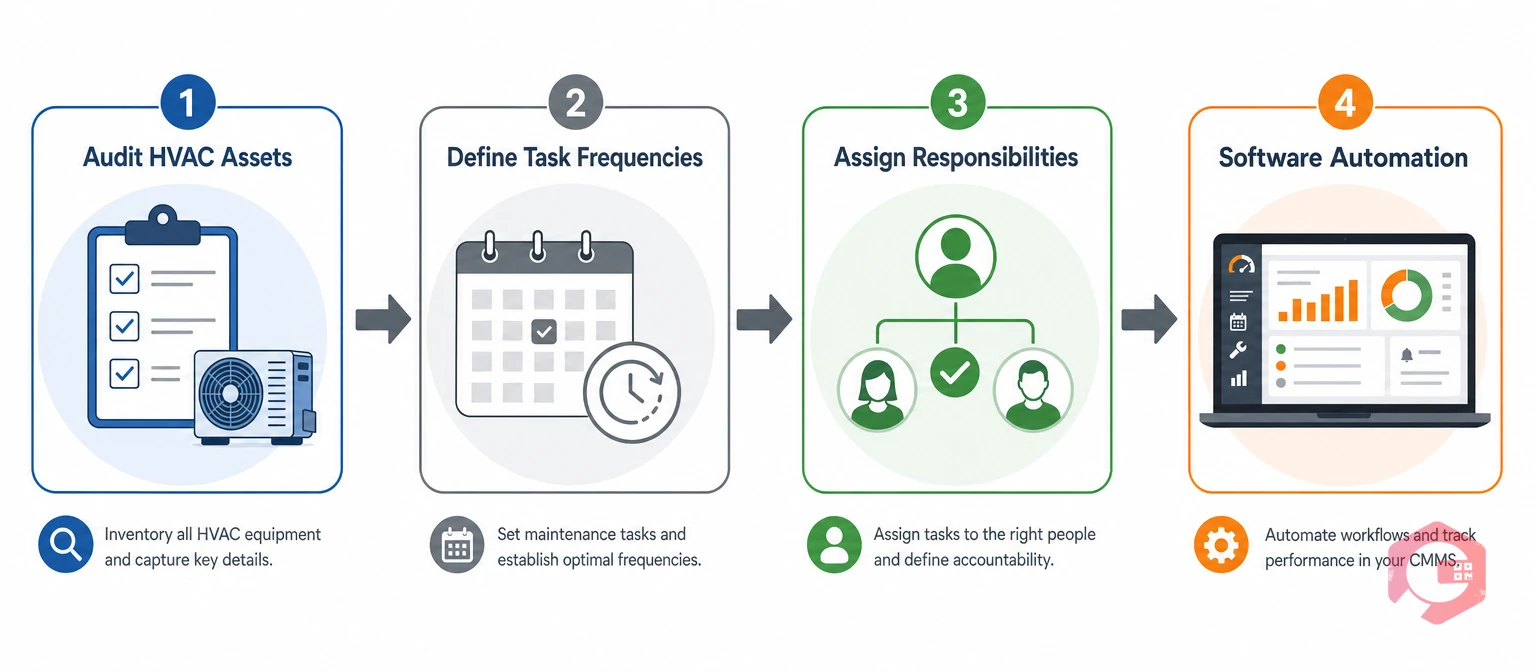
A PM program that actually gets followed requires four things: a complete asset list, defined task frequencies, clear ownership, and a system to track it all. Here's how to build one from scratch.
Start with a physical walk-through and document every HVAC unit: make, model, serial number, installation date, capacity (tons or BTU), and location. Tag each unit with a QR code so technicians can pull up the full service history from their phone without hunting through paper records. This asset register is the foundation of everything that follows - you can't schedule maintenance for equipment you haven't inventoried.
Use the seasonal matrix from the schedule section above as your starting point, then adjust based on manufacturer recommendations (check the equipment manual) and your specific operating environment. A rooftop unit in a coastal location corrodes faster than an identical unit inland - your maintenance frequency should reflect that reality, not just a generic calendar.
For each task, define whether it's handled by in-house technicians or an external contractor. In-house tasks need assigned owners with clear completion criteria. Contracted tasks need a vendor agreement with defined response times, scope, and documentation requirements. Without ownership, tasks slide - especially the quarterly and semi-annual ones that don't have the urgency of a daily or monthly trigger.
A spreadsheet breaks down once you're managing more than 10 HVAC units. Preventive maintenance software like Cryotos automatically generates work orders based on time intervals or usage thresholds, sends reminders to the assigned technician, captures completion photos and notes, and tracks your HVAC fleet's maintenance history in one place. When an emergency call comes in at 2am, you can see in 30 seconds exactly what was last done on that unit - and that data is worth more than any paper log.
Cryotos supports both static PM schedules (fixed calendar intervals) and dynamic PMs triggered by runtime hours - which is critical for HVAC systems that run different duty cycles depending on season and occupancy. You can also set up automated alerts for upcoming PMs so nothing falls through the cracks when your team is stretched.
Two regulatory developments have direct implications for HVAC maintenance programs in 2025.
EPA Refrigerant Phasedown (AIM Act): The American Innovation and Manufacturing (AIM) Act requires phasing down high-GWP HFC refrigerants (including R-410A, the most common residential and light commercial refrigerant) starting in 2025. New equipment must use low-GWP alternatives, and technicians working with refrigerants are required to hold EPA 608 certification. For maintenance teams, this means: any HVAC unit still running R-410A needs careful refrigerant management now, and you should be planning replacement cycles for aging equipment that won't be compatible with newer refrigerants.
ASHRAE 90.1-2022: The updated energy efficiency standard for commercial buildings tightens requirements for HVAC system performance and documentation. Facilities seeking LEED certification or operating in jurisdictions that have adopted ASHRAE 90.1-2022 need maintenance records that demonstrate systems are operating at or near design efficiency - another strong argument for using CMMS software to maintain audit-ready records.
A standard HVAC PM visit covers filter replacement or inspection, thermostat calibration, condensate drain flushing, coil cleaning, refrigerant level check, belt and motor inspection, and electrical connection testing. The exact scope varies by system type (central air, heat pump, chiller, etc.) and the frequency of the visit - a monthly check focuses on filters and drains, while an annual service goes deep on electrical and refrigerant systems.
At minimum, schedule a professional HVAC PM service twice per year - once in spring before the cooling season and once in fall before the heating season. Monthly filter checks and quarterly drain flushes can be handled in-house between professional visits. Industrial facilities with continuous operation typically require monthly professional visits for critical systems.
Preventive maintenance runs on a fixed time-based or usage-based schedule regardless of equipment condition. Predictive maintenance uses real-time sensor data - vibration, temperature, current draw - to predict when a component is likely to fail and schedule service just before that point. Predictive maintenance is more efficient but requires sensors and data infrastructure that most facilities don't yet have. Most facilities benefit most from a strong PM program as the foundation, with predictive tools added to critical systems as budget allows.
Yes - and it's one of the highest-ROI applications of a CMMS. Preventive maintenance software like Cryotos automates work order generation based on your defined schedules, sends mobile notifications to technicians, captures service records with photos and notes, and gives managers visibility into what's been completed and what's overdue. For facilities managing more than 10 HVAC units, the scheduling overhead alone makes CMMS software worth the investment.
Deferred HVAC maintenance compounds over time. Dirty filters reduce airflow and strain motors. Fouled coils force longer run cycles and higher energy bills. A refrigerant leak that would cost $200 to repair at a quarterly check becomes a compressor replacement at $2,000+ if left unaddressed for a year. Most major HVAC failures - compressor burnout, heat exchanger cracks, blower motor seizures - are directly traceable to missed maintenance tasks that would have been caught in a routine PM inspection.
For facilities weighing fixed-interval service against usage-driven scheduling, our breakdown of time-based vs. meter-based maintenance will help you decide which approach fits your HVAC assets best.
Managing HVAC maintenance across multiple units or sites gets complicated fast - especially when you're tracking different service frequencies, multiple contractors, and equipment with different runtime profiles. Cryotos CMMS brings all of that together: automated PM scheduling, mobile work orders, full service history, and real-time dashboards so you always know the status of every unit in your facility. See how Cryotos works and book a free demo to find out how much time your team can save.



Cryotos AI predicts failures, automates work orders, and simplifies maintenance—before problems slow you down.



