
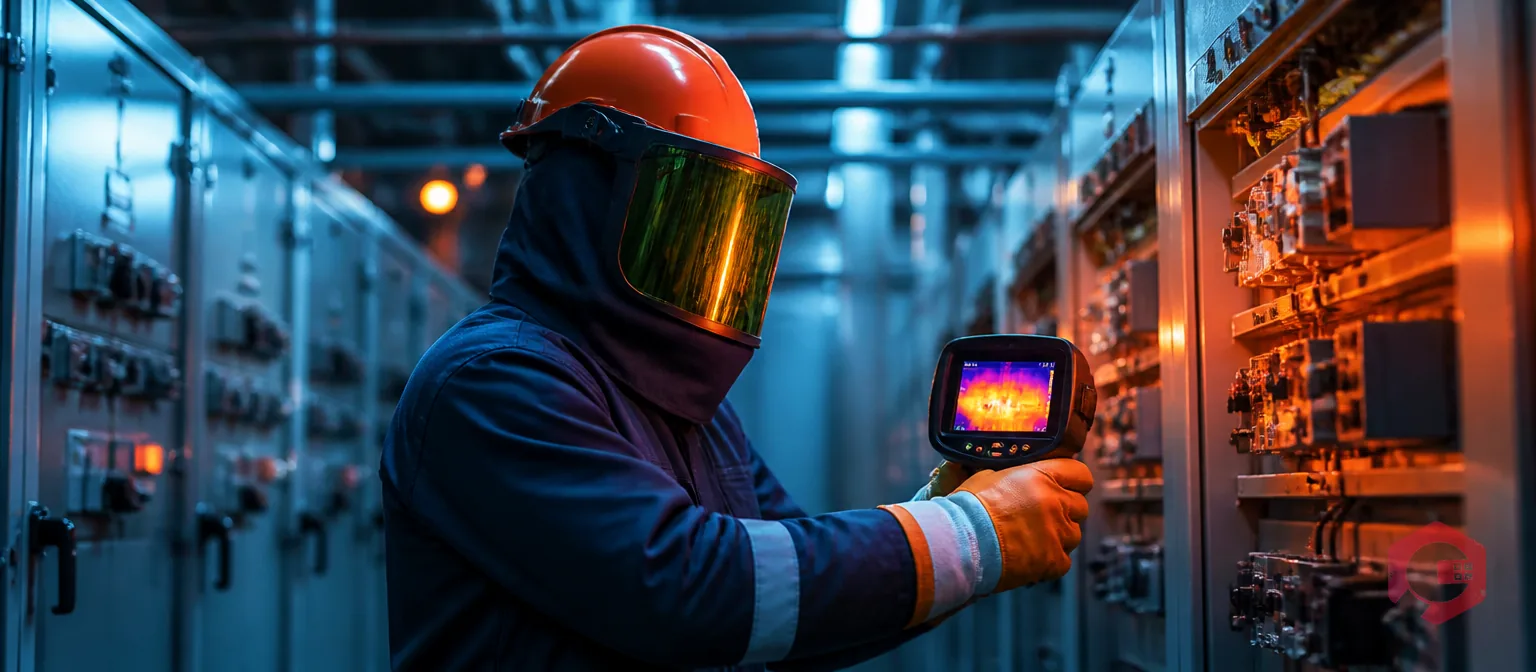
Infrared thermography is a non-contact inspection method that detects heat anomalies in electrical equipment before they escalate into arc flash incidents. A thermal imaging camera scans switchgear, motor control centres, transformers, and cable trays to spot loose connections, overloaded circuits, and failing components while they are still developing faults — not after they cause a hazard. Electrical failures rarely happen without warning. A loose busbar, an overloaded circuit, or a degraded connection builds heat silently until it triggers an arc flash, an event capable of causing severe burns, equipment destruction, and weeks of unplanned downtime. In most documented cases, the fault that caused the arc flash had been present for months before it failed.
This guide explains what infrared thermography is, why it is central to arc flash prevention under NFPA 70E, and exactly how a CMMS such as Cryotos turns thermal scan findings into scheduled inspections, tracked corrective work, controlled permits, and audit-ready compliance records.

Infrared thermography (IRT) is a non-contact, non-destructive testing method that uses a thermal imaging camera to detect infrared radiation emitted by electrical equipment. Higher temperatures appear as colour variations on the camera display, a technique known as thermographic inspection. Because the camera never touches the equipment, scans can be performed while panels remain energised and operating under normal load — the exact condition under which a developing fault is most visible.
In electrical maintenance, IR thermography identifies loose or corroded connections generating excess heat, overloaded circuits drawing higher-than-rated current, imbalanced three-phase loads causing one phase to run hotter than the others, failing insulation on cables and bus bars, and faulty breakers, fuses, and contactors nearing end of life.
The technique aligns directly with predictive maintenance — it detects a developing fault before failure occurs, rather than waiting for a breakdown to reveal the problem. When IR thermography is conducted on a defined schedule and backed by a structured CMMS workflow, it becomes one of the highest-return maintenance activities for any facility with significant electrical infrastructure.

An arc flash is a rapid release of electrical energy caused by a fault in energised equipment. NFPA 70E, the standard that governs electrical safety in the workplace, requires facilities to perform arc flash hazard analysis, label equipment with incident energy levels, and train workers on the correct PPE category before they approach live equipment.
Infrared thermography is a core prevention tool within an NFPA 70E-compliant electrical safety programme — but its effectiveness depends entirely on regularity and follow-through, not on the scan itself. Many facilities conduct an IR survey once a year and file the report. The problem is structural: findings that require corrective action do not automatically generate work orders. A hot spot identified in January can sit in a PDF report until something fails in July. A CMMS removes that gap by connecting the inspection finding directly to a tracked corrective workflow the moment the finding is logged.
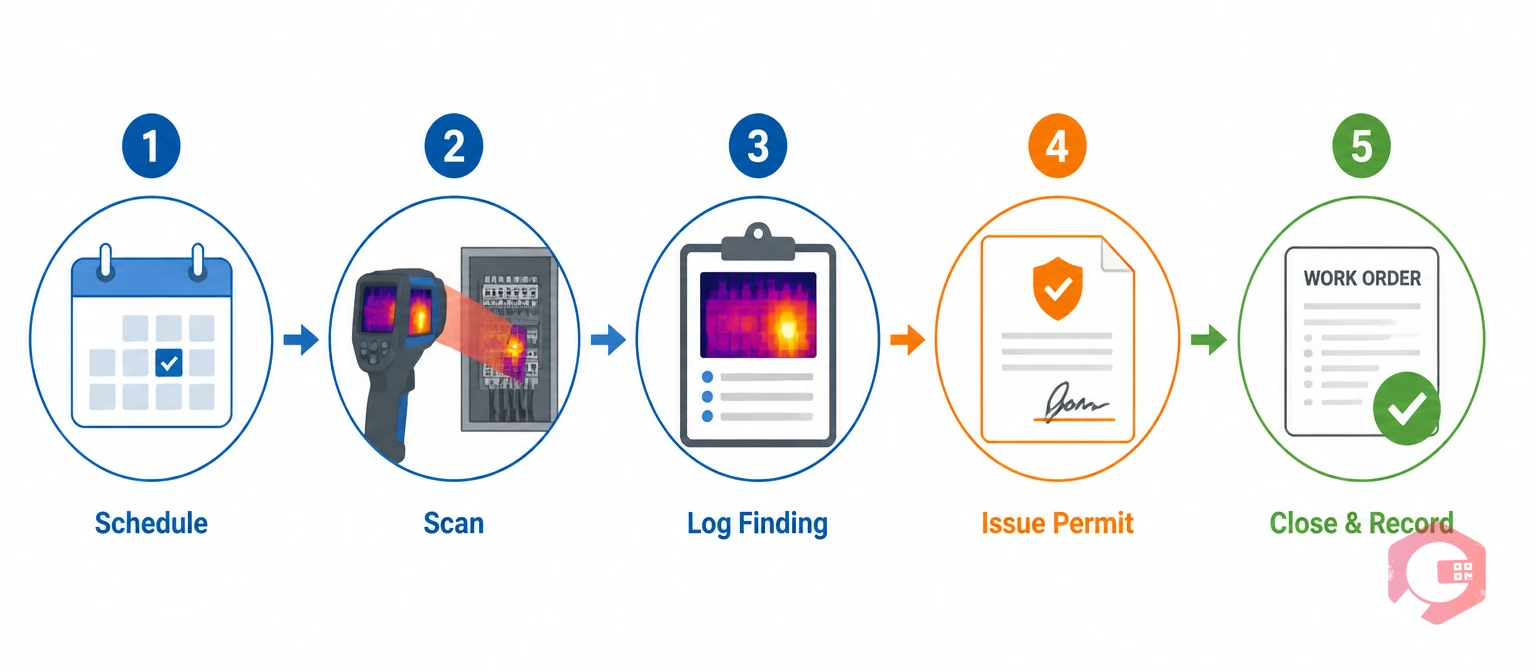
Cryotos CMMS connects every stage of an infrared thermography programme — scheduling inspections, converting findings into work, issuing permits before live work begins, and generating the compliance records auditors ask for. Each module below addresses a specific point where paper-based or spreadsheet-driven programmes typically break down.
IR thermography works best on a fixed cycle. Critical switchgear is typically scanned quarterly; standard panels are usually scanned semi-annually or annually. Cryotos lets you set recurring preventive maintenance work orders for every electrical asset in your register so no inspection depends on someone remembering to raise it.
The result is that every electrical asset in the facility gets inspected on schedule. No panel is missed, and no inspection cycle is skipped because a work order was never raised.
When a thermal camera identifies a hot spot, that finding has to become a tracked, prioritised work order immediately — not at the next planning meeting. Cryotos makes that conversion fast and structured.
Every corrective action taken as a result of an IR finding is time-stamped, assigned, and traceable, so you can show exactly when a hot spot was identified, who fixed it, and when the job closed.
This is the most critical link between IR thermography and arc flash prevention. Before any technician acts on a thermal finding — investigating a hot spot or performing corrective work on live equipment — a Permit to Work must be issued and approved. Cryotos has a dedicated digital Permit to Work module built for exactly this kind of high-risk electrical task.
NFPA 70E and most national electrical safety standards require documented authorisation before working on or near energised equipment. A digital PTW in Cryotos provides that authorisation trail automatically, every time.
A single IR scan result is useful on its own. Twelve consecutive quarterly scans of the same switchgear cabinet, showing a temperature trend over three years, is genuinely actionable intelligence. Cryotos stores every inspection finding against the specific asset, building that trend history automatically rather than leaving it scattered across separate PDF reports.
When a thermographer scans a transformer and finds it running noticeably hotter than the last scan, that comparison is only possible if the previous reading is recorded in a structured system. Cryotos makes the comparison automatic.
Electrical safety managers need documented proof that inspections happened on time and that findings were addressed before an audit deadline arrives. Cryotos generates that evidence automatically instead of requiring a manual compilation exercise.
When an insurance auditor or safety regulator asks for evidence of an electrical maintenance programme, the report can be exported in minutes rather than assembled from paper files and memory.
Thermal inspection reports, arc flash hazard analysis (AFHA) studies, single-line diagrams, and PPE requirement sheets need to be available at the point of work, not back in a filing cabinet.
IR thermography happens in the field — at switchboards, in substations, on rooftop equipment — and technicians need a tool that works where they actually are, including areas with poor connectivity.

The table below maps each Cryotos module to its specific role in an infrared thermography programme.
| Cryotos Module | IR Thermography Use Case | Target Outcome |
|---|---|---|
| Preventive Maintenance | Schedule recurring IR inspections | No inspection cycle is ever missed |
| Work Orders | Log findings, assign corrective repairs | Hot spots are fixed before they fail |
| Permits to Work | Control access to live equipment | No unauthorised work on energised panels |
| Asset Management | Track thermal history per asset | Temperature trends visible over time |
| Reports and Analytics | Prove compliance, track risk reduction | Audit-ready records in minutes |
| Document Management | Store AFHA studies, SLDs, PPE charts | Right document, right place, right time |
| Mobile App | Capture findings, close work orders in the field | No laptop needed at the panel |
Most standards and insurance requirements recommend annual IR surveys as a minimum. For critical electrical infrastructure — main switchgear, MCC panels, UPS systems, and transformer banks — quarterly scans are best practice. Cryotos PM scheduling lets you set different frequencies per asset class, so critical assets get more frequent inspections without manual tracking.
NFPA 70E does not mandate IR thermography by name, but it requires a documented electrical preventive maintenance programme and hazard analysis for all energised electrical work. IR thermography is the most widely accepted method for identifying thermal hazards before they escalate, and documented scan records support arc flash hazard analysis. Cryotos provides the scheduling, records, and audit trail that demonstrate a compliant programme.
Yes. Cryotos has a dedicated Permit to Work module that handles electrical isolation permits, hot work permits, and confined space permits. You configure multi-step approval workflows, require electronic signatures from authorised approvers, and maintain a full audit trail. Work orders can be set to require an active PTW before technicians can close them, enforcing the safety sequence every time.
A CMMS prevents arc flash incidents by ensuring thermal inspections happen on schedule, findings generate corrective work orders immediately, high-risk electrical work requires a formal permit before it starts, and all compliance records are maintained automatically. Without a CMMS, these steps depend on manual processes that create gaps — missed inspection cycles, lost findings, and work proceeding without authorization.
Yes. Cryotos supports multi-site and multi-location asset management with a full asset hierarchy. Electrical assets can be organised by site, building, floor, and distribution board. Inventory, work orders, permits, and reports are separated by location while remaining visible to facility managers across all sites from a single dashboard.
Most teams go live within days, not months. Cryotos does not require complex IT setup or a lengthy enterprise implementation project. The Cryotos onboarding team guides asset data import, PM schedule configuration, and user setup, and the mobile app is available to field teams immediately.
An infrared thermography programme only prevents arc flash incidents if every finding turns into tracked, authorised, completed work — not a report that sits unread. Schedule a free demo to see how Cryotos schedules IR inspections, manages electrical permits to work, and builds the audit-ready records your electrical safety program needs.



Cryotos AI predicts failures, automates work orders, and simplifies maintenance—before problems slow you down.



