A layered process audit is a short, frequent check that managers at several levels run on the same critical controls. For permit to work, supervisors, managers and plant leaders each watch live jobs against the same short question set, on a fixed rhythm.
Permit compliance slips quietly. A signature gets added after the job starts, a gas test is hours old, or a lock stays on a day too long. This guide shows how a layered process audit catches that drift early, who audits what, which questions to ask, and how to keep the routine going without audit fatigue.
Key Takeaways

A layered process audit (LPA) is a recurring, observation-based audit where several management levels check the same controls. Automotive plants made the method popular, and the AIAG CQI-8 guideline describes how to run it. The same idea now works wherever a process must be followed exactly, including permit to work.
Regulators already expect repeat checks. OSHA's control of hazardous energy standard calls for a periodic inspection of energy control procedures at least once a year. The permit-required confined spaces standard asks employers to review the permit space program within a year after each entry.
Those are minimums. An LPA checks the same controls every shift or week, so the yearly review finds fewer surprises. In short, an LPA turns an annual paperwork review into a steady rhythm of short, visible checks.
Permit compliance drift is the gradual gap between what the permit procedure says and what crews do on shift. It grows when production pressure rises, when audits are rare, and when nobody sees the shortcut being taken.
Most facilities find these gaps only after an incident or an external audit. A yearly review cannot see a lock left on for a day or a signature added late. Drift is a frequency problem, so the fix has to be about frequency too.
A layered process audit catches drift early because it checks live jobs often, at several levels, with the same questions each time. Three mechanisms do the work.
A shortcut that lasts one shift gets caught the same week. Frequent checks also stop crews from treating the audit as an event to prepare for.
A supervisor who audits their own crew may overlook habits they have grown used to. When an area manager and a plant leader also check, the questions stay honest and everyone sees that leadership cares about permit discipline.
If the same finding appears three times, it moves up a layer. A recurring late signature stops being a crew problem and becomes a question about permit workload, staffing or the approval route. Frequency, layers and escalation work together to find drift fast and force a fix at the right level.
To build your first question set, start from the safety compliance checklist and trim it to the controls that fail most often on your permits.
The main difference is rhythm and reach: a traditional permit audit is a deep review done once or twice a year by a specialist, while a layered process audit is a quick check done many times a year by the line leaders who own the work.
| Area | Traditional permit audit | Layered process audit |
|---|---|---|
| Frequency | Once or twice a year | Every shift, week or month, by layer |
| Who audits | Safety specialist or external auditor | Supervisors, managers and plant leaders |
| Time per audit | Days of preparation and review | About 10 to 15 minutes |
| What is checked | Permit records and procedure documents | Live jobs, crew answers and the permit on site |
| How findings are used | Written report, often weeks later | Fixed on the spot, trended and escalated |
| Main strength | Depth and independence | Speed, visibility and leadership presence |
Neither replaces the other. The traditional audit tests the whole permit system for gaps, and the LPA keeps daily behavior in line between those audits.
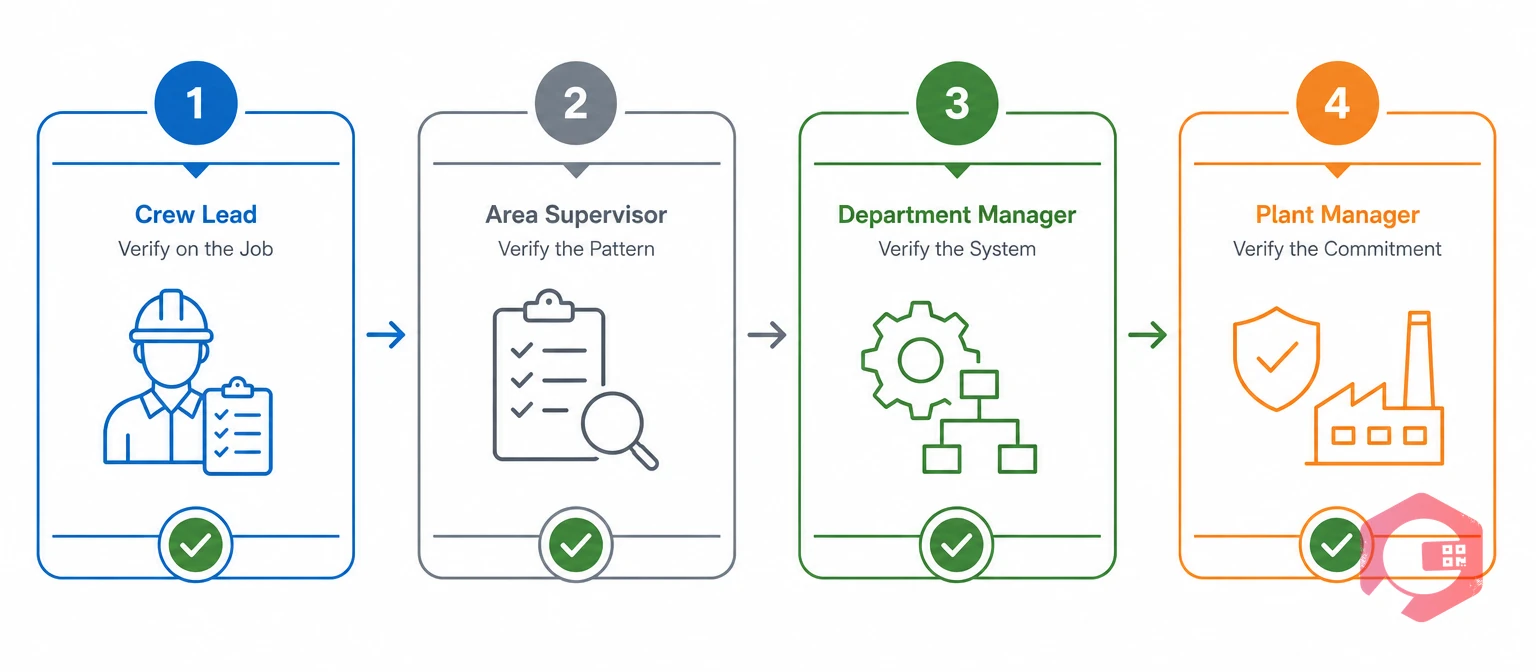
Set up an LPA with four layers, each owned by a different level of management and each asking the same core permit questions.
The Four-Layer Permit Audit Ladder:
Each layer uses the same core questions plus a few extras suited to its level. This keeps findings comparable and gives leaders one picture of permit health. Four layers give you four independent looks at the same control.
A workable schedule asks each layer for a small, fixed amount of time, so audits happen even in busy weeks.
| Layer | Auditor | Frequency | Time per audit | Focus |
|---|---|---|---|---|
| 1 | Crew lead or shift supervisor | Every shift | 10 minutes | Permit on site, isolation proof, gas test, fire watch |
| 2 | Area or maintenance supervisor | Weekly | 15 minutes | Repeat findings, handovers, contractor permits |
| 3 | Maintenance or production manager | Monthly | 15 to 20 minutes | Trends, overdue actions, permit approval delays |
| 4 | Plant manager or EHS head | Monthly or quarterly | 20 minutes | Live job walk, crew voice, resource blockers |
Rotate who audits which area so no one checks the same crew every time. Rotate the question set too, so crews cannot predict the audit. A schedule works when it is written down, owned by name and tracked.
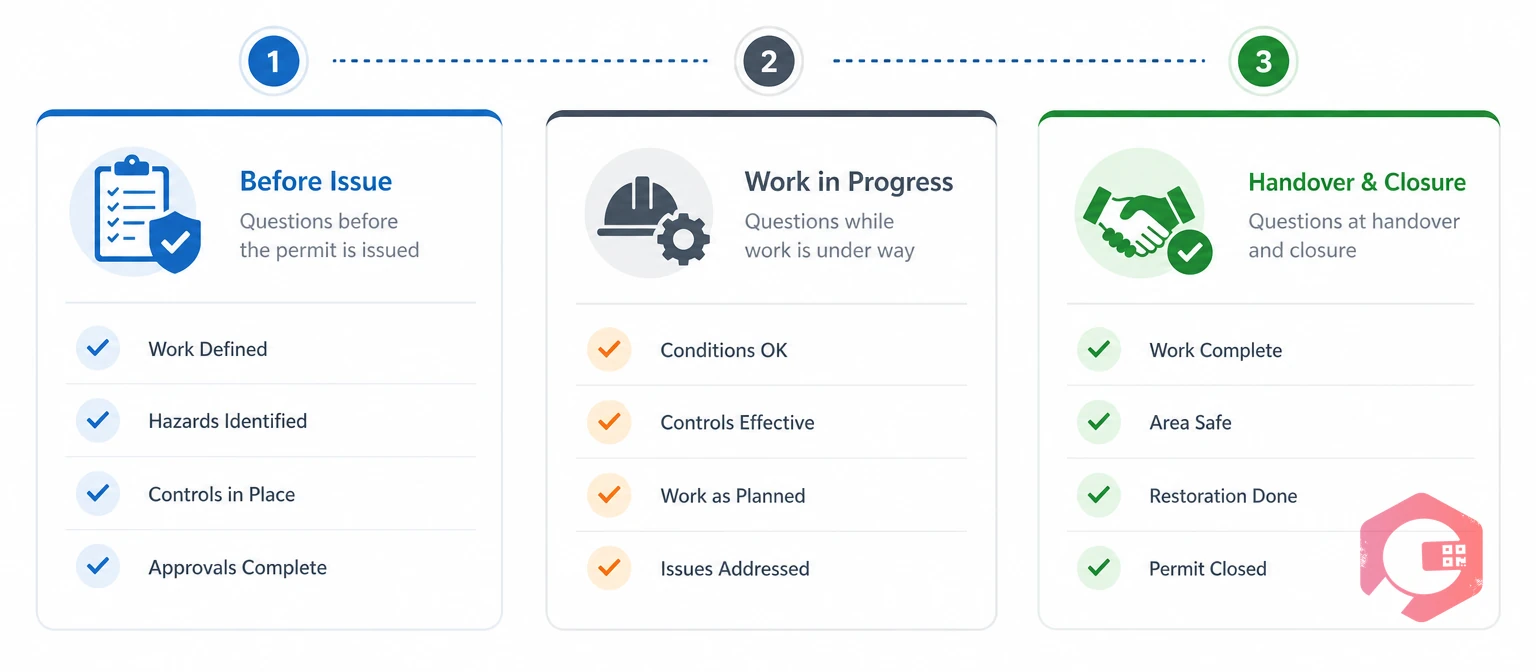
An effective layered process audit checklist holds eight to twelve yes-or-no questions that an auditor can answer by watching and asking, not by reading files.
Keep every question observable. A common mistake is asking only about paperwork, which catches late signatures but misses a missing fire watch. If an auditor cannot see the answer or hear it from the crew, rewrite the question.
Run an LPA without fatigue by keeping each audit short, fixing findings fast, and showing crews what changed because of their answers.
Audit fatigue is mostly a feedback problem. Crews stop caring when findings disappear without action. Operations that successfully sustain LPAs treat every finding as a request to fix the system, not to blame a person.
Software supports layered process audits by scheduling each layer's checks, capturing evidence on a phone, and routing every finding to an owner. A Computerized Maintenance Management System (CMMS) already holds the assets, people and work history that audits depend on.
Closing findings through work orders keeps small defects from becoming outages. Maintenance teams using Cryotos have reported up to 30% reduction in unplanned downtime and 25% faster repair turnaround.
The aim is one place where the schedule, the evidence and the fixes all live.
Plan for 10 to 15 minutes per audit. That is long enough to watch a live job, ask the crew two or three questions and check the permit on site. Longer audits tend to get skipped when production is busy.
Supervisors, area managers, department heads and the plant manager each take a layer. Auditors should know the permit procedure and, where possible, check areas they do not run day to day, which keeps the results honest.
A common pattern is every shift for crew leads, weekly for area supervisors, and monthly for managers and plant leaders. High-risk permit types such as hot work and confined space may justify extra frequency at the lower layers.
No. A gemba walk is open-ended observation, while a layered process audit uses a fixed question set, a set schedule and a recorded result. The two work well together, because a gemba walk often suggests new LPA questions.
Stop the job if there is an immediate hazard, then fix the gap with the crew on the spot. Log the finding with an owner and due date, and escalate it to the next layer if the same finding repeats.
No, it supports them. Standards such as OSHA's ask for periodic inspections and program reviews, and dated LPA records give you evidence for those reviews, but they do not replace them.
Permit compliance holds when someone checks it every shift and every week. Schedule a free demo to see how Cryotos helps you schedule layered audits, capture evidence on mobile, and close every finding.



Cryotos AI predicts failures, automates work orders, and simplifies maintenance—before problems slow you down.