
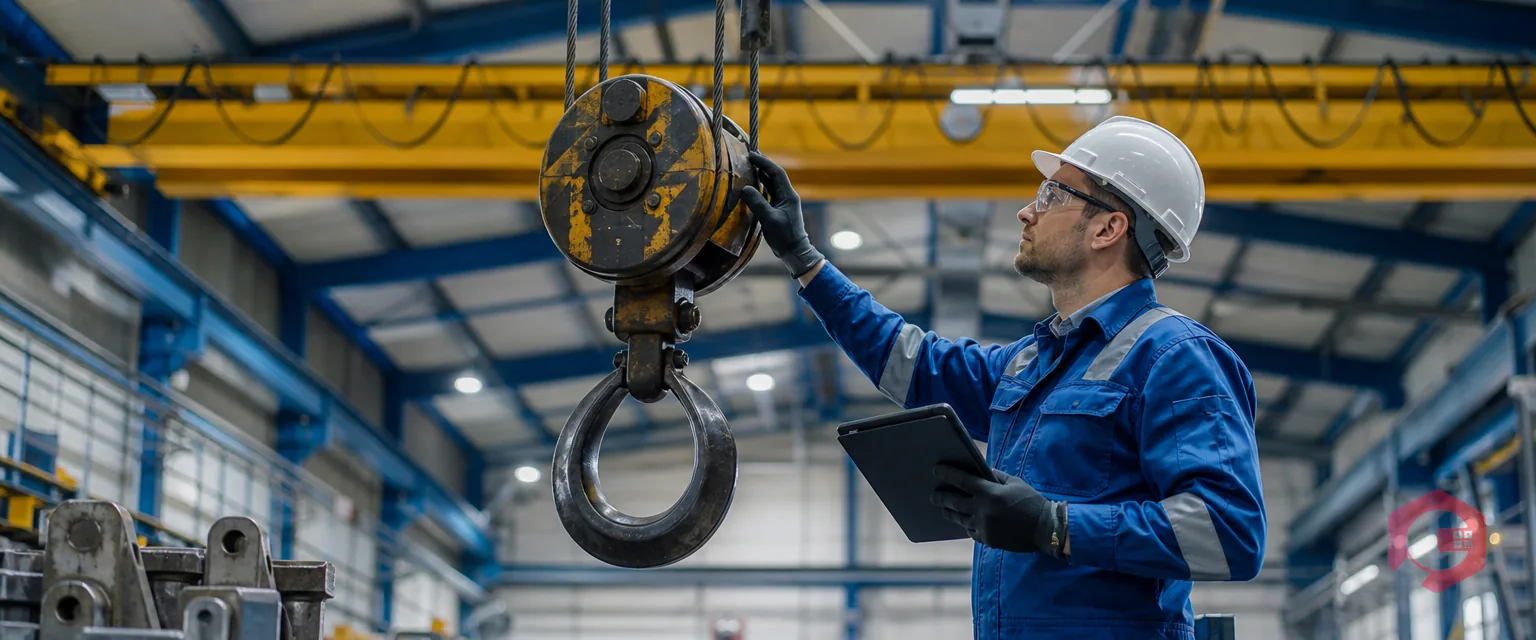
LOLER compliance means every item of lifting equipment gets a thorough examination from a competent person, on time. The written report must then be kept complete and ready to show. The duties sit in regulations 9, 10 and 11 of the Lifting Operations and Lifting Equipment Regulations 1998. Examinations fall due every 6 or 12 months, or under a written scheme.
The examination is only half the duty. When an inspector or investigator asks for a report, your paperwork is the proof. This guide shows what a record must contain, where records fail, and how to build files that hold up.
Key Takeaways
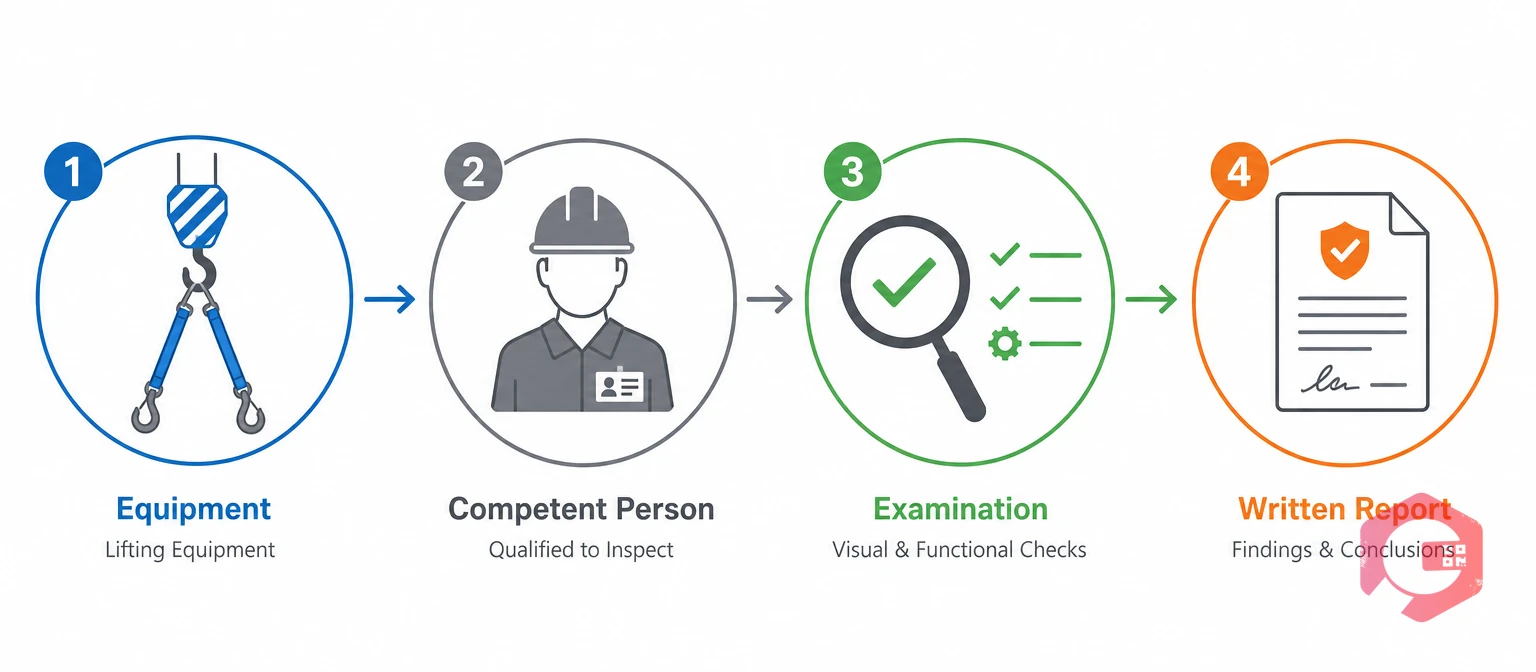
A LOLER thorough examination is a detailed check of lifting equipment by a competent person, recorded in a written report. It covers the equipment and its safety-critical parts, using visual checks, functional checks, wear measurements and, in some cases, testing.
The HSE guidance on thorough examinations and the LOLER Approved Code of Practice (L113) set out the expected approach. LOLER compliance also sits alongside PUWER, which requires lifting equipment to be kept safe through maintenance. Asset management standards such as ISO 55000 point the same way, expecting controlled, documented information.
A competent person is someone with enough knowledge and independence to find defects and judge their safety impact. The law does not define the term, but the Code of Practice expects practical and theoretical knowledge of the equipment.
The examiner can work in-house if they are independent and impartial. They should not be the person who does the routine maintenance, because they would be judging their own work. Independence is what makes the examination count.
A thorough examination, an inspection and routine maintenance are three separate activities, and each needs its own record. An inspector will not accept one in place of another.
| Activity | Done by | When | Record |
|---|---|---|---|
| Thorough examination | Competent, independent person | Every 6 or 12 months, or under a written scheme | Written report with Schedule 1 details |
| Inspection between examinations | Trained, competent person, often the operator or maintenance staff | Set by risk assessment and manufacturer advice | Dated inspection record |
| Pre-use check | Operator | Before use or each shift | Checklist or defect report |
| Maintenance | Maintenance technician | Per manufacturer instructions and condition | Work order with tasks and sign-off |
Most maintenance teams guard the first record and neglect the other three. The interim records are your proof that equipment stayed safe between examinations.
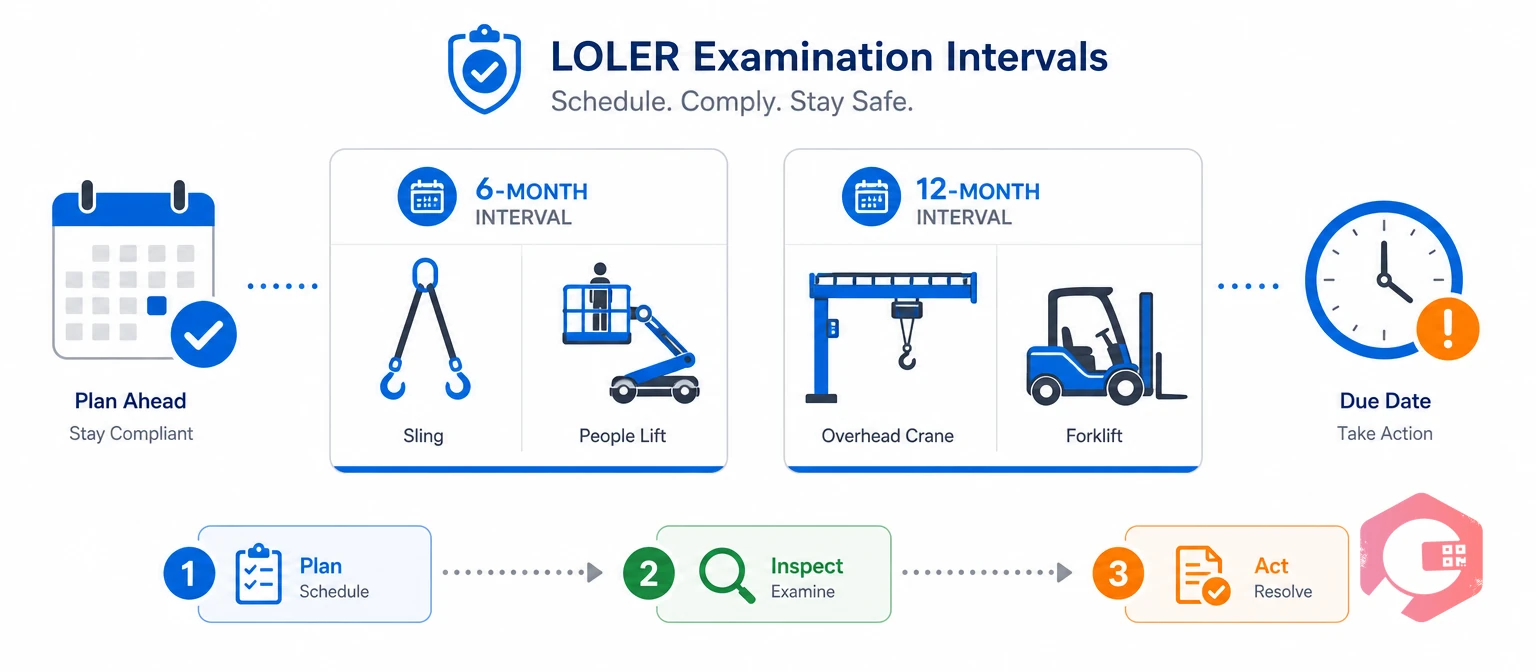
LOLER compliance starts with the right interval for each item. The standard interval is 6 months for lifting accessories and equipment that lifts people. All other lifting equipment needs an examination every 12 months.
| Equipment Type | Maximum Interval | Common Examples | What to Confirm on the Record |
|---|---|---|---|
| Equipment that lifts people | 6 months | Passenger lifts, mobile elevating work platforms | Next due date falls within 6 months |
| All lifting accessories | 6 months | Slings, shackles, eyebolts, lifting beams | Each accessory has its own ID and report entry |
| Other lifting equipment | 12 months | Overhead cranes, forklift trucks, goods hoists | Next due date falls within 12 months |
| Equipment under a written scheme | As the scheme states | Equipment in harsh or specialized use | Scheme is on file and any variation is noted |
| Equipment after exceptional circumstances | Before further use | Damage, major repair, long period out of use | Event, date and re-examination are logged |
A competent person can draw up a written scheme that sets different intervals. Using equipment after its due date is a breach, however sound it looks.
Want a quick self-check of your wider compliance files? Use the free regulatory compliance checklist to spot the gaps.
Schedule 1 of LOLER lists what every thorough examination report must include. HSE confirms there is no set format, provided every item is present. Check each report on the day it arrives.
A dangerous defect must also be confirmed in writing, even if it is fixed on the spot. A copy goes to the enforcing authority. A report missing any of these details is an incomplete record, whatever its stamp says.
Most maintenance teams do the examination work but lose ground on the record. These six gaps appear again and again:
A defect log is a record of every fault an examiner finds, who owns the fix, and when it was closed. HSE also expects records to be protected from unauthorized change. An overwritten spreadsheet with no history is a weak defense for LOLER compliance.
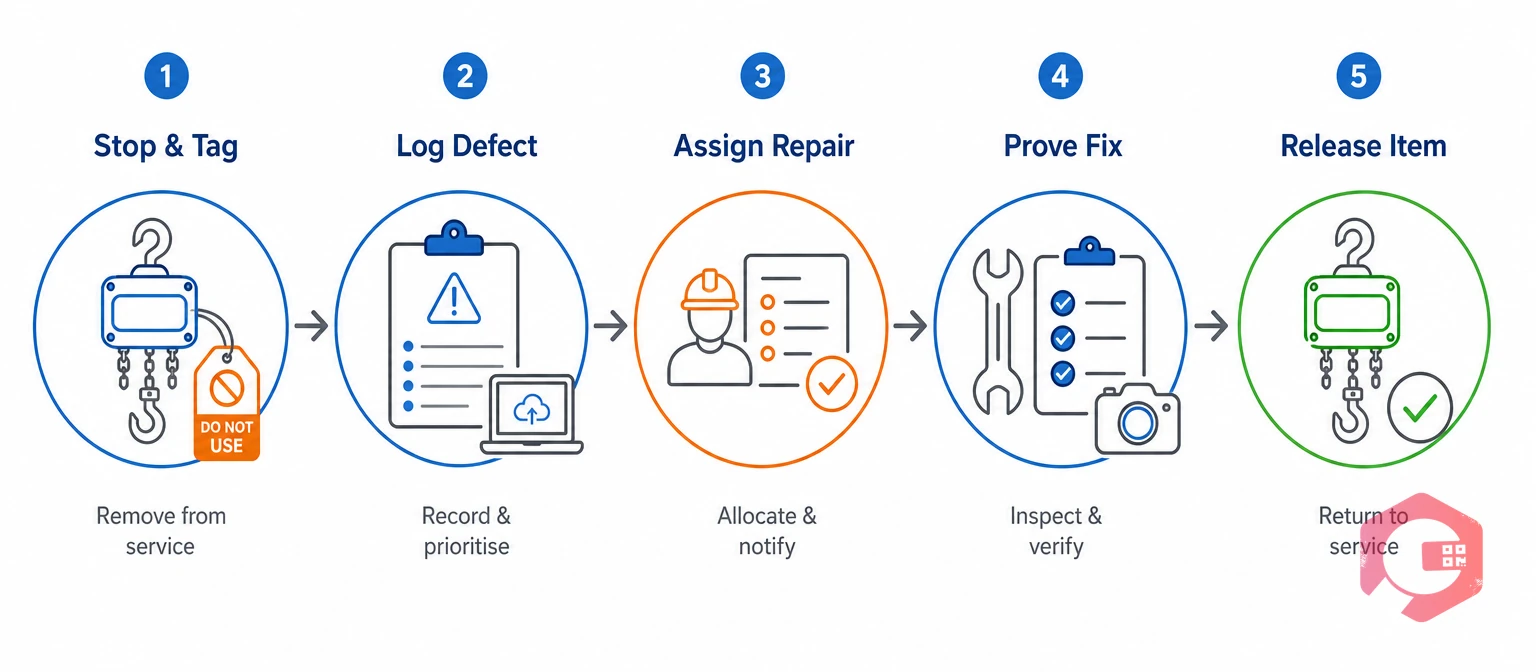
Handle a defect by taking the equipment out of use, assigning a repair, proving the fix and only then releasing it. HSE says you must not use equipment with a dangerous defect until it is remedied.
Examiners often add non-statutory observations on the condition of the equipment. Review them regularly, because repeat remarks on one item can show wear before it becomes a defect. A defect is only closed when the proof is on file.
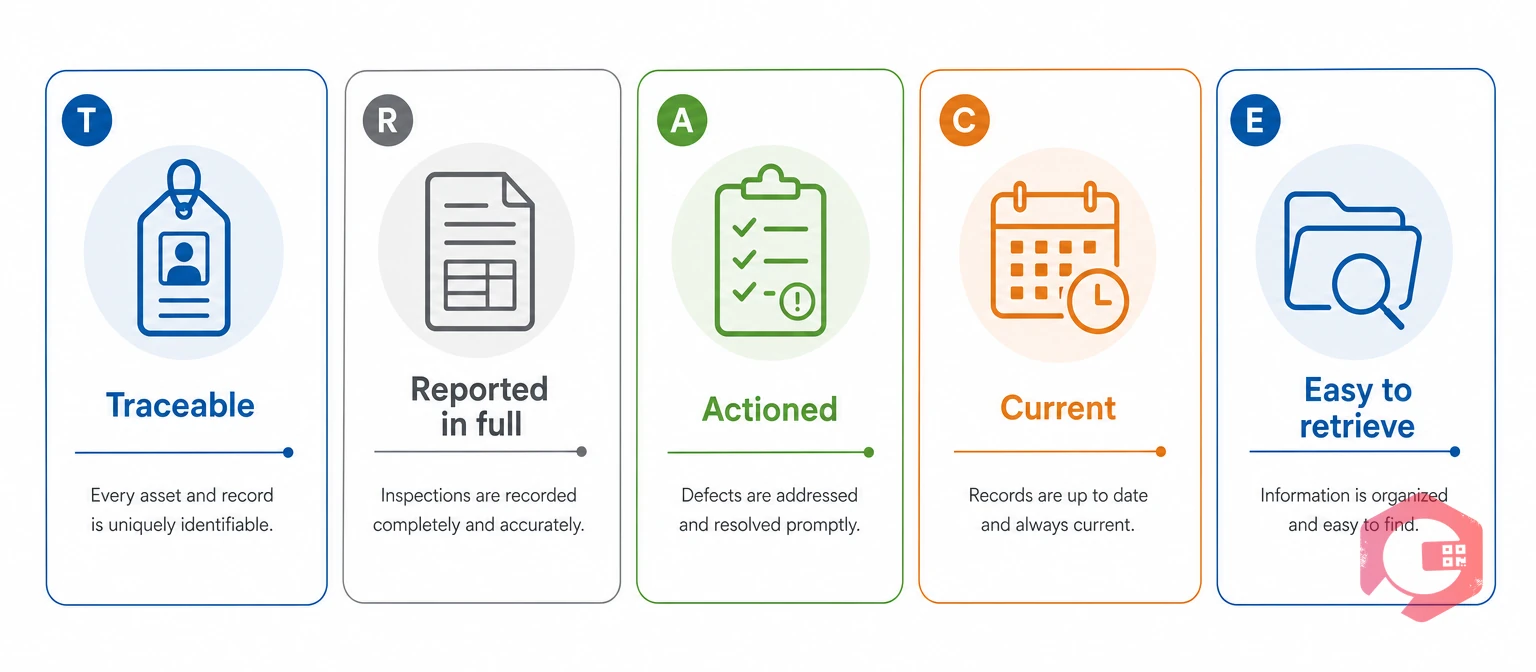
Inspection-ready records follow one rule: you can trace any item to its report and its defects in minutes. The framework below turns that rule into five checks.
The TRACE Records Framework:
Test it with a mock inspection. Pick ten items at random and time how long each report and defect history takes to produce. Any item that takes more than a couple of minutes shows you where to fix first.
Cryotos does not carry out or certify examinations. It gives the competent person's work one controlled home. As a Computerized Maintenance Management System, it keeps the register, the schedule, the report and the defect history together.
Maintenance teams using Cryotos have reported up to 30% reduction in unplanned downtime and 25% faster repair turnaround. The same discipline of logged jobs and closed defects makes LOLER compliance easier to prove.
HSE sets the retention periods in Table 3 of its simple guide to thorough examination. Many organizations keep the full history for the life of the equipment, because it is simpler than tracking each deadline.
Every 6 months for lifting accessories and for equipment used to lift people. Every 12 months for all other lifting equipment, unless a written scheme says otherwise.
A competent person with the right knowledge and enough independence. They can be in-house, but should not be the person who does routine maintenance on that equipment.
Yes. HSE says records do not need to be kept in hard copy. You must be able to provide a written copy when asked, and the records must be protected from unauthorized alteration.
The examiner must tell you immediately, confirm it in writing and send a copy to the enforcing authority. You must not use the equipment until the defect is fixed. For defects that are not dangerous, fix them by the date on the report.
Yes. A CMMS holds the equipment register, schedules each examination, stores the report and tracks defects to closure. It supports the process, but a competent person must still carry out the examination.
LOLER compliance is easier to prove when every report, due date and defect sits in one place. Schedule a free demo to see how Cryotos keeps your lifting equipment records complete, current and ready for inspection.

Cryotos AI predicts failures, automates work orders, and simplifies maintenance—before problems slow you down.



