
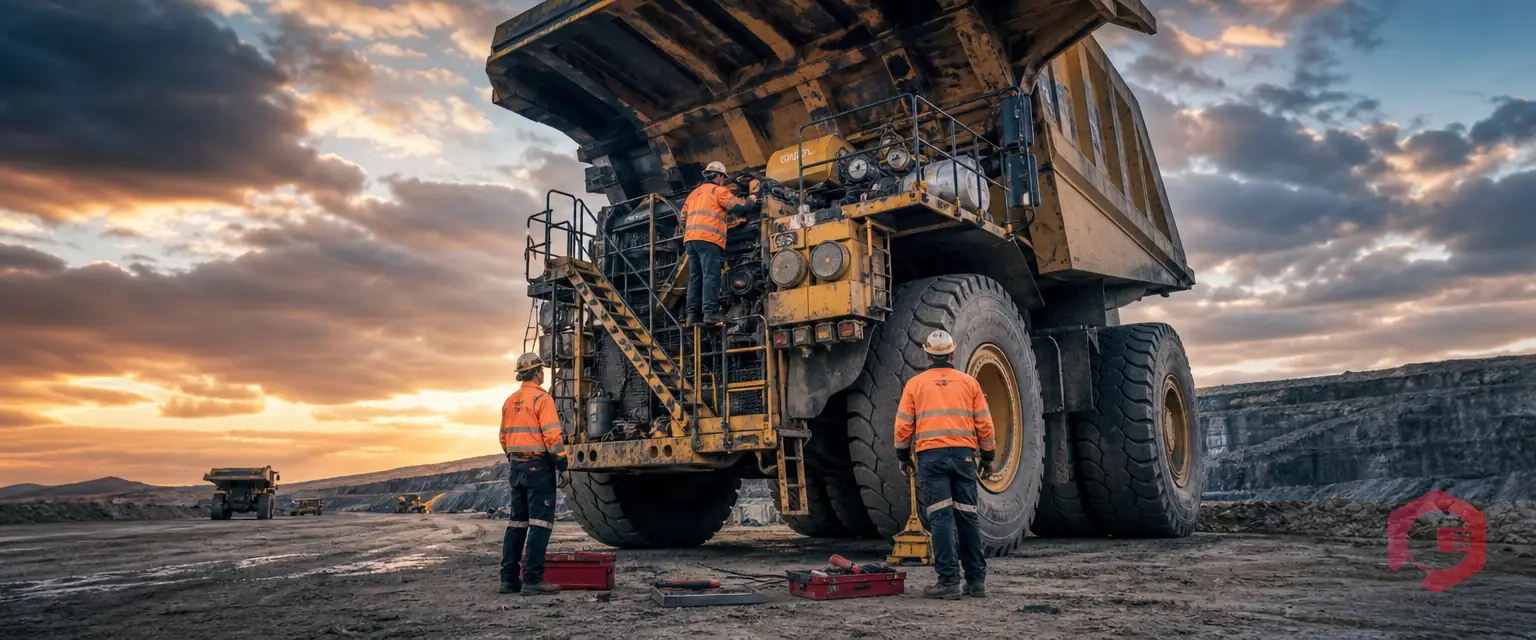
Mining equipment maintenance is the planned inspection, service and repair of machines that move and crush ore. Haul trucks and crushers matter most. A stopped truck slows the pit, and a stopped primary crusher can starve the whole plant.
A Computerized Maintenance Management System (CMMS) gives maintenance teams one place to schedule hour-based services, track component life, control critical spares and prove results. This guide covers how haul trucks and crushers fail, how to schedule their work, and how a CMMS supports mining equipment maintenance for both.
Key Takeaways
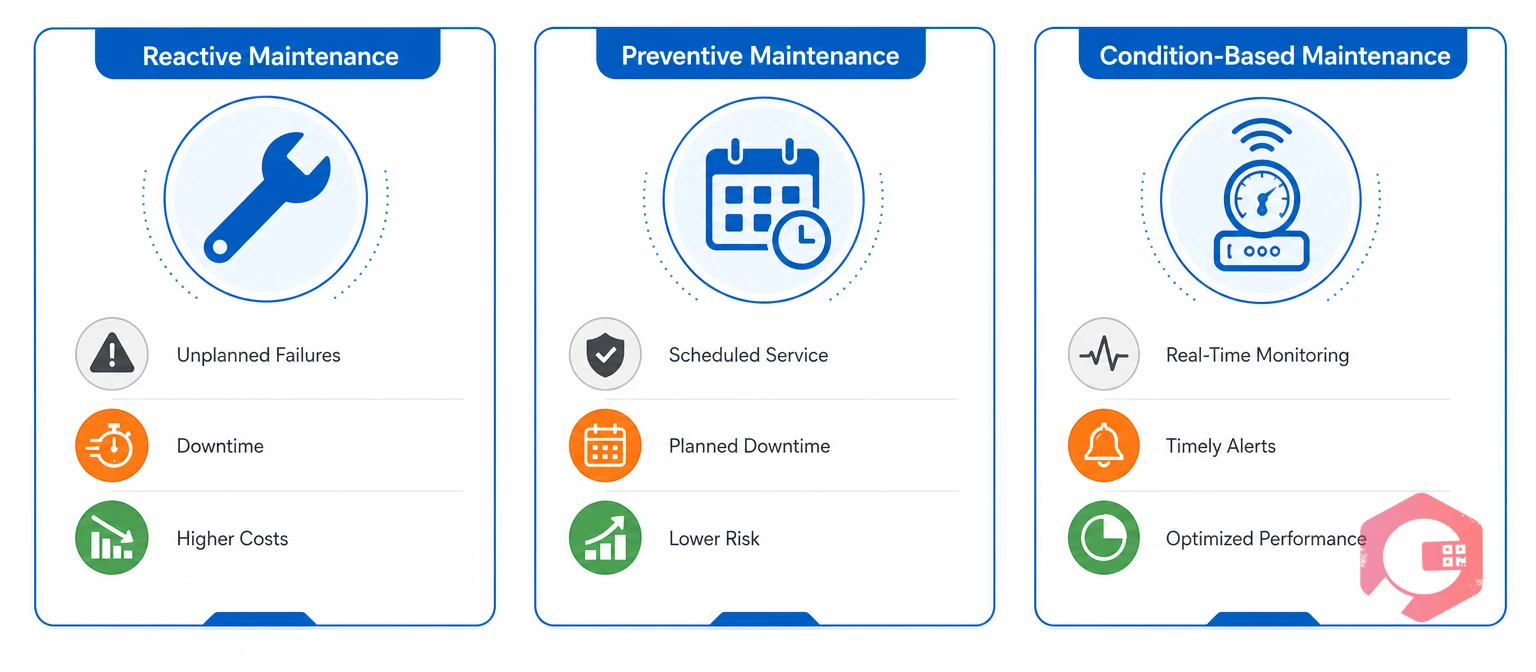
This work covers every task that keeps mobile and fixed mine assets running safely, from daily walk-arounds to planned plant shutdowns. Most mining operations combine three strategies.
ISO 55000 frames maintenance as one part of managing an asset across its life. Reliability-centered maintenance (RCM) then helps maintenance teams match each strategy to the way a component fails.
Teams that do this well rank assets by criticality first, then set the plan, and they build permits for isolation, lifting and hot work into every job. Give each asset the strategy it deserves.
Haul truck maintenance centers on the systems that cause most stoppages: engine and cooling, drivetrain, hydraulics, tires, and frame. Rigid-frame haul trucks in the 100 to 400 tonne payload class usually run in large fleets, so one idle unit slows the whole haul cycle.
Usage-based maintenance is a schedule that triggers work when a machine reaches set operating hours. Most haul truck programs pair a daily pre-shift inspection with tiered services, commonly at 250, 500, 1,000 and 2,000 hours, though each OEM sets its own intervals.
Cryotos preventive maintenance software supports static and dynamic PMs, including triggers by hours, so each truck's service falls due at the right time.
Engines, transmissions and final drives run to target hours. Record hours-to-date against the target on each asset, log every exchange, and review early failures with the supplier. That history also supports warranty claims.
Crusher maintenance revolves around liner wear, lubrication health and planned shutdowns. Primary gyratory and jaw crushers rarely have a spare, so a stoppage can starve everything downstream.
A critical spare is a high-value part that stops a machine or circuit when it fails and takes weeks to replace. For crushers, that means liner sets, bearings and lube pumps. Strong spare parts management gives each one a minimum stock level and alerts the team before it runs out.
Want to see where your own mining equipment maintenance downtime comes from? Try Cryotos downtime tracking to log stops by asset and measure MTBF and MTTR.
Haul trucks need usage-based, fleet-wide maintenance, while crushers need condition-based, plant-level planning. The table shows where the two differ most.
| Dimension | Haul trucks | Crushers |
|---|---|---|
| Asset type | Mobile, many similar units | Fixed plant, often a single unit |
| Main trigger | Operating hours and component life | Running hours, tonnes and condition readings |
| Largest wear cost | Tires, major components, body liners | Liners, bearings, lubrication health |
| Planned events | Tiered PM services and component exchanges | Liner changes and scheduled shutdowns |
| Safety focus | Isolation, tire handling, working at height | Lockout, confined space, heavy lifting |
| Key data | Hours, payload, fault codes, oil samples | Power draw, vibration, temperature, liner wear |
Both asset types share one need in mining equipment maintenance: a single record of work, parts and downtime. That record helps teams spot repeat failures and plan shutdowns around real data. It also clarifies ownership: a fleet planner usually owns the trucks, while a plant planner owns the crushing circuit.
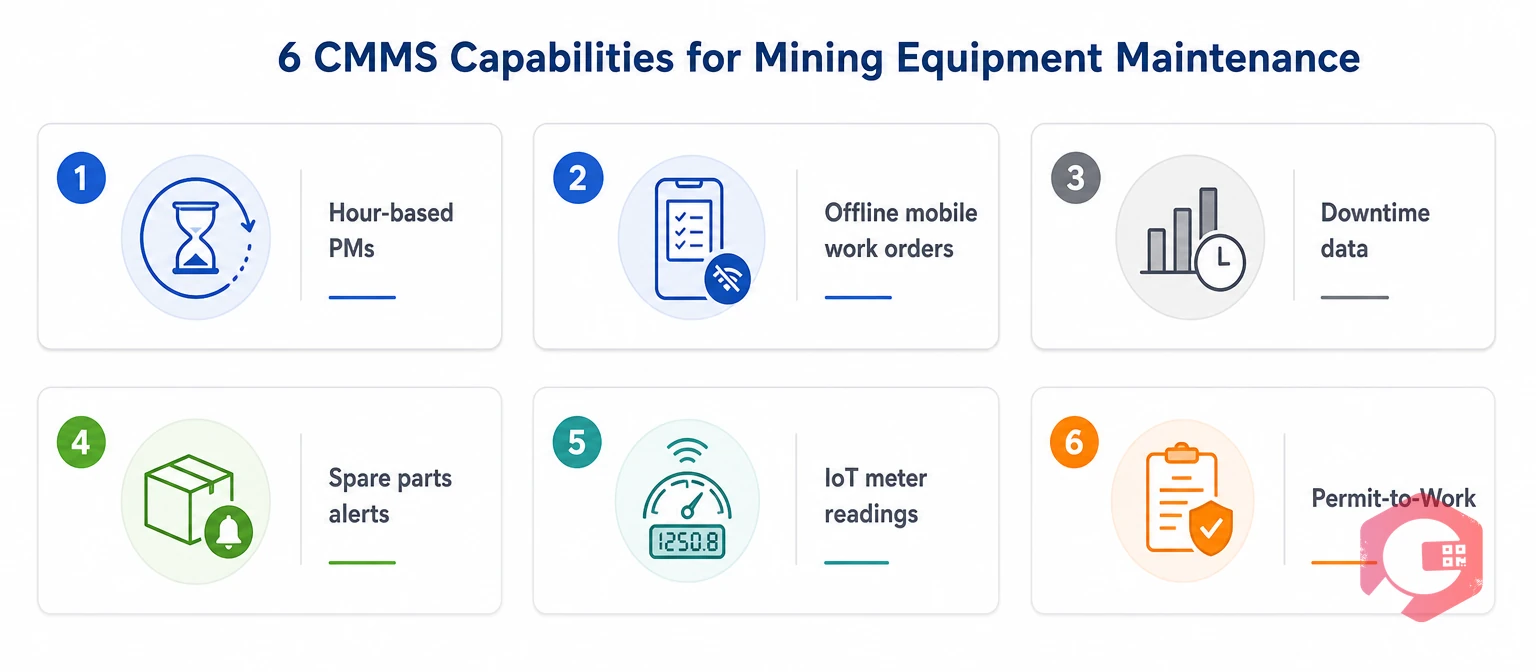
A CMMS replaces paper, spreadsheets and memory with scheduled work, live asset history and parts alerts. Six capabilities matter most for haul fleets and crushing circuits.
Maintenance teams using Cryotos have reported up to 30% reduction in unplanned downtime and 25% faster repair turnaround. See how Cryotos delivers maintenance software built for mining operations, from haul fleets to crushing circuits.
A planner schedules the 1,000-hour service for truck HT-214, attaches the checklist and parts list, and assigns the work order. The technician completes it on a phone, and parts used are recorded against the job. The next service then falls due from the new hour reading.

A pit-to-plant approach to mining equipment maintenance works when it follows five steps: rank, trigger, plan, stock and prove. Use the same steps for trucks and crushers.
The Pit-to-Plant Uptime Framework:
Availability is the share of scheduled time a machine can operate. PM compliance is the percent of due PMs finished on time. Together with MTBF and MTTR, they show whether your mining equipment maintenance plan works.
Most haul trucks follow a daily inspection plus tiered services at operating-hour intervals, commonly from 250 to 2,000 hours. Your OEM manual sets the exact intervals, and a CMMS can trigger each service automatically by hours.
Measure the liner profile at set intervals, record tonnes or running hours at each change-out, and log the results against the crusher. Over time, that history shows the right reline interval.
Yes, if the mobile app has an offline mode. Cryotos lets technicians complete work orders and checklists without signal, then syncs the data automatically when the device reconnects.
No. OEM tools produce machine data, while a CMMS turns that data into scheduled work, parts and records across every make and model. Cryotos also supports IoT meter readings through SCADA, PLC and edge connections.
Start with availability, MTBF, MTTR, PM compliance and the ratio of planned to unplanned work. Add component life against target for trucks, and liner life in tonnes or hours for crushers.
Look for hour-based PM triggers, offline mobile work orders, spare parts alerts, downtime tracking and Permit-to-Work. Those five cover most haul truck and crusher needs.
Start the job plan weeks ahead, confirm liner sets and lifting equipment, and book contractors and permits early. Exact lead times depend on liner supply and site rules.
Haul trucks and crushers reward teams that plan mining equipment maintenance by usage and condition, not by failure. Schedule a free demo to see how Cryotos keeps mining fleets and crushing circuits on schedule.

Cryotos AI predicts failures, automates work orders, and simplifies maintenance—before problems slow you down.



