

A gearbox inspection checklist is a structured set of visual, lubrication, vibration, thermal, and mechanical checks used to catch gearbox wear before it causes a failure. Bearing-related problems cause more than half of all gearbox failures, and most of them give clear warning signs weeks or months before they happen. Skipping a scheduled gearbox inspection checklist is how a small, cheap fix turns into a multi-week rebuild. This guide walks through what a complete gearbox inspection checklist covers, how often to run it, and how a Computerized Maintenance Management System (CMMS) turns that checklist into a program instead of a one-off task.
Key Takeaways
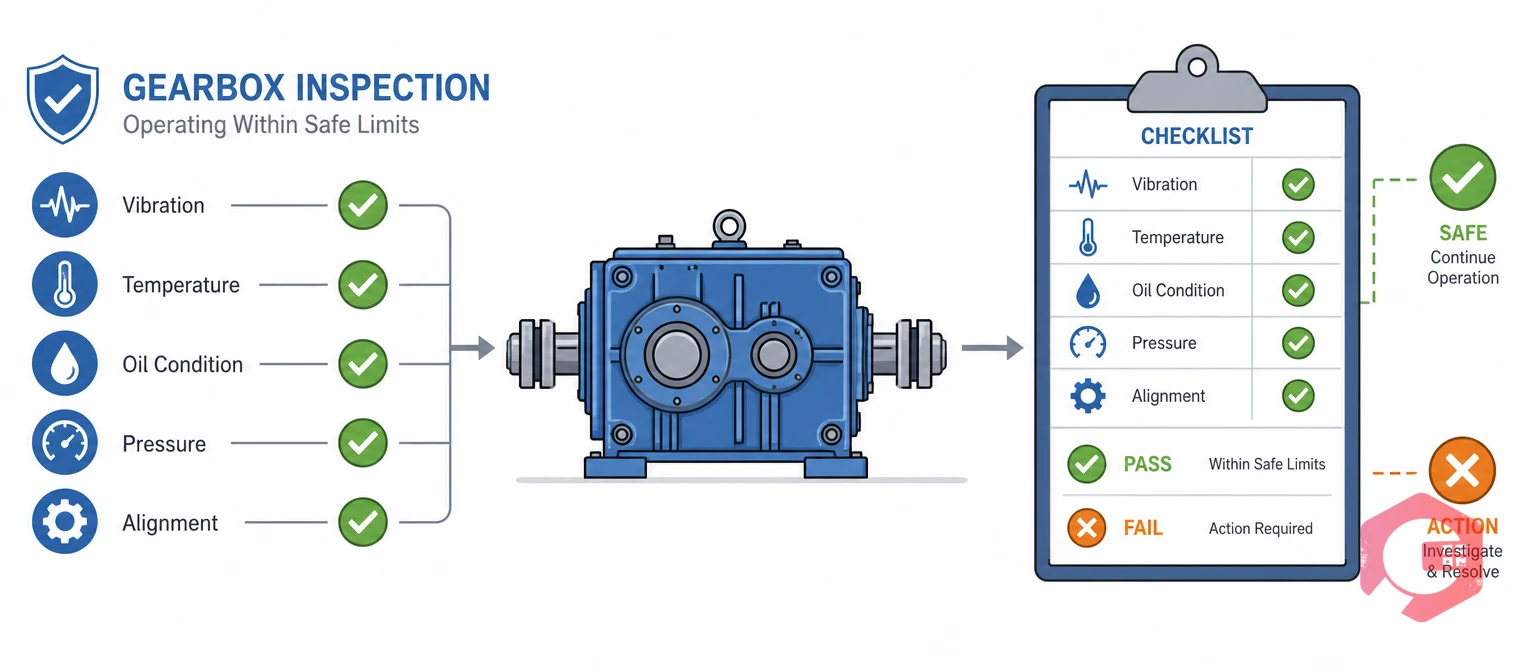
A gearbox inspection checklist is a standardized list of checks that confirms a gearbox is running within safe operating limits. It typically runs at every scheduled PM visit, alongside more frequent operator walk-bys for obvious issues like leaks or noise.
Gearboxes sit between the motor and the driven load on conveyors, mixers, extruders, crushers, and fans. When a gearbox inspection checklist is skipped or run inconsistently, small problems go unnoticed until a tooth breaks or a bearing seizes. That turns a routine service into a multi-week rebuild.
A good gearbox inspection checklist isn't just a list of tasks. It ties each check back to a pass or fail limit. That's what makes sure two different technicians reach the same conclusion from the same reading. You'll also see this work called a gearbox PM checklist or a gear drive inspection routine — different names for the same core idea: catch wear early, before it becomes a failure.
Neglected gearbox inspection carries three costs: unplanned downtime, expensive repairs, and safety risk. Bearing failure is damage to the rolling elements inside a gearbox, and it accounts for most unplanned gearbox downtime industry-wide. Most bearing failures start small. Contamination or lubrication starvation is usually the trigger. A routine gearbox inspection checklist is built to catch both before they become a breakdown.
Repair cost is the second factor. A large custom gearbox can take weeks to rebuild or replace. That lead time turns a missed inspection into an extended production outage rather than a planned repair window.
Safety is the third factor. A seized gearbox on an elevated conveyor or mixer can eject debris or drop a load without warning. Locking it out correctly matters as much as inspecting it. OSHA's control of hazardous energy standard governs that lockout process.
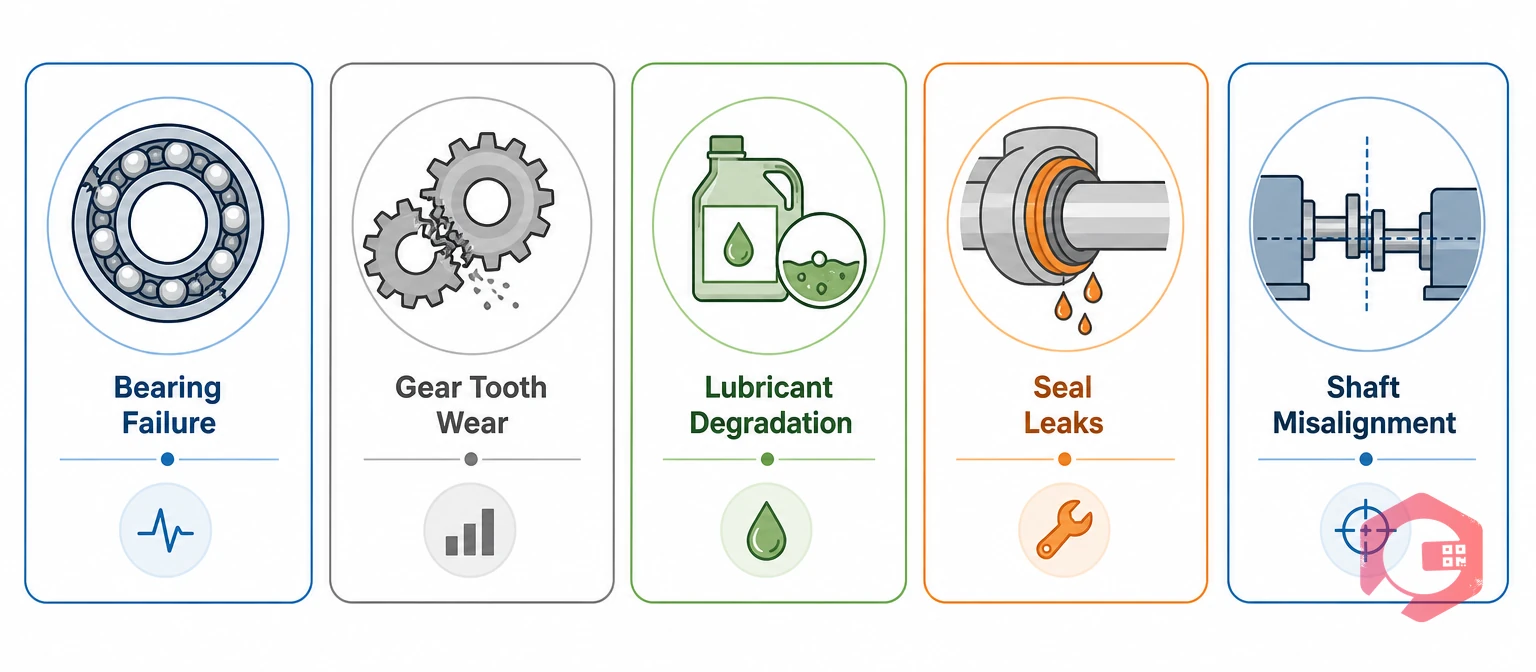
A gear train transmits torque and speed between shafts using meshing gears. Wear in that mesh is one of several failure paths a gearbox inspection checklist has to watch. The mechanics behind a gear train explain why misalignment and contamination spread damage across the whole assembly, not just one part.
Each failure mode leaves its own trail. A worn seal shows up as a leak. A misaligned shaft shows up as vibration. Keep failure history tied to an asset tracking record for each gearbox. That's what turns a one-off repair into a pattern you can actually see.
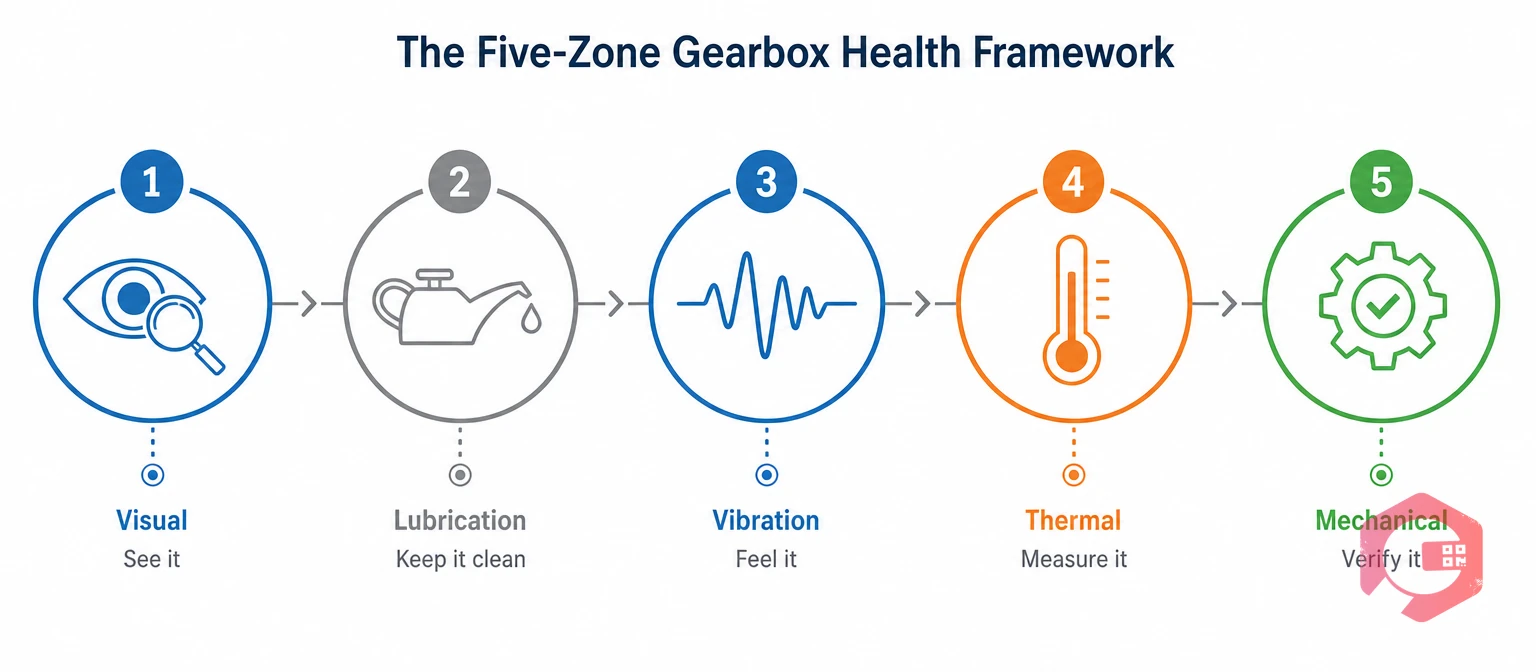
Deciding what to inspect gets easier with a consistent framework instead of an ad hoc walk-around. Five zones cover nearly every failure path a gearbox can take, and together they form the backbone of any solid gearbox inspection checklist.
The Five-Zone Gearbox Health Framework:
A lubricant sample is a small oil draw tested for particle count, moisture, and viscosity to catch internal wear before it shows up anywhere else. Pair that data with condition monitoring practice and vibration trends feed straight into the same asset record as the oil results, through an IoT meter reading integration.
Run all five zones on every visit, even on a quiet gearbox. A zone that looks fine for a year is still worth checking. That's the whole point of a gearbox inspection checklist: catching the one time it isn't fine.
Plants generally run their gearbox inspection checklist under one of three strategies, and most mature programs blend all three by criticality.
| Approach | When It Applies | Typical Task | Main Trade-off |
|---|---|---|---|
| Reactive | Only after a failure stops the gearbox | Emergency rebuild or replacement | Longest downtime, highest cost per event |
| Preventive | Fixed calendar or running-hours interval | Scheduled oil sample, visual and vibration check | Can over-service healthy units and miss fast-developing faults |
| Predictive | Triggered by trended oil or vibration data | Work order opens when a reading crosses a set threshold | Needs steady historical data per gearbox to work well |
Reactive upkeep still shows up for small, easily replaceable gearboxes. It's a poor fit for large or custom units. A failure there means weeks of lead time on a replacement, not a quick swap.
Ready to see the scheduling side in action? Explore Cryotos digital maintenance checklists.
The table below reflects the intervals most plants start with, then adjust based on duty cycle and criticality.
| Task | Frequency | Reference | Criticality |
|---|---|---|---|
| Visual inspection | Weekly to monthly | OEM manual | All gearboxes |
| Oil sample and analysis | Every 3 months | ISO 4406 | Medium and high criticality |
| Vibration reading | Monthly | ISO 10816 / 20816 | High criticality |
| Thermal scan | Quarterly | OEM manual | All gearboxes |
| Backlash and alignment check | Annually | AGMA 6000 | High criticality |
Turning this table into recurring, assigned work is where paper-based programs slip. A maintenance audit checklist tied to each gearbox keeps the interval, the pass criteria, and the sign-off in one place instead of a binder.
A gearbox running near its rated load needs shorter intervals than one running light. Use the table as a starting point, then tighten it once real failure data comes in.
The checks above are well established. What actually derails a gearbox inspection checklist program is usually organizational, not technical.
None of these problems need new test equipment. They're process failures, not technical ones. That means they're fixable without buying a single new sensor.
Most maintenance teams recognize these patterns right away. They show up the same way across almost every plant still running a gearbox inspection checklist on paper.
A CMMS closes the gaps above without changing the underlying inspection methods. Every gearbox becomes an asset record with a full inspection and oil-analysis history in one place.
Maintenance teams using Cryotos have reported up to 30% reduction in unplanned downtime and 25% faster repair turnaround. Most of that gain comes from catching a developing gearbox fault while it's still a scheduled repair, not an emergency one.
A digital gearbox inspection checklist also builds its own audit trail. Every reading, every photo, and every sign-off stays attached to that specific gearbox. That record is what an insurer or an auditor asks for after an incident. It's also what a reliability engineer uses to pick which gearbox families are ready for a fully predictive schedule.
Most plants run a visual check weekly to monthly, an oil sample every three months for medium and high-criticality units, and a full mechanical check annually. A gearbox running near its rated load or duty cycle needs more frequent checks than one running light. Start with the table above, then adjust once real failure history builds up.
Bearing failure is the most common cause, usually from contamination, lubrication starvation, or misalignment rather than the gear teeth wearing out first. That's why lubrication and vibration checks carry as much weight as a visual inspection in any serious gearbox inspection checklist.
A standard oil analysis covers particle count against the ISO 4406 cleanliness code, moisture content, and viscosity. Together they flag internal wear and contamination well before a gearbox shows any outward symptoms. Most plants pull this sample every three months on critical units.
Yes. A CMMS can generate recurring inspection work orders from a fixed calendar or from running-hours triggers, and escalate any check that goes overdue instead of relying on a manual reminder. Most teams set this up once per gearbox class and let the system handle the rest.
Skipping it raises the risk of a bearing seizing or a gear tooth failing without warning. That usually means a longer, more expensive repair than if the same issue had been caught during a scheduled gearbox inspection checklist visit.
A documented, consistent gearbox inspection checklist is the clearest way to cut both unplanned downtime and repair cost. Schedule a free demo to see how Cryotos turns your gearbox inspection schedule into automated, trackable work orders.



Cryotos AI predicts failures, automates work orders, and simplifies maintenance—before problems slow you down.



