

Pharma maintenance compliance means every maintenance activity on GMP equipment and facilities is performed against an approved procedure, by an authorised person, and leaves a record that is attributable, legible, contemporaneous, original and accurate — the ALCOA principles regulators use to judge data integrity. For a maintenance team, that turns each PM and breakdown into a potential inspection exhibit.
Key Takeaways
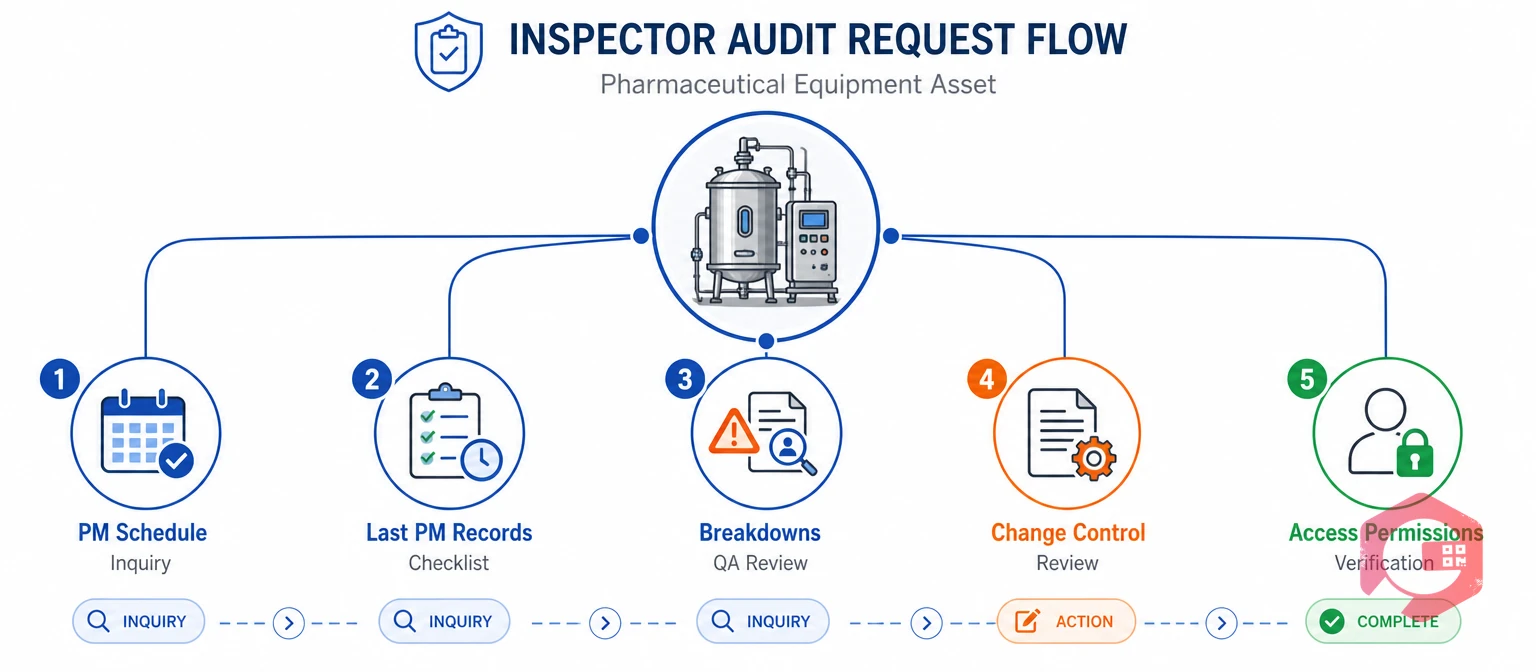
Once an inspector picks an equipment ID from a batch record, the questions come in a predictable order: show me the PM schedule for this asset; show me the last three PM records and the checklist they used; show me any breakdowns since the last batch and who from QA reviewed them; show me the change control behind that frequency change; show me who has access to edit these records.
Under 21 CFR 211.67 and 211.68, written maintenance procedures and records are mandatory. Under 21 CFR Part 11 and EU GMP Annex 11, electronic records must be attributable, time-stamped, protected from alteration, and reviewable.
A paper logbook can satisfy 211.67 but struggles with everything after it. A generic maintenance tool can schedule PMs but rarely knows what a change control is. A purpose-built GMP-compliant CMMS handles each question.
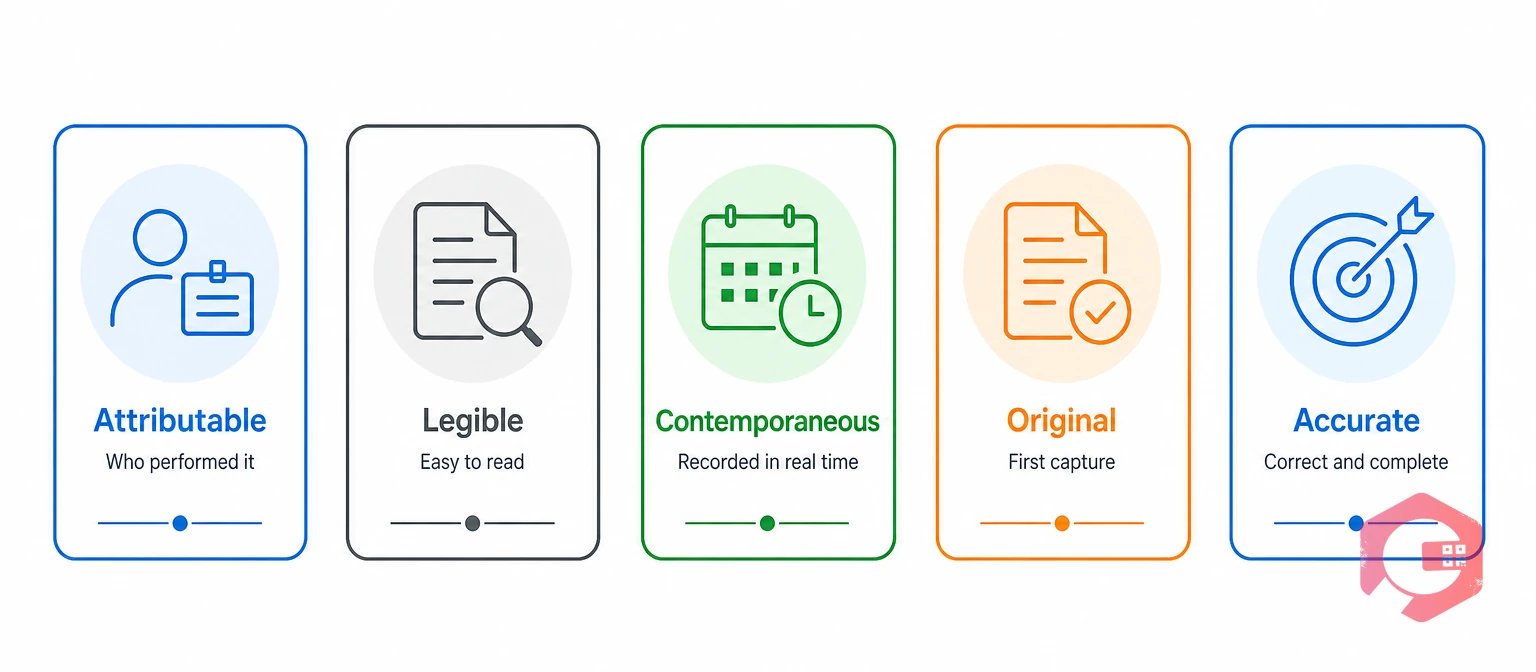
ALCOA+ is the yardstick regulators use for any GxP record. Here is how a single Cryotos work order satisfies each principle without extra effort:
The technician fills one form on a phone or tablet. The compliance structure is in how the form is stored.
A classic inspection finding is a PM record that doesn't match the SOP version current on the day. On paper this happens when old forms stay in circulation after a revision. In a poorly designed digital system it happens when editing the template silently rewrites history.
Cryotos versions every checklist template, and each work order is pinned to the version in force when it was raised. Workflows are named against the site's own SOP numbering so the inspector can go from the SOP index to the digital checklist in one step. The preventive maintenance record and the document control system stay aligned by design.
"This equipment used to be serviced monthly. Now it's quarterly. Show me why." In many plants the answer lives in a QMS the engineering team doesn't use, and the PM calendar was edited by hand with no link back.
In Cryotos, changes to a PM schedule go through an approval workflow. The planner raises the change with a reason, an approver accepts or rejects it, and the record keeps both names, both timestamps, and the remarks. Rejected changes are on file too.
Breakdown descriptions and "work performed" entries reference change-control and CAPA numbers. When PMs are short-closed because equipment is decommissioned, the closing reason quotes the change control. The maintenance system and the quality system tell the same story.
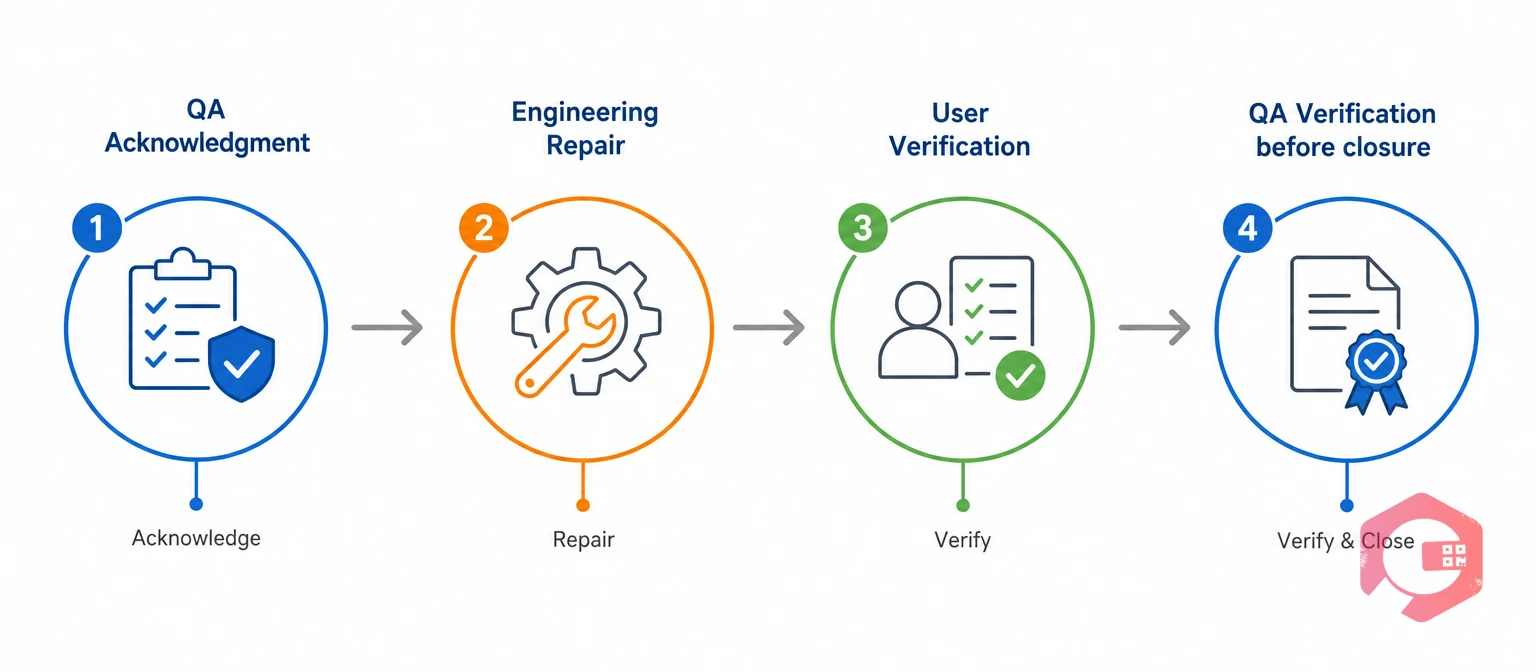
On product-contact equipment, a repair is a quality event as much as an engineering one. The breakdown workflow makes QA a participant at two points:
Because those three answers are fields rather than free text, the site can report on them. Every decision is traceable to a named QA user and a timestamp.
Inspectors don't expect 100% on-time PM. They expect every miss to have a reason and an owner:
The plant closes about 95% of PMs on or before the due date. The remaining 5% is a set of documented exceptions, each with a reason an inspector can read.
Good records are only half of data integrity. The other half is proving they couldn't be altered quietly:
Pharma maintenance compliance isn't only about product quality. The same records protect people. A pharma CMMS should give the maintenance team these safety controls:
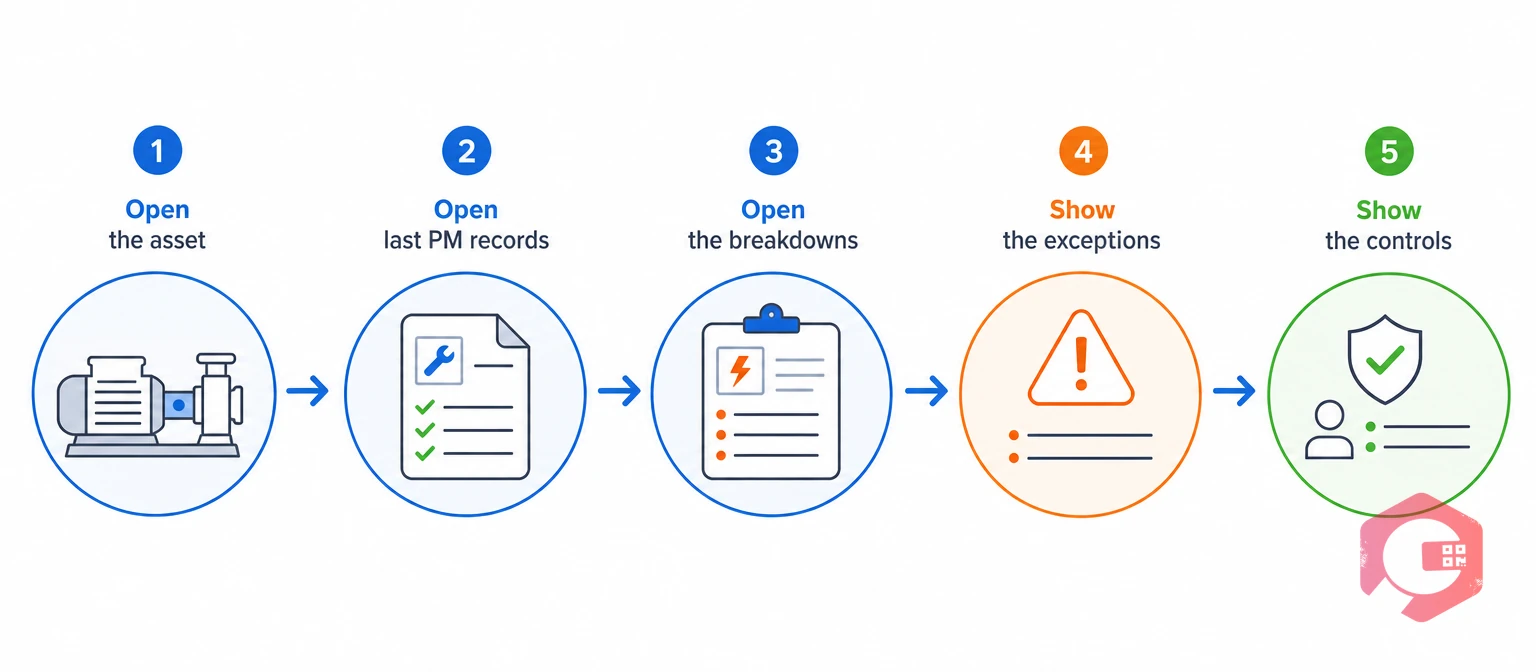
When the request comes — "show me everything on this equipment" — the maintenance team on a GMP-ready CMMS works through it like this:
On paper this is a day of pulling binders. On a CMMS built for pharma it's a few minutes of filtering.
Maintenance on GMP equipment performed against approved procedures by authorised people, leaving records that meet ALCOA+ data-integrity principles. A correctly done PM with an incomplete record is still a finding.
Yes, provided the system uniquely identifies the user, records the time and meaning of the signature, and prevents the record being altered without trace.
Through an approval workflow that records who requested the change, who approved it, when, and the change-control reference. Editing a schedule without that trail is one of the most common data-integrity findings.
No. They expect misses to be rare, and every miss to have a documented reason and owner.
By attaching Permit to Work, LOTO, and safety certificates to the work order, capturing live photo evidence, classifying safety-relevant breakdowns, and logging downtime with root cause.
If your maintenance team still spends inspection week pulling binders, the pattern above is the alternative: one system where the PM record, the QA sign-off, the change control reference, and the safety evidence live together. Cryotos work order management is built for exactly this — from QA-gated workflows to versioned maintenance checklists and live-camera evidence. Schedule a free demo and bring your last inspection request list — we'll show you how each item is answered.


Cryotos AI predicts failures, automates work orders, and simplifies maintenance—before problems slow you down.



