Audit-ready maintenance records are the documented proof that a power plant maintained its equipment on schedule and can produce that proof the moment a regulator asks for it. This includes work orders, inspection checklists, downtime logs, and parts history. Power generation sits under some of the strictest oversight of any industry. A missing signature or a backfilled date can turn a routine inspection into a citation. This guide breaks down what audit-ready maintenance records actually require and which regulations drive them. It also shows how a Computerized Maintenance Management System turns scattered logs into a clear compliance trail.
Key Takeaways
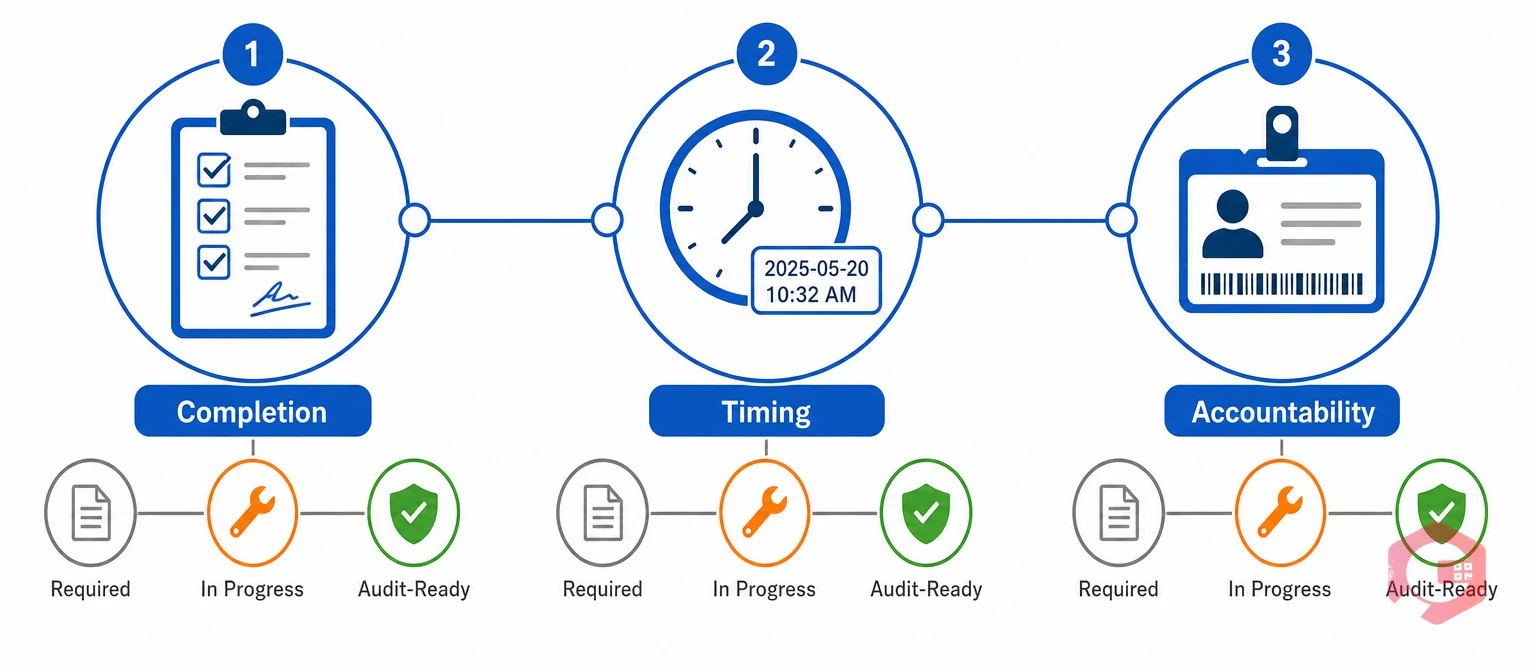
Audit-ready maintenance records are documentation that proves a maintenance task was completed, on time, by an identifiable person, against a specific asset. That one sentence carries three separate requirements. Most compliance failures happen because a plant can prove only one or two of them, not all three.
Paper checklists and email chains usually fail on timing and accountability first. A supervisor can often show that a valve was inspected. Proving it happened on March 14th and not March 21st is much harder once the paper trail goes cold. This is exactly why audit-ready maintenance records need a system behind them, not just good intentions.
Picture a routine boiler inspection. A technician checks the relief valve, notes the reading, and moves on. If that note lives on a clipboard, it might get filed a week later, or not at all. If it lives in a digital work order tied to that boiler's asset ID, it becomes part of a permanent, searchable record the moment the technician signs off. The task is identical. Only the record-keeping changes, and that difference is what an auditor actually sees.

Power plants answer to several overlapping regulatory bodies. Each one expects a different slice of maintenance documentation. Most facilities that fail an audit are not ignoring the rules. They simply cannot retrieve the evidence fast enough.
Reliability frameworks like SMRP and ISO 55000 reinforce the same idea from the asset management side. Maintenance data has to be structured well enough to retrieve, not just collected somewhere. Most maintenance teams already generate this data. The real gap is almost always retrieval speed, not missing work.
The stakes for getting this wrong are real. A failed NERC audit can bring financial penalties. A failed EPA inspection can threaten an operating permit. A failed OSHA inspection can shut down a work area until records are produced. None of these outcomes come from skipped maintenance work. They come from maintenance work nobody can prove happened on time.
Want a starting point for structuring your own evidence? Check the maintenance audit checklist Cryotos uses to organize inspection records before they are ever requested.
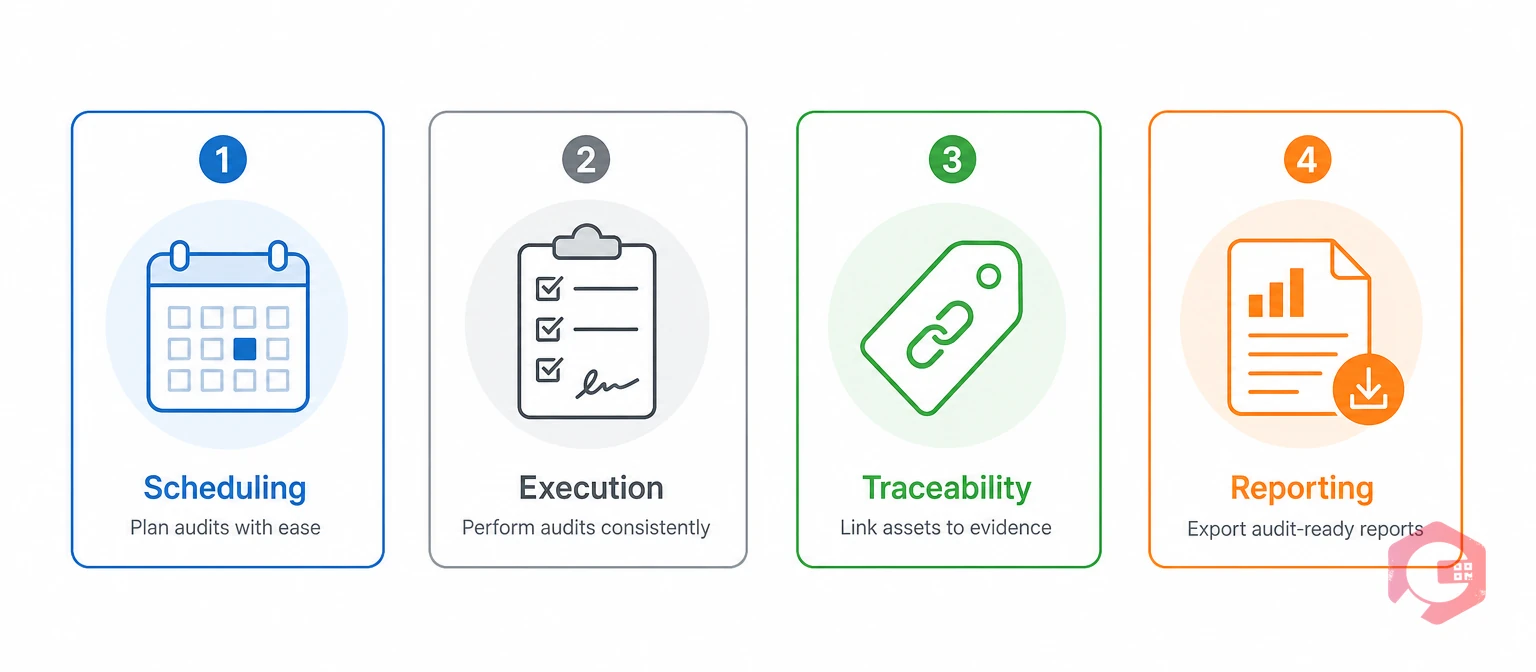
The Four-Pillar Audit-Readiness Framework:
Most facilities that fail an audit are missing one pillar, not all four. A plant can have strong scheduling, but weak reporting. That plant still cannot produce evidence fast enough when an inspector is standing in the control room. Audit-ready maintenance records only hold up when all four pillars work together, not just one or two of them.
Cryotos maps directly onto the Four-Pillar Framework through its core modules. Routine maintenance work turns into a running compliance record without extra paperwork. Nothing extra gets typed twice. The record simply exists because the work happened inside the system. Six modules carry most of the weight here, each one covering a different piece of the compliance picture.
Every maintenance action starts and ends as a logged work order. The system captures who raised it, who approved it, and who closed it. Built-in 5 Whys root cause analysis attaches a written investigation to any failure-driven repair. Regulators look for this step after unplanned outages.
Static and dynamic preventive maintenance schedules trigger inspections by calendar date or by operating hours. This matches how most power generation regulations define their intervals. Overdue tasks get flagged automatically, long before they surface during an audit.
QR code and GPS-based asset tracking ties every work order to one identifiable turbine, transformer, or pressure vessel. When a regulator asks about "that specific asset," the answer is one lookup away instead of a search through file cabinets.
Unplanned outages at a power plant often trigger mandatory reporting. Downtime tracking records outages by department, plant, or asset in real time. It also calculates MTTR, MTBF, and uptime automatically. Instead of reconstructing an outage timeline weeks later, the exact start time, root cause, and repair action are already logged and linked to the work order.
Spare parts are logged with lot numbers and install dates, so a replacement gasket or relay can be traced back to the exact work order that used it. The BI dashboard then turns all of this into scheduled compliance reports by asset or regulation category, ready before an auditor ever asks.
High-risk maintenance in a power plant almost always needs a documented approval chain. Permit to work software digitizes that sign-off process. It directly supports lockout-tagout compliance and closes the paperwork gaps that show up most often in OSHA-style audits.
Maintenance teams using Cryotos have reported up to a 30% reduction in unplanned downtime and 25% faster repair turnaround. Both outcomes also shrink the number of reportable events a plant has to explain in the first place.
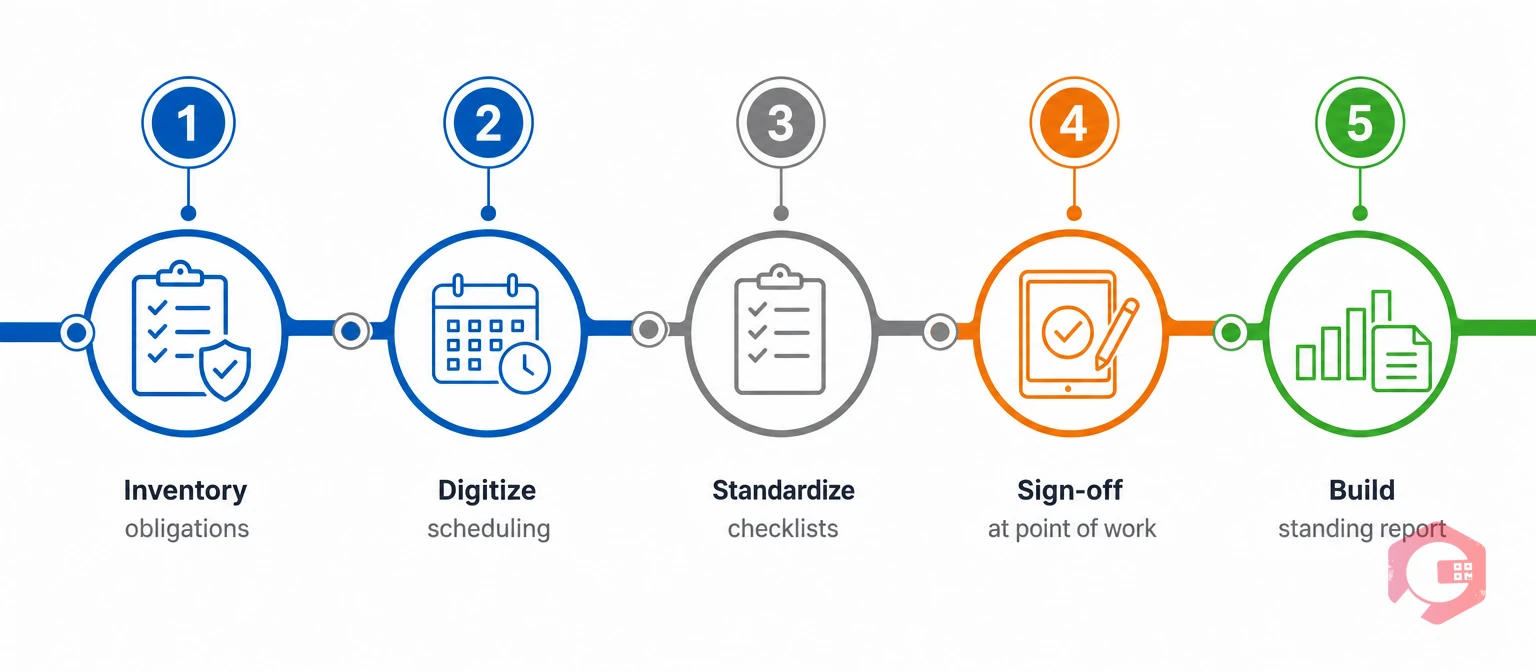
Moving from paper-based logs to a fully audit-ready system does not require ripping out existing processes. It requires digitizing them in the right order. Most plants can complete all five steps within a single quarter, working one system at a time instead of overhauling everything at once.
Most operations that successfully pass repeat audits treat this as an ongoing habit, not a pre-audit scramble. Audit-ready maintenance records end up as a natural byproduct of normal maintenance work, not a separate project.
The same handful of gaps show up across most power plant audit findings. Nearly all of them trace back to manual record-keeping rather than a lack of maintenance work.
A quick way to catch these gaps before an auditor does is running through a regulatory compliance checklist and a safety compliance checklist against current records. Most facilities find at least one of the five gaps above on the first pass. None of these five gaps require more maintenance work to fix. They only require better record-keeping at the point the work already happens.
Power plants typically need preventive maintenance completion records, inspection checklists, outage and downtime logs, parts traceability records, and permit-to-work sign-offs. Auditors expect each one linked to a specific asset and date, forming the full set of audit-ready maintenance records.
A CMMS timestamps and signs each maintenance action at the point of work. It also links every action to a specific asset automatically and can generate a compliance report in minutes instead of a manual search through paper files.
Yes. The same data that satisfies a regulator, including asset history, downtime causes, and parts traceability, also helps maintenance teams spot recurring failures and plan preventive work more accurately.
Yes. The mobile app includes a full offline mode with auto-sync. Technicians working near turbines or switchyards can log signed records that upload once a connection becomes available.
Most facilities run an internal review monthly or quarterly, matching the cadence of their highest-frequency regulatory obligation. This catches gaps in audit-ready maintenance records long before an external audit ever surfaces them.
Responsibility is usually shared. The maintenance team completes and logs the work. A compliance or reliability engineer then confirms the records meet regulatory requirements. A CMMS gives both groups the same source of truth instead of separate spreadsheets.
Turning scattered maintenance logs into defensible, audit-ready maintenance records does not have to wait for the next inspection. The work is already happening. The only thing missing is a system that proves it. Schedule a free demo to see how Cryotos keeps your power plant's maintenance history one search away from any auditor's question.


Cryotos AI predicts failures, automates work orders, and simplifies maintenance—before problems slow you down.