
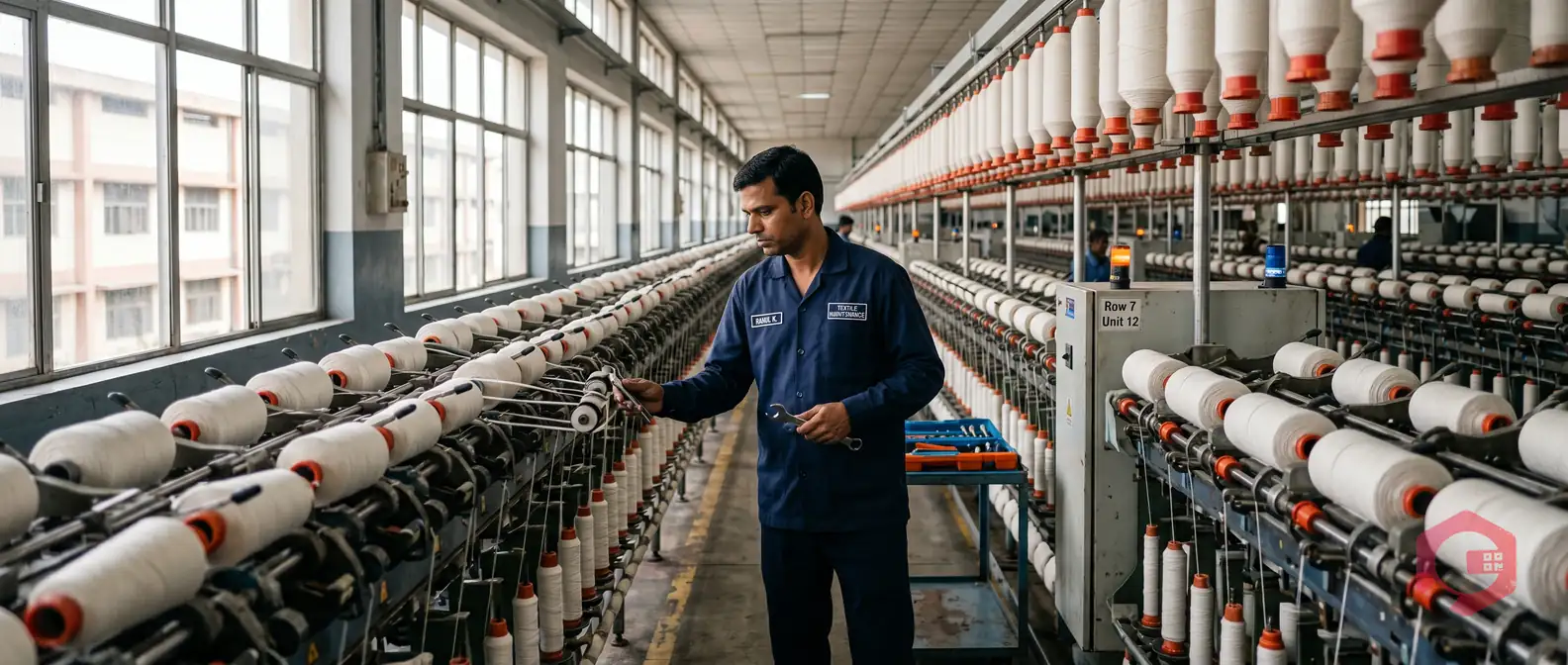
How to build a working preventive maintenance program for textile mills. PM schedules for looms, ring frames, dyeing units, and utilities, plus a clear case for moving from reactive to planned work.
A textile mill never gets a quiet shift. Looms run at 1,200 RPM. Ring frames spin 24 hours a day. Stenters run hot, and dyeing units cycle around the clock. Lint, dust, and humidity wear out bearings, belts, and electrical parts faster than in any other factory. A single seized spindle on a ring frame can shut a side. A jammed dobby on a loom kills shift output. So preventive maintenance is not a side project for textile plants. It is how the plant keeps shipping fabric.
A McKinsey study on operations found that manufacturers who move from reactive to preventive maintenance cut downtime by up to 30% and lower maintenance cost by 10% to 25%. Reliable Plant data shows reactive repairs cost three to nine times more than planned PM. The numbers are clear. The question is how to build the program.
This guide gives you a working PM framework for a textile mill: machine-specific schedules, a starter rollout plan, and the role of a CMMS like Cryotos in keeping everything on track.
Key Takeaways
- Reactive maintenance costs 3 to 9 times more per repair than planned PM, before counting lost orders.
- A healthy textile mill runs at 80% planned, 20% reactive work — most struggling mills are inverted.
- PM frequencies must match the machine: looms, ring frames, dyeing units, stenters, and utilities each need their own cycle.
- A CMMS lifts PM compliance by 20–30% in the first quarter by automating triggers and mobile checklists.
- Cryotos plants typically report 30% less downtime and 25% faster repairs within 12 months.
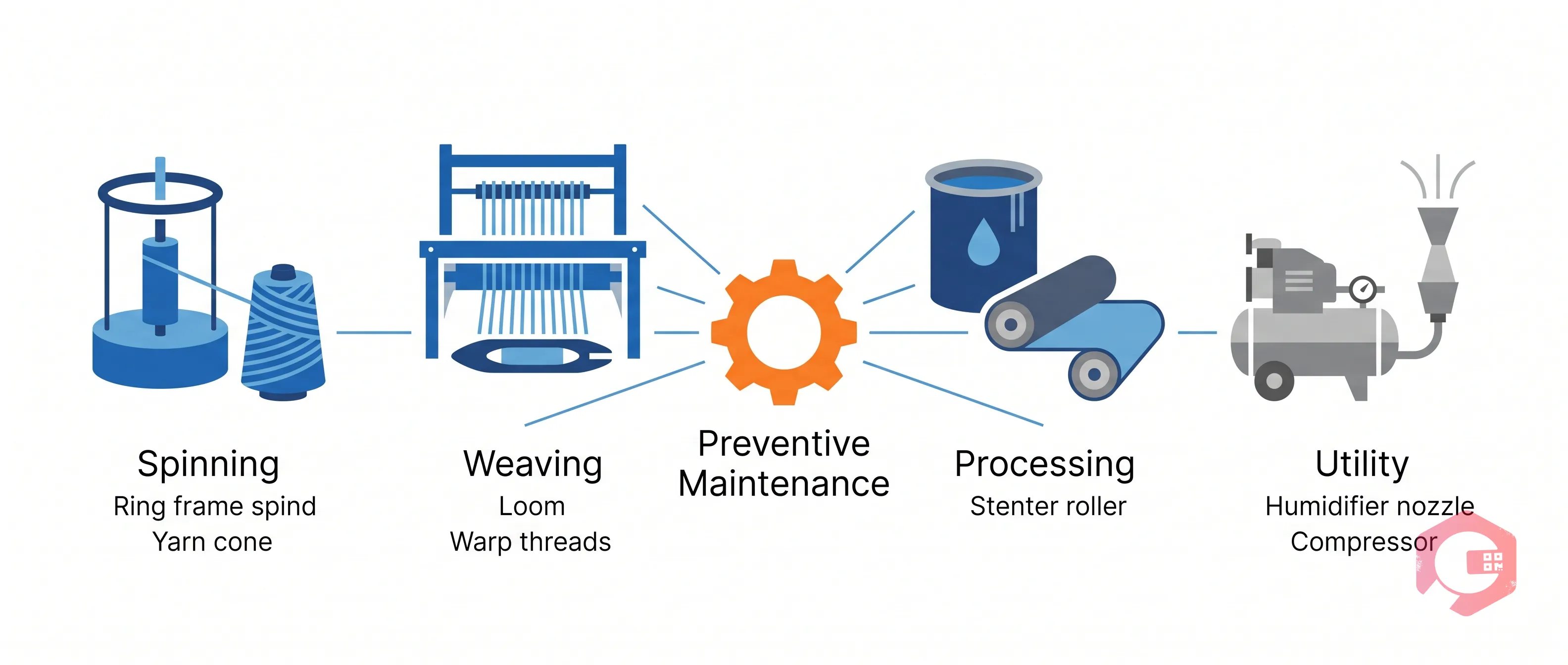
Preventive maintenance in textiles is planned servicing of every machine on a fixed cycle. The cycle can be calendar-based (every Sunday), runtime-based (every 1,000 spindle hours), or production-based (every 50,000 picks). The goal stays the same: catch wear before it breaks the machine, keep quality high, and protect the order book.
A real PM program covers four asset groups in any spinning, weaving, or processing mill:

When a mill skips PM, the cost shows up in five places, not just the breakdown bill.
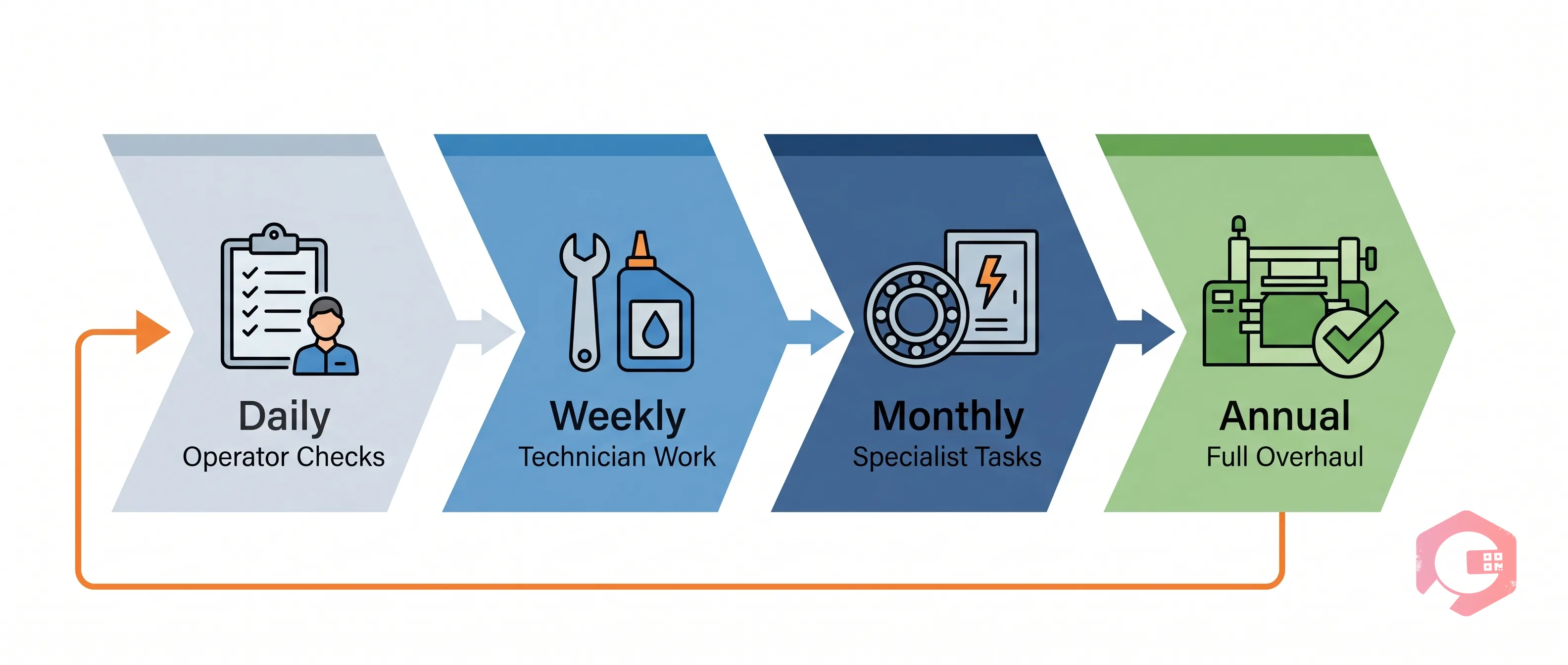
A strong PM program runs on three layers: daily operator checks, weekly technician work, and monthly or annual specialist tasks. The table below sums up a starting plan you can copy into your CMMS and tune over time.
| Machine | Daily | Weekly | Monthly / Quarterly | Annual |
|---|---|---|---|---|
| Ring frame | Spindle tape, traveller wear, lint clear, oil level | Drafting roller clean and lube, suction check, apron condition | Bearing re-grease, belt tension, suction blower check | Full overhaul, gearbox oil change, vibration analysis |
| Air-jet loom | Weft insertion, warp tension, reed clean, lint clear | Cam box and shedding lube, dobby/jacquard wear, heddle frame check | Timing check on all motions, electrical panel inspection, belt change | Full overhaul, statutory air receiver test, full sensor calibration |
| Dyeing machine | Pump seal leak check, sensor reading, agitator visual | Heat exchanger clean, valve stroke test, level sensor check | Pressure pump rebuild, gasket replacement, thermography on panel | Pressure vessel statutory test, full pump overhaul, refractory clean |
| Stenter | Burner flame check, chain alignment, exhaust fan check | Pin/clip chain clean, nozzle clean, chain tension and alignment | Burner nozzle change, fan bearing greasing, fuel line audit | Full chain overhaul, blower rebuild, statutory boiler test |
| Compressor | Pressure, oil level, belt tension, drain condensate | Air filter check, cooler clean, leak audit | Oil change, valve check, motor amp trend | Full overhaul, air receiver statutory test, pressure relief test |
| Humidification plant | Nozzle check, water flow, fan belt | Nozzle clean, filter clean, water quality test | Pump overhaul, fan bearing greasing, electrical panel check | Full system clean, anti-microbial dosing audit |
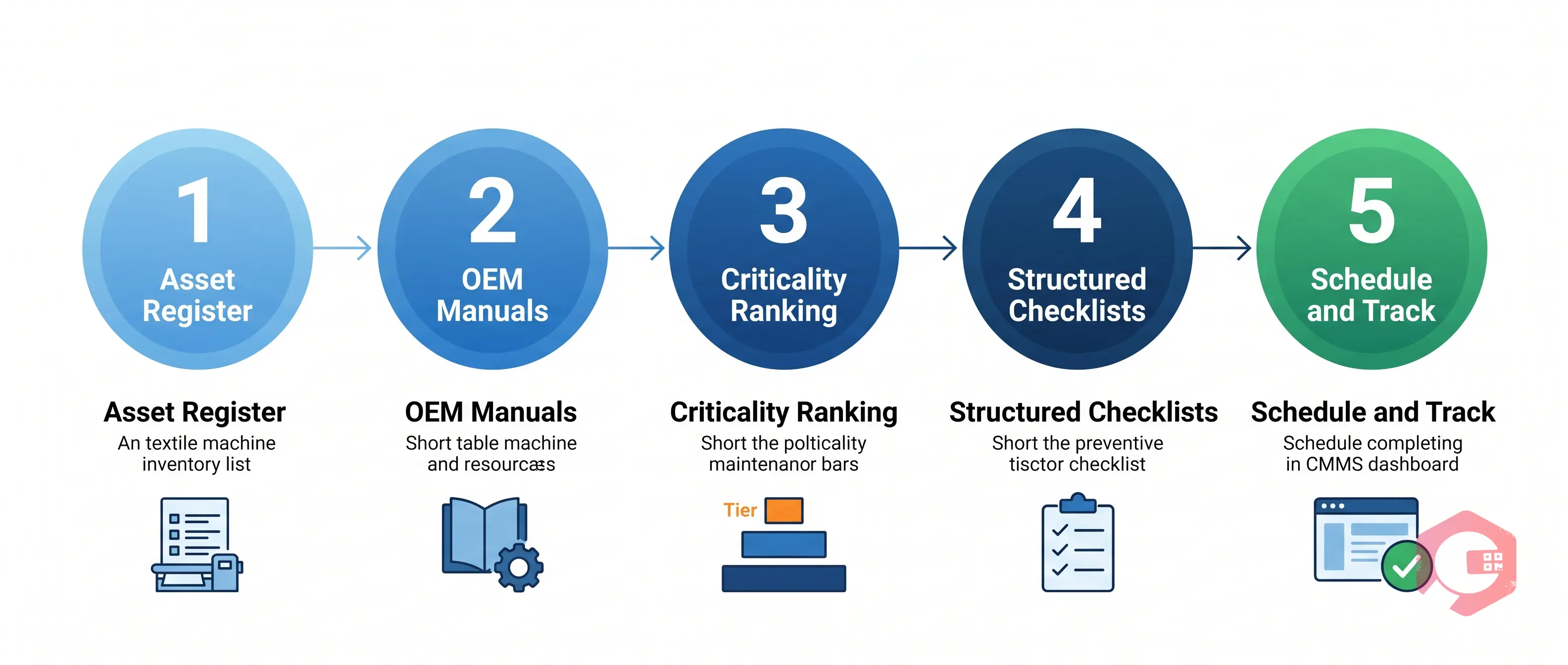
If your plant runs reactive today, you do not need a year-long project to fix it. Five steps over 90 days move most mills to a working PM rhythm.

A CMMS like Cryotos turns the PM plan into daily habit. Four features matter most for a textile mill.
Set rules once. The system opens work orders by calendar, runtime hours, or production count. A ring frame service every 1,000 spindle hours is a one-time setup. The CMMS does the rest.
Technicians scan a QR code on the loom, complete the checklist on a phone, and attach photos of worn parts. No paper forms. No transcription errors. The supervisor can see real-time progress from the office.
Plant managers see what was done on time, what is overdue, and what got skipped. They can filter by machine, technician, shift, or department. This single view often raises compliance from 60% to above 92% in a quarter.
Every PM, every breakdown, and every repair logs against the asset. Six months in, the data shows which looms keep failing, which bearings keep dying, and which spindles need a different lube cycle. The plant adjusts and the failure rate drops.
A 30,000-spindle ring spinning unit in Tirupur ran on Excel and paper logs in 2024. Unplanned breakdowns averaged 2.4 events per week. Power costs ran 7% above the OEM benchmark because of dirty motors and worn belts. The plant rolled out Cryotos in 12 weeks with focus on ring frames, draw frames, and the humidification plant.
After nine months: unplanned breakdowns dropped to 0.9 per week, PM compliance climbed from 54% to 95%, and power cost per kg of yarn fell by 4.8%. Spare-part stockouts ended after the third month thanks to the linked inventory module.
It is planned servicing of textile machines, including spinning frames, looms, dyeing units, stenters, and utility equipment, on a fixed cycle. Tasks cover lubrication, cleaning, inspection, adjustment, and planned part replacement, all done before failure.
Most machines need daily operator checks, weekly technician inspections, monthly bearing and electrical work, and a full annual overhaul. High-speed machines like air-jet looms and ring frames need tighter cycles than slower auxiliary equipment.
Daily warp tension and weft insertion checks, weekly lubrication of cam boxes and shedding mechanisms, monthly timing verification of all motions, and routine heddle frame and reed inspection. These five tasks alone catch the majority of loom failures.
Preventive maintenance follows a schedule. Predictive maintenance follows live data from vibration, temperature, and current sensors. Most mills should master PM first, then add predictive triggers on the most critical assets like main blowers, compressors, and high-speed looms. The ISO 55000 standard frames both approaches inside a single asset-management system.
Yes. Most mills recover the CMMS cost in 6 to 9 months through downtime savings, fewer overtime hours, and lower spare-part stockouts. Larger mills running multiple shifts see payback even faster.
Preventive maintenance is the highest-ROI move a textile mill can make. It cuts breakdowns, lifts quality, lowers power bills, and gives the maintenance team a steady plan instead of daily firefighting. Build the asset register. Set the schedules. Use a CMMS to keep them alive.
For a deeper view, read our guides on asset management for textile machinery and CMMS software for textile manufacturing.
Want to see what a textile PM program looks like inside Cryotos? Book a free 30-minute demo and we will set up sample PMs for your top 5 machines on the call.

Cryotos AI predicts failures, automates work orders, and simplifies maintenance—before problems slow you down.



