

Maintenance overtime is one of the clearest signs that an operation is running reactively rather than proactively. When technicians regularly push past the end of their shifts, the instinct is to hire more people — but in most cases, the team isn't short on headcount. It's short on planning. The fix isn't to ask your team to work faster — it's to eliminate the planning failures, inventory gaps, and reactive defaults that create overtime pressure in the first place. This guide walks through the root causes of maintenance overtime and six proven strategies to reduce it, including how modern CMMS tools give maintenance managers the data and automation needed to reclaim planned working hours.
Key Takeaways
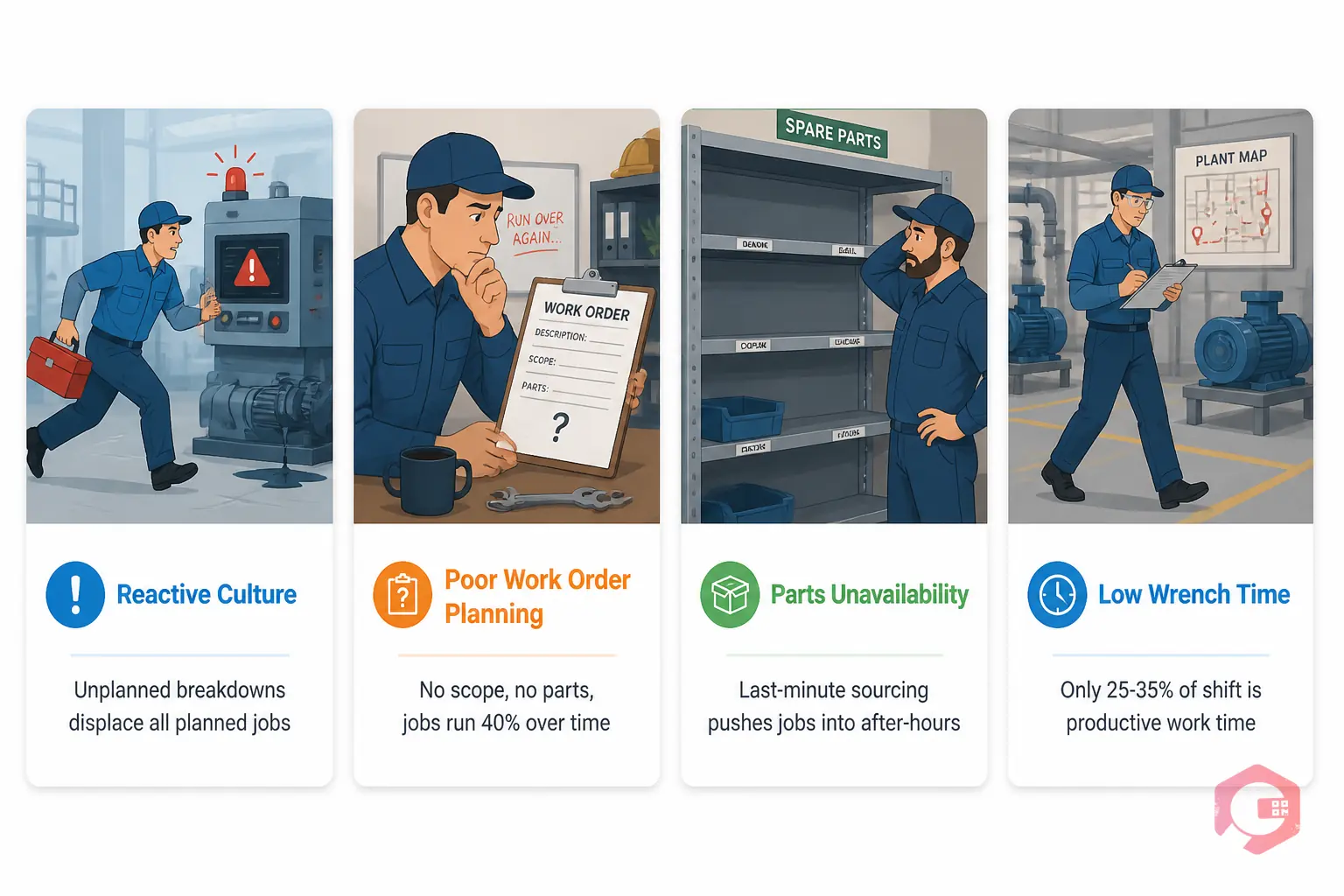
Overtime in maintenance doesn't happen by accident. It's the downstream result of structural problems that build quietly until your technicians are working late every week and your payroll is bleeding. Understanding where overtime actually comes from is the first step to stopping it.
When your team spends most of its time responding to unexpected breakdowns, planning goes out the window. Every emergency call-out is unscheduled work that displaces planned jobs — pushing everything else into after-hours territory. According to the Society for Maintenance and Reliability Professionals, maintenance operations dominated by reactive work routinely see overtime costs exceed 20% of total maintenance labour budgets.
The real problem is compounding: one reactive job this morning means three planned PMs get deferred to tonight. Tomorrow, those deferred jobs become tomorrow's emergencies. The cycle repeats until overtime becomes the norm rather than the exception. Organisations in this pattern often mistake the symptom — technicians working long hours — for the cause, and respond by authorising more overtime rather than addressing the reactive culture driving it.
Jobs that arrive without clear scopes, estimated durations, or pre-kitted parts force technicians to improvise on-site. A job scoped at two hours stretches to four when parts need sourcing or instructions need clarification. Multiply that across a week and the accumulated waste lands directly in overtime.
Research from Plant Engineering consistently shows that planned and scheduled maintenance work is completed 20–25% faster than unplanned reactive work — not because technicians work harder, but because they spend less time waiting, searching, and problem-solving on the fly.
A technician who arrives at an asset with the wrong part — or no part at all — doesn't just lose that job's time. They lose travel time, sourcing time, and often can't reschedule until end of day. Inventory gaps are one of the most underestimated drivers of maintenance overtime, especially in facilities with a large asset count.
Most maintenance managers underestimate how little of the working day is actually spent on productive wrench-turning activity. Industry benchmarks from Reliable Plant put average wrench time at 25–35% of a technician's shift — the rest goes to travel, waiting, administrative tasks, and parts retrieval. Without visibility into this split, you can't tell whether overtime is driven by genuine workload or hidden inefficiency.
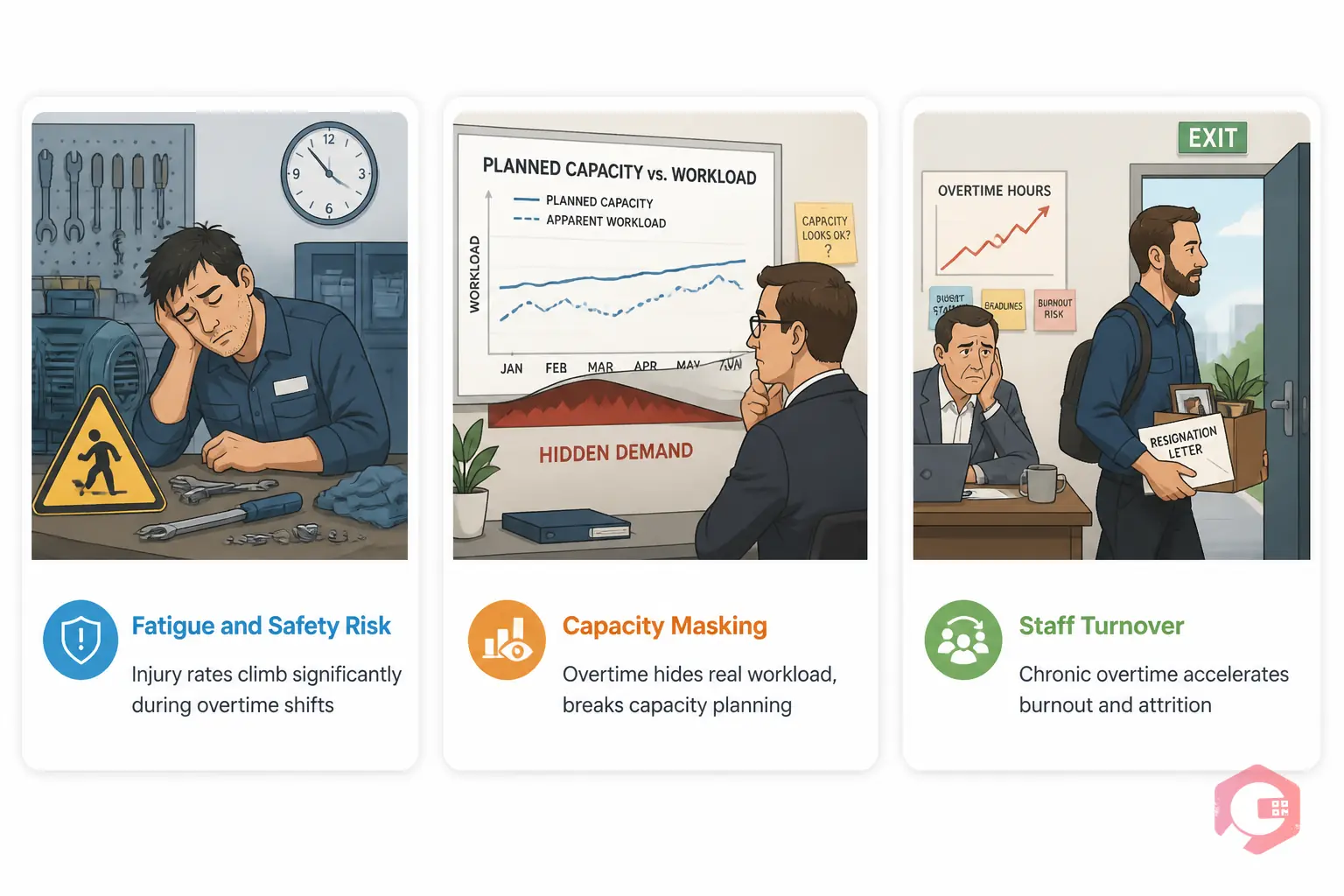
Overtime costs show up in the payroll line — but that's only part of the damage. When technicians consistently work beyond their scheduled hours, the wider operational impact compounds fast.
Fatigue is the most direct consequence. Tired technicians make more errors, miss checklist steps, and are more likely to be involved in safety incidents. OSHA research on extended work hours confirms that injury rates climb significantly during overtime periods, particularly in physically demanding roles like equipment maintenance and repair.
Beyond safety, chronic overtime signals a system under strain. It masks the real demand picture, makes capacity planning inaccurate, accelerates staff turnover, and — critically — prevents the long-term improvement work (audits, RCA, PM optimisation) that would reduce emergency workload in the first place.
Understanding planned versus unplanned downtime is essential for separating what's controllable from what's genuinely urgent — and it's the foundation of any serious overtime reduction effort.
Use the wrench time calculator to establish your team's current productive time baseline — it's the starting point for any honest conversation about overtime root causes.
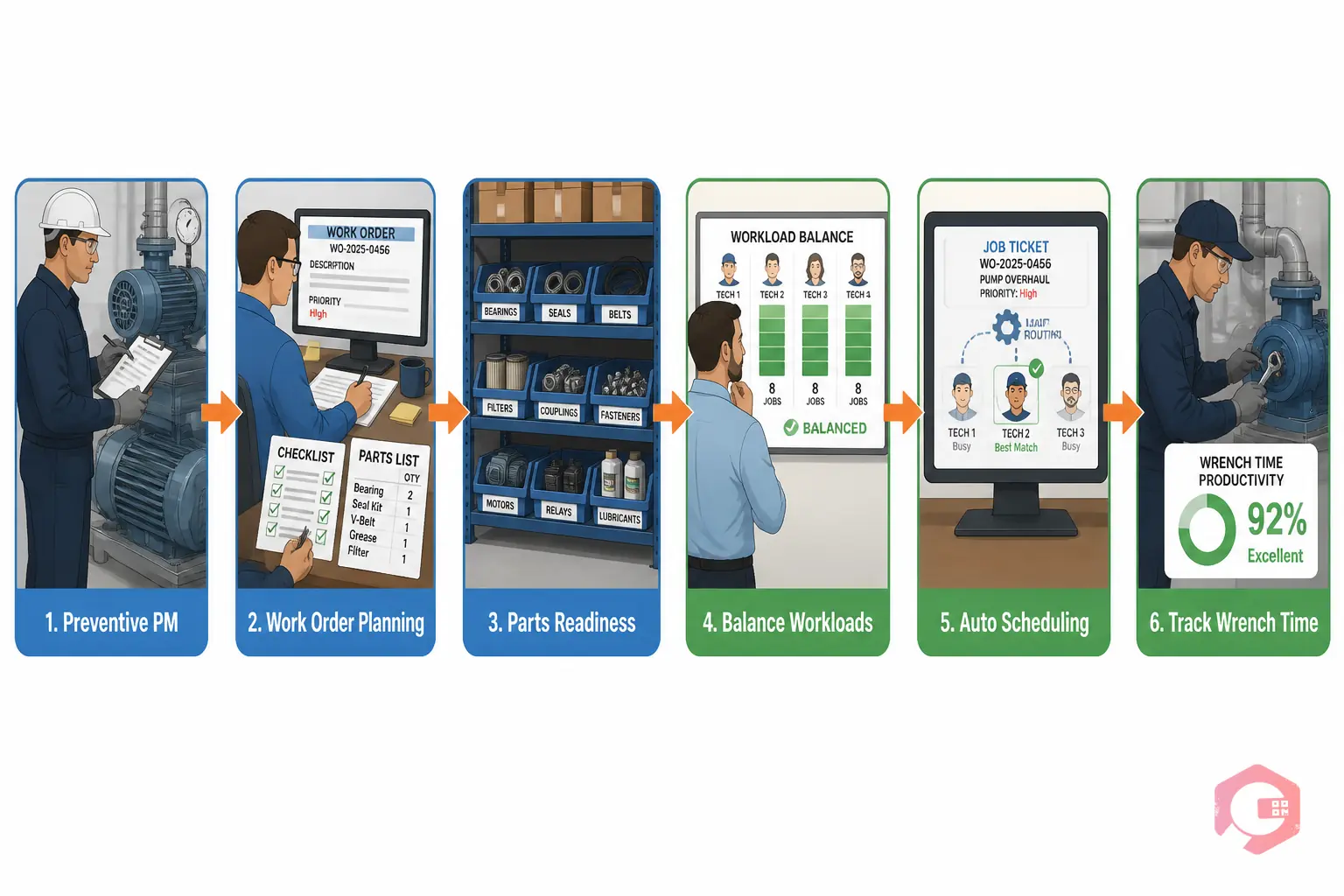
These strategies work in combination. Start with the first two — they address the highest-leverage root causes — and build from there as your planning maturity grows.
Every hour of preventive maintenance eliminates multiple hours of reactive emergency response. When you inspect and service assets on a defined schedule, you catch failure precursors before they become breakdowns — and you do it during planned hours, not at 9 PM on a Friday.
The goal isn't 100% preventive coverage overnight. Start by identifying your highest-criticality assets — the ones whose failures consistently trigger overtime call-outs — and build structured PM schedules for those first. A well-implemented preventive maintenance software system allows you to schedule PMs based on calendar intervals, runtime hours, or sensor readings, so nothing is missed and technicians arrive at planned jobs on time.
The difference between a planned job and an unplanned job is preparation. A properly planned work order includes the asset location, task checklist, required tools, estimated duration, pre-kitted parts, and a safety procedure reference. When technicians have all of that before they start, jobs complete in the estimated time — not 40% over it.
Structure your work order management process so that nothing enters the schedule without a scope. Even for reactive jobs, a quick 5-minute scoping step before dispatch reduces on-site delays significantly. Use maintenance checklists attached to every work order type so technicians always know exactly what steps to follow — no guesswork, no rework.
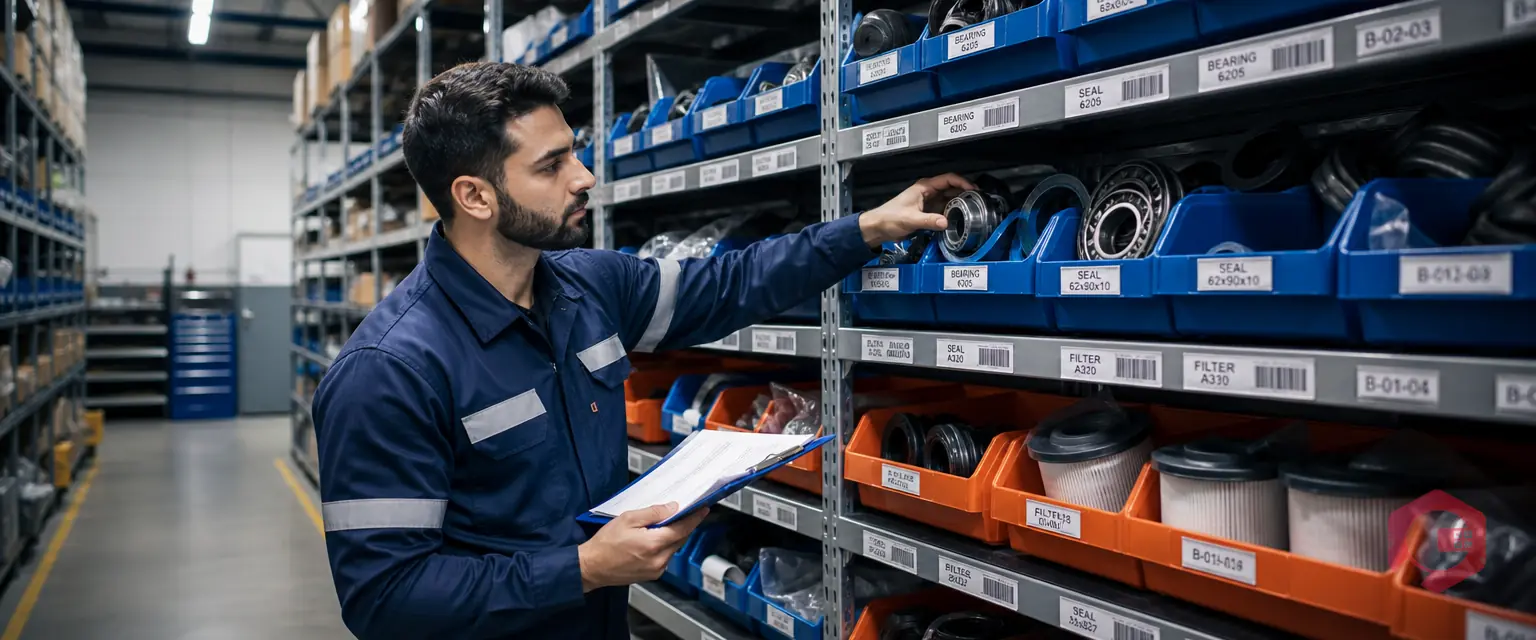
Parts delays kill job completion times. The fix isn't to overstock everything — it's to stock the right things. Analyse your work order history to identify which parts appear most frequently across your asset base, then set minimum stock thresholds for those items so your team is never caught waiting for a critical component.
When a technician scans an asset's QR code to create a work order, your system should surface the parts required and confirm they're available in stock — before the job is dispatched. That single step eliminates one of the most common causes of on-site delays and after-hours sourcing runs that push jobs into overtime. For larger facilities, pairing this with a structured put-away and picking process ensures parts are always where they're supposed to be, not discovered missing at the moment they're needed.
Overtime is rarely distributed evenly across a maintenance team. Usually, a small number of senior or specialised technicians absorb a disproportionate share of emergency call-outs because they're the most capable — or because workload assignment is informal and defaults to whoever's available. This creates a burnout-and-attrition cycle that makes overtime worse over time.
Use your maintenance data to make workload visible. Track jobs completed, hours logged, reactive vs planned ratios, and backlog volume per technician. When you can see the distribution clearly, you can rebalance assignments, prioritise cross-training, and make a data-driven case for additional headcount when the numbers genuinely justify it.
Manual scheduling is slow, error-prone, and doesn't adapt well to change. When a breakdown happens at 2 PM and three PMs are already running, a manual scheduler has to make split-second decisions about priority and resource reallocation without full visibility. That often means technicians stay late to finish what gets deprioritised.
Automated workflow automation handles escalation logic for you: if a high-priority work order isn't acknowledged within a set window, it automatically escalates to the next available technician or supervisor. Jobs get assigned faster, coverage gaps are caught before they become emergencies, and after-hours escalations drop significantly.
If your technicians are consistently working overtime but your asset count and workload volume haven't changed, the most likely culprit is wasted time during the standard shift — not genuine overload. Wrench time tracking helps you see exactly where productive time is being lost.
Common wrench time killers include: waiting for permits or access approvals, hunting for tools and equipment, travelling between distant assets due to poor route planning, and manual administrative tasks like filling in paper job cards. Eliminating these through digital processes and smarter scheduling often recovers enough productive time to bring overtime back to near-zero without adding headcount. The goal is to move your wrench time percentage from the 25–35% average up toward the 45–55% range that high-performing maintenance teams achieve — an improvement that can free up several hours per technician per week.
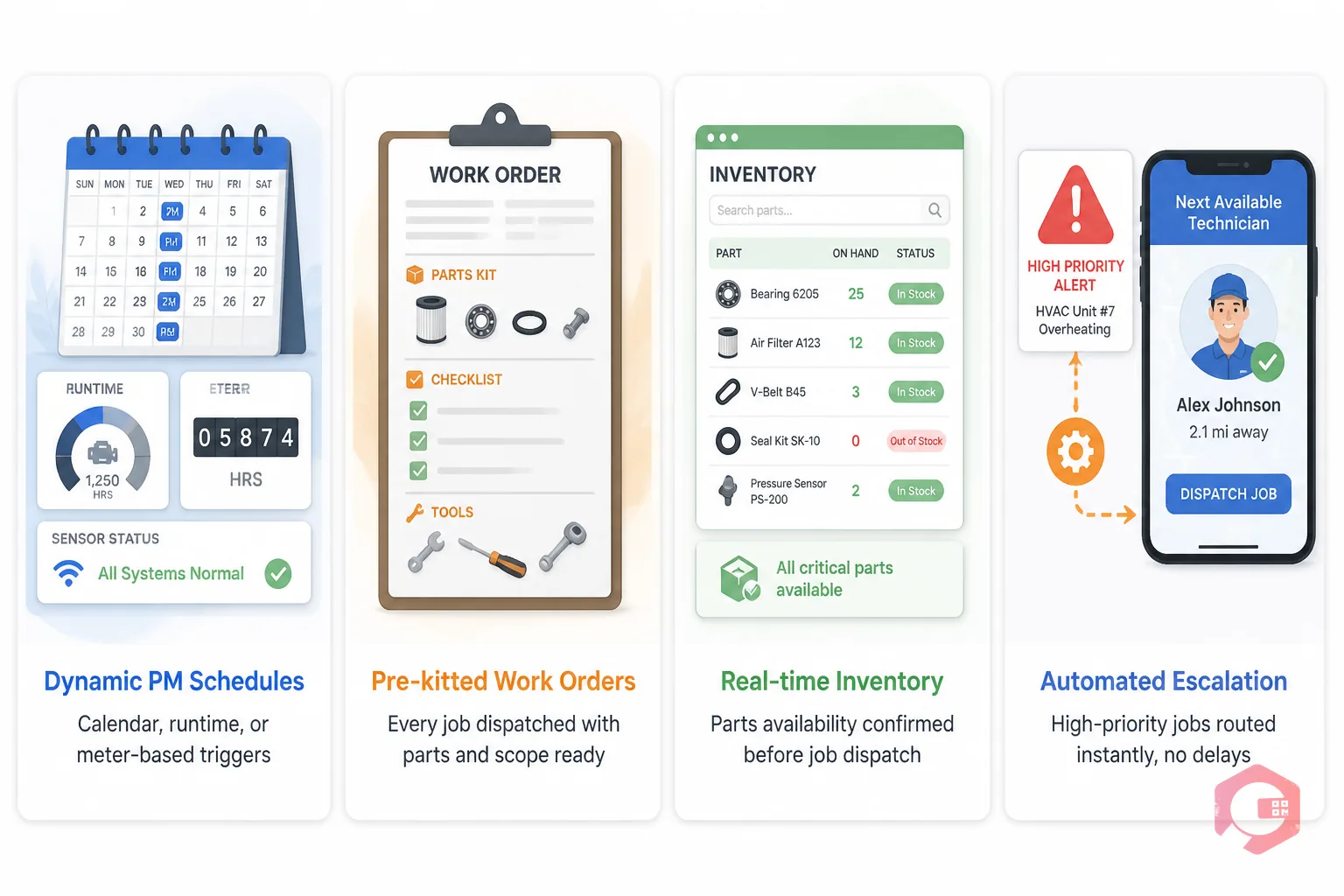
A CMMS doesn't eliminate overtime on its own — but it removes the information gaps, manual processes, and reactive defaults that cause it. Cryotos is built specifically to give maintenance teams the operational visibility and automation they need to run on planned time, not crisis time.
With Cryotos, maintenance teams can build dynamic PM schedules (calendar, runtime, or meter-based), plan and pre-kit work orders before dispatch, track real-time inventory availability, and automate escalation workflows — all from a single platform. The BI dashboard surfaces reactive vs planned ratios, technician utilisation, and backlog trends so managers can spot overtime pressure building before it shows up in payroll. Mobile offline access means technicians can log job updates and complete checklists in real time — eliminating the end-of-shift admin pile that often causes unofficial overtime.
Teams using Cryotos report up to a 30% reduction in unplanned downtime and 25% faster repair times — two of the core metrics that directly determine whether your maintenance team runs on scheduled hours or overtime.
Stop letting overtime erode your maintenance budget and your team's morale. Sustainable maintenance performance requires sustainable working hours — and that starts with a plan. Schedule a free demo to see how Cryotos gives your team the tools to complete maintenance on time, every time.
The most common cause is a high proportion of reactive, unplanned maintenance work. When breakdowns dominate the schedule, planned jobs get displaced and must be completed after hours. Poor work order planning — jobs arriving without scopes, parts, or time estimates — compounds the problem by making every task take longer than it should.
Preventive maintenance shifts work from reactive emergencies to planned, scheduled jobs. Because PM tasks are booked in advance with the right tools and parts ready, they complete within estimated timeframes during normal working hours. Every breakdown avoided through proactive servicing is an overtime call-out that never happens.
The most useful KPIs are: wrench time percentage (target 45–55%), planned-to-reactive maintenance ratio (target 80%+ planned), schedule compliance rate, work order backlog volume, and mean time to repair (MTTR). These metrics together reveal whether overtime is caused by genuine workload or operational inefficiency.
Most maintenance teams see measurable improvements in schedule adherence and reactive job frequency within 60–90 days of full CMMS implementation. Overtime reduction typically becomes visible after the first full PM cycle runs on schedule — usually within the first quarter — as emergency call-outs from preventable failures start to drop.


Cryotos AI predicts failures, automates work orders, and simplifies maintenance—before problems slow you down.



