
Reducing equipment life-cycle cost starts long before a machine breaks down. It starts at the design and buying stage, through a practice called Early Equipment Management. Equipment life-cycle cost is the total spend on an asset from purchase through daily use, repairs, and disposal. Most of that cost is locked in by early design choices. So the cheapest place to cut it is before the equipment ever runs.
Early Equipment Management puts reliability and maintenance know-how into those early choices. The result is an asset that is built to cost less across its whole life. This guide shows what drives life-cycle cost and how a Computerized Maintenance Management System supports the approach.
Key Takeaways
Equipment life-cycle cost is the sum of every cost an asset creates. It runs from the day you specify it to the day you retire it. Purchase price is only the visible tip. The larger share hides in years of energy use, spare parts, labor, and lost output.
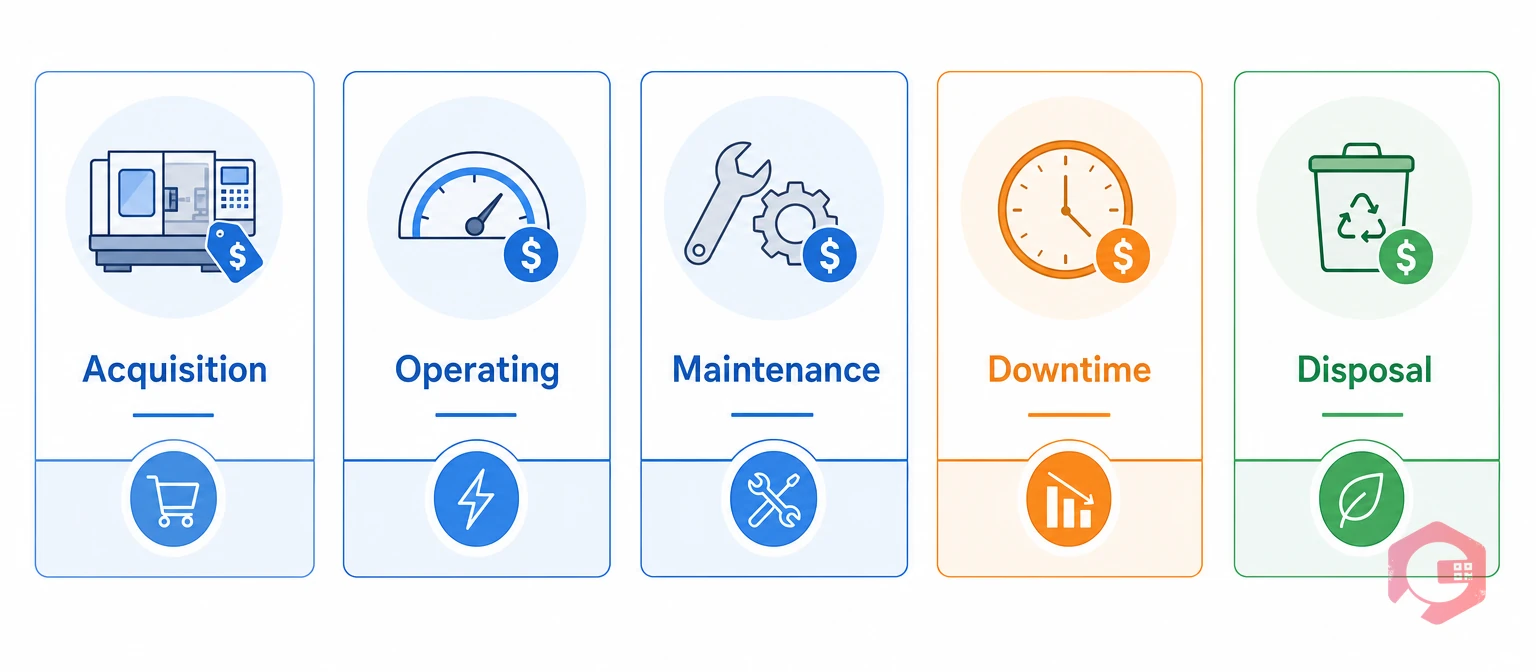
Life-cycle cost is the total of five cost groups that build up across an asset's working life. Each group shows a place where savings are possible.
For most industrial assets, acquisition is only 10–20% of the total. Operating and maintenance make up the rest. This idea sits at the heart of whole-life cost thinking. Chasing a lower sticker price often raises the true cost. Tracking these groups per asset — the goal of asset lifecycle management — turns life-cycle cost into a number you can act on.
Early Equipment Management is the practice of building reliability and easy repair into equipment before it is installed. It is one of the eight pillars of TPM. It treats the design and buying phase as the point of most control over lifetime cost.
The core idea is maintenance prevention. Maintenance prevention is a design method that removes failure modes before equipment reaches the plant floor. Instead of accepting whatever an OEM ships and repairing it forever, teams feed real failure and cost data back to designers. The next machine is then easier to run and cheaper to maintain.
This mindset fits the ISO 55000 standard. That standard frames each asset choice around whole-life value, not upfront price. Operations that adopt EEM stop treating reliability as a repair problem. They start treating it as a design rule.
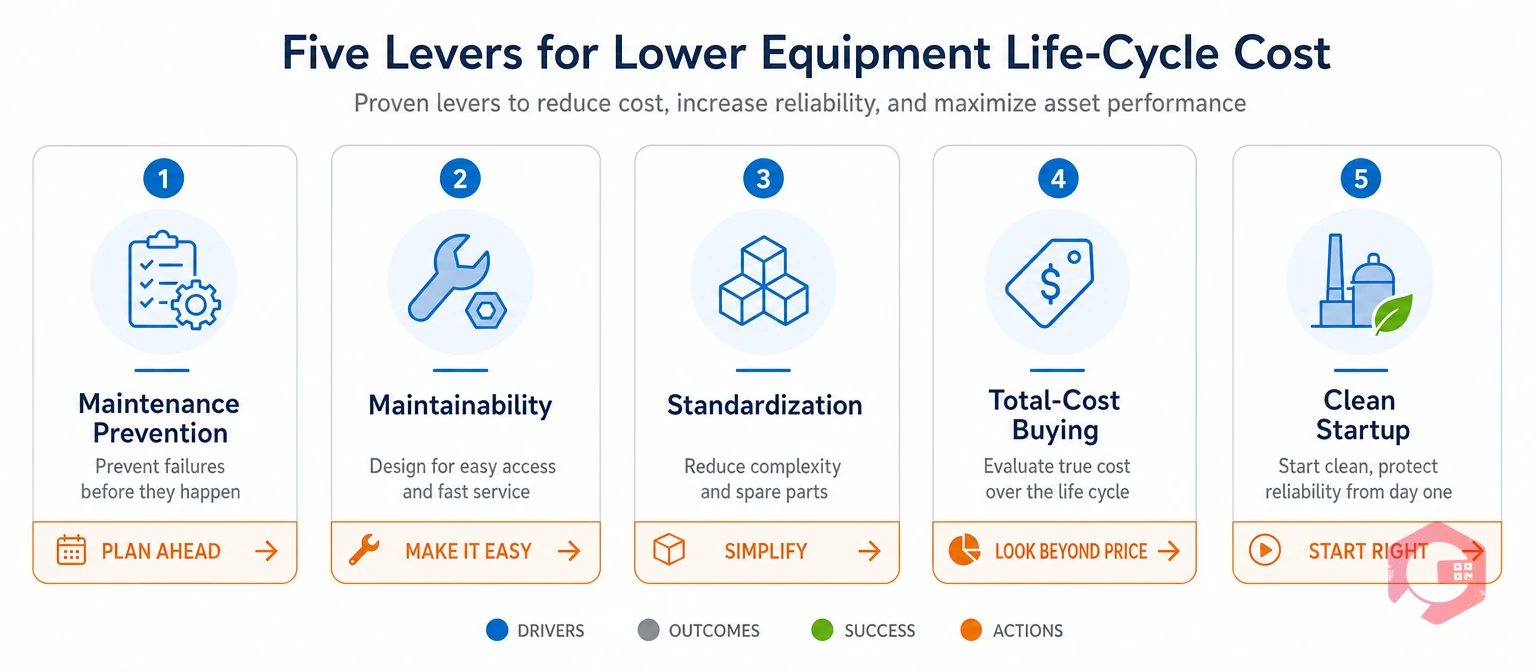
Early Equipment Management reduces life-cycle cost by attacking it early. Design and buying are the only stages where cost is cheap to change. Once equipment is installed, teams can manage cost — but they can no longer design it out.
The Five-Lever LCC Reduction Framework:
Each lever adds up. A standard, easy-to-service design that launches cleanly avoids the slow bleed of unplanned downtime. That bleed quietly drives most life-cycle cost. To size it up, run the numbers with a maintenance cost calculator before your next purchase.
Purchase price and life-cycle cost measure two very different things. Mixing them up is the most common buying mistake. Purchase price is a one-time number. Life-cycle cost is what the asset really costs you over years of service.
| Factor | Purchase Price | Life-Cycle Cost |
|---|---|---|
| Time Horizon | One-time, at purchase | Full service life, 10+ years |
| Share of Total Cost | Roughly 10–20% | 100% (includes purchase) |
| Main Drivers | Sticker price, install | Energy, maintenance, downtime |
| Who It Favors | Lowest bidder | Most reliable asset |
| Best Decision Basis | Short-term budget | Total value over time |
A cheaper machine that fails often and burns more energy usually costs more over its life. A pricier, reliable one often wins on the whole-life number. Early Equipment Management makes that trade-off clear at the point of purchase. The whole-life cost then drives the decision, not the invoice.
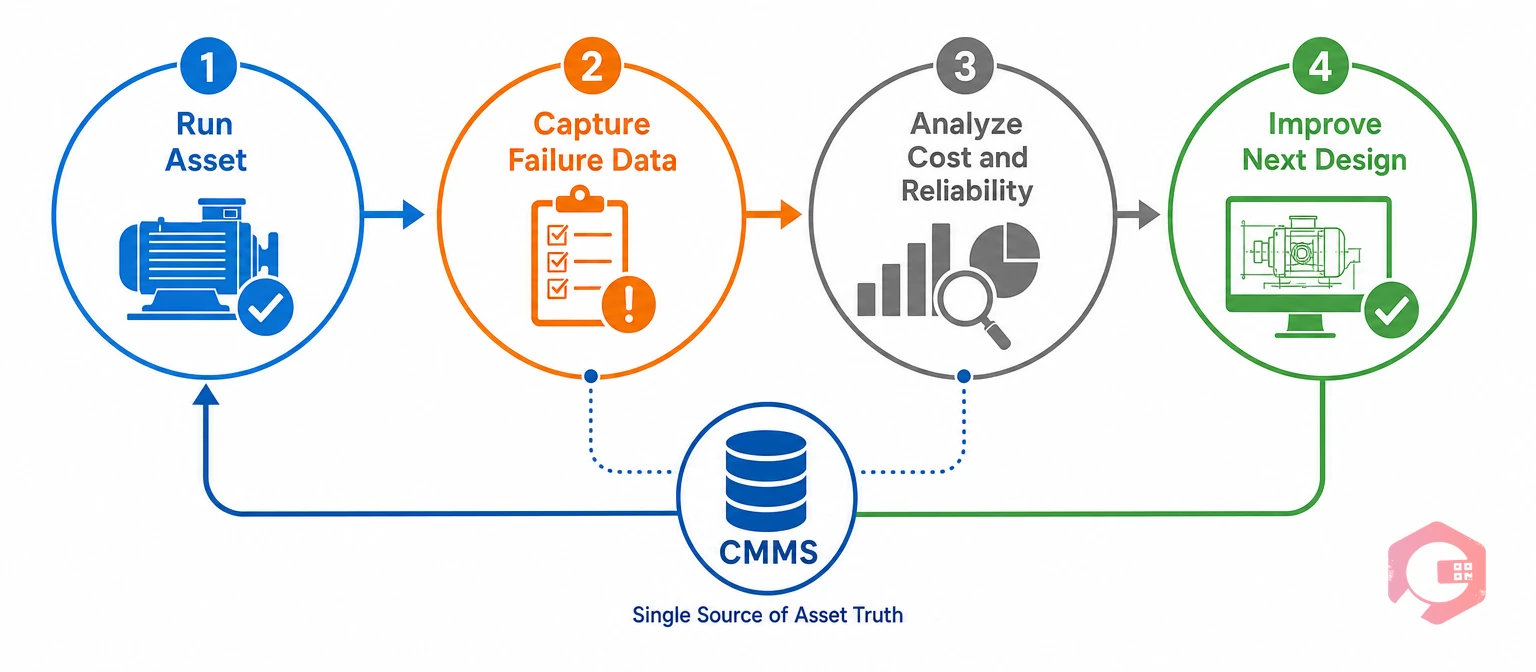
A CMMS supports Early Equipment Management by capturing the data that design choices depend on. Without that data loop, "design for reliability" is just a slogan. With it, every new asset is specified from real evidence.
Maintenance teams using Cryotos have reported up to 30% reduction in unplanned downtime and 25% faster repair turnaround. That is exactly the history that tells designers which failure modes to remove next time.
The pattern that works for most facilities is simple. Run the asset. Capture the truth about how it fails and what it costs. Then spend that knowledge on the next design. A CMMS is what makes the loop real instead of anecdotal.
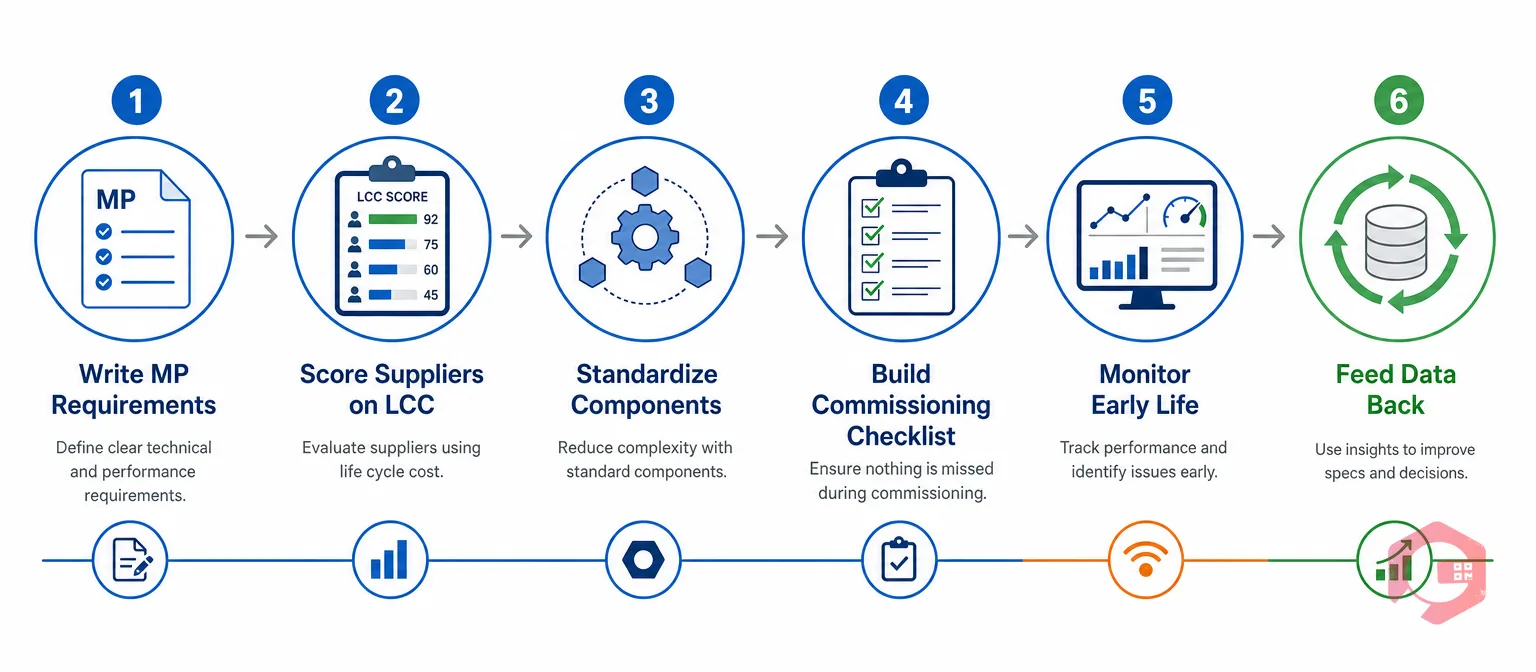
Implementing Early Equipment Management does not need a full TPM rollout on day one. Teams can start with a few clear steps. Each one shifts decisions upstream toward design and buying.
Start with one asset class. Prove the savings. Then extend the same discipline across the plant. Small, data-driven steps add up to a much lower life-cycle cost over time.
Life-cycle cost and total cost of ownership are closely related and often used to mean the same thing. Both count acquisition, operating, maintenance, and disposal costs across an asset's life. Total cost of ownership sometimes adds indirect costs like training and admin. The intent is the same: judge an asset by its whole-life cost, not its price.
Design and buying decisions usually commit 80–90% of an asset's total life-cycle cost. They do this even though they take up only a small slice of the calendar. Choices about parts, access, and reliability set years of running and maintenance spend. That is why Early Equipment Management focuses on the early phase.
No, you can apply Early Equipment Management without a complete TPM program. Start by feeding your top failure modes into equipment specs. Then score suppliers on life-cycle cost. These steps deliver value on their own and build a base for wider TPM adoption later.
A CMMS reduces life-cycle cost by turning maintenance work into usable data. It records failure history, tracks cost per asset, and reports reliability metrics. Teams can then design out repeat problems and buy more reliable equipment next time. The result is less downtime, smaller spare stock, and better buying decisions.
Lower life-cycle costs come from better decisions made earlier, and those decisions need reliable data. Schedule a free demo to see how Cryotos captures the failure and cost history that makes Early Equipment Management work across your asset base.

Cryotos AI predicts failures, automates work orders, and simplifies maintenance—before problems slow you down.



