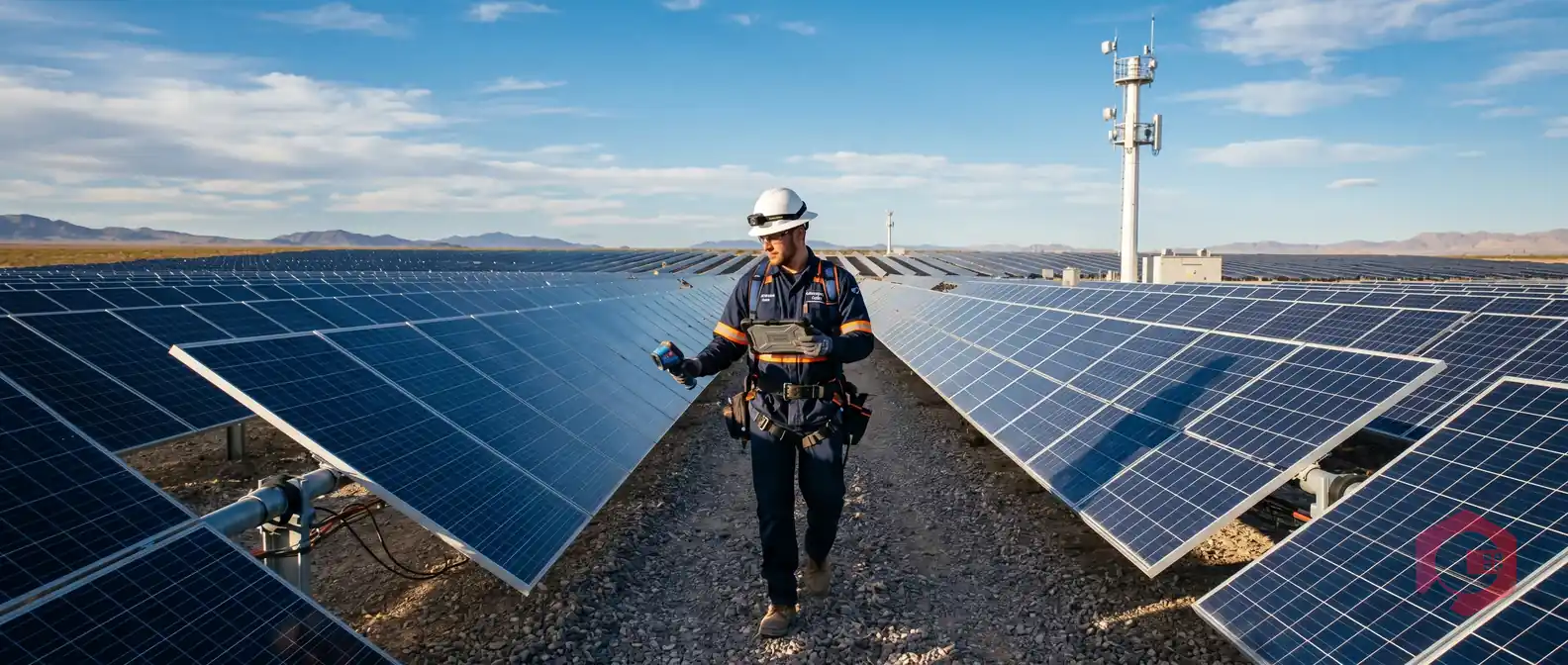
Solar energy is one of the fastest-growing power sources globally, with installed capacity exceeding 1.6 terawatts worldwide. As solar farms scale in size and complexity, operations and maintenance (O&M) teams face mounting pressure to maximise energy yield while keeping costs in check. Unplanned equipment failures-a tripped inverter, a failing tracker motor, or a degraded string of panels-can cost operators thousands of dollars per day in lost generation revenue.
Traditional reactive and time-based maintenance strategies are no longer sufficient for utility-scale solar plants. The answer lies in predictive maintenance powered by real-time data-and the cornerstone of that data infrastructure is SCADA, or Supervisory Control and Data Acquisition. By integrating SCADA systems with modern maintenance management platforms, solar operators can shift from guesswork to data-driven decisions, catching failures before they happen and acting with precision.
This guide explores how SCADA integration for solar predictive maintenance works in practice, what data it captures, how it connects with your CMMS, and the tangible benefits plant managers can expect. Whether you oversee a 5 MW rooftop array or a 500 MW utility-scale facility, the principles here apply directly to your O&M strategy.
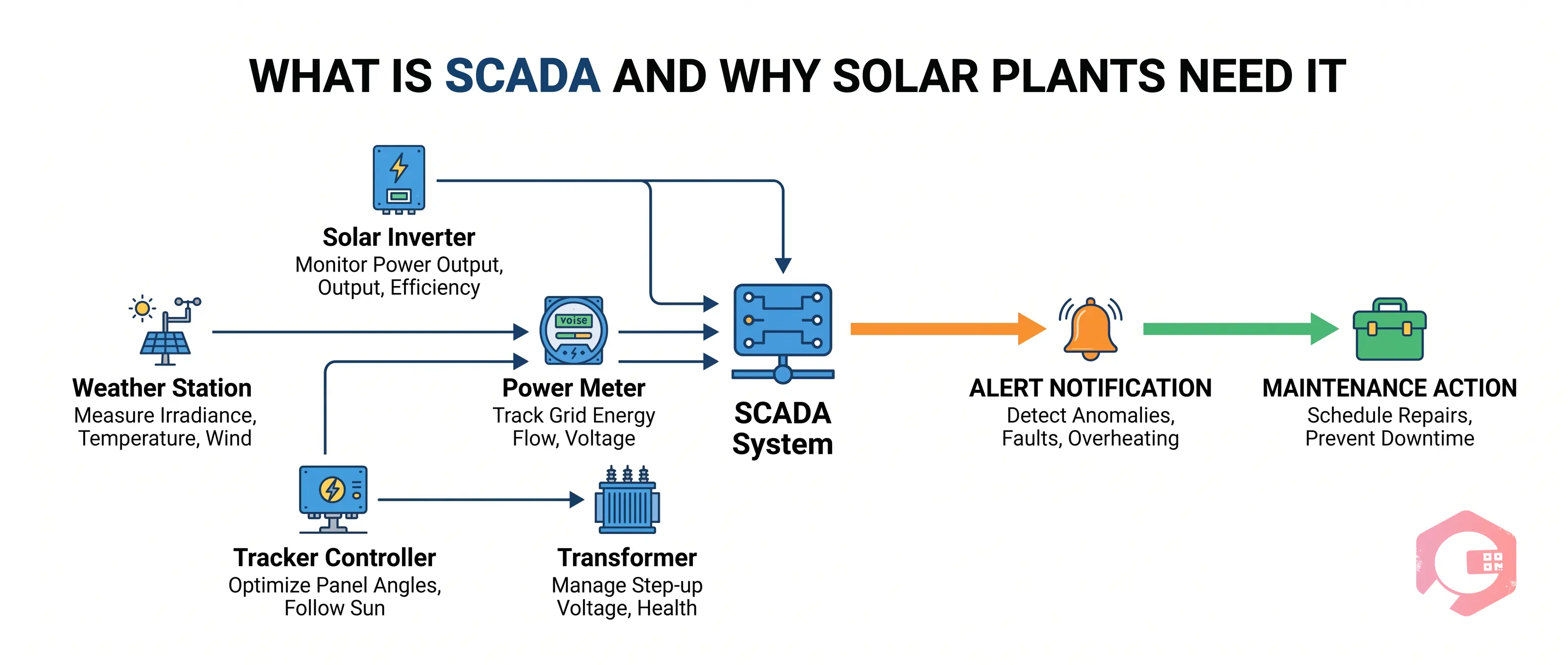
SCADA stands for Supervisory Control and Data Acquisition. It is an industrial control system architecture that collects real-time data from sensors, meters, and field devices distributed across a plant, transmits that data to a central interface, and enables operators to monitor and control operations remotely. In a solar context, SCADA aggregates information from inverters, weather stations, power meters, tracker controllers, and transformer units-giving the operations team a single pane of glass over the entire facility.
Without SCADA, solar O&M teams rely on periodic manual inspections or inverter-level alarms alone, both of which are reactive by nature. A string that has been underperforming for two weeks may not be discovered until the monthly energy audit. With SCADA, that same string anomaly is flagged within minutes of the deviation appearing, enabling rapid dispatch before the issue cascades into a larger fault.
Modern solar SCADA platforms also integrate with meteorological data-irradiance, wind speed, and ambient temperature-allowing performance ratio (PR) calculations to happen in near real-time. This normalisation is essential for distinguishing between a genuine equipment fault and a temporary weather-related dip in output, ensuring maintenance teams act only when a real intervention is needed.
Predictive maintenance uses historical data, trend analysis, and machine learning algorithms to predict when a component is likely to fail-before it actually does. SCADA is the data pipeline that makes this possible in solar plants. By continuously streaming telemetry from every monitored asset, SCADA provides the high-frequency, time-stamped data that predictive algorithms need to learn normal operating patterns and flag deviations with precision.
Consider an inverter. A healthy unit operating at 1,000 W/m² irradiance produces a predictable output voltage and current. If SCADA begins recording subtle shifts-a 2% drop in conversion efficiency over two weeks, or elevated operating temperatures at night-these are early warning signatures of cooling fan degradation or capacitor wear. A predictive model trained on this data will generate a maintenance alert days before the inverter fails completely, avoiding an unplanned outage entirely.
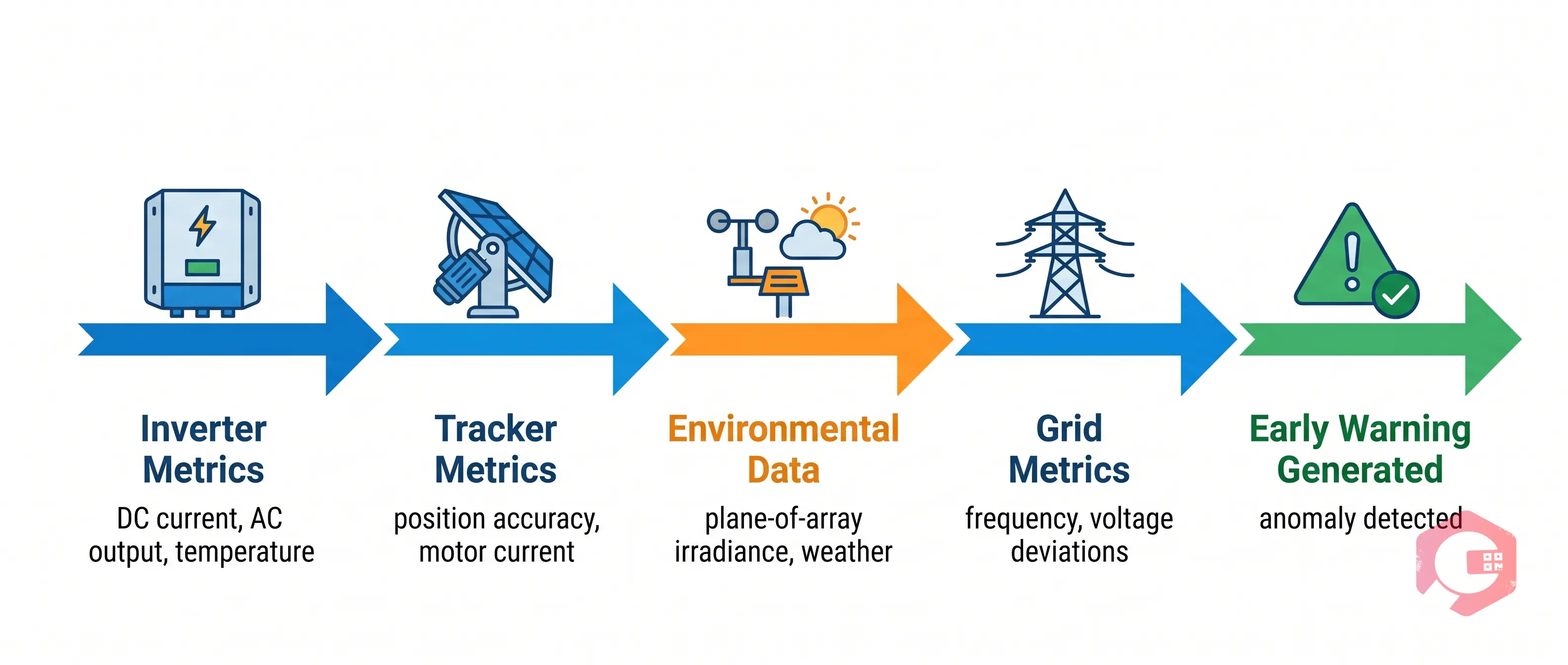
The predictive power of your maintenance programme is only as good as the data flowing through your SCADA system. Solar plants generate an enormous volume of operational data from diverse asset classes. Understanding which data points matter most allows maintenance teams to configure SCADA for maximum early-warning sensitivity across every major failure mode.
Collecting data through SCADA is only the first half of the predictive maintenance equation. The second half is acting on that data-and that requires tight integration between your SCADA platform and your Computerised Maintenance Management System (CMMS). A CMMS like Cryotos bridges the gap between raw operational telemetry and the maintenance workflows your technicians execute on the ground every day.
When SCADA detects an anomaly-say, an inverter efficiency drop of 8% sustained over 72 hours-the integration layer automatically creates a work order in the CMMS, populated with the asset ID, fault description, priority level, and relevant sensor readings. The maintenance scheduler assigns the job to a qualified technician, dispatches them with the right tools and spare parts, and tracks resolution-all without manual data entry or supervisory phone calls.
Cryotos's asset management software provides a structured asset hierarchy for solar plants, ensuring each inverter, tracker, and transformer has a digital twin with a complete maintenance history. Combined with SCADA data feeds, every predictive alert becomes a contextual maintenance decision backed by the asset's full service record. Explore how Cryotos's CMMS software can serve as the operational backbone for your entire solar maintenance programme.
The business case for SCADA integration in solar predictive maintenance is well established across the industry. Plants that transition from reactive or time-based maintenance to SCADA-driven predictive programmes consistently report significant improvements in both reliability and operating economics, often recovering their integration investment within the first operating year.
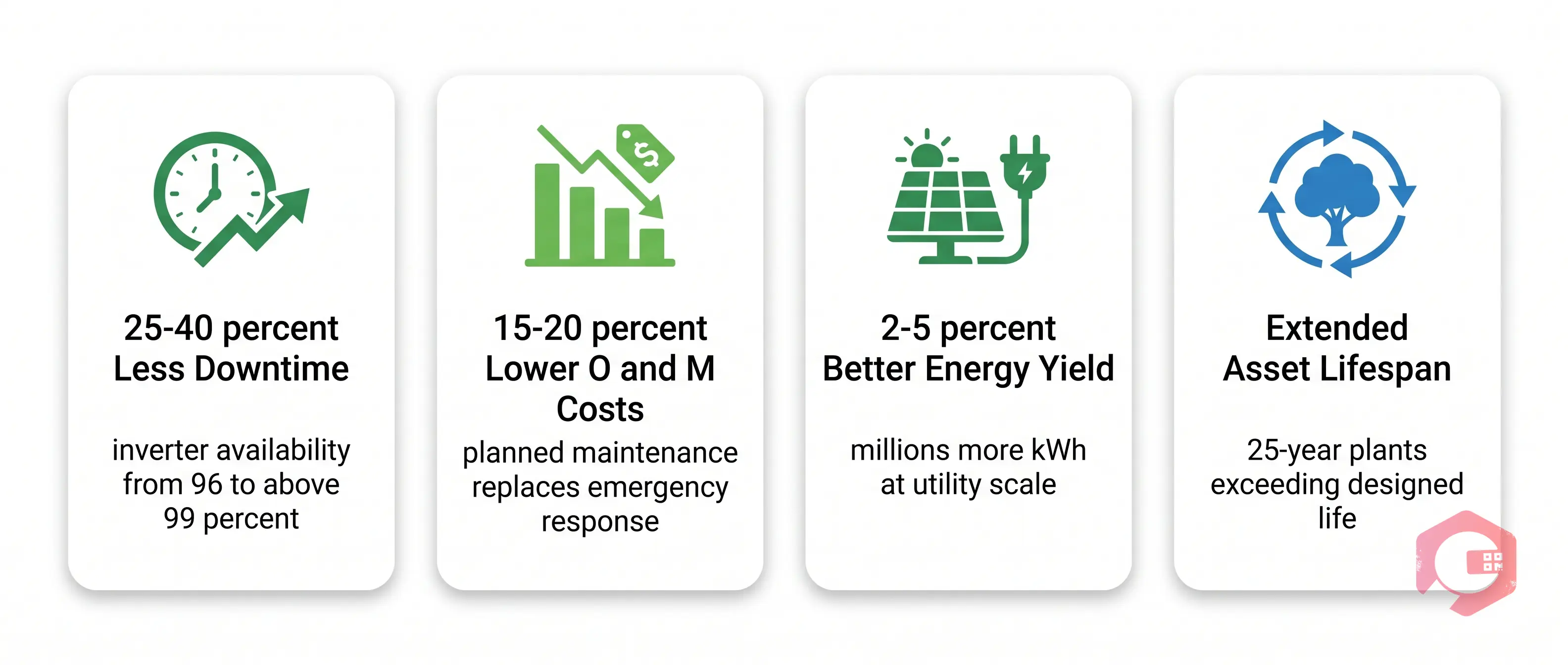
Typical outcomes reported by solar operators include a 25-40% reduction in unplanned downtime, a 15-20% decrease in annual O&M costs, and a 2-5% improvement in energy yield. At utility scale, a 3% yield improvement on a 200 MW plant translates to millions of additional kilowatt-hours delivered to the grid annually. Inverter availability rates commonly improve from 96% to above 99% within 12 months of a full predictive maintenance rollout.
Beyond cost savings, SCADA-driven maintenance also extends asset lifespans. Catching thermal hotspots in modules early prevents the kind of irreversible cell degradation that permanently reduces panel output. A solar plant designed for a 25-year lifecycle can often exceed that target when predictive maintenance is applied consistently from the first year of operation. Cryotos's preventive maintenance software works in tandem with SCADA feeds to schedule condition-based interventions at exactly the right time-maximising yield without over-maintaining assets or wasting field crew hours.
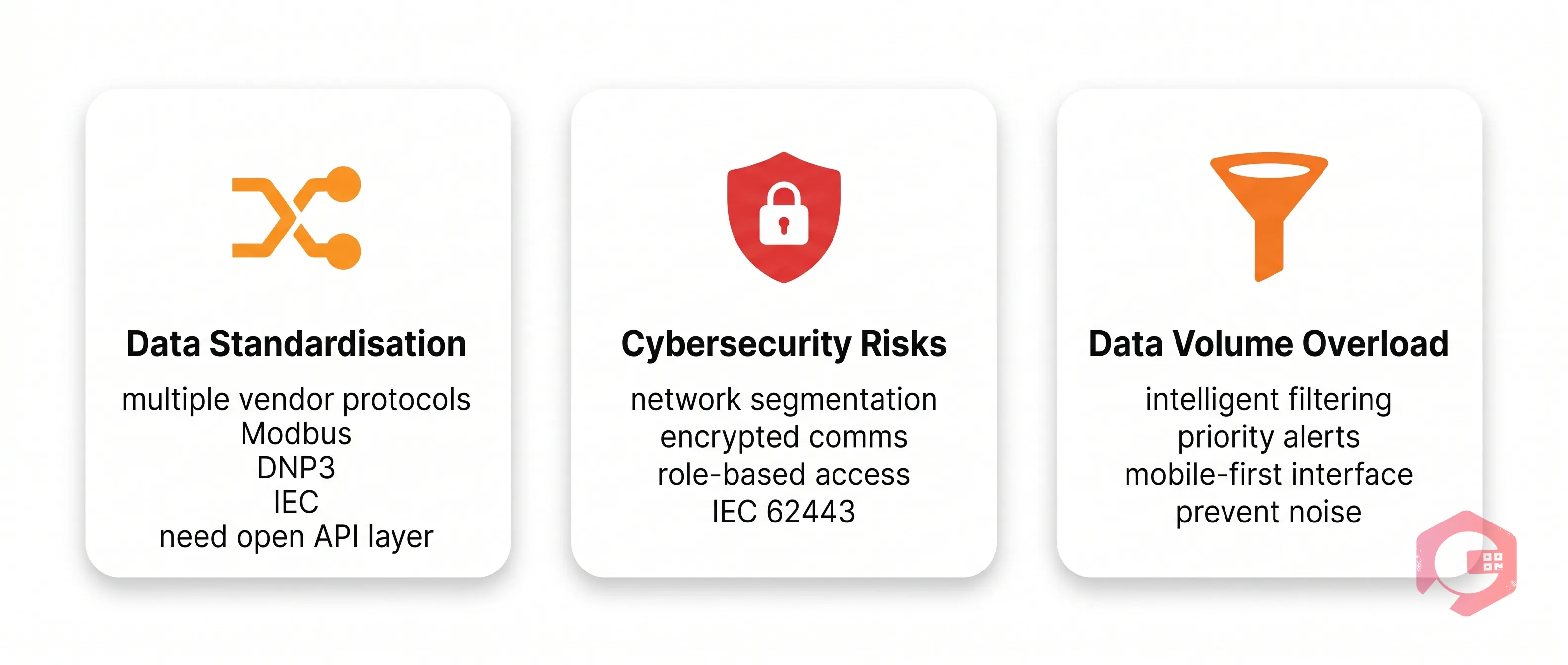
Despite its clear advantages, SCADA integration for solar predictive maintenance comes with implementation challenges that plant managers must plan for. The most common hurdle is data standardisation. Solar plants frequently feature inverters, trackers, and sensors from multiple vendors, each transmitting data in different protocols-Modbus, DNP3, IEC 61850, or proprietary formats. A SCADA platform with broad protocol support and an open API layer is essential for consolidating these diverse streams without loss of data fidelity or resolution.
Cybersecurity is another critical concern. SCADA systems connected to the internet for remote monitoring represent potential attack surfaces that bad actors have actively targeted in the energy sector. Solar operators should implement network segmentation, encrypted communications, role-based access controls, and regular firmware update schedules as baseline security hygiene. Choosing vendors who adhere to IEC 62443 industrial cybersecurity standards significantly reduces the risk of operational disruption from external threats.
Finally, the volume of data SCADA generates can overwhelm operations teams without the right analytics layer in place. Raw sensor feeds from a 100 MW plant can produce millions of data points per day. Integrating SCADA with a CMMS that offers intelligent filtering, priority-based alerting, and mobile-first technician interfaces ensures that actionable signals reach the right person at the right time-without drowning maintenance managers in false alarms or low-priority noise.
SCADA integration for solar predictive maintenance is no longer a luxury reserved for the largest utility-scale plants. As cloud-based SCADA platforms become more accessible and integration with CMMS systems more seamless, even mid-sized solar operations can achieve enterprise-grade predictive capabilities. The combination of real-time SCADA telemetry, AI-driven anomaly detection, and a connected maintenance platform creates an O&M ecosystem that proactively protects revenue, extends asset life, and keeps technicians focused on high-value interventions rather than emergency firefighting.
If your solar plant is ready to move beyond reactive maintenance, Cryotos provides the tools to make that transition seamless. From SCADA-triggered work orders and structured asset management to mobile technician workflows and performance analytics, Cryotos brings every element of your solar O&M strategy under one intelligent platform. Book a demo today and discover how predictive maintenance can transform your plant's energy yield and bottom line.



Cryotos AI predicts failures, automates work orders, and simplifies maintenance—before problems slow you down.