

A scheduled maintenance closure without an approval workflow is one of the most common causes of unplanned production disruptions in manufacturing and facilities. An approval workflow for maintenance closures is a structured, multi-step authorization process that ensures the right people — operations, safety, and management — formally sign off before any planned shutdown begins. Without it, teams risk unauthorized stoppages, safety violations, missed production targets, and cascading failures that cost far more than the maintenance itself. According to plant operations research, uncoordinated maintenance shutdowns contribute to up to 40% of preventable production losses in industrial facilities. This guide explains exactly why the approval step matters and how to build a workflow that protects your operation.
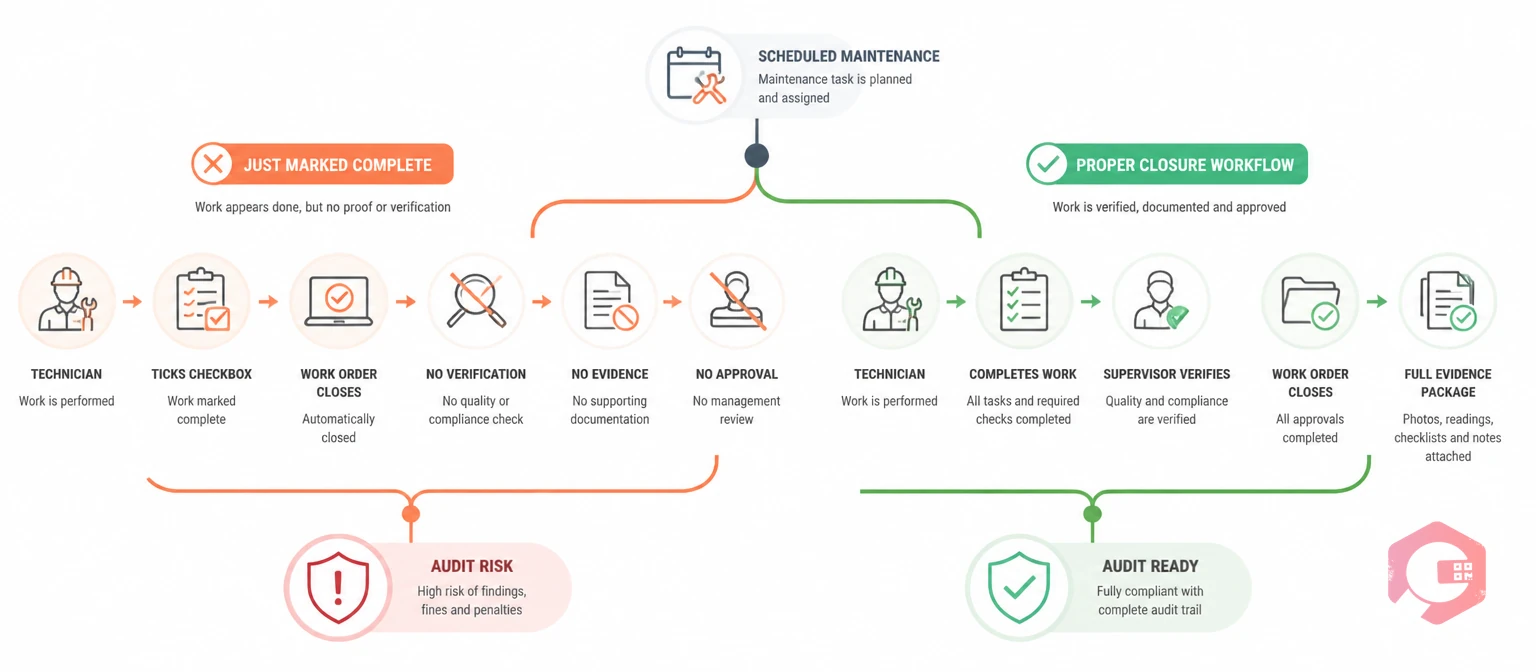
A scheduled maintenance closure is a planned downtime event where a specific asset, production line, or facility area is deliberately taken offline for preventive, corrective, or condition-based maintenance. Unlike emergency breakdowns, scheduled closures are planned in advance — which is precisely why they require a formal authorization chain before work begins.
Scheduled closures can range from a two-hour lubrication stop on a conveyor line to a week-long overhaul of a production unit. What they share is a predictable window, a defined scope of work, and multiple departments affected by the shutdown. That cross-functional impact is what makes an approval workflow non-negotiable — not just for efficiency, but for safety and regulatory compliance.
In industries like oil and gas, pharmaceuticals, and food processing, regulatory bodies require documented evidence of approval before any planned shutdown. A structured workflow creates that paper trail automatically.
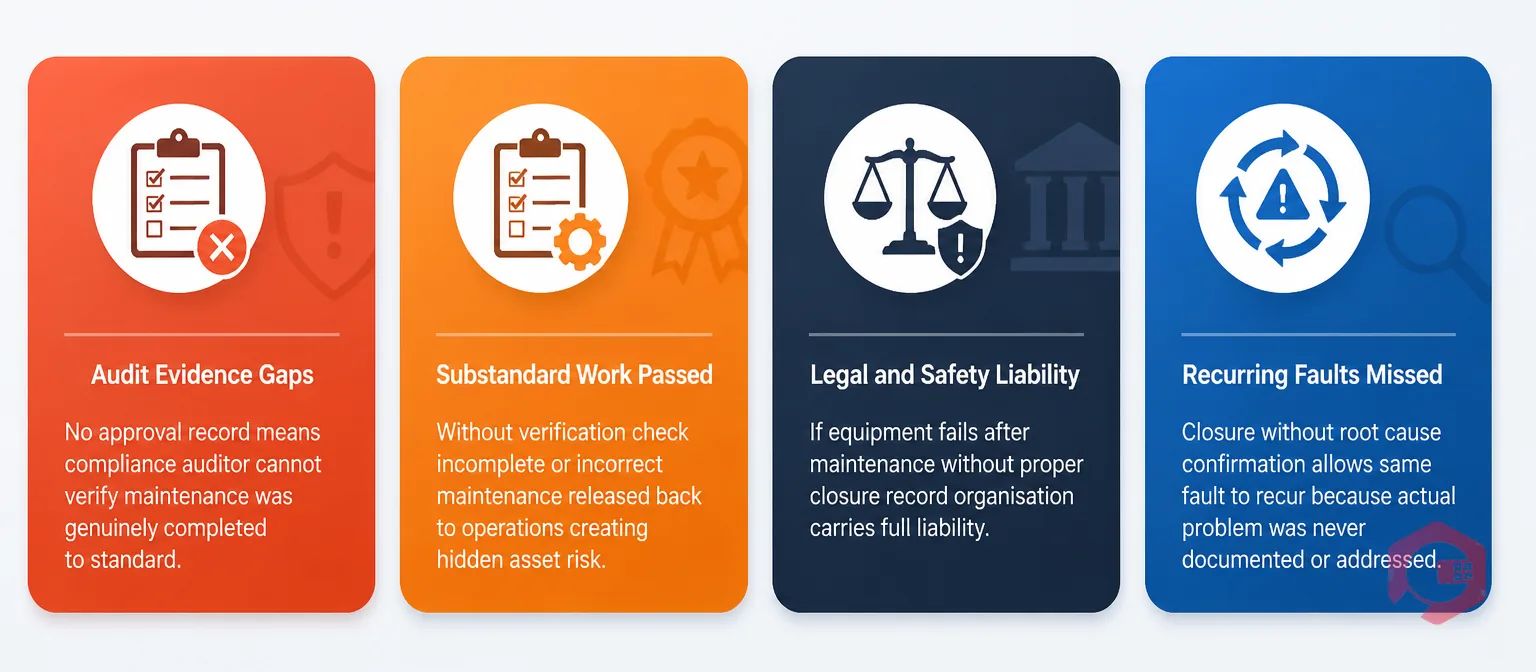
When maintenance teams schedule closures without a formal approval process, the consequences extend well beyond a delayed work order. Here is what actually happens:
A study by the International Society of Automation found that poor maintenance coordination — including inadequate approval chains — accounts for roughly 23% of all unplanned industrial downtime. The approval step is not bureaucracy; it is loss prevention.
Effective approval workflows involve more than just the maintenance manager clicking "approve." Each stakeholder brings a distinct perspective that catches different types of risk:
Not every closure requires all five approvals — a tiered system based on shutdown scope and risk level keeps the process efficient. Minor single-asset closures under two hours may need only maintenance and operations sign-off; major multi-system shutdowns trigger the full chain.
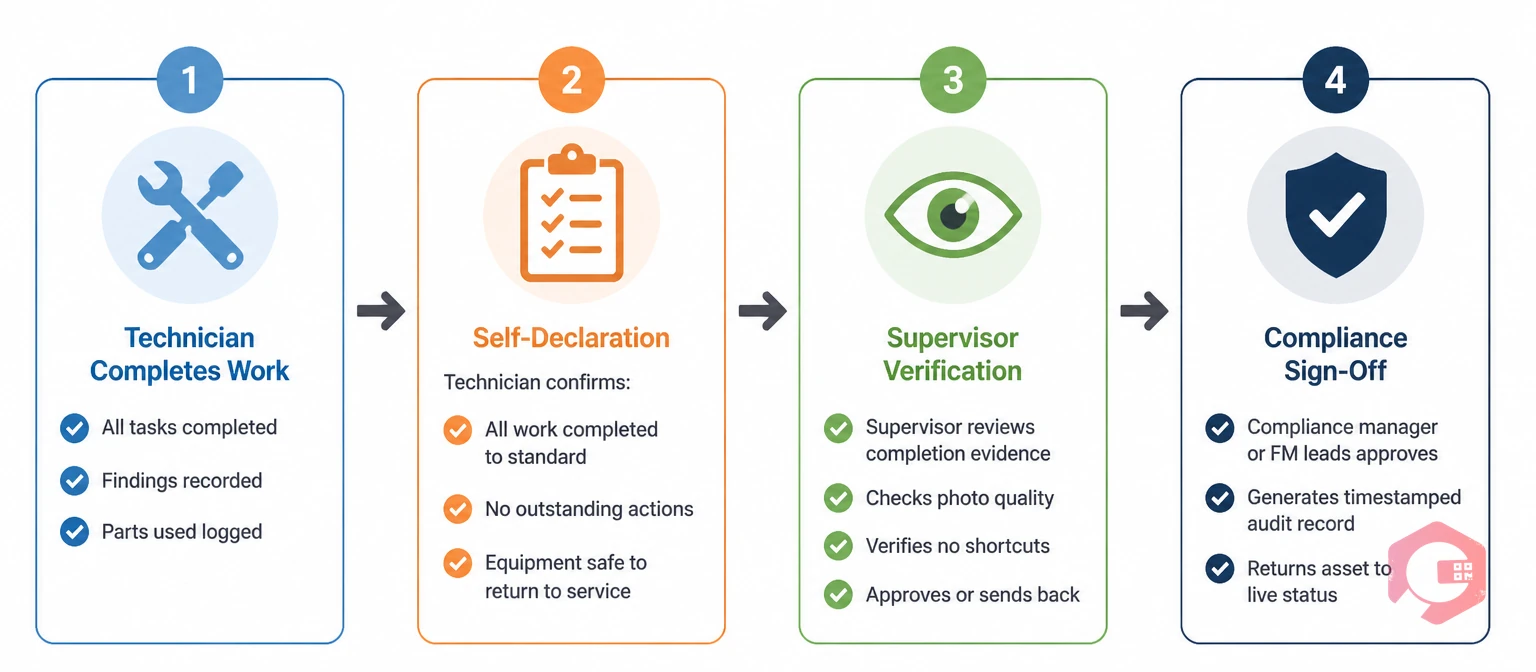
A well-designed maintenance closure approval workflow follows a clear sequence that balances thoroughness with speed. Here is a proven structure that works across manufacturing, facilities, and utilities:
The key to making this workflow fast is parallel routing — steps 3 and 4 run simultaneously in most CMMS platforms, cutting the total approval cycle to under 48 hours for standard closures.
Many facilities still manage maintenance closure approvals through email chains, shared spreadsheets, or paper-based forms. Here is how that approach compares to a CMMS-based workflow automation system:
| Criteria | Manual (Email/Spreadsheet) | CMMS-Based Workflow |
|---|---|---|
| Approval Speed | 3-7 days (email delays, missed messages) | 24-48 hours (parallel routing, auto-reminders) |
| Audit Trail | Scattered across inboxes; hard to retrieve | Centralized, timestamped, linked to work order |
| Stakeholder Visibility | Siloed - each approver sees only their thread | Full transparency - all parties see real-time status |
| Escalation Handling | Manual follow-up required; often delayed | Automatic escalation after deadline passes |
| Compliance Documentation | Manual export; prone to gaps | Auto-generated reports for audits |
| Schedule Conflict Detection | None - relies on human cross-checking | Real-time conflict detection against production calendar |
| Error Rate | High - missing approvals, wrong dates common | Low - mandatory fields and digital sign-off enforced |
The shift from manual to CMMS-based approval is not just about speed. It eliminates the grey zones where closures slip through without full authorization — the exact failure mode behind most approval-related incidents and production conflicts.
Cryotos CMMS includes a built-in workflow automation module that handles the full maintenance closure approval cycle without manual chasing. Here is what it does out of the box:
Organizations using Cryotos report a 30% reduction in unplanned downtime and faster maintenance cycles — both directly tied to eliminating the coordination failures that approval workflows prevent. You can see this in action in the BorgWarner case study, where structured maintenance workflows reduced reactive maintenance by a significant margin.
For teams managing complex, multi-asset environments, Cryotos also integrates with preventive maintenance scheduling so that closure approvals are built directly into the PM calendar — approvals are triggered automatically when a scheduled PM window approaches, without anyone needing to initiate the request manually.
A maintenance closure specifically refers to taking an asset or area offline to perform maintenance work. Planned downtime is the broader category that includes maintenance closures, upgrades, inspections, and scheduled production changeovers. All maintenance closures are planned downtime events, but not all planned downtime involves maintenance work.
Final approval authority depends on the scope and risk level of the closure. For low-impact single-asset shutdowns, the operations manager typically holds final authority. For high-impact or multi-system closures, the plant or facility manager should provide final sign-off after operations and safety approvals are in place.
A well-designed CMMS-based approval workflow should complete in 24-48 hours for routine closures when parallel routing is used. Manual email-based processes typically take 3-7 days. For emergency-level planned closures, expedited approval tracks can compress the timeline to under 4 hours with pre-defined escalation paths.
Yes — even in small facilities with a team of five, informal approvals create accountability gaps. A lightweight two-step approval (maintenance lead + operations manager) documented in a CMMS takes less than 10 minutes and creates the audit trail that protects both the team and the business when something goes wrong during a closure.
Several frameworks require documented authorization for planned shutdowns. OSHA 29 CFR 1910.147 (control of hazardous energy) requires documented authorization for energy isolation procedures. ISO 55001 (asset management) requires evidence of planned maintenance authorization as part of asset management system compliance. Industry-specific regulations in pharmaceuticals (GMP), food processing (FSMA), and utilities add further documentation requirements.
Scheduled maintenance closures carry real operational, safety, and compliance risk when they happen outside a structured approval process. The approval workflow is not an administrative hurdle — it is the mechanism that keeps your production schedule intact, your workers safe, and your compliance records clean. If your team is still managing closure approvals through email threads and spreadsheets, you are absorbing preventable risk every maintenance cycle. Cryotos CMMS gives you a configurable, automated approval workflow that routes the right requests to the right people, tracks every sign-off, and closes the loop on every closure — without the manual chasing. Book a demo today and see how fast your approval cycles can run.


Cryotos AI predicts failures, automates work orders, and simplifies maintenance—before problems slow you down.



