Steam Turbine Bearing Moisture: How Do You Keep Moisture Out of Critical Steam Turbine Bearings?

Calendar
Duration:
9 min
calendar today
Published on
November 23, 2026
Featured Image

Steam turbine bearing moisture is controlled by stopping steam at the shaft glands, sealing the bearing housings with isolators built for steam service, and checking the oil for water on a fixed routine. Plants that rely on only one of these steps often see the same bearing failures return.

This guide covers how water gets in, a five-layer defense, a published fertilizer plant case and a Resil Chemical story from Cryotos. It also shows how a Computerized Maintenance Management System (CMMS) keeps the checks on schedule.

Key Takeaways

  • Steam is the main source: Gland leakage and idle periods put more water into bearing housings than most teams expect.
  • One fix is rarely enough: Purges, breathers and tighter clearances help, but severe cases usually need sealed isolators as well.
  • Oil tells you early: A fixed sampling route finds water before the bearing pays for it.
  • Records close the loop: Resil Chemical improved detection by digitizing readings, breakdown logs and preventive maintenance.

What Is Steam Turbine Bearing Moisture, and Why Does It Matter?

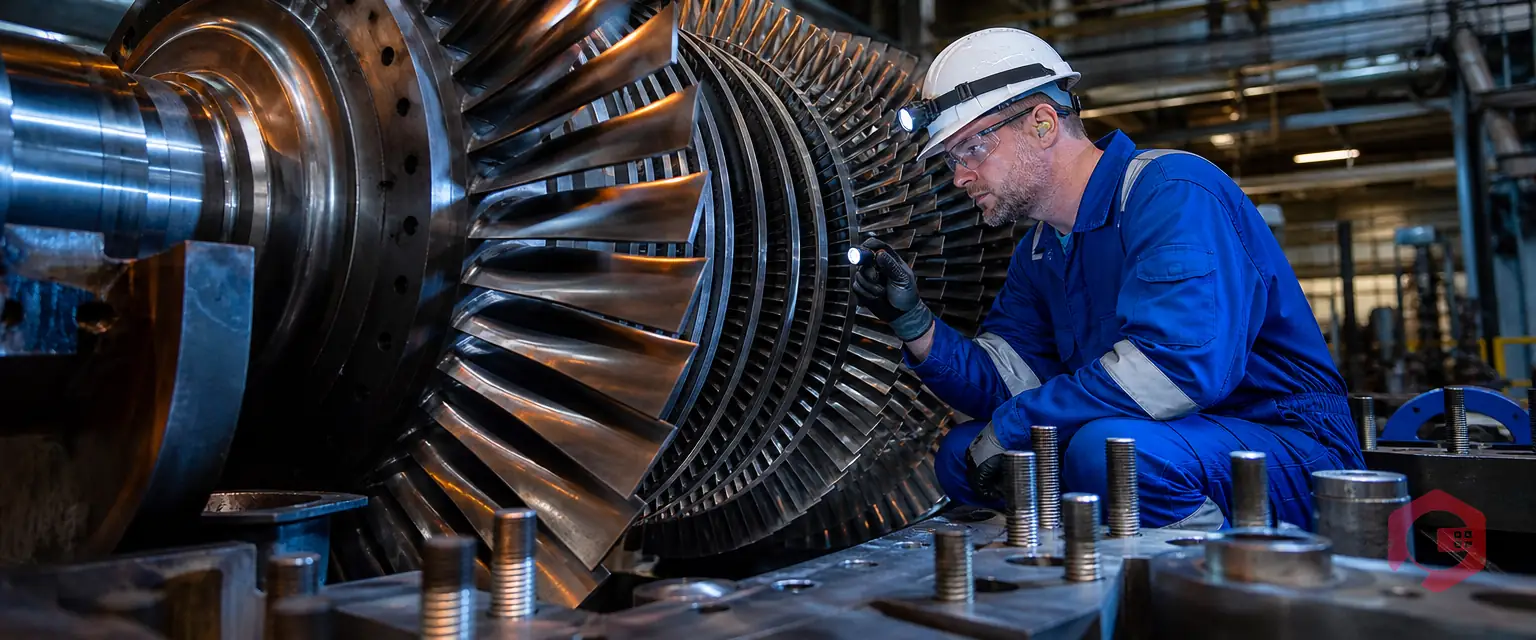
Concept diagram of moisture in steam turbine bearing oil causing film loss corrosion and short bearing life | Cryotos

Steam turbine bearing moisture is water, as steam or liquid, that enters the bearing housing and oil. A steam turbine rotor rides on an oil film inside fluid bearings, and water in that oil attacks the part that keeps metal from touching metal.

Critical turbines, such as those built to API 612 for special-purpose service, run for years between outages. Moisture damage is slow, so it is easy to miss until a bearing fails. Treat water ingress as a named failure mode in your FMEA and reliability-centered maintenance (RCM) studies.

  • Film loss: Water weakens the oil film that carries the rotor.
  • Corrosion: Rust forms on journals, housings and other iron surfaces.
  • Oil breakdown: Water causes sludge, emulsions and additive loss.
  • Short life: Bearings fail early and the repair repeats.

Moisture turns a durable bearing into a repeat repair if nobody tracks it.
How Does Moisture Get Into Steam Turbine Bearings?

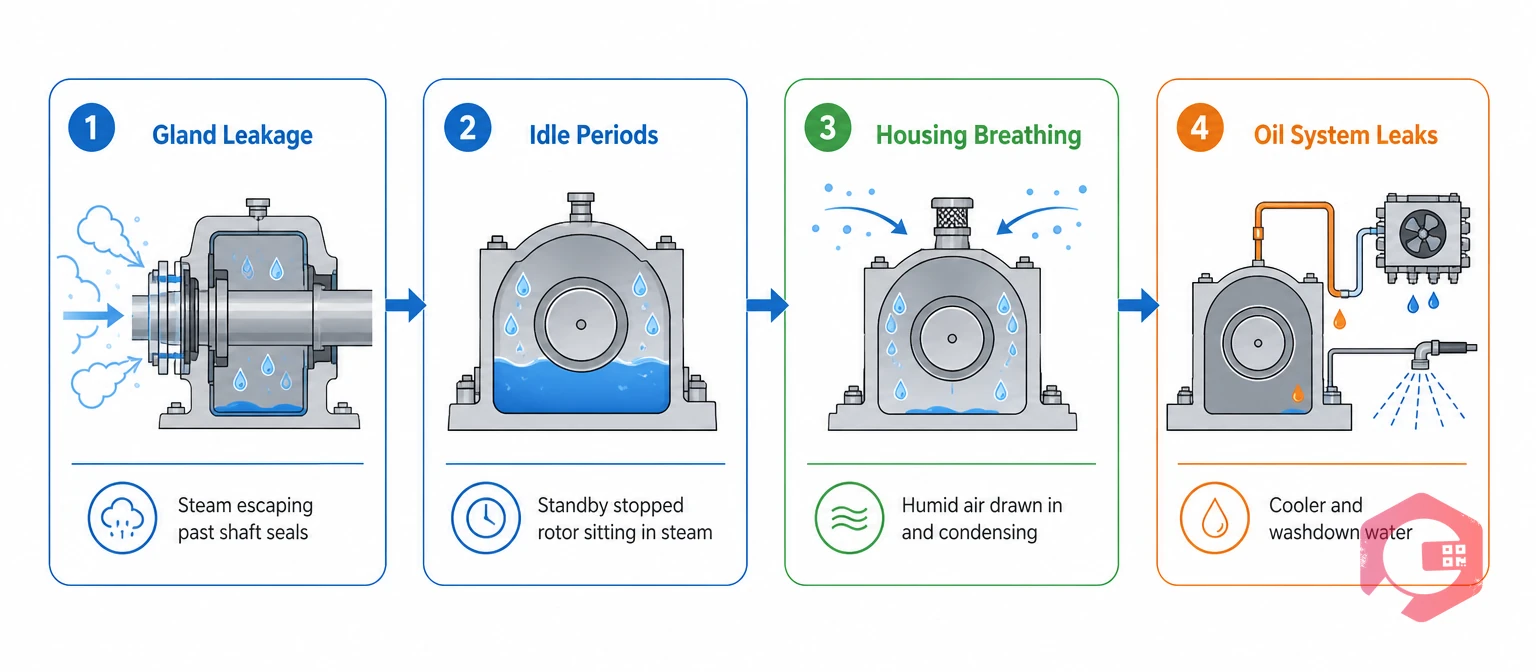
Four routes moisture enters a steam turbine bearing: gland leakage, idle periods, housing breathing, oil system leaks | Cryotos

Moisture mostly gets in where steam leaks past the shaft glands and condenses on the cooler inner walls of the bearing housing. Idle readiness is the standby state when the rotor is still and live steam can still leak past the seals.

A Reliabilityweb case study explains why that state is so harmful. Housing seals that work well on a spinning shaft do little when the rotor is stopped, so steam condenses and collects in the sump.

  • Gland leakage: Steam escapes past carbon rings and reaches the housing.
  • Idle periods: Standby turbines sit in steam with no oil flow and no shaft motion.
  • Housing breathing: A 1988 paper by W. L. Coleman, hosted by Texas A&M University, notes that oil aeration draws a steady flow of air into forced-feed turbine housings. That air carries humidity that can condense inside.
  • Oil system leaks: Cooler tube leaks, washdown and damaged seals add water from outside.

Most maintenance teams find the idle-period exposure last, because the turbine looks fine until it enters service. Find every entry route before you pick a fix.

The 5-Layer Steam Turbine Bearing Moisture Defense Stack

Five-layer steam turbine bearing moisture defense stack: gland, seal, vent, sample, remove | Cryotos

The most reliable defense against steam turbine bearing moisture is a stack of five layers, each stopping water at a different point. A single layer leaves a gap that steam will find.

The Steam Turbine Bearing Moisture Defense Stack:

  • Gland: Keep gland steam leakage low, so less steam reaches the housing.
  • Seal: Fit bearing isolators made for steam service.
  • Vent: Control housing breathing with desiccant breathers or a clean, dry air or nitrogen purge.
  • Sample: Test oil on a fixed route using condition monitoring and alert on water.
  • Remove: Drain the sump, filter or dehydrate the oil and fix the source.

How a bearing isolator keeps water out

A labyrinth bearing isolator is a rotating seal that keeps oil in and moisture out of a bearing housing. A labyrinth seal forces leakage through a winding path, and steam-service versions add heat protection and a deflector for incoming steam.

Isolators work as one layer, not the only one. Teams that keep the gland, vent and sampling layers in place get the longest bearing life.

Where each layer fits in your steam turbine bearing moisture plan

  • Gland and Seal: Mechanical teams own these, and most work happens at outages.
  • Vent: Planners own breather and purge checks, which belong on a monthly PM.
  • Sample: Lube or reliability technicians own the route and the water limits.
  • Remove: Mechanical teams act on alerts, and planners record the fix.

Track how often your turbine bearings fail with the MTBF calculator.

Case Study: What Mosaic Fertilizer Learned About Steam Turbine Bearing Moisture

Mosaic Fertilizer’s Louisiana operations cut chronic bearing water contamination by replacing OEM housing seals with labyrinth isolators designed for steam. The figures come from a Reliabilityweb case study co-written with the seal supplier. Treat the savings as reported, not audited.

The Major Challenge: Chronic Water in the Oil

  • Short run times: Terry GAF4 turbines at the ammonia plant averaged 4 to 12 months between repairs.
  • Repair cost: Bearings alone cost about $14,000, and a full rebuild about $35,000.
  • Worst case: An emergency rebuild of a turbine and compressor in August 2010 cost over $300,000.

What Mosaic Tried Before It Worked

The team tried tighter clearances, air buffer porting, baffles, air and nitrogen purging, desiccant vent filters, vent check valves and synthetic oils. None fully stopped the water.

What Fixed It and What It Saved

In July 2008, three isolators costing $2,400 went onto one turbine. Weekly oil samples then showed zero water, with no repairs for over 24 months. Mosaic estimated at least three avoided repairs, about $100,000, and a payback under three weeks.

Mosaic later standardized on the same isolator design for pump and gearbox shafts up to 3 inches, and reviewed larger shafts case by case. Your own steam turbine bearing moisture costs will differ, so start with your repair history, your time between repairs and your outage cost. Clear failure records made this fix easy to justify.

How Cryotos Helps Teams Control Moisture: The Resil Chemical Example

Cryotos helps teams control steam turbine bearing moisture by making every check, reading and repair visible and on schedule. Resil Chemical’s case study does not involve turbines. It shows the same failure pattern: problems found late and routine checks missed.

The Major Challenge Resil Chemical Faced

Manual meter reading was slow, so the team set acceptable limits too wide. Equipment problems went unnoticed until they became failures.

  • Complaints: No systematic way to capture and categorize them.
  • Breakdowns: Hard to track by shift, with unclear owners and updates.
  • Preventive maintenance: Done manually or not tracked, so inspections were missed.

How Cryotos Solved Each Gap in Practice

  • Digital meter readings: Daily readings appear in dashboards, so abnormal trends show up sooner.
  • Categorized complaints: Site users log issues by type, with feedback and ratings.
  • Shift-wise tracking: Managers see who closed each repair, and technicians update digital work orders during the job.
  • Weekly reports: Pending and completed work arrives by email each week.
  • Automated PM: Preventive maintenance software schedules and tracks checks, including safety showers, eyewash stations and fire extinguishers.

Resil reports faster issue resolution and better equipment reliability, but the case study gives no downtime percentages, and none are claimed here. Across the wider Cryotos base, maintenance teams using Cryotos have reported up to 30% reduction in unplanned downtime and 25% faster repair turnaround. Results vary by site.

What This Means for Steam Turbine Bearings

  • Readings: Log water-in-oil results as readings, so trends show on a dashboard.
  • Checks: Put breather, seal and sump checks on a recurring PM with a checklist.
  • Alerts: Set limits tight enough that a rising trend opens a work order early.
  • History: Keep every repair and sample against the turbine, so the next failure has context.

A Practical Moisture Check Routine for Maintenance Teams

An effective routine for steam turbine bearing moisture is short, fixed and recorded. Set intervals from your OEM manual and oil supplier, then tighten them on turbines with a history of water.

  • Each shift: Look for steam at glands and housings, and check the sump sight glass for cloudy oil.
  • Weekly: Sample oil on chronic-moisture turbines and log the water result against the limit.
  • Monthly: Inspect breathers, desiccant condition and housing seals.
  • Each outage: Check bearings for corrosion and inspect isolator O-rings and wear parts.
  • On any alert: Open a work order, find the source and record the fix.

Online water sensors can feed readings into IoT meter reading, so a rising trend opens a work order without waiting for the next walk-round. A routine that nobody records is a routine that fades.

Mistakes that keep steam turbine bearing moisture coming back

  • Topping up the oil: Fresh oil hides the symptom while the source keeps leaking.
  • Skipping standby turbines: Idle units take on water quietly, so include them in the route.
  • Swapping seals without notes: Record the old failure mode, or nobody can tell whether the new seal worked.
  • Setting limits once: Review water limits after each failure and each design change.

Frequently Asked Questions

How do you know if there is water in your steam turbine bearing oil?

Cloudy or milky oil and free water at the sump drain are early signs. A hot plate crackle test gives a quick field check, and a lab test such as ASTM D6304 gives a precise reading. Trend the results over time.

Which seal keeps steam out of a turbine bearing housing better, lip seals or labyrinth isolators?

Labyrinth isolators built for steam service usually do better, because lip seals wear and stationary OEM labyrinths work properly only on a turning shaft. In the Mosaic case, isolators replaced the OEM seals and the oil stayed free of water.

How often should you sample steam turbine bearing oil for water?

No single interval fits every plant. Many teams start weekly on turbines with a history of moisture, then relax the interval once the trend is stable. Follow your OEM and oil supplier guidance.

What should you do when you find water in turbine lube oil?

Find the source before you top up or change the oil. Drain free water, filter or dehydrate the oil, check the bearing condition and log the fix on a work order, so the cause is on record.

Can a CMMS help control steam turbine bearing moisture?

Yes. A CMMS schedules the checks, stores oil results against each turbine and opens a work order when a reading crosses its limit. That keeps the history needed to prove which fix worked.

Moisture control is won by routine, not by luck. Schedule a free demo to see how Cryotos keeps your turbine checks, oil results and repairs on one record.

Want to Try Cryotos CMMS Today?

Get Free Demo

Let AI Take Control of Your Maintenance

Cryotos AI predicts failures, automates work orders, and simplifies maintenance—before problems slow you down.

Try AI-Powered CMMS
🡢