
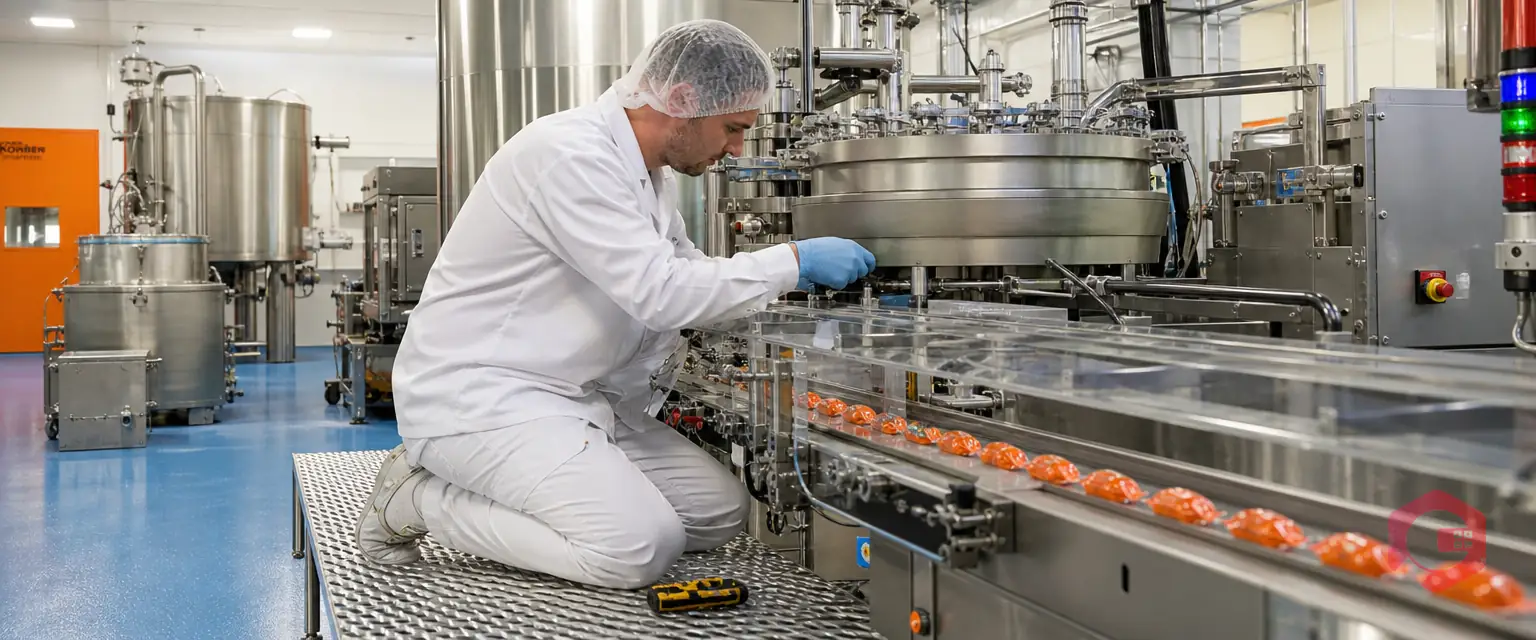
Sugar and confectionery manufacturing maintenance is the planned care of process, utility and packaging assets that protects uptime, hygiene and safety. It keeps cookers, mills, depositors and wrappers running. Product stays clean, allergens stay controlled and dust stays down.
Strong plants treat every repair as a controlled event. A Computerized Maintenance Management System (CMMS) ties work orders, cleaning steps and release sign-offs together. Nothing restarts unchecked.
Key Takeaways
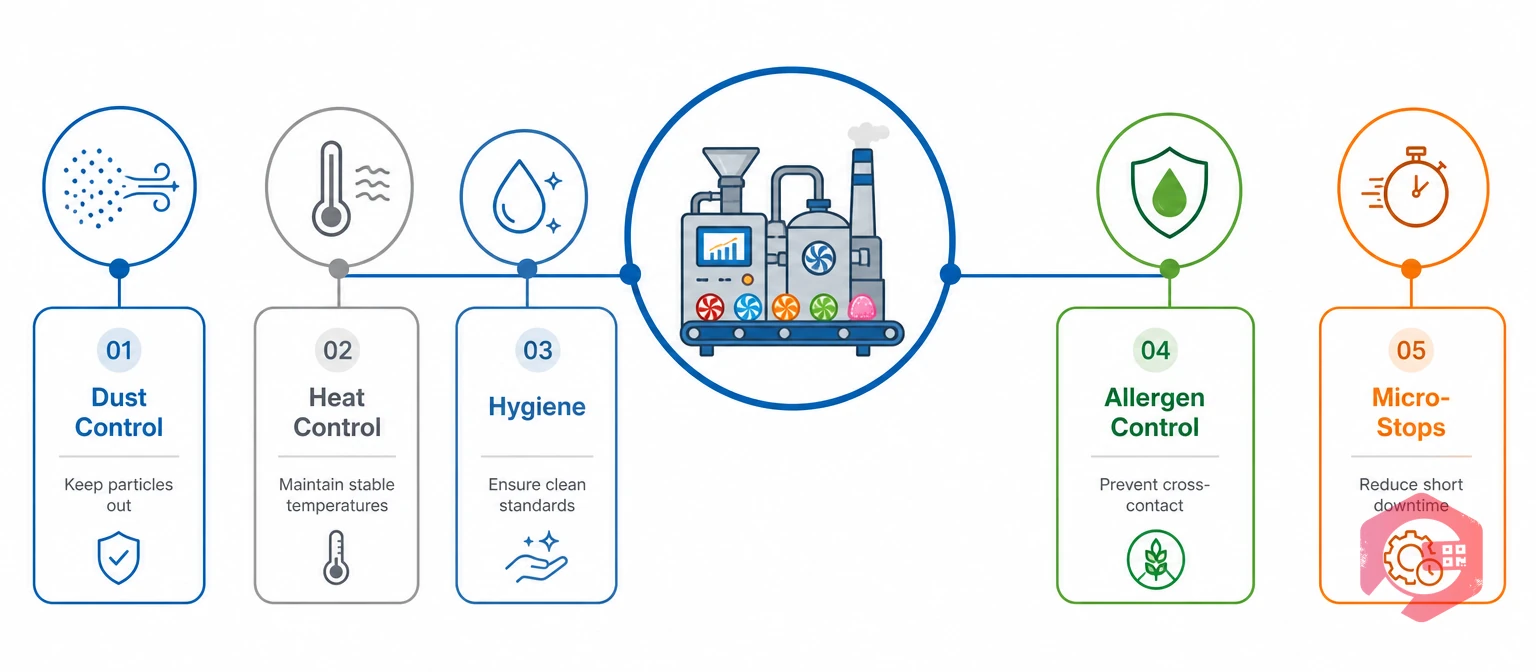
Combustible sugar dust is fine powder that can burn or explode when it builds up or becomes airborne. OSHA lists sugar and other food dusts as combustible dust hazards. NFPA 61 covers fire and dust explosion prevention in food plants.
Dust is one of five demands that set these plants apart.
FDA current good manufacturing practices expect plants to keep equipment from contaminating food. So sugar and confectionery manufacturing maintenance must protect product safety as well as uptime.
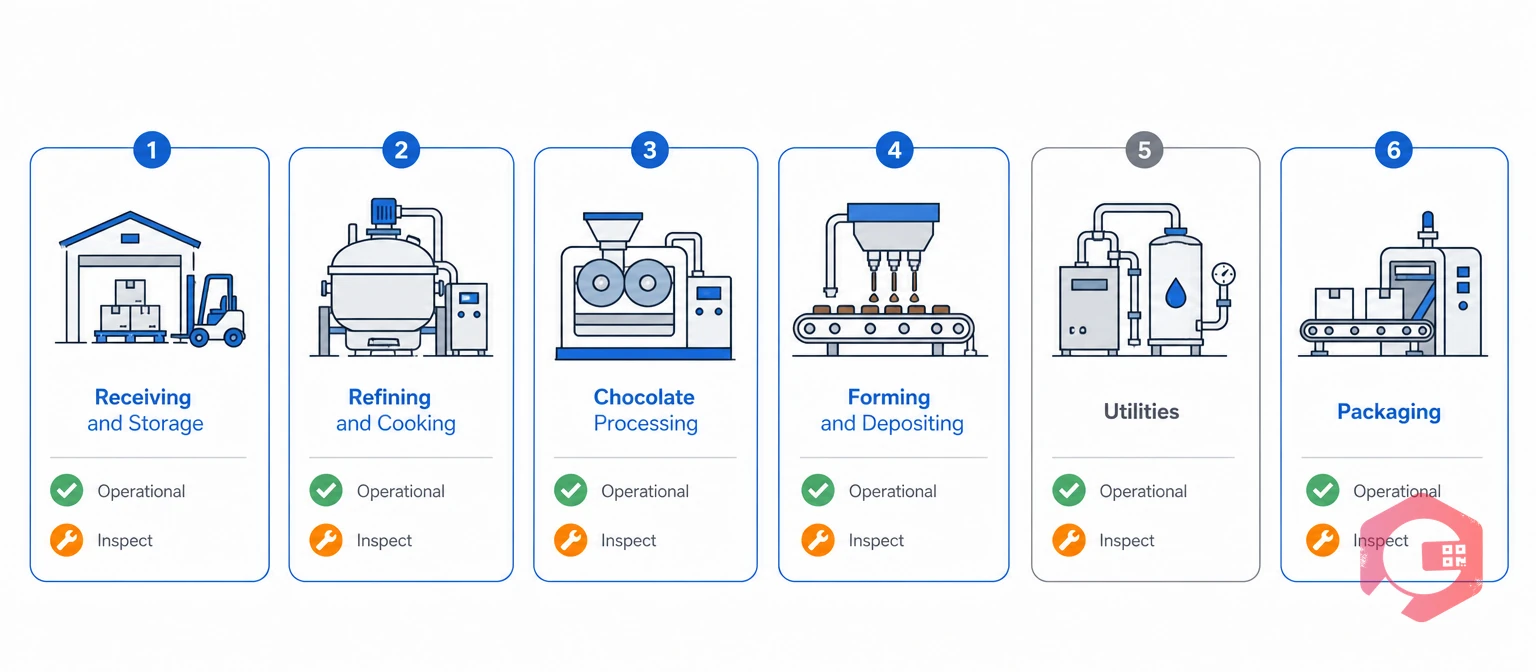
A maintenance map links each process area to its key assets. It also shows which checks matter most.
Treat steam, cooling, compressed air and water as critical assets. Low air pressure or unstable chilled water often looks like a repeated machine fault.
Not sure how much output micro-stops cost you? Start with Cryotos downtime tracking to see losses by plant, department and asset.
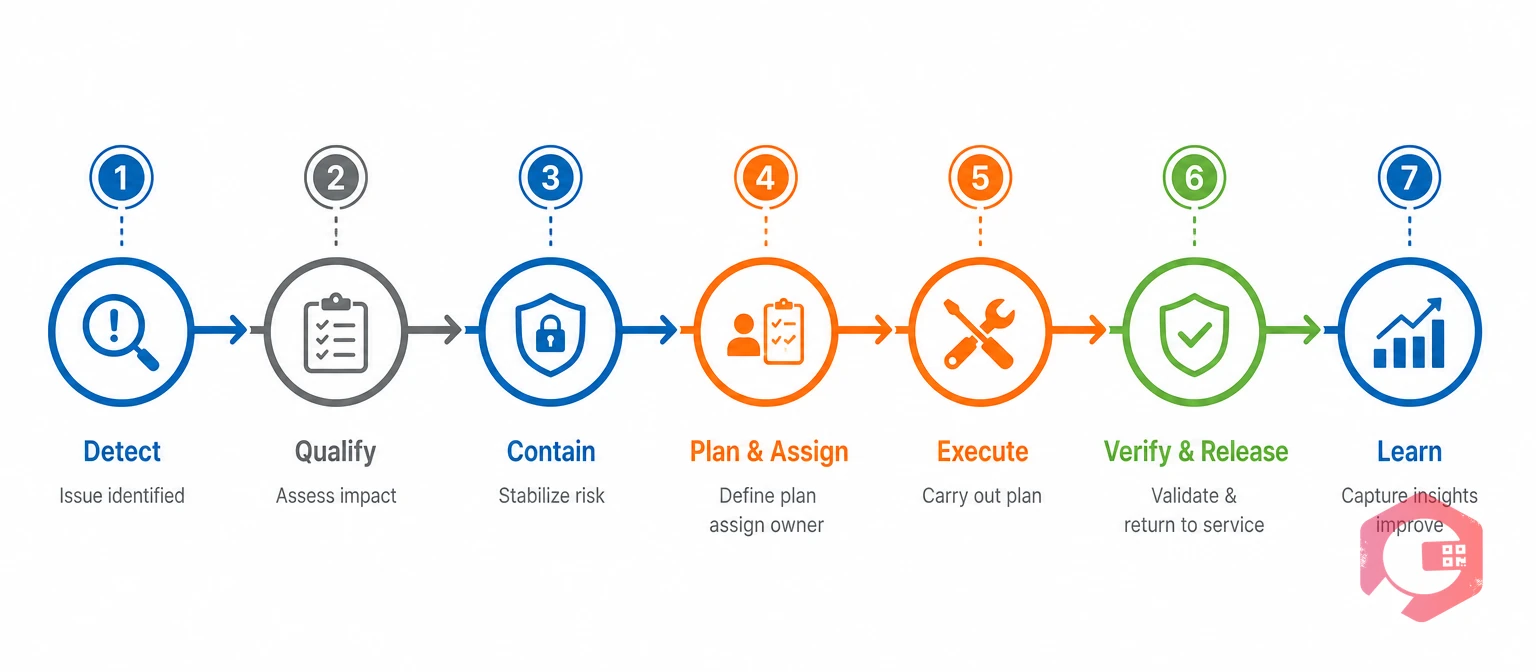
In sugar and confectionery manufacturing maintenance, a job is done only when the asset is safe, clean, tested and released. The framework below shows the path.
The Seven-Step Detect-to-Learn Framework:
Zone 3 drifts above target, so an operator raises a request. The planner confirms the drift and finds no duplicate work order. Quality holds the affected product. A refrigeration technician gets the trend and food-grade parts, replaces a faulty valve actuator and tests the loop. After cleaning, the line restarts. Valve cycle count becomes a condition trigger for future checks.
Maintenance release is the sign-off that proves a repaired asset is safe, clean and ready to run. Skipping it turns a sound repair into a contamination event or a repeat failure.
The right strategy depends on how each asset fails. Simple wear parts suit calendar tasks. Assets that show early decline suit condition triggers.
| Asset group | Key checks | Preferred strategy |
|---|---|---|
| Centrifuges and rotating equipment. | Vibration, bearing heat, lubrication and oil. | Condition-based plus planned overhaul. |
| Pumps and product transfer. | Seal leaks, pressure, motor current and alignment. | Inspection plus condition monitoring. |
| Heat exchangers and cookers. | Approach temperature, steam traps and fouling. | Performance-based cleaning plus PM. |
| Tempering and cooling. | Zone temperatures, chiller and fan health. | Continuous trend plus PM. |
| Conveyors and dust collection. | Belt tension, buildup, pressure drop and explosion protection. | Autonomous inspection plus safety-critical PM. |
| Packaging lines. | Seal heat, knives, jaws, photo-eyes and air leaks. | Centerline settings plus planned replacement. |
Avoid over-maintenance. Calendar replacement without evidence can add early-life failures and contamination risk. Operators can own routine checks under total productive maintenance (TPM). Preventive maintenance software can schedule tasks by calendar or runtime.
Useful KPIs show whether maintenance protects safe, stable production. They do not count closed work orders. Start with six.
A micro-stop is a short stop that operators clear within minutes, often without a work order. Code micro-stops apart from breakdowns. Otherwise, chronic packaging losses stay hidden.
Adjust results for product mix, seasonal campaigns and planned shutdowns. Maintenance teams that skip a baseline often credit maintenance for gains that came from recipe or volume changes. Strong sugar and confectionery manufacturing maintenance programs also split results by line, product family, shift and failure mode.
The biggest risks come from dust, contamination, allergens and shortcuts under time pressure.
Make each control a required step on the work order, not a reminder. Controls that live in people's heads vanish at shift change.
Cryotos supports sugar and confectionery manufacturing maintenance by putting asset history, job steps, parts and sign-offs on one mobile platform. Plants can also read about the food and beverage CMMS solution.
Maintenance teams using Cryotos have reported up to 30% reduction in unplanned downtime and 25% faster repair turnaround.
A planner registers a flow-wrap line. The planner sets an operating-hours PM for the sealing jaws and adds a checklist with a photo step and sign-off. A technician scans the machine QR code, replaces worn jaws offline and signs. The micro-stop trend then shows whether the fix worked.
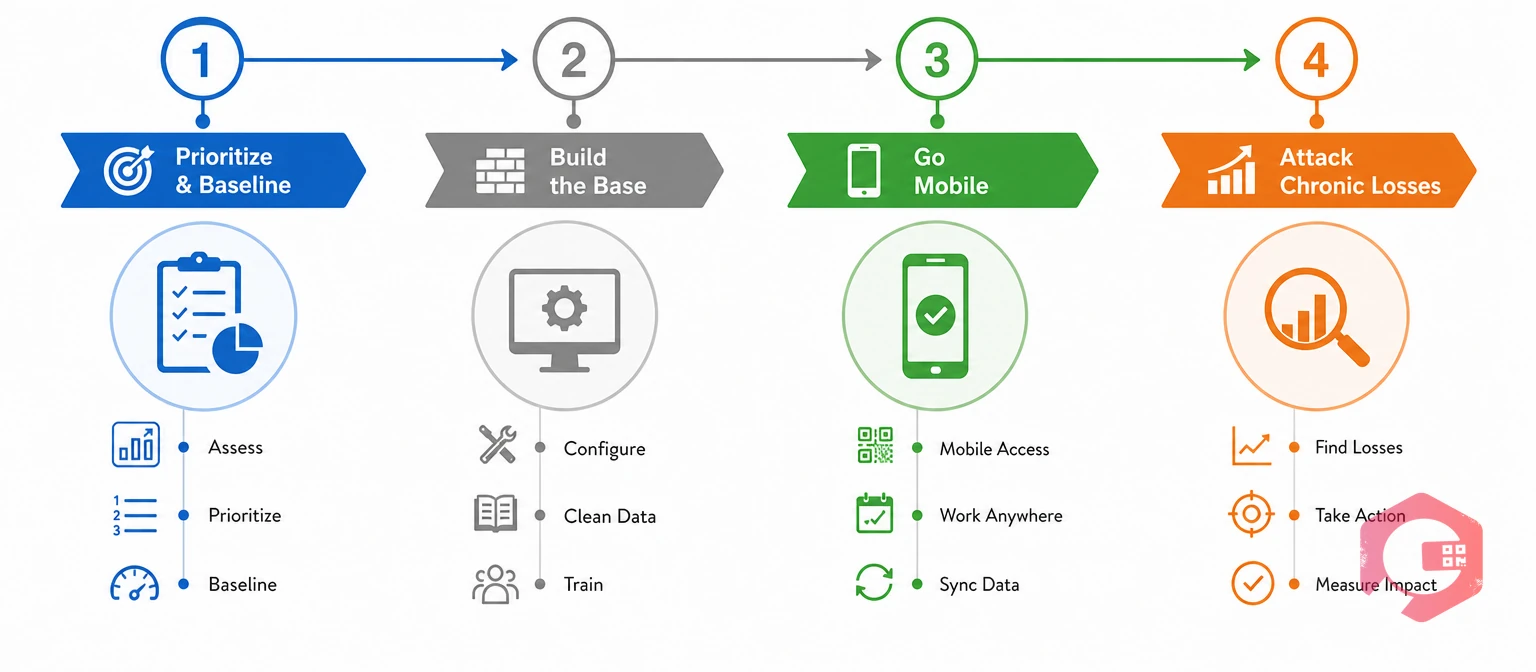
The most reliable start for sugar and confectionery manufacturing maintenance is a focused pilot. Aim it at a few critical assets and chronic losses.
Shared ownership across maintenance, production, quality and food safety keeps the program alive.
It is the planned inspection, repair and testing of process, utility and packaging equipment. Hygiene, allergen and dust controls are built in. The goal is stable output and safe product.
Leaks, deposits and weak dust collectors let sugar dust build up near ignition sources. Maintenance teams control it with housekeeping, extraction checks and hot work rules.
Start with PM compliance, planned maintenance ratio, MTBF, MTTR, repeat failure rate and micro-stop minutes. Add spare-parts service level once work-order data is reliable.
Use controlled tools, part counts and approved lubricants. Require cleaning, line clearance and quality sign-off before any restart.
Steam, chilled water, compressed air and vacuum problems often look like machine faults. Track them as critical assets with their own KPIs and PM plans.
Yes. A CMMS can carry cleaning and line-clearance steps with signatures on each job. Cryotos does this for sugar and confectionery manufacturing maintenance through customizable checklists and mobile sign-off.
Every repair in a sweet plant is also a hygiene and safety event. Schedule a free demo to see how Cryotos supports sugar and confectionery manufacturing maintenance, with dust controls, cleaning release and spare parts in one workflow.


Cryotos AI predicts failures, automates work orders, and simplifies maintenance—before problems slow you down.



