

Switchgear and circuit breaker maintenance is the scheduled inspection, testing, and servicing of the equipment that protects a plant's electrical system from faults and overloads. Skip it, and you raise the odds of an arc flash. That single event can injure workers and shut down a whole process line in seconds. It can also void an insurance claim if the plant can't show a documented maintenance history. This guide covers what the work involves, the standards behind it, a practical inspection schedule, and how a Computerized Maintenance Management System (CMMS) helps you run the program consistently instead of chasing failures.
Key Takeaways
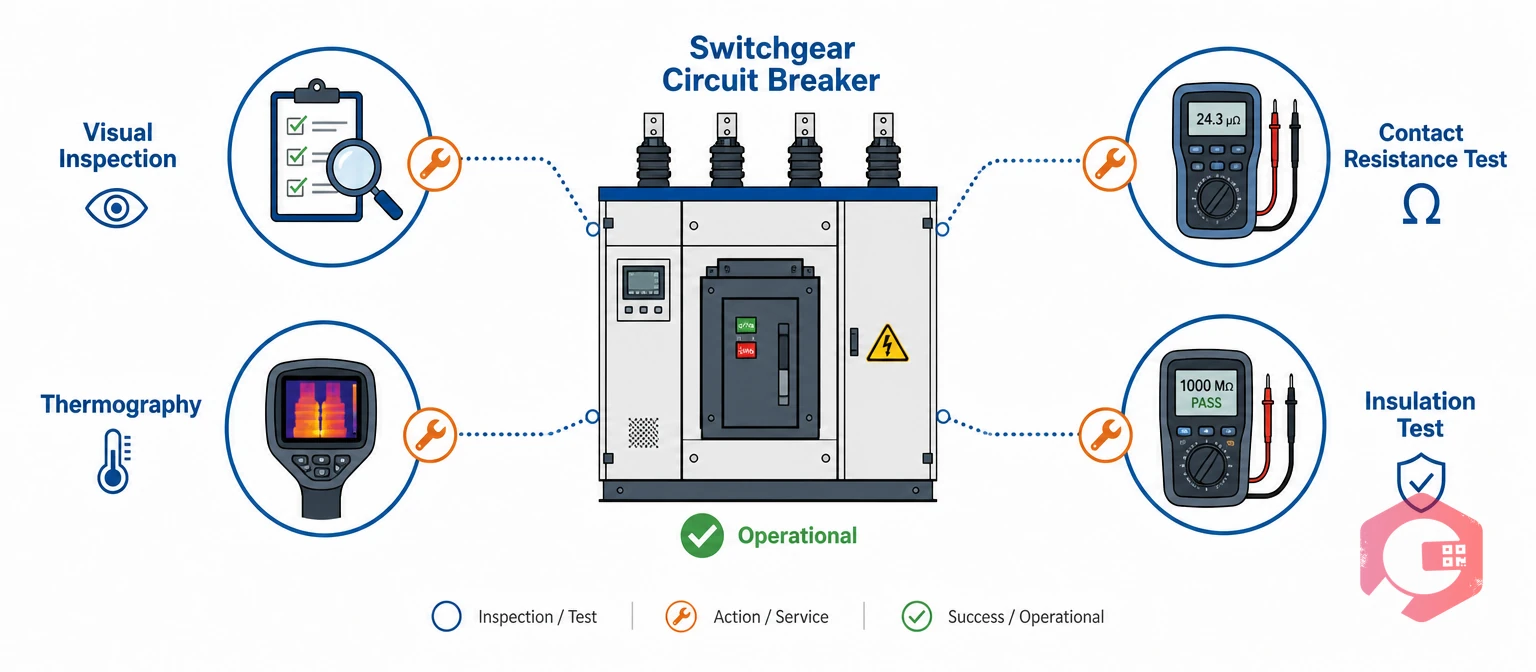
Switchgear and circuit breaker maintenance is the inspection and testing that keeps protective equipment able to isolate electrical faults safely. It ranges from a five-minute visual check for scorch marks to a multi-hour contact resistance test on a main breaker.
Most plants run this work under a written program tied to a standard, most often NFPA 70B in North America. The standard sets what gets inspected, how often, and what result counts as a pass. That documentation matters as much as the tasks themselves. It's what a plant needs to show an auditor or an investigator after an incident.
You'll also see this work called electrical preventive maintenance or breaker PM. The terms overlap, but switchgear and circuit breaker maintenance specifically means the protective devices, not the motors or panels they feed.
Neglected maintenance carries three costs: safety risk, unplanned downtime, and shorter asset life. Arc flash is a sudden, high-energy release from an electrical fault that can burn workers and destroy equipment in milliseconds. A loose connection or worn contact is a common trigger. OSHA's electrical safety guidance treats this as a leading hazard in industrial plants.
Unplanned downtime is the second cost. A breaker that fails to trip on a fault can let damage spread through the rest of the system instead of isolating it to one feeder. That turns a small fault into a plant-wide outage.
Asset life is the third cost. Switchgear and its breakers often carry a 20 to 40-year design life. Poor upkeep shortens that life and turns a routine service into an unplanned capital replacement years ahead of schedule.
Switchgear is the combination of breakers, switches, and protective devices that control and isolate sections of a power system. Plants typically maintain a mix of the equipment below, and each type has different inspection needs.
Each type has its own quirks. A vacuum breaker won't tell you it's failing the way an oil breaker will. That's one reason a one-size-fits-all checklist rarely works well across a whole plant.
Keep this equipment tied to an asset tracking record with nameplate data and a criticality rating. That's what lets you decide which lineups get tested first when time is tight.
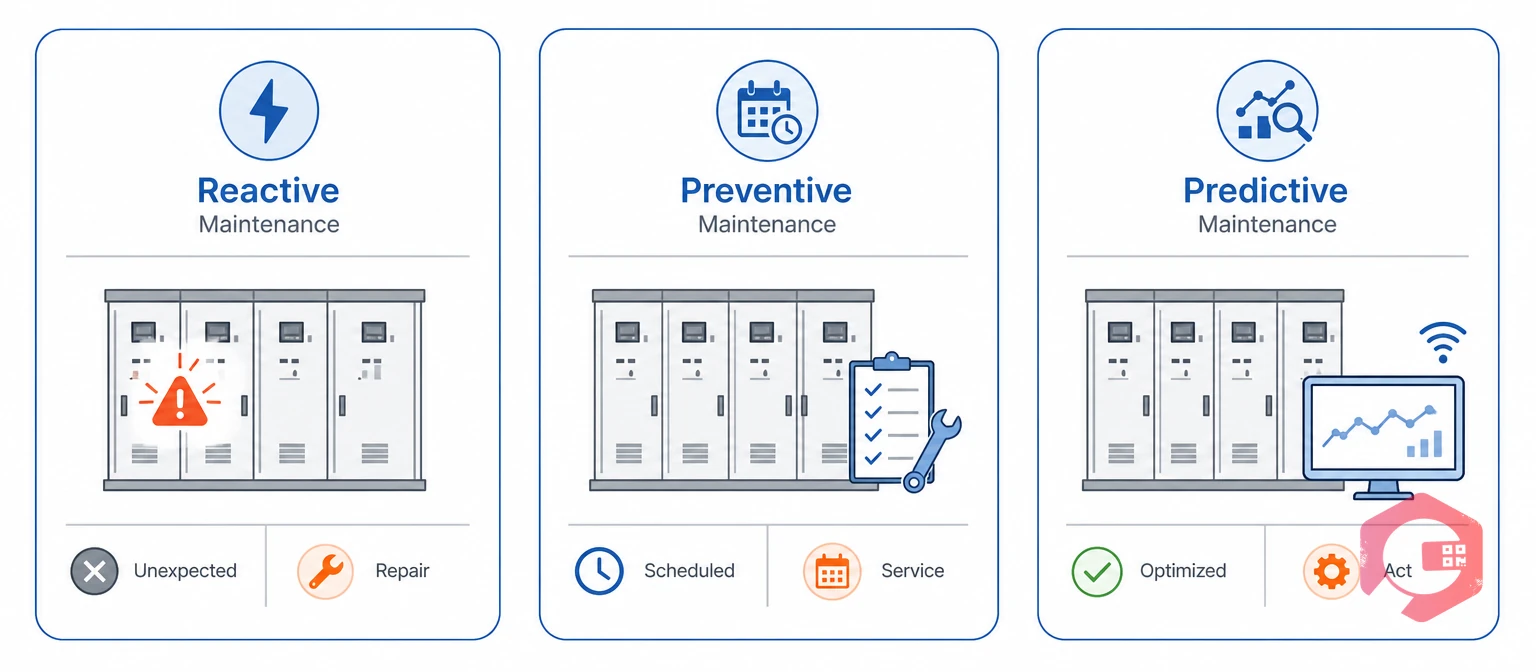
Plants generally run this work under one of three strategies. Most mature programs blend all three, based on breaker criticality.
| Approach | When It Applies | Typical Task | Main Trade-off |
|---|---|---|---|
| Reactive | Only after a failure or fault trips the breaker | Repairing or replacing a breaker after it fails | Highest risk of arc flash and unplanned downtime |
| Preventive | Fixed calendar or operation-count interval | Annual thermographic scan, 3-year contact resistance test | Can over-service healthy breakers and under-service busy ones |
| Predictive | Triggered by measured wear or drift | Rising contact resistance or SF6 pressure drop opens a work order | Needs steady historical data per asset to work well |
Reactive maintenance still shows up for low-criticality LV breakers. It's a poor fit for main incomers and tie breakers, where the failure mode is too severe to accept.
Ready to see how the scheduling side works? Explore Cryotos preventive maintenance software.
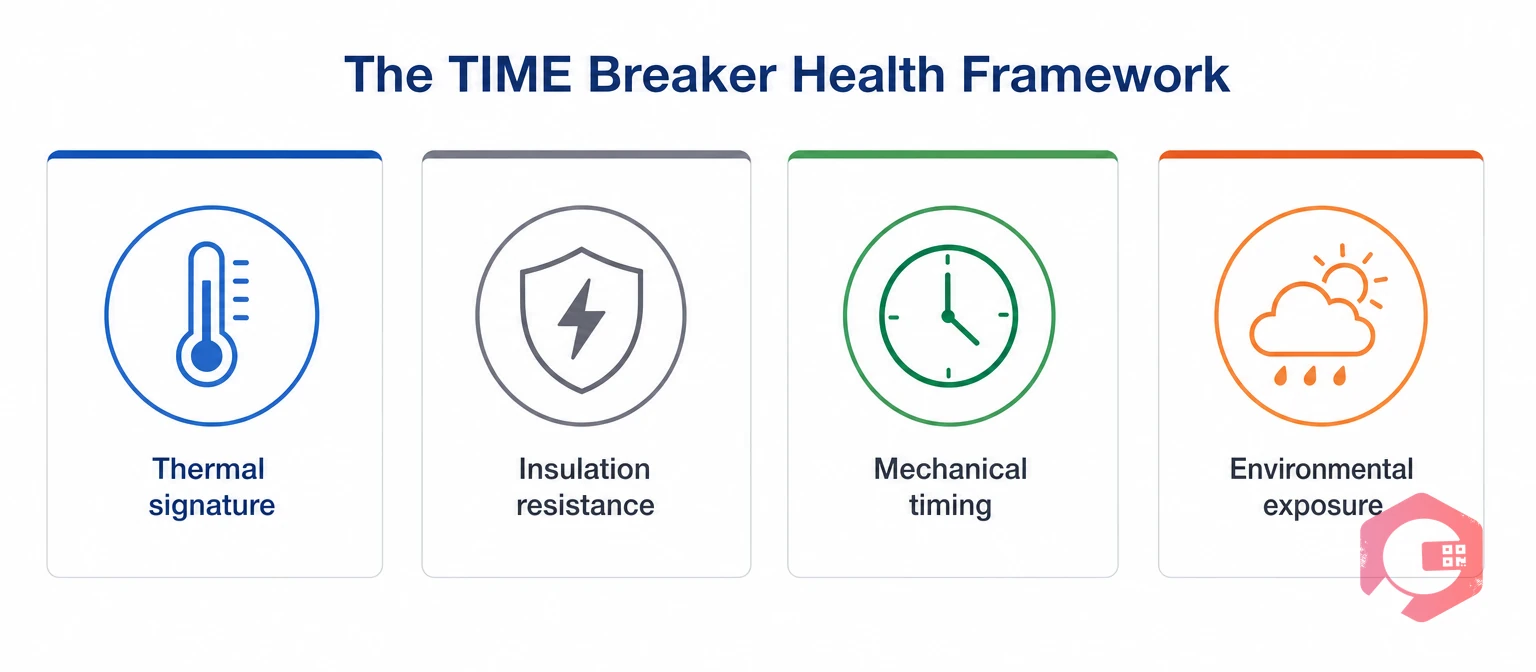
Deciding what to check gets easier with a consistent framework instead of an ad hoc list. Teams that track four indicators catch most developing faults before a trip.
The TIME Breaker Health Framework:
Contact resistance testing is a micro-ohm measurement that flags worn breaker contacts before they cause a nuisance trip. Feed these four readings into an IoT meter reading integration. That lets you move specific breaker families from calendar-based to condition-based maintenance once enough trend data builds up.
The table below reflects the intervals most plants start with. They come from NFPA 70B and NETA MTS guidance, then get adjusted for actual duty cycle and criticality.
| Task | Frequency | Standard Reference | Criticality |
|---|---|---|---|
| Visual and thermographic inspection | Quarterly to annually | NFPA 70B | All switchgear |
| Contact resistance test | Every 1-3 years | NETA MTS | Main and tie breakers |
| Insulation resistance test | Annually | NFPA 70B / NETA MTS | MV and HV switchgear |
| SF6 gas pressure check | Annually | IEEE C37 / manufacturer | SF6 breakers only |
| Trip unit and relay test | Every 1-3 years | NFPA 70B | Protective relays |
Turning this table into recurring, assigned work is where paper-based programs slip. Digital maintenance checklists tied to each breaker keep the interval, the pass criteria, and the sign-off in one place instead of a binder.
The NFPA 70B standard is the reference most plants cite when an auditor asks why an interval was chosen.
The testing methods above are well established. What actually derails switchgear and circuit breaker maintenance is usually organizational, not technical.
None of these problems are technical. They're process problems. That's good news, because process problems are fixable without new test equipment.
Most maintenance teams recognize these patterns right away. They show up the same way across almost every plant still running this program on paper.
A CMMS closes the organizational gaps above. It doesn't change the underlying test methods. What changes is how consistently those methods actually get run, tracked, and proven.
Maintenance teams using Cryotos have reported up to 30% reduction in unplanned downtime and 25% faster repair turnaround. Most of that gain comes from capturing the right data every time, not occasionally.
That consistency is what makes moving from calendar-based to condition-based maintenance realistic for more than a handful of critical breakers. A documented program also protects the plant itself.
An audit trail is the time-stamped record of every inspection and test that proves a maintenance program ran as planned. Insurers and regulators increasingly expect to see one before they sign off on a facility's electrical safety program. A small maintenance team can build that record automatically, just by doing the work through the system instead of around it.
Most plants follow NFPA 70B guidance: a visual and thermographic inspection at least once a year, with contact resistance and insulation resistance testing every one to three years depending on breaker criticality. Main and tie breakers usually get tested more often than lightly loaded feeder breakers. A breaker that operates dozens of times a day wears faster than one that rarely cycles, so the actual interval should reflect real use, not just the calendar.
Preventive maintenance runs on a fixed calendar or operation-count schedule, regardless of measured condition. Predictive maintenance uses readings like contact resistance or SF6 pressure to trigger work only when the data shows a developing problem. That cuts unnecessary servicing on breakers that are still healthy.
Skipping it raises the risk of an arc-flash event, a breaker failing to trip during a fault, and faster wear that shortens the equipment's service life. Any one of these can turn a routine service into an unplanned outage or a safety incident.
Yes. A CMMS can generate recurring work orders from time-based intervals or from meter and condition-based triggers. It also escalates any task that goes overdue instead of relying on a manual reminder or a sticky note. Most teams set this up once per asset class, then let the system handle the rest.
Arc flash is a sudden release of energy from an electrical fault that can cause severe burns and equipment damage. Regular switchgear and circuit breaker maintenance cuts that risk by catching the loose connections, worn contacts, and insulation failures that most often trigger these events.
Building a documented, consistent switchgear and circuit breaker maintenance program is the clearest way to cut both safety risk and unplanned downtime. Schedule a free demo to see how Cryotos turns your breaker inspection schedule into automated, audit-ready work orders.



Cryotos AI predicts failures, automates work orders, and simplifies maintenance—before problems slow you down.



