

TQM implementation is the process of applying Total Quality Management principles across all departments, processes, and people in a manufacturing organization to deliver consistent product quality, reduce waste, and drive continuous improvement. Unlike one-time quality audits or isolated checks, TQM is an ongoing operational philosophy backed by data, structured processes, and strong maintenance practices.
Manufacturers who implement TQM cut production defects, improve equipment reliability, and reduce operational costs measurably. The key is pairing TQM principles with modern digital tools — specifically a CMMS — that can standardize processes, track asset performance, and surface actionable insights at scale.
Key Takeaways

Total Quality Management is a management framework that integrates quality assurance into every aspect of an organization — from shop floor operations to management decision-making. Developed by quality pioneers Deming, Juran, and Feigenbaum, TQM remains the most widely adopted quality framework in manufacturing today.
TQM's core principles include customer focus, process standardization, fact-based decision-making, and continuous improvement — often called Kaizen. What distinguishes TQM from narrower quality programs is that it spans the entire organization, not just the quality department.
For manufacturers, equipment reliability sits at the heart of TQM. When machines fail unexpectedly, product quality deteriorates. That is why maintenance management is the practical starting point for any TQM implementation.
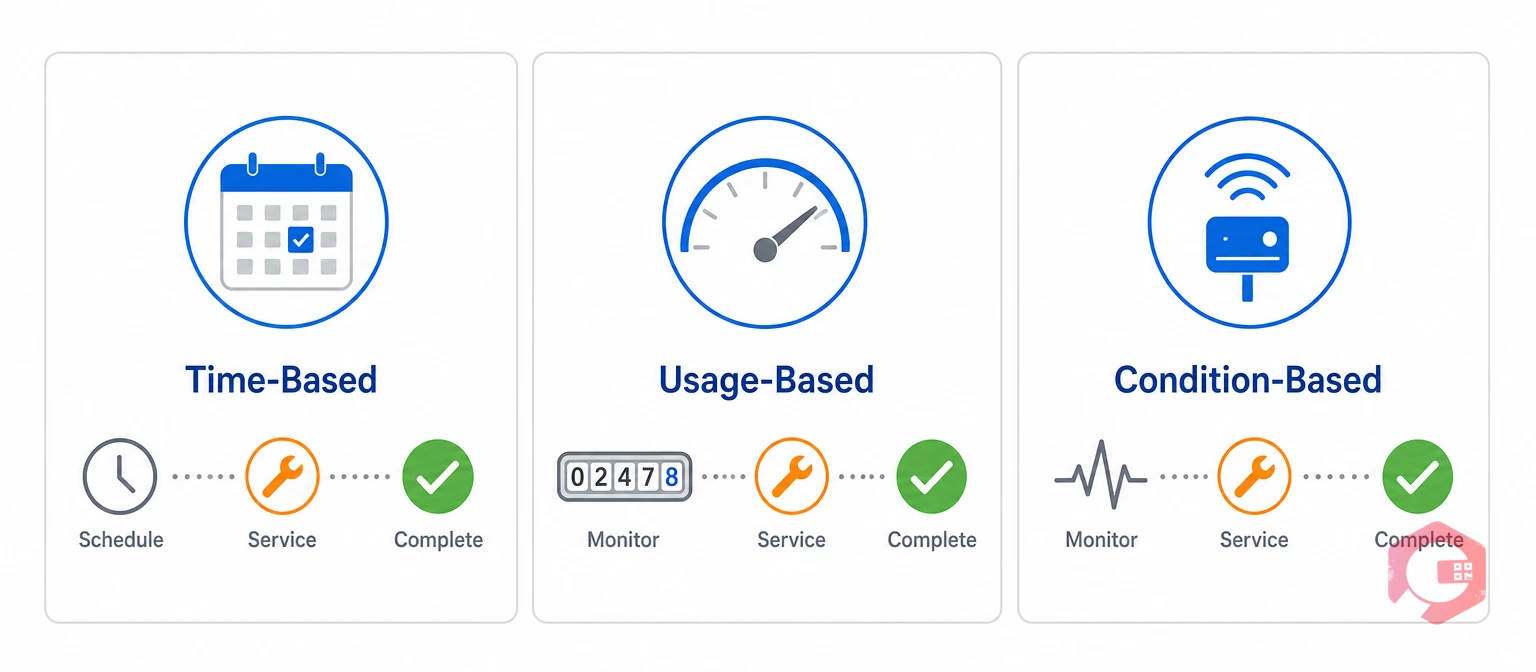
Equipment failures are the single biggest source of quality defects on the shop floor. A machine running outside its optimal parameters — whether due to worn tooling, inadequate lubrication, or an overdue calibration — produces parts outside specification before anyone notices.
A preventive maintenance software platform automates scheduling based on time intervals, usage hours, or condition data. This ensures every asset receives the attention it needs before failures occur.
Manufacturers using structured preventive maintenance programs report up to 30% less unplanned downtime. Fewer breakdowns directly translate to more consistent production runs and fewer quality excursions.
Process variation is the enemy of product quality. When different technicians perform the same inspection differently — checking different parameters, using different tolerances, at different frequencies — quality becomes inconsistent by design.
Digital maintenance checklists tied to SOPs eliminate this variation. Every technician follows the same procedure, in the same order, with the same acceptance criteria — regardless of shift or experience level.
Paper-based maintenance systems hide information that TQM programs need. Tasks get lost, priorities conflict, and maintenance history is scattered across filing cabinets and email threads.
Digital work order management centralizes every maintenance activity in one system. Supervisors assign, prioritize, and track tasks in real time. Technicians receive clear instructions with attached SOPs and parts lists. Managers see live status without chasing phone calls.
Asset lifecycle management is the practice of tracking every maintenance event, failure mode, and performance metric for a piece of equipment from installation through decommissioning. This data is what makes TQM's continuous improvement cycle possible in practice.
Without full asset history, maintenance teams repeat the same mistakes because they cannot identify the pattern connecting individual failures to a root cause.
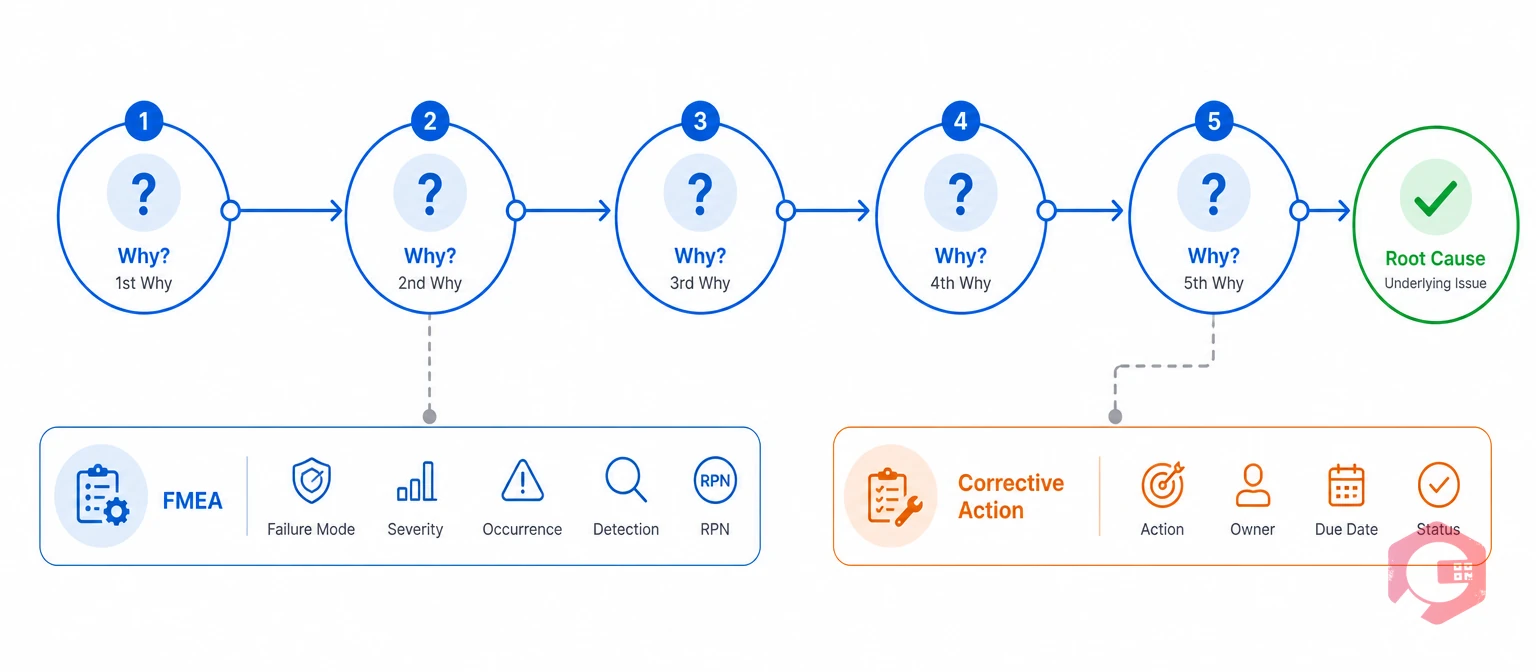
TQM's continuous improvement philosophy requires finding and fixing the causes of problems, not just the symptoms. Root cause analysis (RCA) is the structured method for doing this.
When maintenance data is centralized in a CMMS, RCA becomes faster and more accurate. Instead of relying on memory and anecdote, teams analyze actual work order history, failure logs, and inspection records to trace a defect back to its origin.
One of manufacturing's most persistent quality risks is knowledge concentration. When a production process depends on one experienced technician who knows how a machine "should sound" before it fails, that knowledge is fragile and non-transferable.
An AI-powered knowledge base within a CMMS captures maintenance procedures, troubleshooting guides, and best practices in a searchable, centralized repository. New technicians access the same expertise that took years to build — instantly, at the point of use.
Quality information has no value if it sits in a system no one updates until the end of the shift. Real-time data capture at the point of maintenance is essential for TQM's requirement for accurate, timely quality information.
Mobile CMMS tools with offline capability let technicians update work orders, complete inspection checklists, and capture photos directly from the shop floor — even in areas with no network coverage. Data syncs automatically when connectivity is restored.
A well-planned preventive maintenance program fails if parts are not available when needed. A machine kept down by a missing spare part creates exactly the kind of unplanned production gap that TQM is designed to eliminate.
Integrated spare parts management within a CMMS links inventory levels directly to maintenance schedules and historical consumption patterns. The system knows what parts are needed, when they are needed, and triggers replenishment before stock runs out.

TQM is only as good as the data behind it. Without visibility into how equipment is actually performing, management decisions are based on reports that are already out of date.
Real-time maintenance analytics dashboards track the KPIs that matter most to quality outcomes:
The BI dashboard in Cryotos rolls these metrics into a live view that updates in real time, eliminating the weekly spreadsheet rebuild that delays decisions.
Manual approval workflows, notification gaps, and inconsistent escalation paths introduce errors into any quality system. When a technician closes a job but no one reviews it for a week, a quality-critical finding goes unaddressed.
No-code workflow automation within a CMMS defines exactly what happens when specific conditions are met — automatically. Approval requests are sent, escalations triggered, and notifications delivered without anyone manually tracking the process.
Workflow automation is the connective tissue of TQM — it ensures every process step is completed, every time, without depending on individual memory or manual follow-up.
The most practical first step is establishing a preventive maintenance program supported by a CMMS. Equipment reliability is the foundation of product quality — until maintenance is proactive and data-driven, other TQM initiatives lack the operational stability to deliver results.
A CMMS supports TQM by digitizing maintenance workflows, standardizing inspection procedures, providing root cause analysis data, and delivering real-time KPI dashboards. It acts as the operational backbone that connects maintenance activity to quality outcomes across the entire plant floor.
The most important maintenance KPIs for TQM include MTBF (Mean Time Between Failures), MTTR (Mean Time to Repair), maintenance compliance rate, OEE, and unplanned downtime percentage. Together, these metrics reflect equipment reliability, maintenance effectiveness, and production quality consistency.
A basic TQM framework — covering preventive maintenance, inspection checklists, and digital work orders — can be operational within 90 days using a modern CMMS. Full TQM maturity, including advanced analytics, root cause analysis workflows, and workforce-wide adoption, typically takes 12 to 18 months to achieve.
TQM (Total Quality Management) focuses on quality improvement across all organizational processes. TPM (Total Productive Maintenance) focuses specifically on eliminating equipment losses through operator-led maintenance and reliability engineering. In practice, the two complement each other — TPM's equipment reliability improvements directly support TQM's quality objectives.
Ready to implement TQM with the maintenance infrastructure to support it? Schedule a free demo to see how Cryotos connects preventive maintenance, inspection checklists, work order management, and real-time analytics into one platform for manufacturing quality excellence.



Cryotos AI predicts failures, automates work orders, and simplifies maintenance—before problems slow you down.



