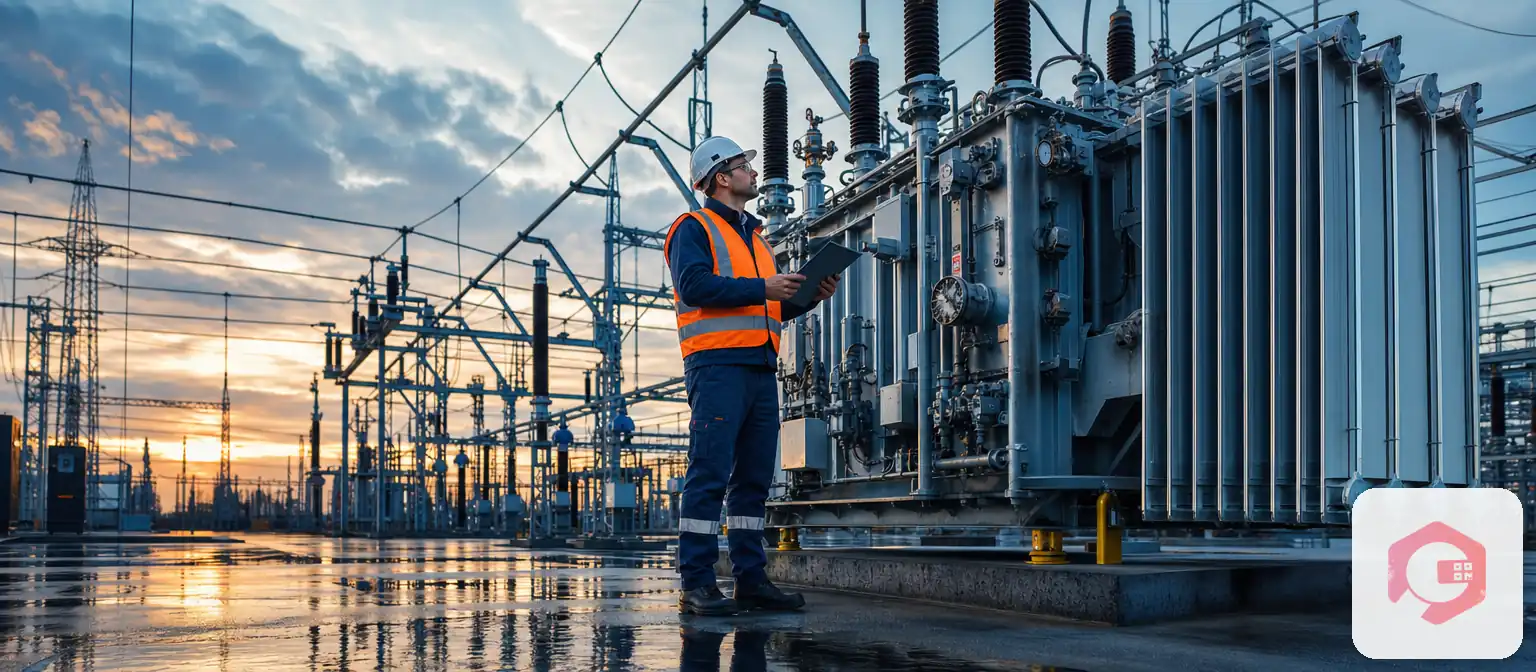
Utility asset management is the practice of planning, operating, maintaining, and replacing the physical infrastructure that delivers power, water, gas, and telecommunications services to homes and businesses. As grids age, regulations tighten, and customer expectations rise, utility operators are under pressure to get more out of every asset while spending less on reactive repairs and costly outages. According to the IEA World Energy Investment 2023 report, global investment in electricity networks alone exceeded $300 billion in 2023 — yet a significant share of that spending goes toward replacing infrastructure that better maintenance would have extended by years.
These nine trends are reshaping how utilities manage their assets right now — and the organisations that move fastest on them will carry the lowest cost base and the highest reliability scores into the next decade.

For decades, utility maintenance ran on fixed calendars: inspect the transformer every six months, replace the valve every three years. The problem is that two assets of the same age and model can have wildly different failure profiles depending on their load history, environment, and operating conditions. Treating them identically wastes money on assets that do not need attention and misses failures brewing in assets that do.
Predictive maintenance uses sensor data, operational history, and condition monitoring readings to predict when a specific asset is likely to fail — and triggers maintenance only when evidence supports it. Utilities deploying condition-based maintenance on their most critical assets are reporting 20 to 40% reductions in unplanned outages and significant drops in per-asset maintenance spend.
A utility that cannot see the real-time state of its field assets is flying blind. IoT sensor networks are changing that at scale — pressure sensors on water mains, temperature monitors on substation transformers, vibration sensors on pump stations, and flow meters on gas distribution lines are all feeding live data back to central operations centres.
When that sensor data is connected to a maintenance management system, it closes the loop between detection and action. An abnormal temperature reading on a substation transformer can automatically trigger a work order for field inspection before a failure occurs. Cryotos's IoT meter reading integration pulls live readings from connected devices directly into the maintenance workflow — so alerts become actions, not just notifications on a dashboard nobody checks.
With thousands of assets spread across hundreds of square kilometres, no utility team can prioritise maintenance manually and get it right every time. AI-powered risk scoring engines are changing this — they ingest maintenance history, sensor readings, age, criticality, and consequence-of-failure data to produce a ranked list of which assets need attention most urgently.
This approach moves decision-making from gut feel and seniority to evidence. According to Gartner research on AI in asset management, organisations using AI-driven prioritisation cut critical asset failures by up to 25% compared to traditional schedule-based approaches.
A digital twin is a virtual representation of a physical asset — updated continuously with real operating data so it mirrors the actual condition and performance of its real-world counterpart. The asset lifecycle management decisions that digital twins support — when to repair, when to refurbish, when to replace — translate directly into capital budget efficiency and reduced emergency spending.
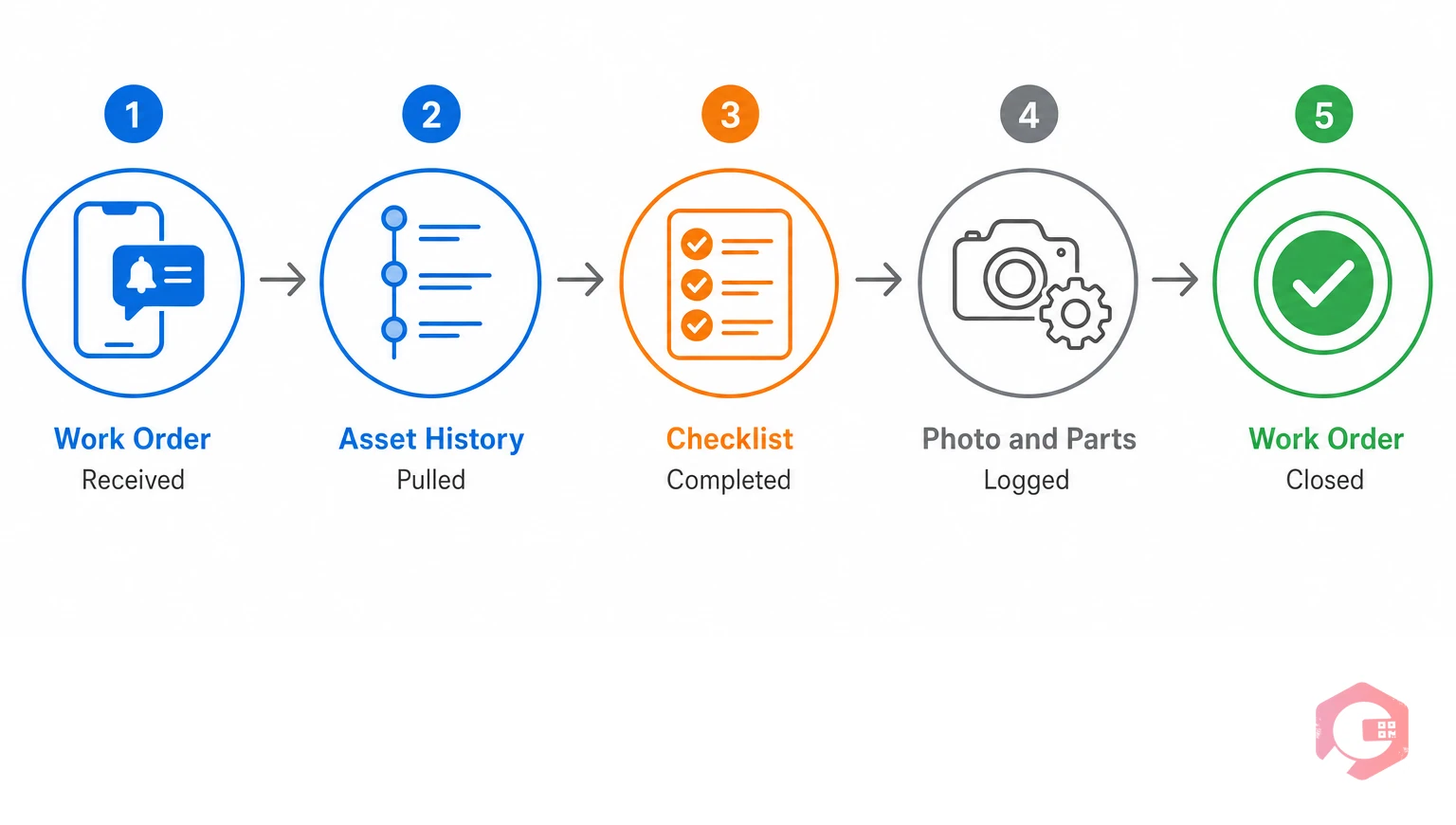
Field technicians working on utility infrastructure spend most of their working day away from a desk. Mobile-first maintenance platforms are eliminating this friction. When a technician arrives at a pumping station with a mobile CMMS app, they can pull up the full asset history, complete a digital checklist, photograph any defects, log parts used, and close the work order — all from the field. Cryotos's mobile CMMS supports offline mode with automatic sync, which matters for field teams working in remote locations with patchy connectivity.
Utility operators face some of the most demanding regulatory environments of any industry. A modern asset management system automates the compliance calendar: it schedules mandatory inspections, sends escalating alerts when deadlines approach, captures digital sign-offs, and stores all records in a searchable audit trail. Cryotos's document management capability keeps inspection certificates, compliance reports, and regulatory records attached to the specific assets they relate to.
Risk-based investment planning replaces age as the primary driver with a more nuanced calculation: probability of failure multiplied by consequence of failure. The BI dashboard in Cryotos aggregates work order history, failure frequency, downtime data, and repair costs by asset — exactly the inputs a risk-based investment planning model needs. The ISO 55001 Asset Management standard provides a globally recognised framework for implementing risk-based investment planning in utility environments.

The utility sector is facing a significant demographic challenge. Knowledge management systems embedded in CMMS platforms are becoming a critical tool for capturing and transferring this expertise before it walks out the door. Cryotos's AI-powered knowledge base makes institutional knowledge searchable and accessible to the whole maintenance team.
Integrating an EAM (Enterprise Asset Management) system with ERP platforms like SAP or Microsoft Dynamics 365 closes the gap between maintenance and financial data. Cryotos supports ERP integration with SAP and Microsoft Dynamics 365. According to a McKinsey analysis of utility operational models, utilities that achieve tight integration between asset management and financial systems reduce their total maintenance spend by 15 to 25% over five years.
Utility asset management is the structured approach to planning, maintaining, operating, and replacing the physical infrastructure used to deliver utility services — including power lines, water mains, gas distribution networks, substations, and pumping stations.
Utility infrastructure failures carry consequences far beyond the immediate repair cost. Predictive maintenance catches developing failures before they become outages, reducing both the frequency and severity of service disruptions.
A CMMS supports utility asset management by centralising work order management, automating preventive and predictive maintenance schedules, capturing field inspection data on mobile devices, generating compliance documentation automatically, and integrating with IoT sensors and ERP systems.
ISO 55001 requires organisations to establish a documented asset management system that aligns asset decisions with organisational objectives, manages risk across the asset portfolio, and demonstrates continuous improvement in asset performance.
The utility sector's asset challenges are not going away. Cryotos gives utility maintenance teams the platform to act on all nine of these trends — from IoT-triggered work orders and mobile field operations to AI-powered knowledge management and ERP-integrated cost tracking.



Cryotos AI predicts failures, automates work orders, and simplifies maintenance—before problems slow you down.