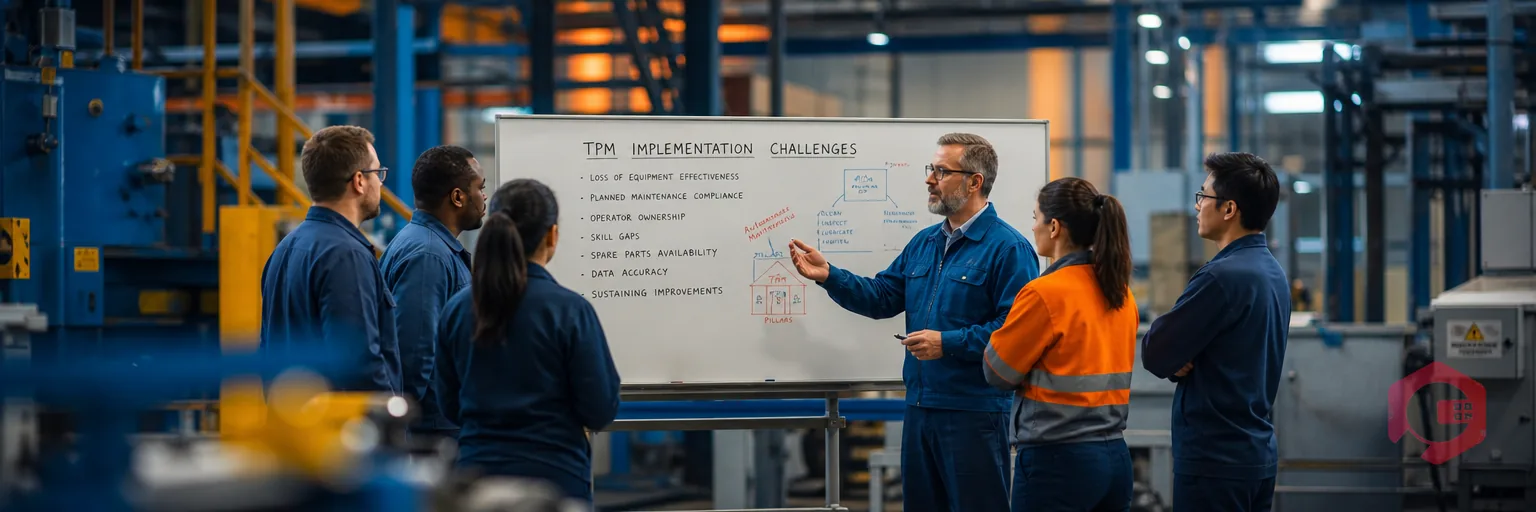
TPM implementation challenges are the habits, skill gaps, and data problems that stop Total Productive Maintenance programs from working. The most common ones are reactive culture, operator resistance, weak management buy-in, training gaps, and unreliable asset data.
Most plants meet these challenges in the same order. That's good news. Each one has a proven fix, and this guide walks through them one by one.
Key Takeaways
TPM implementation is the structured process of rolling out Total Productive Maintenance across a plant. It involves operators, maintenance teams, supervisors, and managers together. It is not just a new procedure handed down from the top.
TPM traces back to the Japan Institute of Plant Maintenance. The institute formalized the method in the 1970s. The goal has stayed the same since then: cut equipment losses and build a culture of continuous improvement.
Most facilities support this shift with a Computerized Maintenance Management System, known as a CMMS, to schedule work and log inspections in one place. Without one, the challenges below tend to pile up fast.
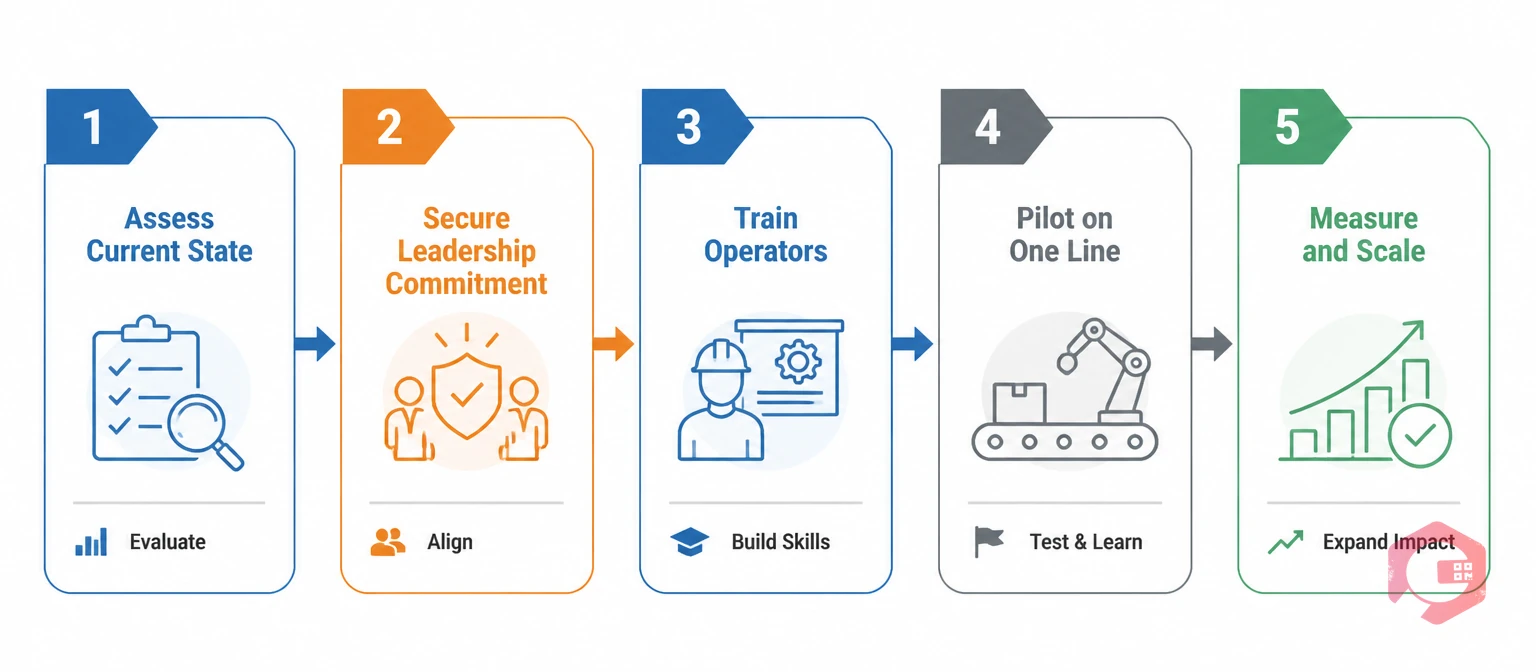
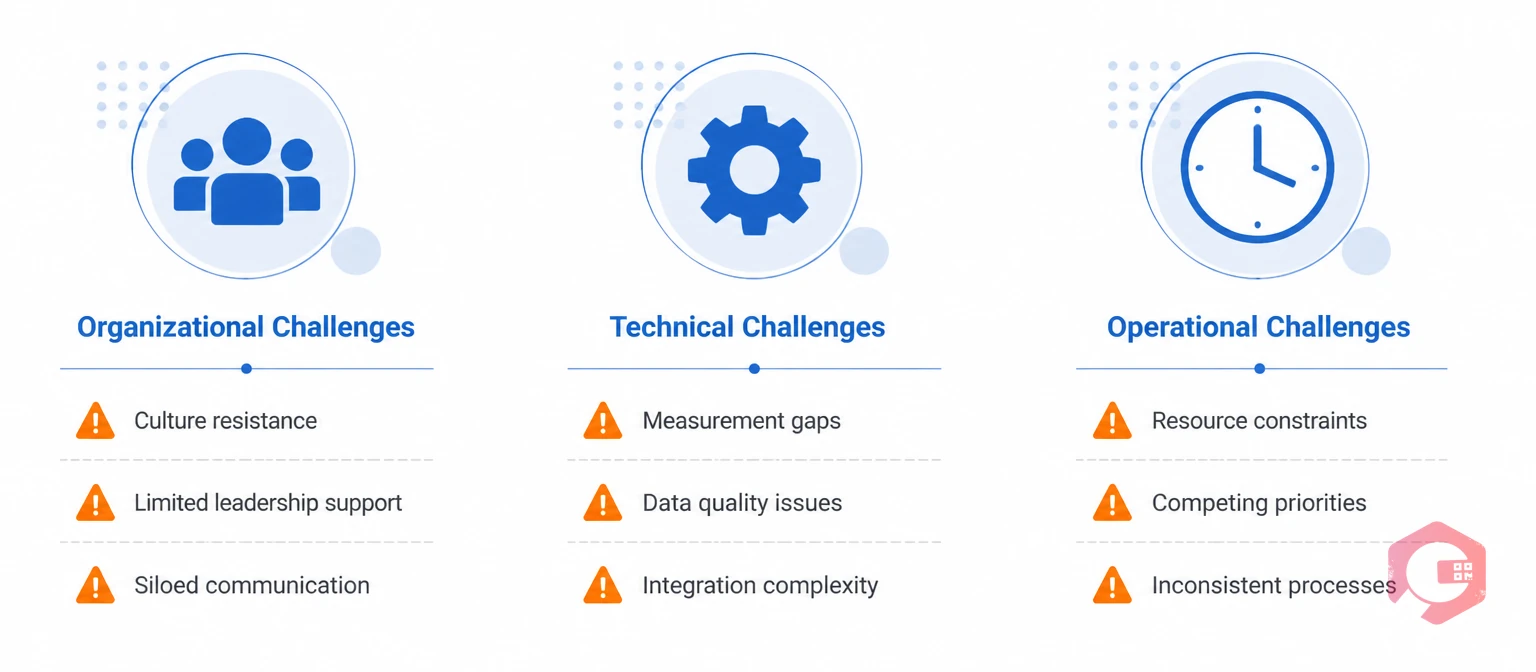
Most TPM implementation challenges start before the program even launches. They come from how the plant already runs day to day. Reactive maintenance culture is the biggest one. When teams only fix equipment after it breaks, planned work feels like extra effort instead of protection.
Teams that succeed at this stage usually digitize asset history and maintenance calendars first. Visibility has to exist before culture can change. Skipping straight to autonomous maintenance without this groundwork is one of the most common early mistakes.
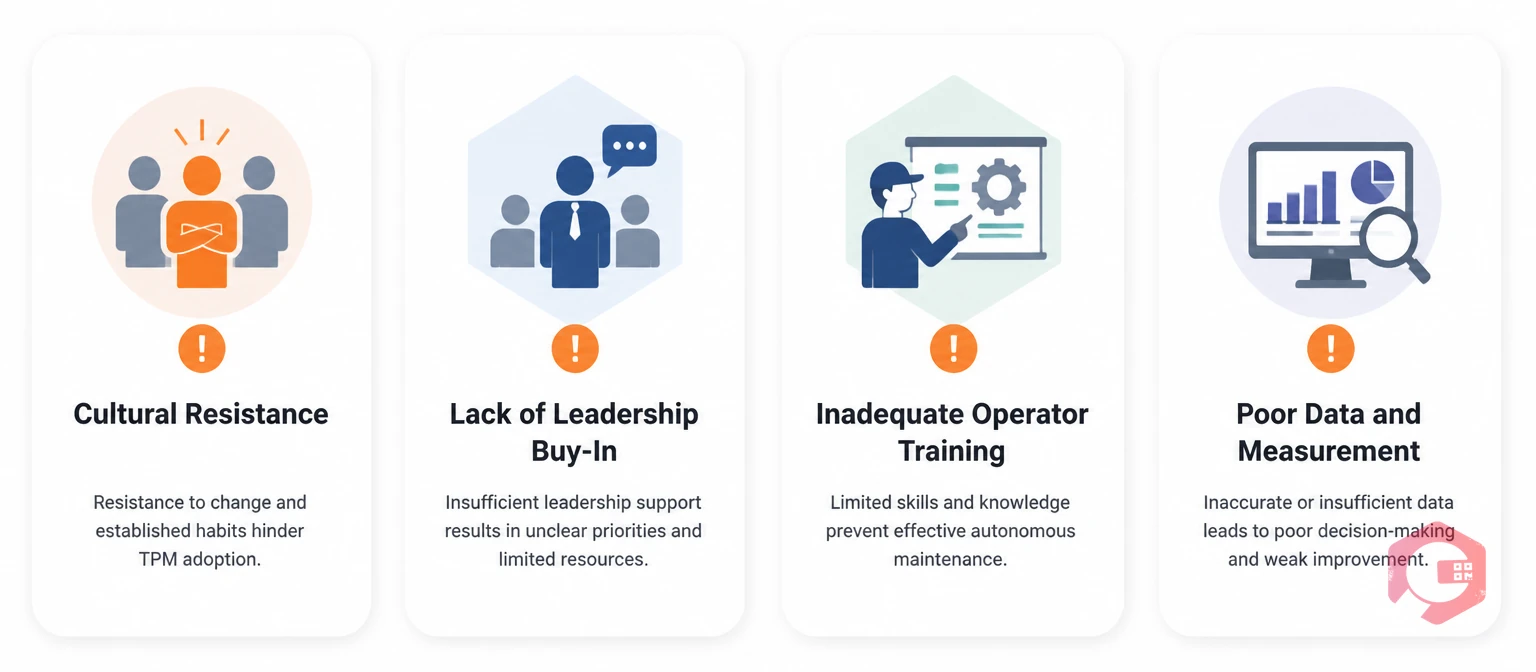
Employee resistance to TPM implementation usually comes from fear, not opposition. Operators worry that autonomous maintenance means more work with no extra time or credit for doing it.
Four things consistently turn resistant teams into supportive ones:
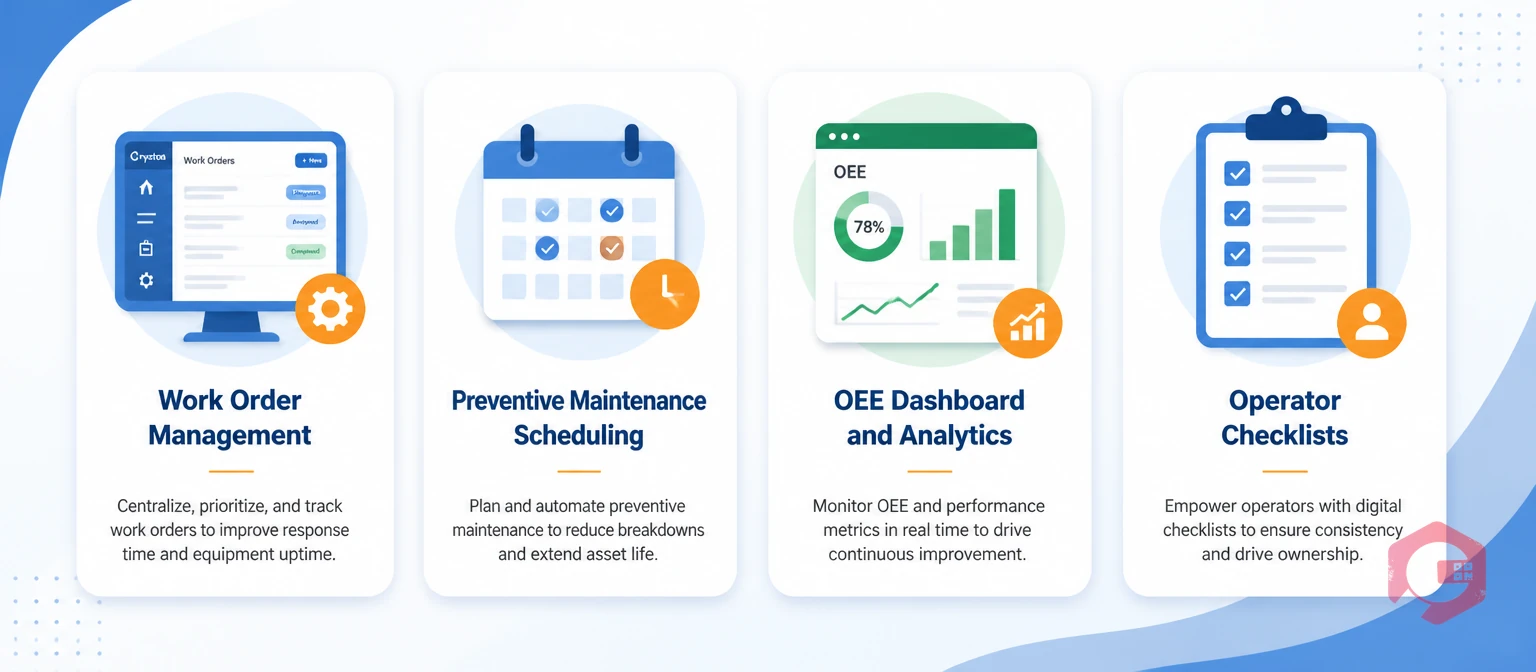
A mobile app with simple digital checklists removes most of the friction. Operators finish inspections in minutes instead of filling out paper forms nobody reads.
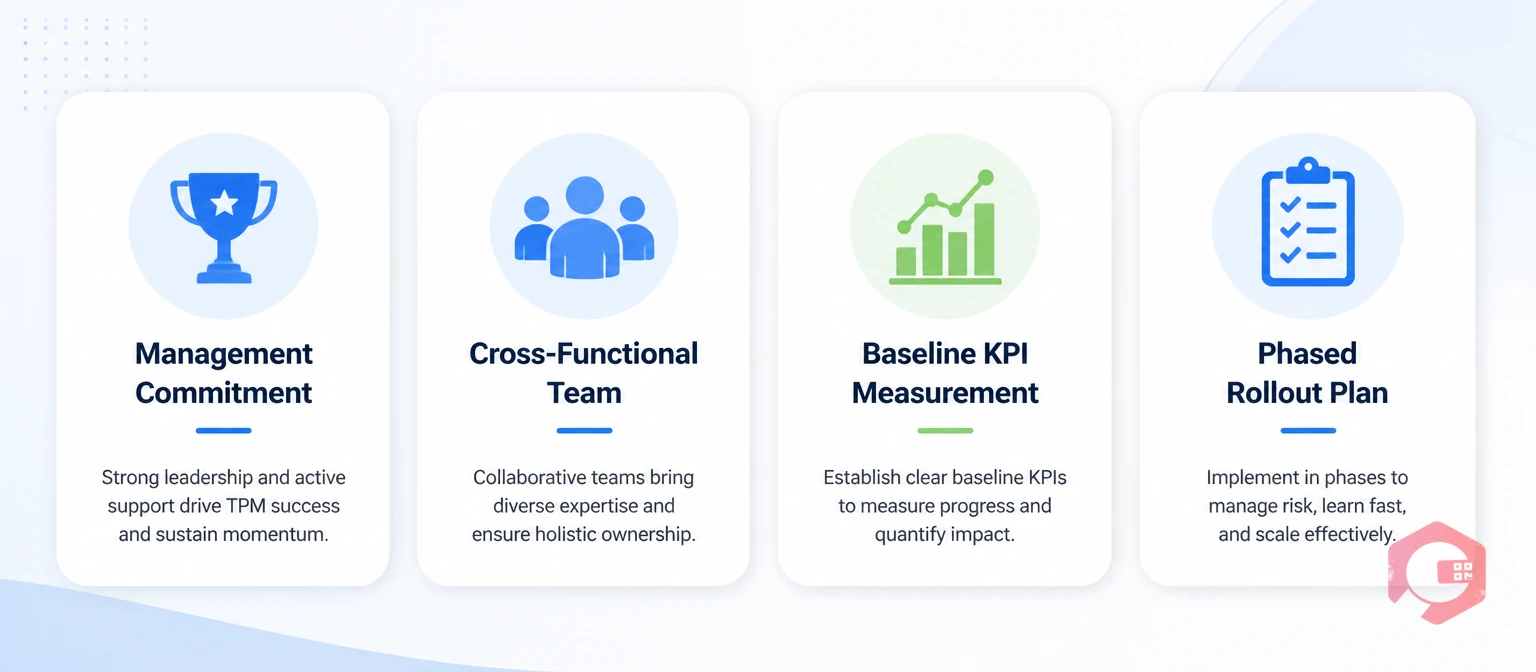
Lack of management commitment is one of the fastest ways to kill a TPM program. It shows up as poor resource allocation, missing KPIs, and reviews that quietly stop after the first quarter.
Operators notice fast when leadership stops tracking what it promised to track. That mismatch kills program credibility, not the technology behind it.
See exactly how much unplanned downtime is costing your plant with Cryotos's free OEE calculator. It's often the number that keeps leadership engaged past the honeymoon phase.
Skill gaps stall TPM implementation when operators inspect equipment they were never trained to assess. Most plants underestimate how much judgment autonomous maintenance actually takes.
Digital SOPs that operators can pull up on the shop floor beat binder-based training every time. The information shows up exactly when it's needed, not just once during onboarding.
Poor asset data quietly undermines TPM implementation, because every decision depends on it. PM frequency, spare parts stocking, and failure analysis all rely on accurate history.
Missing records also make it hard to prove ROI to leadership. That loops straight back into the commitment problem above.
Most facilities fix this by centralizing records first. Then they rebuild PM schedules on top of clean data instead of guesswork.
Autonomous maintenance is the TPM pillar where operators own daily equipment cleaning and inspection. It is also one of the hardest pillars to implement. It asks people to change habits built over years.
The most common sticking points are unclear ownership between operators and technicians, inconsistent inspection routines, and checklists that feel like busywork.
Facilities that get autonomous maintenance right treat it as a habit-building exercise first. Paperwork comes second, not first.
Planned maintenance breaks down in TPM programs around three things: scheduling conflicts, missing parts, and stretched technicians. Each one pushes PM tasks to "next week" indefinitely.
A PM schedule that looks perfect on paper is worthless if the parts aren't in stock. Delayed PMs then cause more breakdowns. Those breakdowns eat up the very resources needed to catch up.
Teams using preventive maintenance software with drag-and-drop scheduling close this gap fastest. Conflicts surface before PMs get missed, not after.
Overall Equipment Effectiveness is a single score that combines availability, performance, and quality. A program that only tracks OEE is missing two-thirds of the real picture, though.
The TPM Success Triangle:
Programs that only watch the equipment corner of this triangle often look healthy on paper while adoption quietly slips. A dashboard that tracks all three gives a far more honest read on program health.
Sustaining TPM after implementation is harder than launching it. Early enthusiasm fades. Old habits creep back in without deliberate reinforcement. Most facilities see a dip six to twelve months after launch if nothing actively maintains momentum.
Automated reminders and escalations, sent without manual follow-up, usually separate programs that sustain gains from ones that quietly slide back to reactive maintenance.
CMMS software supports TPM implementation as a decision-support and execution platform. It doesn't implement TPM on its own. It removes the admin friction behind most of the challenges above, though, and that friction is often what quietly kills momentum.
Maintenance teams using Cryotos have reported up to 30% reduction in unplanned downtime and 25% faster repair turnaround. Most of that gain comes from downtime tracking, checklists, and inventory sitting in one system instead of scattered spreadsheets.
The software doesn't replace culture change. It just makes culture change measurable and easier to sustain over time.
Most facilities see early wins in inspection consistency within three to six months. OEE gains usually take nine to eighteen months to become clear and repeatable.
TPM implementation works best with joint ownership between operations and maintenance leadership. A steering team that includes operators works better than one department running it alone.
The most common failure point is losing management commitment after the initial rollout. KPI reviews lapse, and autonomous maintenance routines quietly stop soon after.
A CMMS isn't strictly required. Facilities without one, though, typically struggle to keep records and KPI tracking consistent enough to sustain TPM past the first year.
TPM focuses on operator-driven daily ownership and overall equipment effectiveness. Reliability-centered maintenance is a more analytical, failure-driven approach usually led by reliability engineers.
Every challenge above traces back to one thing: a gap between what TPM asks of a team and what their tools let them track. Schedule a free demo to see how Cryotos turns TPM implementation into a program that sustains itself, with kaizen-style continuous improvement built in.

Cryotos AI predicts failures, automates work orders, and simplifies maintenance—before problems slow you down.