Voice-Based Work Order Creation for Facility Teams: The Complete Guide

Article Written by:

Meyyappan M

Created On:

April 24, 2026

Voice-Based Work Order Creation for Facility Teams: The Complete Guide

Voice-based work order creation for facility teams is the process of using spoken commands — captured through a mobile app — to instantly generate, assign, and log maintenance work orders in a CMMS. Instead of typing on a small screen with greasy gloves or navigating menus in a noisy plant room, a technician speaks a few words and the system creates a fully structured work order in seconds. According to a McKinsey report on maintenance operations, field technicians spend up to 30% of their working time on administrative tasks — voice technology directly attacks that waste. This guide covers exactly how voice-based work order creation works, why facility teams need it, and what to look for when evaluating tools.

What Is Voice-Based Work Order Creation?

Voice-based work order creation is a CMMS capability that lets maintenance and facility technicians dictate work orders using natural speech on a mobile device. The system captures the spoken input, processes it using AI and natural language processing (NLP), and maps it to the correct fields — asset, location, fault description, priority level, and assigned team — without any manual typing.

When a technician says “Air handler unit 3 in Building B is vibrating abnormally, flag it high priority for the HVAC team,” the system parses that sentence and populates every field automatically. The technician reviews the pre-filled form and submits with one tap. No menu navigation, no spelling errors in asset names, no missed fields.

Modern systems go beyond basic transcription. AI-powered NLP understands intent regardless of phrasing — “east wing chiller is grinding” and “the chiller in the east wing is making a grinding noise” produce the same structured work order. Some platforms also support voice and photo input simultaneously, so the receiving team gets both a verbal description and visual evidence in a single work order.

Why Facility Teams Need Voice-Based Work Order Tools

Facility management involves constant movement — from mechanical rooms to rooftops to occupied office floors. Technicians are always carrying tools, climbing ladders, or wearing protective gear. Pulling out a phone to navigate a multi-screen work order form in those conditions is impractical and error-prone.

A Plant Engineering study found that maintenance technicians spend an average of 15–20 minutes per shift filling out work orders, PMs, and fault logs. Across a team of 10 technicians working five days a week, that's over 800 hours a year lost to administrative work. Beyond time, typed entries are prone to errors: misspelled asset names, wrong location codes, skipped fields — gaps that degrade MTTR and MTBF reporting accuracy.

Voice input is faster and tends to be more accurate because it's captured at the point of observation, while details are fresh. The strongest use cases include inspection rounds (narrating findings asset by asset), reactive maintenance calls (logging the fault while standing in front of broken equipment), and PPE-restricted environments where typing with gloves is slow and awkward.

How Voice-Based Work Order Creation Works Step by Step

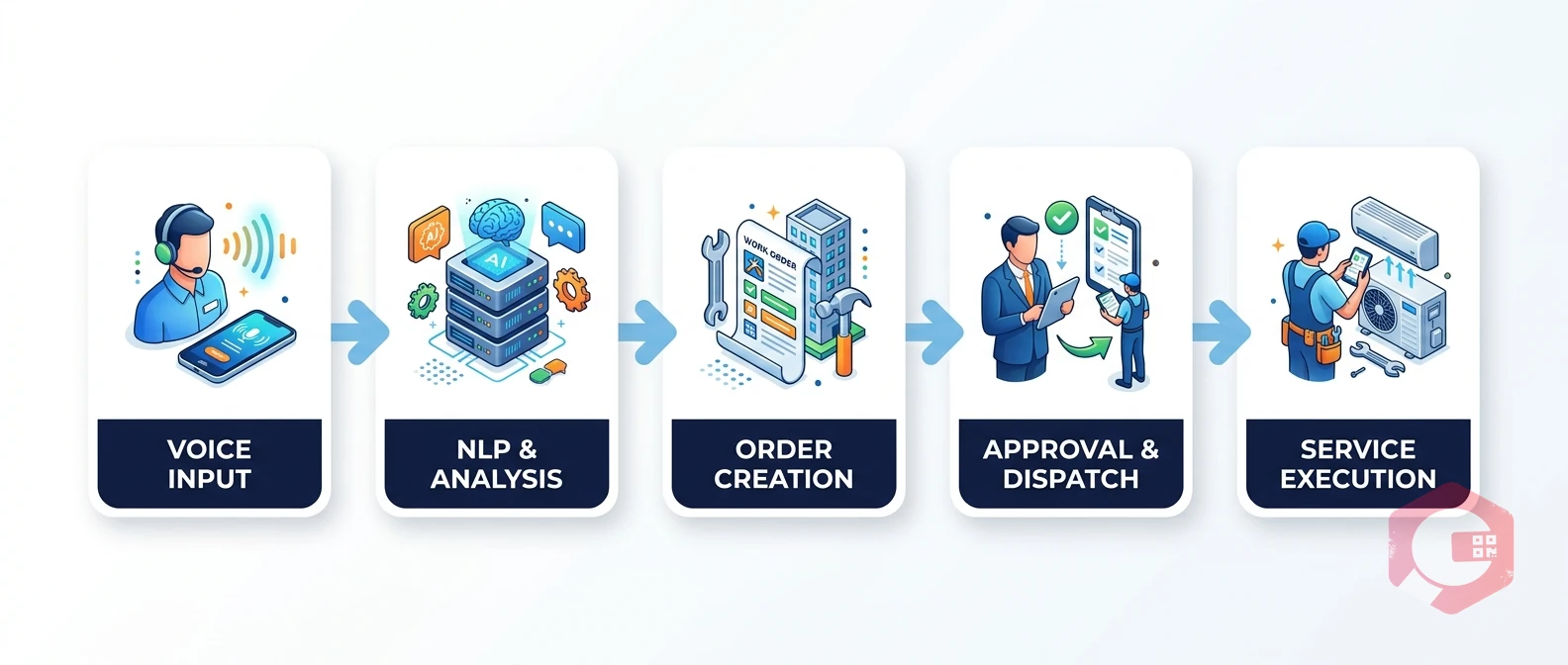
Voice-Based Work Order Creation for Facility Teams — workflow

Here's the end-to-end flow for a facility technician using a voice-enabled work order management system:

  • Step 1 — Open the mobile app: The technician opens the CMMS app. A voice button is accessible directly from the home screen or work order list.
  • Step 2 — Activate and speak: The tech taps the mic and describes the issue in plain language — asset, location, fault, priority, and any relevant context.
  • Step 3 — AI parsing: The system processes the speech, maps entities to existing CMMS records, and pre-fills the work order form.
  • Step 4 — Review and confirm: The technician sees the auto-filled work order, makes quick corrections if needed, and submits with one tap.
  • Step 5 — Auto-routing: The system assigns the work order to the correct team based on asset type and location, and sends real-time notifications via mobile, email, or WhatsApp.
  • Step 6 — Live tracking begins: Supervisors see status updates in real time — from “Open” to “In Progress” to “Completed” — without chasing anyone for updates.

The entire process takes under 60 seconds. Compare that to a manual flow where the technician might not log the fault until they're back at a workstation.

Key Features to Look For in a Voice-Enabled CMMS

Not all CMMS platforms handle voice equally. Basic tools offer simple speech-to-text transcription. Advanced platforms like Cryotos CMMS use generative AI to interpret and structure what the technician says. When evaluating options, look for:

  • Generative AI parsing: The system should map spoken entities to asset records, location codes, and team assignments — not just copy words into a text field.
  • Offline voice capture: Basements, server rooms, and loading bays often have weak connectivity. The app should capture voice offline and sync when connectivity returns.
  • Voice + photo input: Technicians should be able to speak a description and attach a photo simultaneously for richer, more accurate work orders.
  • Priority detection: Words like “urgent,” “emergency,” or “down” should automatically flag the work order as high priority and trigger escalation workflows.
  • QR code + voice pairing: Scanning an asset QR code before speaking pre-populates the asset field, so the technician only needs to describe the fault verbally.

Real-World Benefits for Facility Teams

Voice-Based Work Order Creation for Facility Teams — scenario

Voice input is typically three times faster than typing on a mobile keyboard, according to Nielsen Norman Group research. For a facility team creating 20–30 work orders per day, that compounds into hours of recovered productivity each week. Facility teams using AI-powered CMMS platforms report up to 25% faster MTTR as a direct result of faster work order creation and routing.

Voice work orders also improve safety and compliance. A technician using voice doesn't need to look at a screen in hazardous areas. And because the work order is created in real time, it leaves a cleaner audit trail for OSHA LOTO requirements and ISO 55001 asset management standards — where accurate, timely fault documentation is mandatory. Facilities undergoing audits often discover that verbal fault observations were never logged. Voice work order tools close that gap permanently.

How Cryotos Enables Voice-Based Work Order Creation

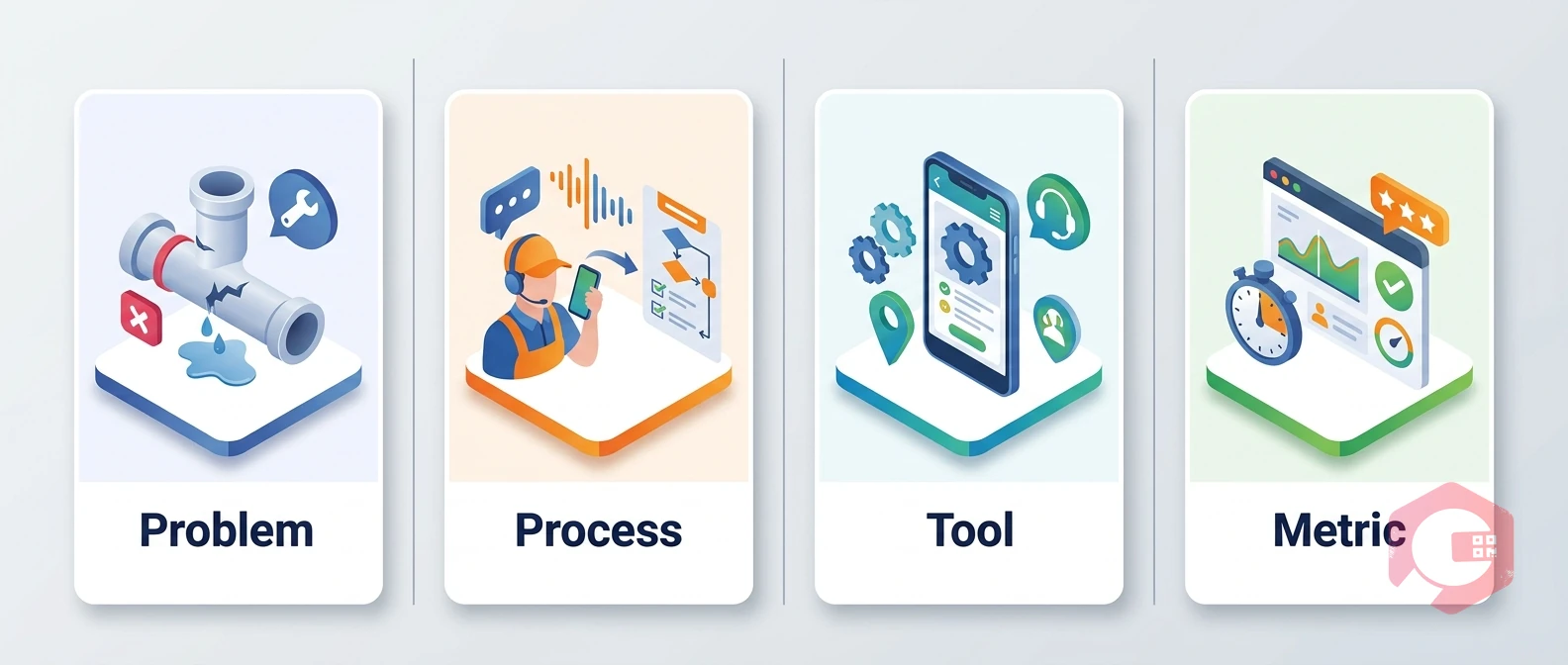
Voice-Based Work Order Creation for Facility Teams — problems grid

Cryotos is built for maintenance and facility teams that operate in demanding physical environments. Its generative AI layer supports voice commands and photo analysis simultaneously — a technician can scan an asset QR code, speak the fault description, attach a photo, and submit a complete AI-structured work order in under a minute, entirely from the mobile app.

Cryotos automatically routes work orders to the right technician or team based on asset type, location, and skill set. Real-time notifications go out via mobile push, email, or WhatsApp. Supervisors get live visibility through the Cryotos dashboard without needing to follow up by phone or radio. All voice-created work orders feed directly into the reporting module — MTTR, MTBF, and first-time fix rate data is accurate because it's built from real-time entries, not reconstructed from handwritten logs at shift end.

Cryotos customers report a 30% reduction in equipment downtime and 25% faster repair times after adopting the platform. If your facility team is still creating work orders by typing on a phone screen, you're losing time, accuracy, and compliance documentation every day. See how Cryotos makes voice-powered work order management part of your daily workflow.

Frequently Asked Questions

What is voice-based work order creation in facility management?

Voice-based work order creation is a CMMS feature that lets facility technicians dictate maintenance requests using spoken commands on a mobile device. AI and NLP convert the speech into a structured work order — with asset, location, priority, and team fields auto-populated — without manual typing.

Can voice commands work without internet connectivity?

Yes, leading CMMS platforms support offline voice capture. The mobile app stores the voice input locally and syncs the created work order to the server once connectivity is restored. This is especially important in basements, plant rooms, and remote facility areas with poor signal.

Do all CMMS platforms support voice work order creation?

No. Basic CMMS tools offer only typed mobile forms. Voice-enabled work order creation requires a dedicated AI/NLP layer and a mobile app designed for hands-free operation. When evaluating platforms, confirm whether the voice feature does entity extraction and auto-routing, or is simply basic speech-to-text transcription.

How does voice work order creation improve maintenance response times?

Voice creation reduces the time between fault observation and work order submission from several minutes to under 60 seconds. Combined with automatic routing and real-time notifications, this cuts the total response chain significantly — teams using AI-powered CMMS platforms report up to 25% faster MTTR after adopting voice-enabled tools.

Conclusion

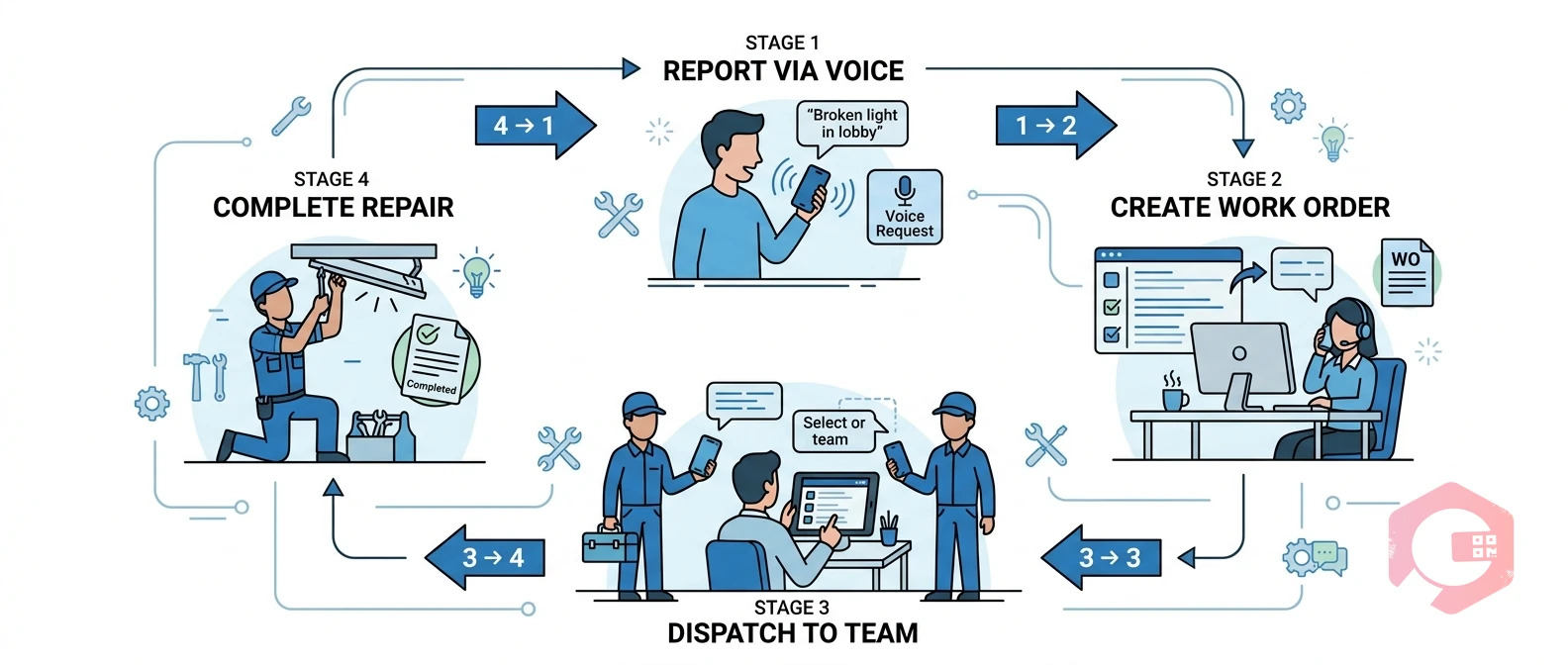
Voice-Based Work Order Creation for Facility Teams — lifecycle

Voice-based work order creation for facility teams addresses a real, daily bottleneck: the gap between when a technician spots a fault and when that fault becomes a tracked, routed, documented work order. Every minute that gap stays open is lost maintenance capacity and compliance exposure.

The technology is mature, the accuracy is high, and the ROI is measurable. Facility teams that adopt voice-enabled CMMS tools consistently reclaim technician time, improve data quality, and respond to faults faster. Learn how Cryotos makes voice work order creation part of your daily maintenance workflow.

Want to Try Cryotos CMMS Today? Lets Connect!
Thank you! Your submission has been received!
Oops! Something went wrong while submitting the form.
Related Post

Voice-Based Work Order Creation for Facility Teams: The Complete Guide

Calendar
Duration:
8 min read
calendar today
Published on
April 24, 2026
Featured Image

Voice-based work order creation for facility teams is the process of using spoken commands — captured through a mobile app — to instantly generate, assign, and log maintenance work orders in a CMMS. Instead of typing on a small screen with greasy gloves or navigating menus in a noisy plant room, a technician speaks a few words and the system creates a fully structured work order in seconds. According to a McKinsey report on maintenance operations, field technicians spend up to 30% of their working time on administrative tasks — voice technology directly attacks that waste. This guide covers exactly how voice-based work order creation works, why facility teams need it, and what to look for when evaluating tools.

What Is Voice-Based Work Order Creation?

Voice-based work order creation is a CMMS capability that lets maintenance and facility technicians dictate work orders using natural speech on a mobile device. The system captures the spoken input, processes it using AI and natural language processing (NLP), and maps it to the correct fields — asset, location, fault description, priority level, and assigned team — without any manual typing.

When a technician says “Air handler unit 3 in Building B is vibrating abnormally, flag it high priority for the HVAC team,” the system parses that sentence and populates every field automatically. The technician reviews the pre-filled form and submits with one tap. No menu navigation, no spelling errors in asset names, no missed fields.

Modern systems go beyond basic transcription. AI-powered NLP understands intent regardless of phrasing — “east wing chiller is grinding” and “the chiller in the east wing is making a grinding noise” produce the same structured work order. Some platforms also support voice and photo input simultaneously, so the receiving team gets both a verbal description and visual evidence in a single work order.

Why Facility Teams Need Voice-Based Work Order Tools

Facility management involves constant movement — from mechanical rooms to rooftops to occupied office floors. Technicians are always carrying tools, climbing ladders, or wearing protective gear. Pulling out a phone to navigate a multi-screen work order form in those conditions is impractical and error-prone.

A Plant Engineering study found that maintenance technicians spend an average of 15–20 minutes per shift filling out work orders, PMs, and fault logs. Across a team of 10 technicians working five days a week, that's over 800 hours a year lost to administrative work. Beyond time, typed entries are prone to errors: misspelled asset names, wrong location codes, skipped fields — gaps that degrade MTTR and MTBF reporting accuracy.

Voice input is faster and tends to be more accurate because it's captured at the point of observation, while details are fresh. The strongest use cases include inspection rounds (narrating findings asset by asset), reactive maintenance calls (logging the fault while standing in front of broken equipment), and PPE-restricted environments where typing with gloves is slow and awkward.

How Voice-Based Work Order Creation Works Step by Step

Voice-Based Work Order Creation for Facility Teams — workflow

Here's the end-to-end flow for a facility technician using a voice-enabled work order management system:

  • Step 1 — Open the mobile app: The technician opens the CMMS app. A voice button is accessible directly from the home screen or work order list.
  • Step 2 — Activate and speak: The tech taps the mic and describes the issue in plain language — asset, location, fault, priority, and any relevant context.
  • Step 3 — AI parsing: The system processes the speech, maps entities to existing CMMS records, and pre-fills the work order form.
  • Step 4 — Review and confirm: The technician sees the auto-filled work order, makes quick corrections if needed, and submits with one tap.
  • Step 5 — Auto-routing: The system assigns the work order to the correct team based on asset type and location, and sends real-time notifications via mobile, email, or WhatsApp.
  • Step 6 — Live tracking begins: Supervisors see status updates in real time — from “Open” to “In Progress” to “Completed” — without chasing anyone for updates.

The entire process takes under 60 seconds. Compare that to a manual flow where the technician might not log the fault until they're back at a workstation.

Key Features to Look For in a Voice-Enabled CMMS

Not all CMMS platforms handle voice equally. Basic tools offer simple speech-to-text transcription. Advanced platforms like Cryotos CMMS use generative AI to interpret and structure what the technician says. When evaluating options, look for:

  • Generative AI parsing: The system should map spoken entities to asset records, location codes, and team assignments — not just copy words into a text field.
  • Offline voice capture: Basements, server rooms, and loading bays often have weak connectivity. The app should capture voice offline and sync when connectivity returns.
  • Voice + photo input: Technicians should be able to speak a description and attach a photo simultaneously for richer, more accurate work orders.
  • Priority detection: Words like “urgent,” “emergency,” or “down” should automatically flag the work order as high priority and trigger escalation workflows.
  • QR code + voice pairing: Scanning an asset QR code before speaking pre-populates the asset field, so the technician only needs to describe the fault verbally.

Real-World Benefits for Facility Teams

Voice-Based Work Order Creation for Facility Teams — scenario

Voice input is typically three times faster than typing on a mobile keyboard, according to Nielsen Norman Group research. For a facility team creating 20–30 work orders per day, that compounds into hours of recovered productivity each week. Facility teams using AI-powered CMMS platforms report up to 25% faster MTTR as a direct result of faster work order creation and routing.

Voice work orders also improve safety and compliance. A technician using voice doesn't need to look at a screen in hazardous areas. And because the work order is created in real time, it leaves a cleaner audit trail for OSHA LOTO requirements and ISO 55001 asset management standards — where accurate, timely fault documentation is mandatory. Facilities undergoing audits often discover that verbal fault observations were never logged. Voice work order tools close that gap permanently.

How Cryotos Enables Voice-Based Work Order Creation

Voice-Based Work Order Creation for Facility Teams — problems grid

Cryotos is built for maintenance and facility teams that operate in demanding physical environments. Its generative AI layer supports voice commands and photo analysis simultaneously — a technician can scan an asset QR code, speak the fault description, attach a photo, and submit a complete AI-structured work order in under a minute, entirely from the mobile app.

Cryotos automatically routes work orders to the right technician or team based on asset type, location, and skill set. Real-time notifications go out via mobile push, email, or WhatsApp. Supervisors get live visibility through the Cryotos dashboard without needing to follow up by phone or radio. All voice-created work orders feed directly into the reporting module — MTTR, MTBF, and first-time fix rate data is accurate because it's built from real-time entries, not reconstructed from handwritten logs at shift end.

Cryotos customers report a 30% reduction in equipment downtime and 25% faster repair times after adopting the platform. If your facility team is still creating work orders by typing on a phone screen, you're losing time, accuracy, and compliance documentation every day. See how Cryotos makes voice-powered work order management part of your daily workflow.

Frequently Asked Questions

What is voice-based work order creation in facility management?

Voice-based work order creation is a CMMS feature that lets facility technicians dictate maintenance requests using spoken commands on a mobile device. AI and NLP convert the speech into a structured work order — with asset, location, priority, and team fields auto-populated — without manual typing.

Can voice commands work without internet connectivity?

Yes, leading CMMS platforms support offline voice capture. The mobile app stores the voice input locally and syncs the created work order to the server once connectivity is restored. This is especially important in basements, plant rooms, and remote facility areas with poor signal.

Do all CMMS platforms support voice work order creation?

No. Basic CMMS tools offer only typed mobile forms. Voice-enabled work order creation requires a dedicated AI/NLP layer and a mobile app designed for hands-free operation. When evaluating platforms, confirm whether the voice feature does entity extraction and auto-routing, or is simply basic speech-to-text transcription.

How does voice work order creation improve maintenance response times?

Voice creation reduces the time between fault observation and work order submission from several minutes to under 60 seconds. Combined with automatic routing and real-time notifications, this cuts the total response chain significantly — teams using AI-powered CMMS platforms report up to 25% faster MTTR after adopting voice-enabled tools.

Conclusion

Voice-Based Work Order Creation for Facility Teams — lifecycle

Voice-based work order creation for facility teams addresses a real, daily bottleneck: the gap between when a technician spots a fault and when that fault becomes a tracked, routed, documented work order. Every minute that gap stays open is lost maintenance capacity and compliance exposure.

The technology is mature, the accuracy is high, and the ROI is measurable. Facility teams that adopt voice-enabled CMMS tools consistently reclaim technician time, improve data quality, and respond to faults faster. Learn how Cryotos makes voice work order creation part of your daily maintenance workflow.

Want to Try Cryotos CMMS Today?

Get Free Demo

Let AI Take Control of Your Maintenance

Cryotos AI predicts failures, automates work orders, and simplifies maintenance—before problems slow you down.

Try AI-Powered CMMS
🡢