
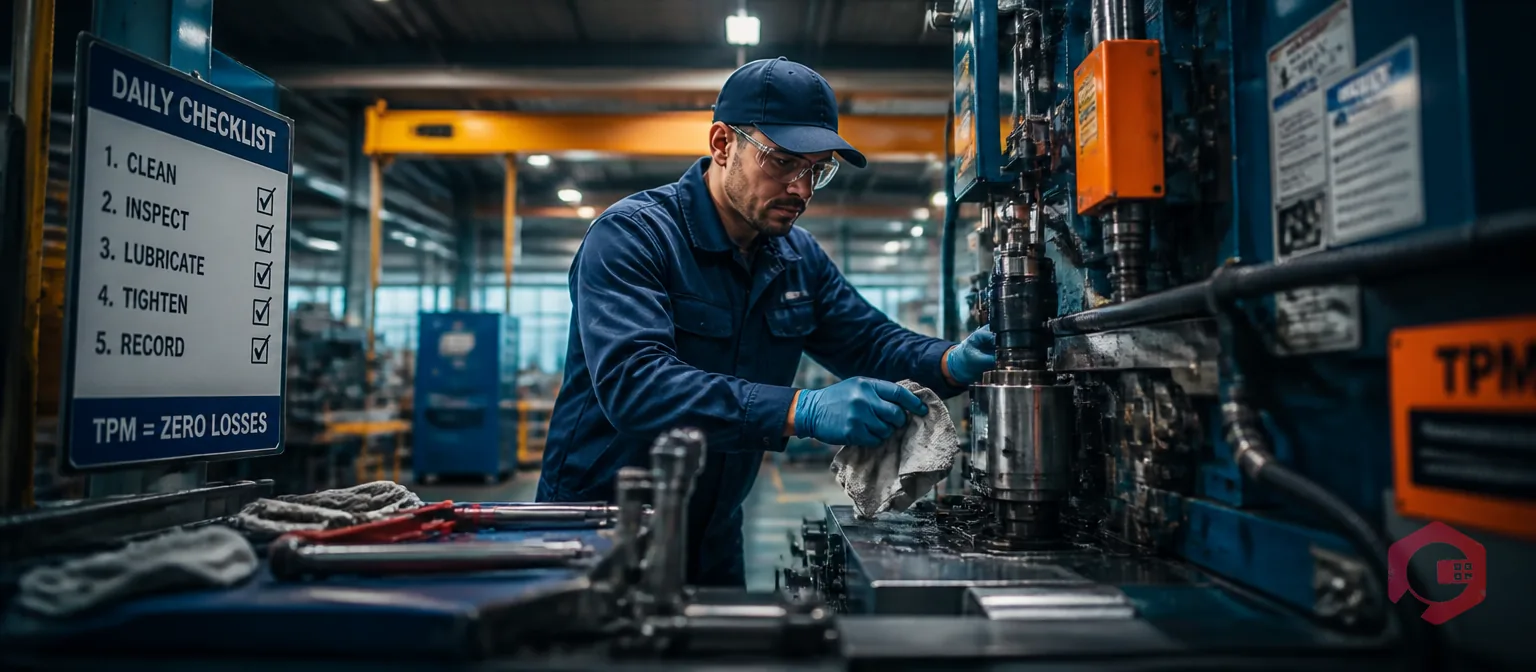
Autonomous maintenance is a TPM pillar where machine operators — not just maintenance technicians — take ownership of daily equipment care, including cleaning, lubrication, inspection, and minor adjustments. In 2026, it looks nothing like a laminated checklist on a wall. Today’s shop floors pair operator skills with IoT sensor data, mobile CMMS apps, and AI-assisted anomaly detection to make autonomous maintenance faster, smarter, and genuinely effective. According to a 2024 Deloitte manufacturing study, plants that actively practice autonomous maintenance report 23% fewer unplanned breakdowns compared to those relying on centralized maintenance departments alone. This guide breaks down exactly what autonomous maintenance looks like in practice — from morning walk-arounds to digital work order closure — so you can benchmark your own program.
The original definition of autonomous maintenance, rooted in Seiichi Nakajima’s Total Productive Maintenance (TPM) framework, placed daily equipment care in the hands of operators. The intent was simple: the people closest to the machine are the first to notice when something feels off. That logic still holds in 2026, but the tools have changed dramatically.
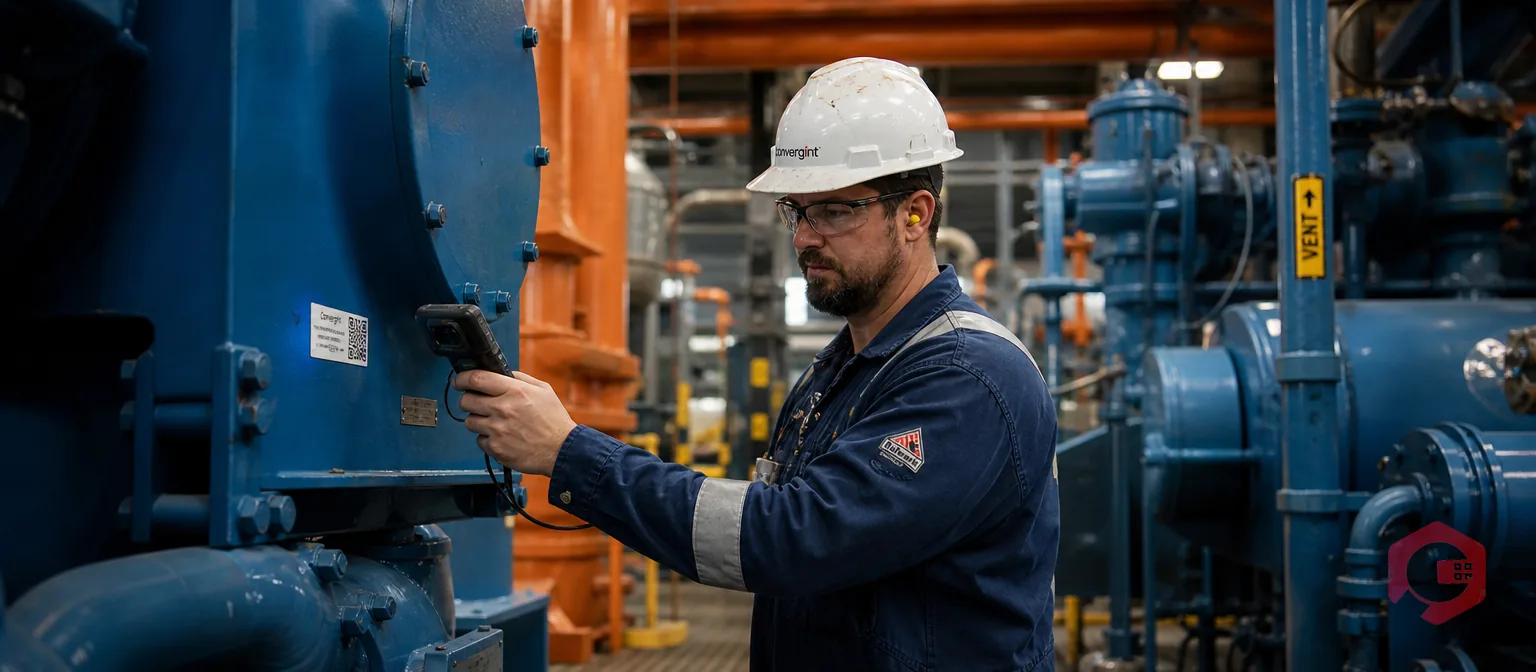
On modern shop floors, autonomous maintenance is no longer just about wiping down a machine and tightening bolts. Operators now scan QR codes on assets with a mobile phone, pull up the day’s checklist in a CMMS, log readings against sensor baselines, and immediately flag deviations that the system routes to a maintenance engineer. The gap between “something feels wrong” and “a work order is open” has compressed from hours to minutes.
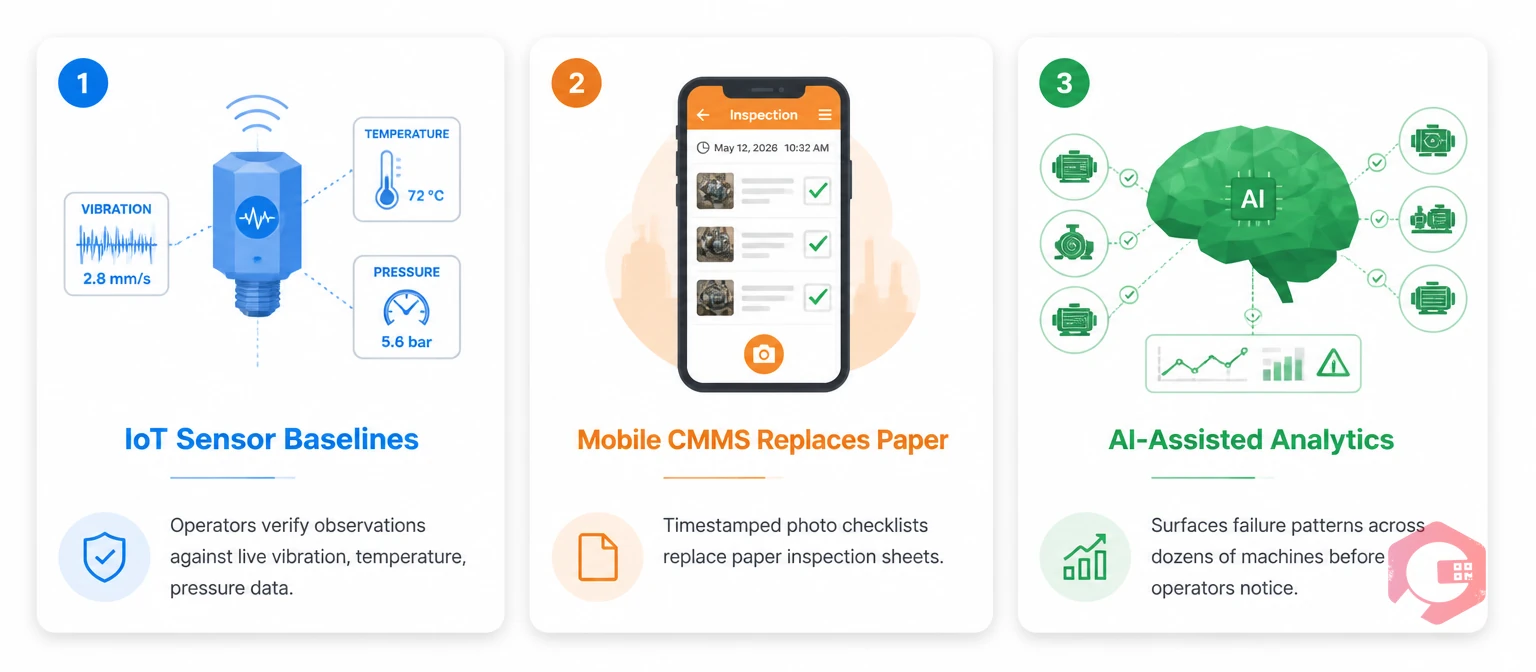
Three shifts have redefined autonomous maintenance in 2026. First, IoT sensors provide continuous baselines, so operators no longer rely solely on touch and sound — they verify their observations against live data. Second, mobile CMMS platforms replace paper-based inspection sheets, ensuring every check is timestamped, photographed, and stored. Third, AI-assisted analytics surface patterns across dozens of machines, flagging equipment that is trending toward failure before any operator notice it. Autonomous maintenance in 2026 is collaborative intelligence between the operator on the floor and the digital systems supporting them.
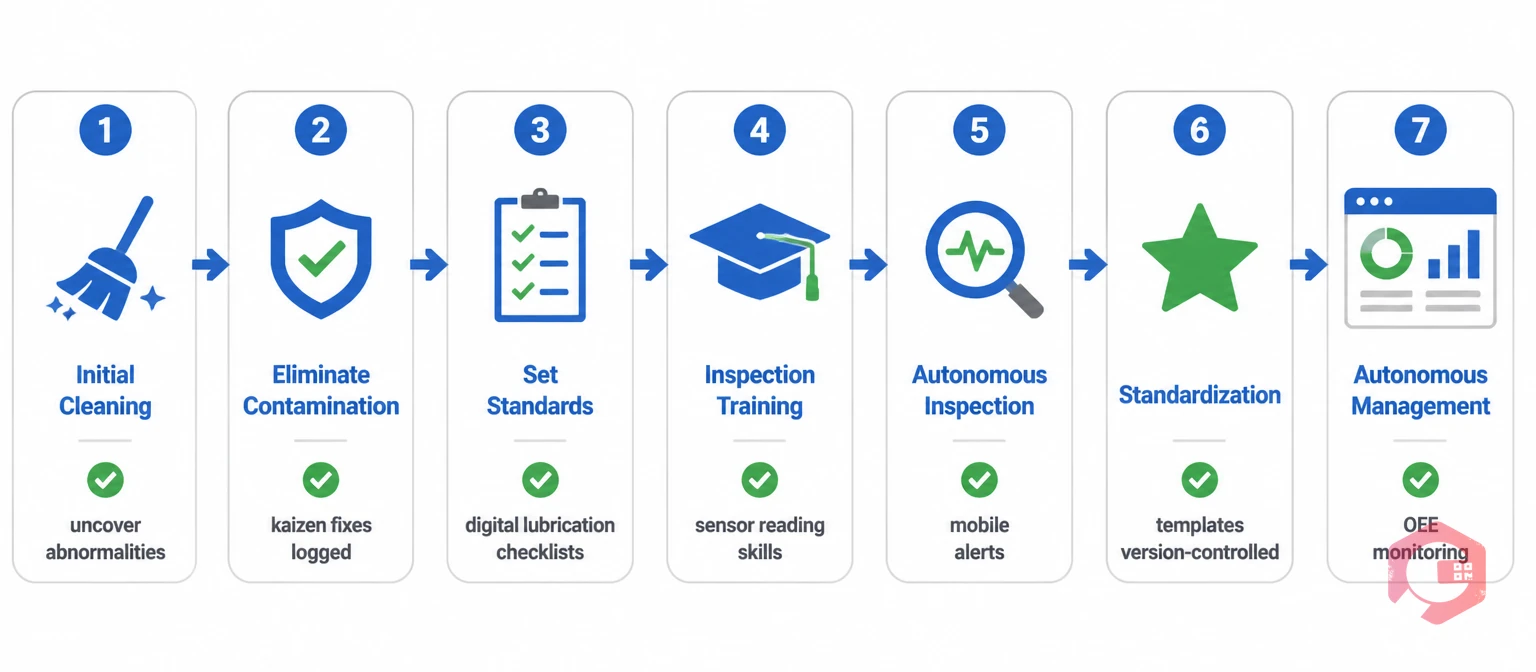
The classic 7-step TPM model remains the backbone, but each step now integrates digital tools that compress timelines and improve accuracy:
Walk into a mid-size automotive components plant in 2026 and the first 15 minutes of a shift look like this. An operator arrives, opens the CMMS mobile app, and sees three pre-shift inspection tasks queued for their assigned machine cell. They scan the asset QR code on the first machine, work through the checklist — checking coolant levels, confirming no abnormal vibration on the spindle (the app shows the current sensor reading vs. the established baseline), and photographing the lubrication point with a time-stamped image. All green. The next machine shows a temperature reading 4°C above its normal range. The operator taps “Flag Abnormality,” adds a short voice note, and the system instantly creates a condition-based work order, routed to the maintenance engineer on shift with priority classification already applied by the AI engine.
That entire sequence — inspection, comparison, escalation — takes about 8 minutes per machine. Compare that to the traditional model where an operator might mention the temperature issue verbally to a supervisor, who writes it on a paper log, which gets picked up during the afternoon maintenance walk. By then the machine may have triggered an unplanned stoppage.
This is what preventive maintenance paired with operator empowerment actually looks like. The operator is not replacing the maintenance team — they’re acting as the first detection layer, closing the gap between equipment anomaly and corrective action. By the end of the shift, the CMMS BI dashboard shows all inspection tasks completed, one work order raised and in progress, and the machine’s OEE trending at 91% for the day.
Autonomous maintenance without digital infrastructure is just unsupported operator guesswork. The combination of a CMMS and IoT sensor networks changes that equation entirely.
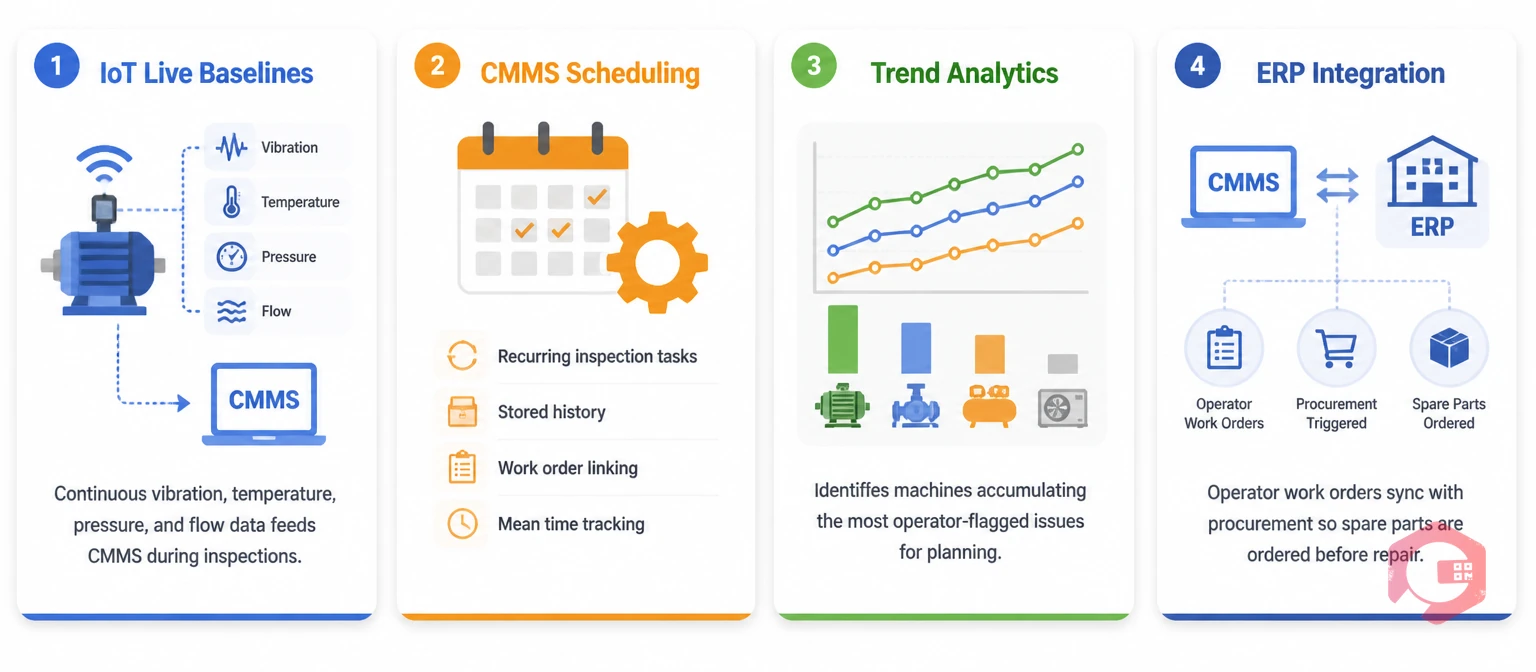
IoT meter reading integration means sensors continuously feed vibration, temperature, pressure, and flow data into the CMMS. Operators see live baselines during inspections rather than guessing from memory. When a reading drifts outside control limits, the system generates an alert before the operator even finishes their round. This is condition-based maintenance embedded directly into the autonomous maintenance workflow.
The CMMS side manages everything else: scheduling recurring inspection tasks, storing historical readings, linking abnormality reports to work orders, and tracking mean time to respond once an operator flags an issue. Over time, this data reveals which machines accumulate the most operator-flagged issues, helping maintenance planners adjust preventive maintenance frequencies or trigger deeper engineering reviews. Without this loop, autonomous maintenance programs often plateau — operators do the checks but the data never feeds back into better planning.
For operations using SAP or Microsoft Dynamics 365, ERP integration ensures that operator-generated work orders automatically sync with procurement, so spare parts can be ordered before a planned repair even begins. The result is a maintenance ecosystem where the operator’s daily inspection directly drives smarter decisions at every level of the organization.
| Dimension | Traditional Operator Role | Autonomous Maintenance Role (2026) |
|---|---|---|
| Equipment Ownership | Run the machine; report breakdowns to maintenance | Own daily care; cleaning, lubrication, inspection, and minor fixes |
| Inspection Method | Visual walk-around, paper form or verbal report | Mobile CMMS checklist with sensor cross-reference and photo capture |
| Anomaly Response | Tell supervisor; wait for maintenance team | Flag digitally in CMMS; work order auto-created and routed immediately |
| Data Contribution | Little to none — observations rarely captured formally | Every inspection generates timestamped records used for trend analysis |
| Maintenance Relationship | Separate; maintenance fixes what operators break or report | Collaborative; operators handle Levels 1–2, maintenance handles Levels 3–5 |
| Skill Requirements | Machine operation proficiency | Machine operation + basic maintenance skills + CMMS mobile literacy |
| OEE Impact | Reactive — OEE suffers from undetected deterioration | Proactive — OEE improves as operators catch issues before they become failures |
Most autonomous maintenance programs stall within the first six months. The reasons are consistent across industries, and so are the fixes.
The most common barrier is operator resistance. Operators fear that taking on maintenance tasks means they’ll be blamed for equipment failures. This is a cultural problem that no software solves alone. The fix is a clear skill development pathway — structured training that builds genuine competence in basic maintenance tasks, paired with recognition when operators catch issues early. When an operator flags an anomaly that prevents a major breakdown, that story should be shared across the plant.
The second barrier is poor standards quality. Vague inspection instructions (“check lubrication level — ensure adequate”) produce inconsistent results. High-performing teams write standards at the action level: specific volumes, frequencies, visual pass/fail criteria, and photographs of what correct looks like. Storing these in a knowledge-based portal accessible on mobile means operators can reference them mid-task without hunting for a paper binder.
The third barrier is data that goes nowhere. Operators fill out checklists, but no one uses the data. Maintenance planners never see the trend showing that Machine 7 generates three times more flagged issues than comparable machines in the same cell. Closing this loop requires the CMMS to generate automatic weekly summaries for maintenance supervisors — turning operator diligence into visible, actionable intelligence. When operators see their flags translated into real maintenance improvements, engagement climbs. This report builder capability makes that connection automatic.
Finally, many teams attempt to jump to Step 5 (autonomous inspection) without completing Steps 1–3. The result is operators conducting inspections on dirty, poorly-standardized machines — finding issues every cycle because the baseline was never established. A phased rollout, starting with a single machine cell, allows teams to build the foundation before scaling across the plant.
Autonomous maintenance is a sub-practice within TPM where machine operators perform daily care tasks like cleaning, lubrication, and basic inspection. Preventive maintenance is a broader strategy involving scheduled, calendar or usage-based maintenance tasks typically performed by trained maintenance technicians. In practice, autonomous maintenance handles the daily front line; preventive maintenance covers deeper, less frequent interventions.
A realistic implementation timeline for a single production line runs 6–12 months, depending on the starting point. Steps 1–3 (cleaning, contamination elimination, and standards) typically take 3–4 months. Training and autonomous inspection capability (Steps 4–5) follow over the next 3–6 months. Full autonomous management maturity (Steps 6–7) often takes 18–24 months from program launch.
Under most frameworks, operators handle Levels 1 and 2 — daily cleaning, lubrication, tightening, and basic adjustments like replacing worn guards or resetting minor parameters. Levels 3–5, involving component disassembly, calibration, or electrical work, remain the responsibility of qualified maintenance technicians. The exact boundary depends on regulatory requirements and union agreements in your industry.
No. Autonomous maintenance frees maintenance technicians from repetitive daily tasks so they can focus on higher-value work — predictive analysis, complex repairs, and reliability engineering. Plants that implement autonomous maintenance well typically see their maintenance teams shift from reactive fire-fighting to proactive problem-solving, improving both team engagement and equipment reliability.
Autonomous maintenance in 2026 demands more from operators, but it gives them better tools to succeed. The combination of structured training, digital inspection workflows, and real-time CMMS data creates a maintenance ecosystem where breakdowns become the exception rather than the norm. If your team is ready to move from paper-based rounds to a connected autonomous maintenance program, Cryotos CMMS gives operators the mobile checklists, IoT sensor integration, and instant work order creation they need to make every inspection count — from the first shift to the hundredth.


Cryotos AI predicts failures, automates work orders, and simplifies maintenance—before problems slow you down.



