

A Computerized Maintenance Management System (CMMS) supports asset lifecycle management by centralizing maintenance data, automating preventive schedules, and giving teams the analytics they need to make smarter decisions at every stage - from procurement to disposal. Organizations that implement a CMMS alongside a structured asset lifecycle strategy report up to a 30% reduction in downtime and 25% faster repair times, according to Cryotos operational data. In short, a CMMS turns reactive maintenance into a proactive, data-driven discipline.
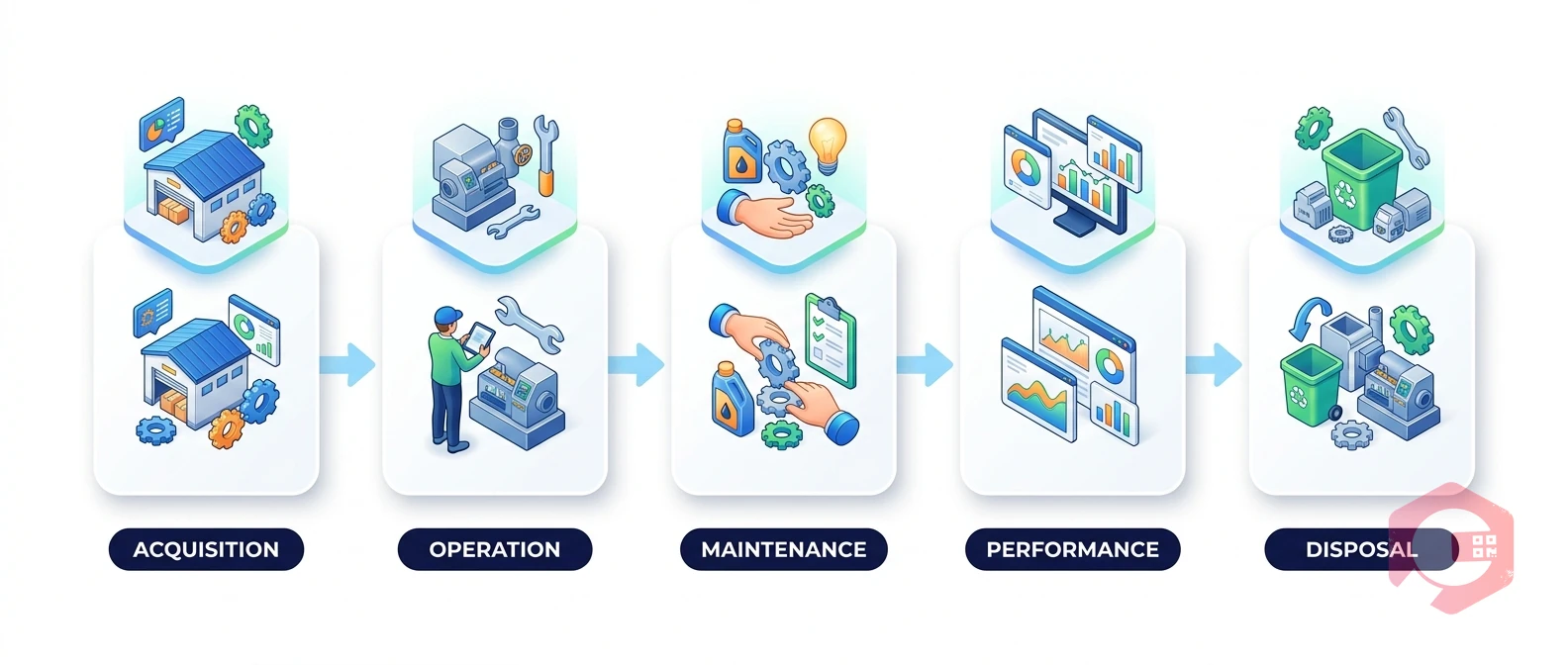
Here's a quick look at the five stages a CMMS actively supports:
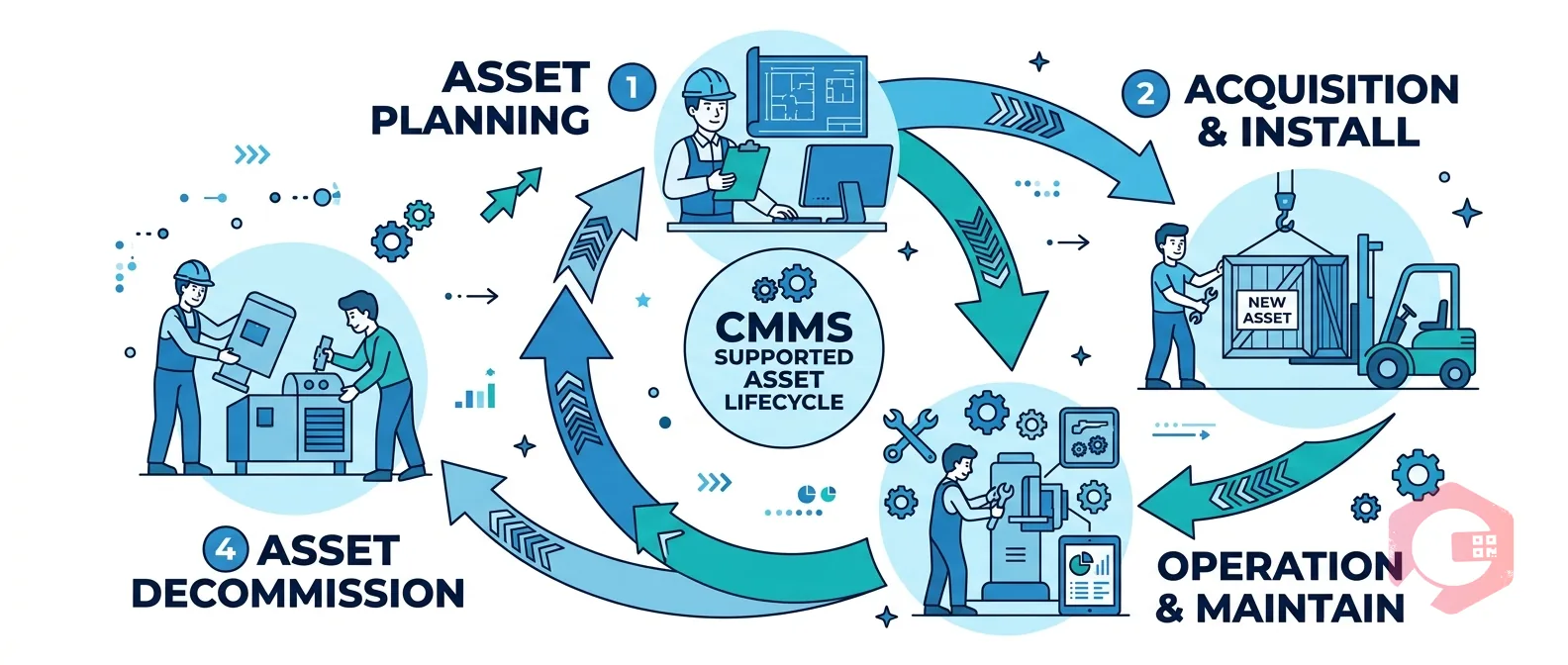
Asset lifecycle management (ALM) is the systematic process of overseeing a physical asset from the moment it is acquired to the day it is retired or disposed of. The goal is straightforward: get maximum value from every asset while keeping costs, risks, and downtime under control. According to IBM, ALM combines a range of strategies designed to extend the lifespan of an asset and increase its efficiency - a definition that applies equally to a single pump on a factory floor and an entire fleet of service vehicles.
Without a structured ALM approach, maintenance teams end up chasing breakdowns rather than preventing them. The result is higher repair costs, more unplanned downtime, and assets that wear out years before they should. A CMMS is the tool that makes ALM practical at scale.
Most asset lifecycle frameworks follow five stages, though the time an asset spends in each stage varies widely by industry and asset type:
The Maintenance stage is the longest by far - often representing 60-80% of an asset's total lifespan - which is exactly why this is where a CMMS delivers the most value.
A CMMS does far more than log work orders. It acts as the operational backbone across every stage of the asset lifecycle - feeding data forward from one phase to the next and giving maintenance managers the visibility to act before problems occur. Here's how it works in practice at each stage.
Before you spend a single dollar on new equipment, your CMMS should already be involved. Historical data stored in the system - repair frequency, downtime incidents, spare parts consumption, and total maintenance cost per asset - gives procurement teams an objective basis for evaluating replacement options. Instead of guessing whether a new CNC machine is worth the investment, you can pull the actual cost-per-hour of running the current one.
A CMMS also helps you build out a total cost of ownership (TCO) model before purchase. If your maintenance history shows that a particular make of compressor averages three major failures in its first five years, that data changes the procurement conversation entirely. According to McKinsey, companies that use data-driven maintenance strategies reduce overall maintenance costs by 10-25% - and it starts here, at the planning stage.
The moment a new asset arrives on-site, the CMMS goes to work. Technicians use asset management software to assign a unique identifier, attach the manufacturer's documentation, record warranty details, and generate a QR code for instant access to asset data in the field. In Cryotos, this process takes minutes on a mobile device - even offline.
Commissioning is also when you set up the asset's bill of materials (BOM), stock the required spare parts in your inventory module, and configure the first round of preventive maintenance (PM) schedules. Getting this right from day one means the maintenance team is never scrambling to find documentation or reorder parts reactively six months later.
Once an asset is in active use, the CMMS becomes the command centre for everything that happens to it. Real-time location tracking via GPS, NFC, and BEACON technology keeps assets visible across large sites or multi-location operations. IoT sensors connected through SCADA and PLC integrations feed live condition data - temperature, vibration, pressure, cycle counts - directly into the system, triggering alerts when readings drift outside safe thresholds.
Work requests come in through QR code scans, mobile submissions, or WhatsApp - all routed automatically to the right technician based on skill set and proximity. The downtime tracking module records every operational interruption in real time, categorised by department, asset, and root cause. This gives operations managers the data they need to spot patterns before a minor issue becomes a production stop.
Maintenance is where the asset spends the majority of its life, and it's where a CMMS earns its keep most clearly. The system supports multiple maintenance strategies running in parallel - and the best CMMS platforms let you apply the right strategy to each asset based on its criticality and condition.
Preventive maintenance (PM) schedules are built on two models: static PMs trigger on fixed time intervals (every 30 days, every 6 months), while dynamic PMs trigger on usage - hours run, kilometres travelled, or cycles completed. Cryotos supports complex "Either/Or" and "And" scheduling conditions, so a compressor can be serviced at 500 hours OR 3 months - whichever comes first. According to the Reliable Plant resource library, for every $1 invested in preventive maintenance, organisations save $5 in corrective repairs.
Predictive maintenance (PdM) takes it a step further by analysing IoT sensor data to forecast failures before they happen. When vibration readings on a motor trend upward over several weeks, the CMMS flags it and auto-generates a work order - before the bearing seizes and takes down the production line with it.
When failures do occur, the 5 Whys root cause analysis tool built into Cryotos work orders prevents the same failure from recurring. Technicians document findings, attach photos and videos, and close the loop with a verified resolution - all from their mobile device.
Key KPIs the CMMS tracks during this stage include:
When an asset nears the end of its useful life, the CMMS makes the decommission decision objective rather than emotional. Maintenance managers can pull the full cost history - total repair spend, average downtime per year, spare parts consumed - and compare it against the cost of replacement. This is the repair-vs-replace analysis, and it's nearly impossible to do reliably without accurate lifecycle data.
ISO 55001, the international standard for asset management, requires organisations to document disposal decisions and demonstrate that they align with overall asset management objectives. A CMMS provides the audit trail automatically - work orders, inspection records, compliance certifications, and disposal approvals are all stored and retrievable in seconds.
Use this checklist to ensure your CMMS is actively supporting each phase of the asset lifecycle - not just the maintenance stage.
The total cost of ownership (TCO) of an asset includes far more than the purchase price. It covers installation, energy consumption, spare parts, labour, unplanned repair costs, and eventual disposal. Most organisations significantly underestimate this number - and then overspend on maintenance as a result. A CMMS changes that by making every cost visible and traceable.
Unplanned downtime alone costs industrial manufacturers an estimated $50 billion per year globally, according to research cited by GE Digital. A single hour of downtime on a high-volume production line can cost anywhere from $5,000 to $500,000 depending on the industry. Preventing even a fraction of that through proactive maintenance has a direct and measurable impact on the bottom line.
Preventive and predictive maintenance are the two most powerful tools in a CMMS arsenal for reducing unplanned downtime. PM schedules ensure that lubrication, inspections, and component replacements happen on time - before wear becomes failure. Predictive maintenance goes further, using IoT sensor data to catch the early signs of deterioration that a scheduled PM might miss between service dates.
Cryotos customers report an average 30% reduction in downtime and 25% faster repair times after implementing structured CMMS-driven maintenance. That translates directly to more production hours, lower emergency repair costs, and longer intervals between major overhauls. A Deloitte study on smart factory operations found that predictive maintenance strategies reduce breakdowns by 70% and lower maintenance costs by 25% compared to purely reactive approaches.
One of the most valuable - and often overlooked - functions of a CMMS is helping teams decide when to stop repairing an asset and replace it instead. Without lifecycle data, this decision is based on gut feel. With it, you can calculate the actual cost of keeping an ageing asset running versus the capital cost of replacement.
A practical repair-vs-replace framework looks like this: if the cumulative annual maintenance cost of an asset exceeds 50% of its replacement cost, replacement typically delivers better long-term ROI. Your CMMS makes this calculation straightforward - pull the asset's full maintenance cost history, factor in projected downtime risk, and compare against the depreciated asset value and replacement quote.
The Cryotos asset management module stores the complete repair history, downtime log, and parts spend for every asset - giving managers everything they need to make this call with confidence rather than guesswork.
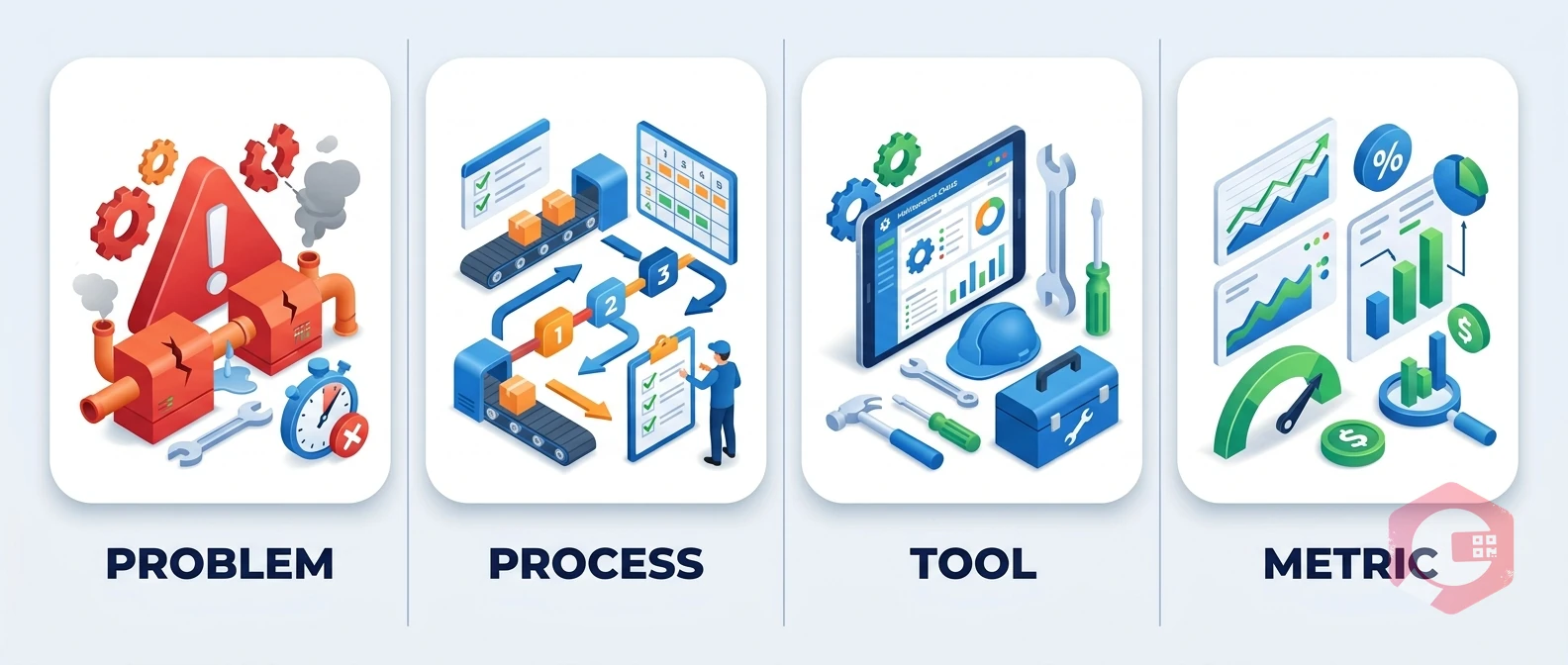
A common question among operations and maintenance leaders is whether a CMMS or an Enterprise Asset Management (EAM) system is the right fit for lifecycle management. The short answer: a CMMS focuses on maintenance execution, while an EAM covers the full financial and operational lifecycle of assets at an enterprise level.
For most mid-market operations - manufacturing plants, facilities management, utilities, and healthcare - a modern CMMS like Cryotos covers the full asset lifecycle management workflow without the implementation complexity and cost of an enterprise EAM. And with SAP and Microsoft Dynamics 365 integrations built in, Cryotos bridges the gap for organisations that need both systems working together.
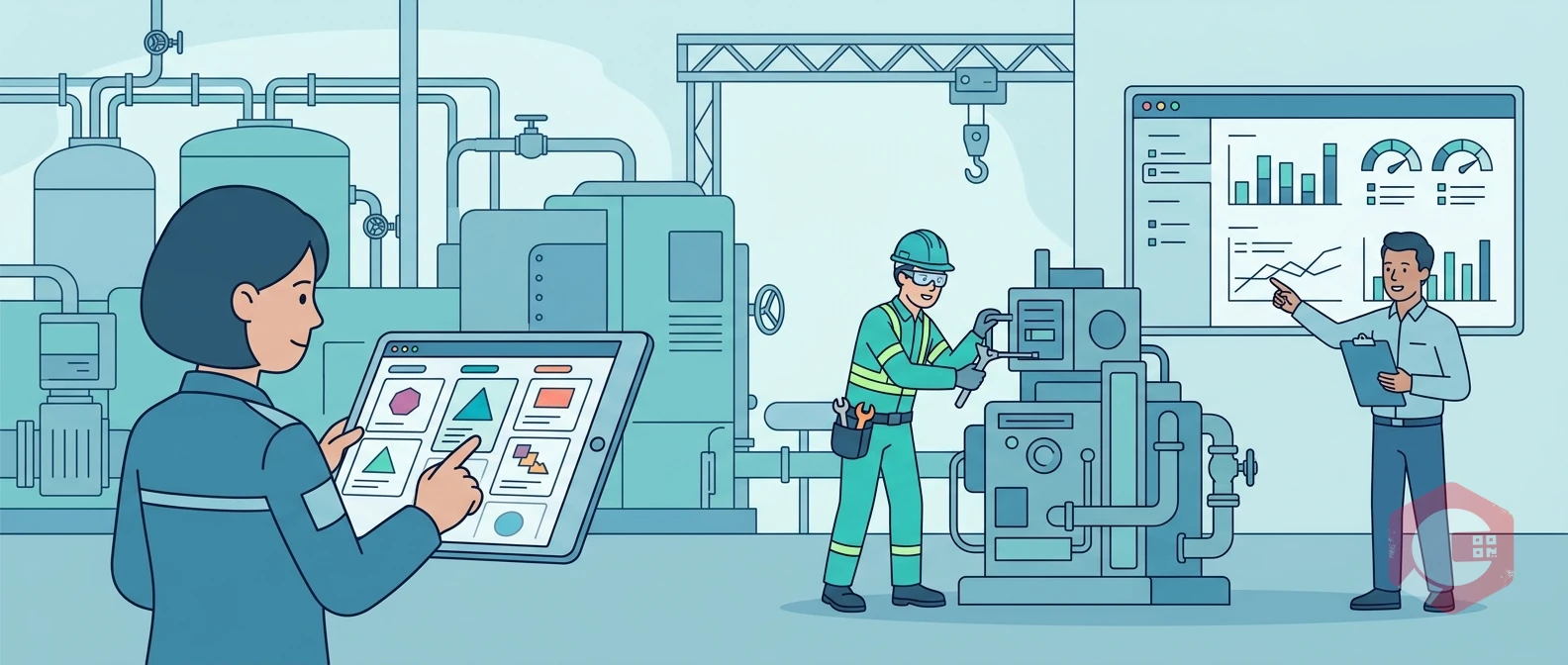
The gap between a basic work order system and a true lifecycle management platform has closed dramatically in the past two years. AI and IoT are no longer roadmap items - they're live features changing how maintenance teams operate day to day.
A CMMS supports asset lifecycle management by centralising all maintenance data - work orders, repair history, parts consumption, downtime records, and compliance documentation - across every phase from commissioning to disposal. It automates preventive maintenance scheduling, provides real-time asset visibility, and generates the analytics that maintenance and operations teams need to extend asset life and control costs.
A CMMS reduces downtime through two primary mechanisms: preventive maintenance scheduling and predictive maintenance alerts. By ensuring that lubrication, inspections, and component replacements happen on time - and by detecting early failure signals from IoT sensors - a CMMS prevents the majority of unplanned breakdowns before they occur. When failures do happen, the system accelerates response by routing work orders instantly and providing technicians with full asset history on their mobile devices.
The most important KPIs for CMMS-driven lifecycle management are Mean Time Between Failures (MTBF), Mean Time to Repair (MTTR), Overall Equipment Effectiveness (OEE), PM Compliance Rate, and Total Cost of Ownership (TCO). MTBF and MTTR tell you how reliable an asset is and how quickly your team restores it after failure. OEE captures the combined impact of availability, performance, and quality. PM Compliance Rate shows whether scheduled maintenance is actually happening on time. TCO tracks the full financial cost of running an asset across its entire life.
Yes - a CMMS is one of the most effective compliance tools available to maintenance teams. It stores all inspection records, safety certifications, permit-to-work approvals, and maintenance logs in a centralised, auditable system. When an inspector asks for proof that a pressure vessel was serviced on schedule or that a Lockout/Tagout procedure was followed, the CMMS provides a timestamped, unbroken record. This is especially important for organisations operating under OSHA regulations, ISO 55001, or sector-specific standards in healthcare and utilities.
A CMMS focuses on the maintenance execution layer of asset management - work orders, PM schedules, technician dispatch, and maintenance analytics. An EAM (Enterprise Asset Management) system covers the full financial and operational lifecycle, including asset depreciation, capital planning, procurement, and cross-enterprise reporting. Most mid-market organisations get full lifecycle management capability from a modern CMMS, especially one with ERP integration. Larger enterprises with complex multi-site asset portfolios and finance-driven lifecycle decisions often benefit from an EAM or a combined CMMS + EAM approach.
Ready to put your assets on a better lifecycle management plan? Cryotos CMMS gives maintenance teams a single platform to track, maintain, and optimise every asset from day one to decommission. With built-in preventive maintenance scheduling, real-time downtime tracking, IoT integration, and AI-powered work order generation, Cryotos is built for the full lifecycle - not just the breakdown. Book a free demo and see how leading maintenance teams are extending asset life and cutting downtime costs.


Cryotos AI predicts failures, automates work orders, and simplifies maintenance—before problems slow you down.



