A Computerized Maintenance Management System (CMMS) benefits pharma companies by turning maintenance into one auditable record instead of two disconnected jobs — uptime and compliance stop competing and start running on the same data. That distinction matters most at 2 a.m., when a reactor trips mid-batch and the shift supervisor is flipping through a logbook that hasn't been updated since March. Paper can't track a calibration deadline, prove a cleaning event happened, or calculate equipment performance in real time. A CMMS does all three. For plants also running Total Productive Maintenance (TPM), it solves something bigger: keeping autonomous checks, planned schedules, and performance data alive long after the training posters fade.
Key Takeaways
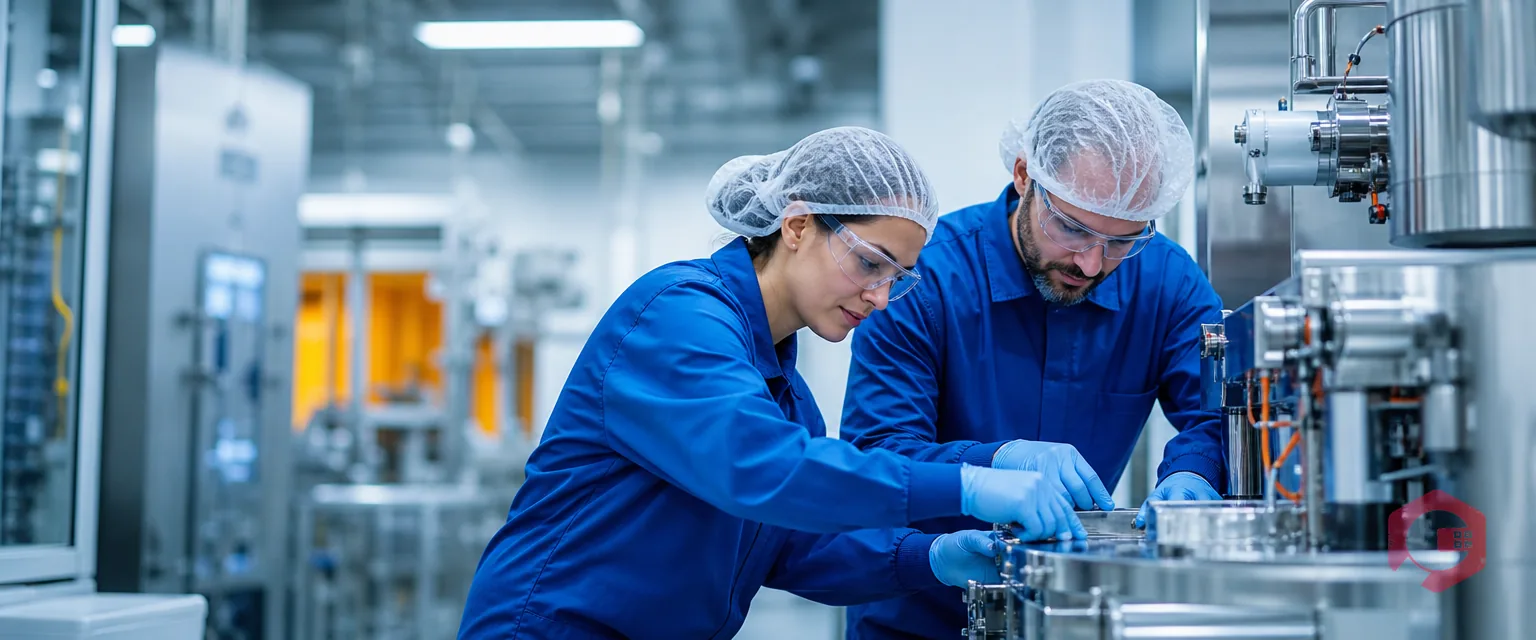
Nobody goes into maintenance because they love paperwork. But on a pharmaceutical line, paperwork is the job whether anyone likes it or not — every cleaning, every calibration, every five-minute fix has to be documented well enough to survive someone asking about it two years later.
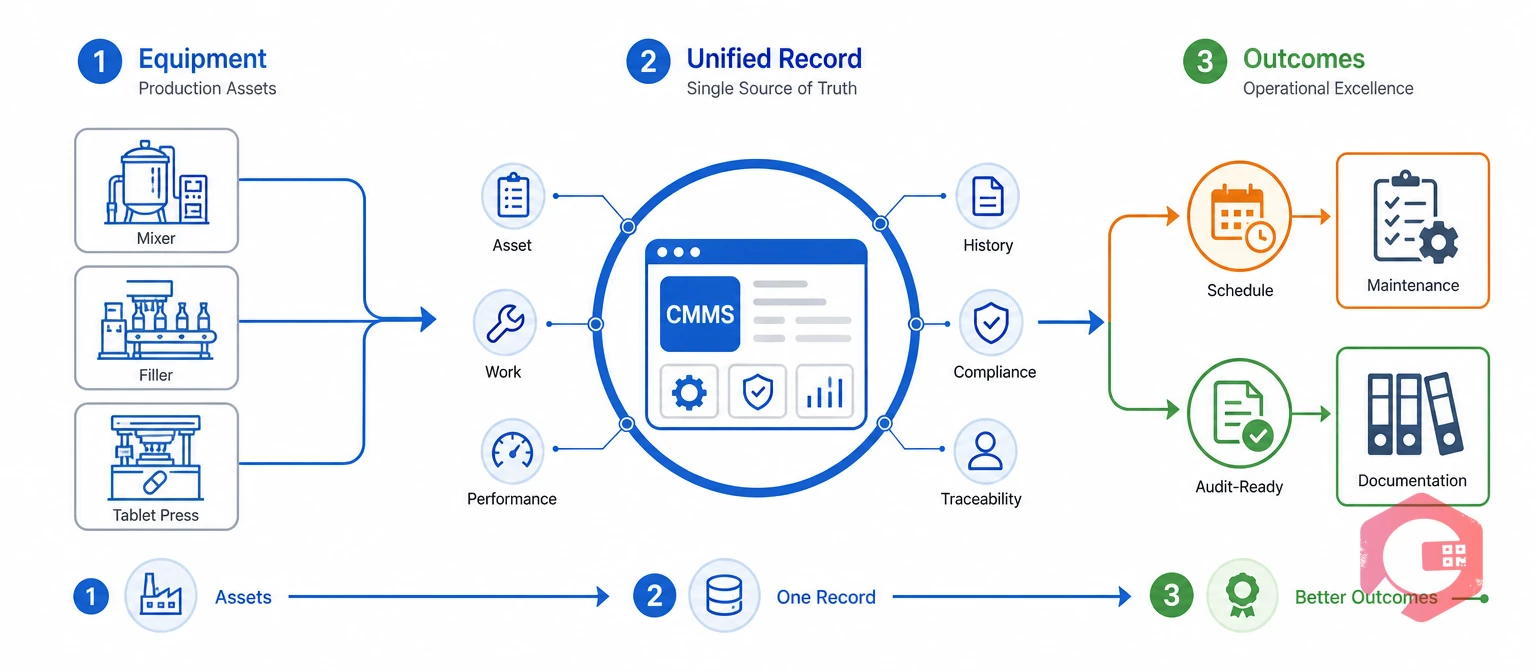
A CMMS is the software that carries that weight: it schedules the work, tracks who did it, and keeps the single record that regulators, quality teams, and maintenance managers all end up needing. That matters more in pharma than almost anywhere else, because the equipment isn't just equipment. A reactor, a tablet press, an HVAC system holding a cleanroom in spec — these touch product quality directly. Let one fail quietly with no paper trail, and the batch it touched can get flagged as non-conforming. Not because the product was bad. Because nobody could prove it wasn't.
Many plants are also running CMMS built for pharmaceutical manufacturing as the backbone of a broader Total Productive Maintenance philosophy — operators running basic checks, maintenance running planned schedules instead of chasing fires, everyone watching the same effectiveness numbers. Good ideas, all of it. But good ideas fall apart fast without something holding them together, which is the CMMS's other job.
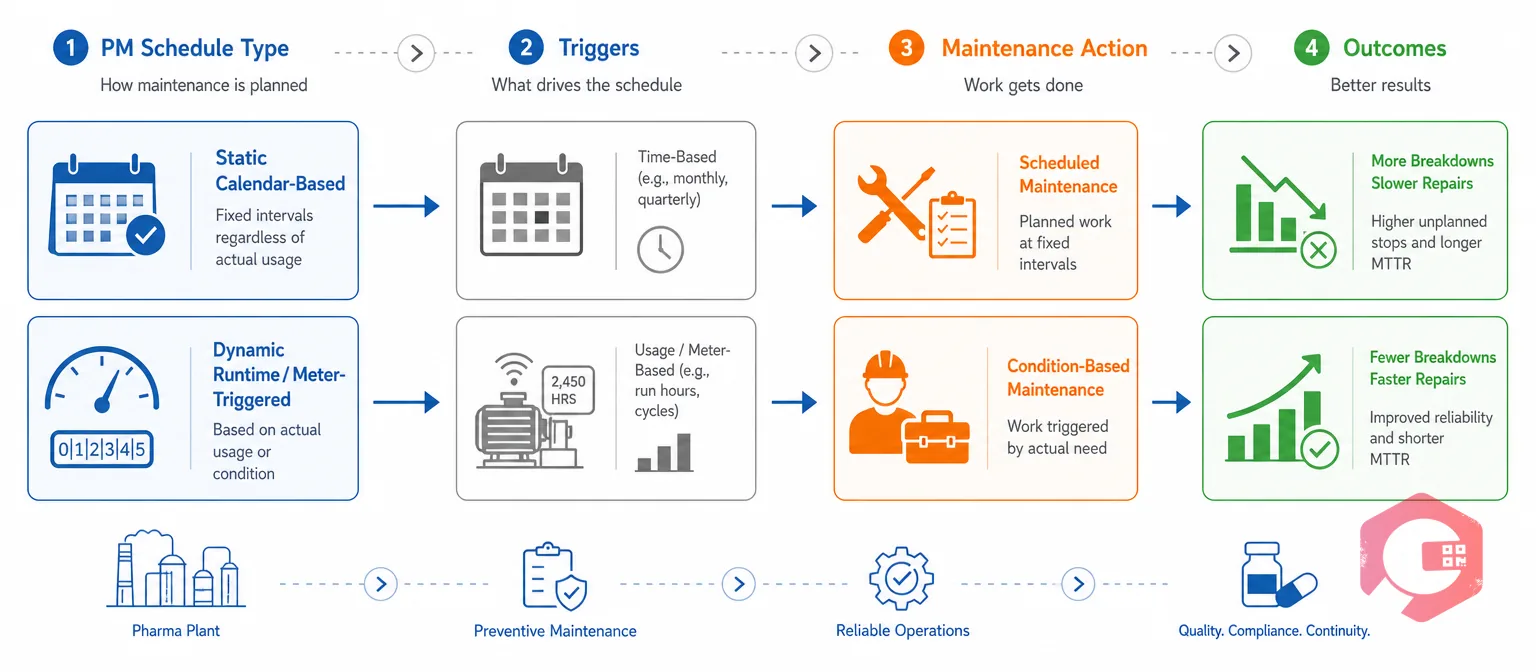
Downtime in a pharma plant isn't just annoying — it compounds. A reactor going down mid-cycle can force a full batch rejection under current Good Manufacturing Practice rules, not a delay. So the whole game becomes catching failure before it happens, not after.
Most plants running on gut feeling and a wall calendar don't get that chance. They fix what's broken and move on, with no feedback loop back into the schedule. Same failure, different month, forever. A preventive maintenance platform closes that gap two ways:
A smaller feature prevents a bigger headache: the system can flag equipment overdue for calibration and block it from being marked available for production until a qualified technician signs off. One control point, one less way for something to slip through. Maintenance teams using Cryotos have reported up to 30% less unplanned downtime and 25% faster repair turnaround — numbers that come from catching problems while they're still small, not from luck.
Everyone dreads audits, and almost nobody talks honestly about why. An FDA or EU GMP inspector isn't trying to trip anyone up. They're checking three things: was calibration done on schedule, was preventive maintenance actually completed, and were deviations properly investigated. Simple to say, brutal to prove if records live in binders scattered across two buildings.
A CMMS turns audit dread into a non-event by timestamping every maintenance action — who did it, what procedure they followed, what parts they used. Under FDA's CGMP regulations, that level of traceability isn't optional; 21 CFR 211.67 specifically requires written maintenance procedures and the records to prove they were followed. When an inspector asks for two years of history on one bioreactor, you don't send someone digging through storage — you filter by asset and hand over a complete record in minutes. That's the difference between an audit that's mildly stressful and one that turns into a 483 observation because a gap in the paper trail went unnoticed until it was too late to fix.
A lot of plants don't realize maintenance and quality are often looking at the same equipment and telling two different stories. Maintenance says the line's running fine. Quality says batches are failing in-process testing. Both can be technically right, arguing from different spreadsheets.
Overall Equipment Effectiveness (OEE) fixes that because it's just math: availability times performance times quality. A press can run at full speed and still produce out-of-spec product, and OEE catches all three factors at once instead of hiding two of them behind a good-looking uptime figure. Calculating it by hand once a quarter tells you what already happened — useful, but a bit like reading yesterday's weather report. A live BI dashboard runs it continuously off work order and downtime data, so a maintenance manager and a QA lead pull up the same asset and see the same number. No arguing, just the number. See where your own line stands with the OEE calculator before you compare notes with quality.
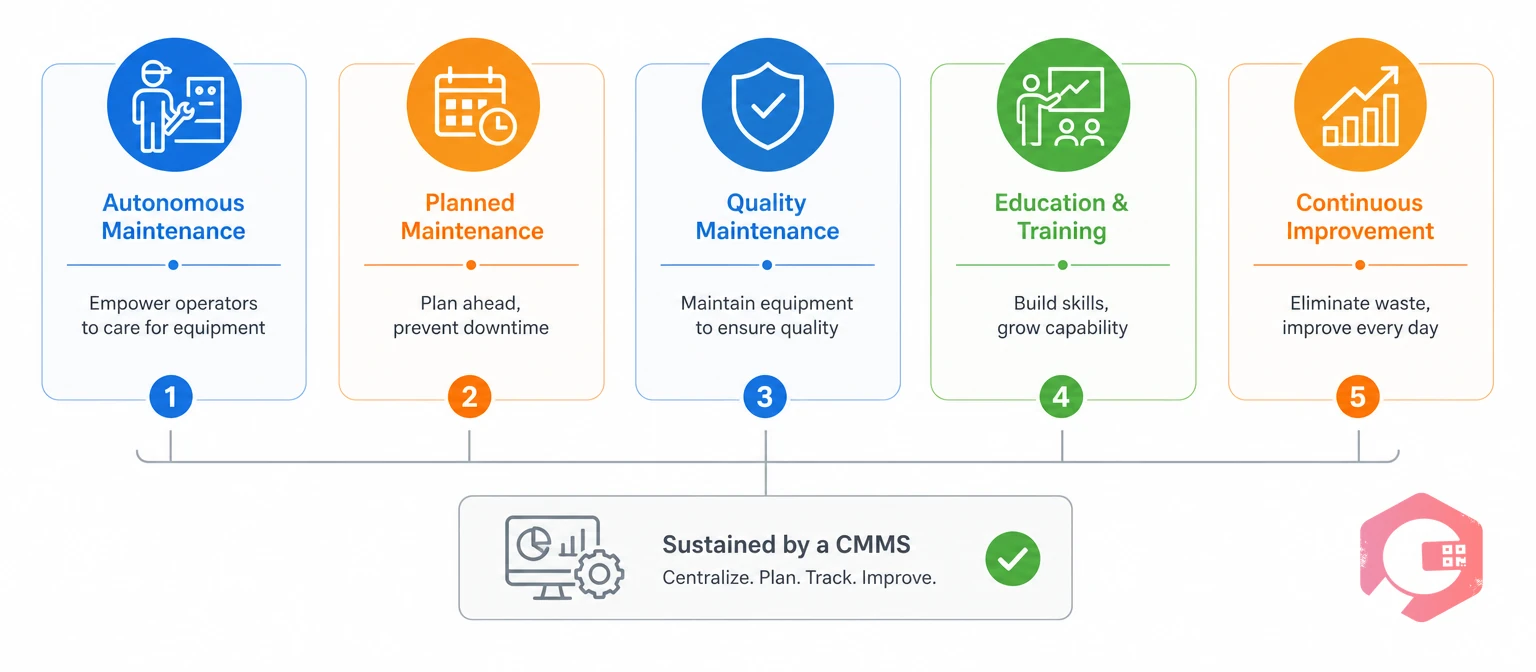
Here's the honest version of what usually happens with Total Productive Maintenance. A plant launches it with real energy. Posters go up, operators train on autonomous checks, everyone's excited for about six months. Then the checklist stops getting filled out consistently, and a year later someone asks "wait, are we still doing that?" and nobody's sure.
It's not that the pillars are wrong. The problem is that none of them survive on paper and good intentions alone — somebody has to track whether they're actually happening, and that somebody usually has forty other things to do. The TPM Pillar-to-Practice Matrix maps each pillar to the CMMS function that keeps it running day to day instead of fading with the posters:
| TPM Pillar | CMMS Function That Sustains It | Why It Doesn't Quietly Lapse |
|---|---|---|
| Autonomous Maintenance | Mobile operator checklists with photo capture | Every check is logged the moment it's completed — nothing to misplace or forget to file |
| Planned Maintenance | Auto-generated work orders on a fixed or meter-based schedule | The plan can't go stale without someone noticing a missed work order |
| Quality Maintenance | Work orders linked to root-cause and deviation records | Equipment condition and batch quality stay in one record instead of a separate binder |
| Education and Training | Role-based access control on task completion | Only qualified people can complete certain tasks in the first place |
| Continuous Improvement | Dashboard trend analysis on recurring defects | Improvement shows up on its own instead of requiring a report nobody reads |
That last column is really the whole answer to why TPM programs fizzle out. It was never about the pillars being wrong — it was about nothing tracking whether they were still standing.
Two changes matter more to the daily grind than they sound like they should. First, digital checklists. Not exciting, but the difference between a paper form filed in a drawer and a structured, searchable record is enormous once you actually need to find something. A system built around digital maintenance checklists can pull in an existing Excel checklist directly, or scan a paper one via OCR, so nobody's rebuilding years of validated procedures from scratch just to go digital.
Second — a bit more fun — AI-assisted work orders. Instead of a technician stopping mid-repair to type out what happened, they can describe it out loud or snap a photo, and the work order writes itself. An AI-powered knowledge base can pull up the right procedure or a similar past repair automatically, so people spend less time hunting for the right document mid-job. None of this cuts a corner on the audit trail. It just removes the typing between the moment something happens and the moment it's recorded.
Fewer unplanned shutdowns, faster repairs, and a single audit-ready record that satisfies FDA and EU GMP inspectors. It also gives maintenance and quality teams a shared, real-time view of equipment performance instead of two conflicting spreadsheets.
By timestamping every maintenance activity as it happens — who did it, what procedure they followed, what parts they used. That record can be filtered by asset, date, or technician and produced in minutes instead of the hours a paper system takes.
Because nothing was tracking whether the pillars were still being followed once the initial training push ended. A CMMS logs autonomous checks automatically, generates planned maintenance on schedule, and surfaces improvement trends without anyone manually chasing the data.
Yes. A live BI dashboard calculates OEE continuously from work order, downtime, and output data, so maintenance and quality see the same number in real time rather than reconstructing it from separate spreadsheets after the fact.
Running maintenance on paper works fine right up until it doesn't — until the plant adds a second line, an auditor asks a question nobody can answer fast enough, or a batch sits on hold while someone hunts for a record that should have taken thirty seconds to pull up. Schedule a free demo to see how Cryotos helps pharma manufacturers cut downtime, stay audit-ready, and keep every TPM pillar standing long after the posters come down.


Cryotos AI predicts failures, automates work orders, and simplifies maintenance—before problems slow you down.