Contemporary facilities management is not an easy task as the increasing cost of operations, unpredictable equipment failures, and communication silos may cause serious damage to the business profitability and welfare of the employees.
To address these challenges, visionary leaders are not doing reactive maintenance, but rather strategic, data-driven best practices which guarantee energy efficiency, manage cost, and lead to long-term success.
This post examines seven practical steps to make your business more efficient and how Cryotos CMMS can give you the capabilities to achieve these steps and streamline all your operations.
The Role of the Modern Facility Manager
The successful functioning of a facility relies heavily on the manager's ability to look beyond the daily chaos. A modern Facility Manager is part strategist, part financial analyst, and part operations expert.
Key responsibilities now include
- Planning, Budgeting, and Financial Management: Forecasting long-term capital expenditures rather than just paying immediate bills.
- Supervising Repairs and Inspections: Getting rid of messy management and replacing it with smooth processes.
- Ensuring Compliance: Maneuvering through a maze of safety laws and environmental regulations to get out of liability.
7 Facilities Management Best Practices to Improve Efficiency
These are the seven strategies that can be used to turn your operations into a value driver, instead of a cost center.
1. Shift from Reactive to Preventive Maintenance
- The Concept: No More Waiting to get equipment to fail. Switch between reactive and preventive maintenance (repairing when they go wrong and fixing them before they do).
- The Benefit: It is significantly more likely to eliminate the possibility of any type of unexpected breakdowns, extend the lifespan of assets, and avoid expensive emergency maintenance, involving overtime labor and rush delivery of components.
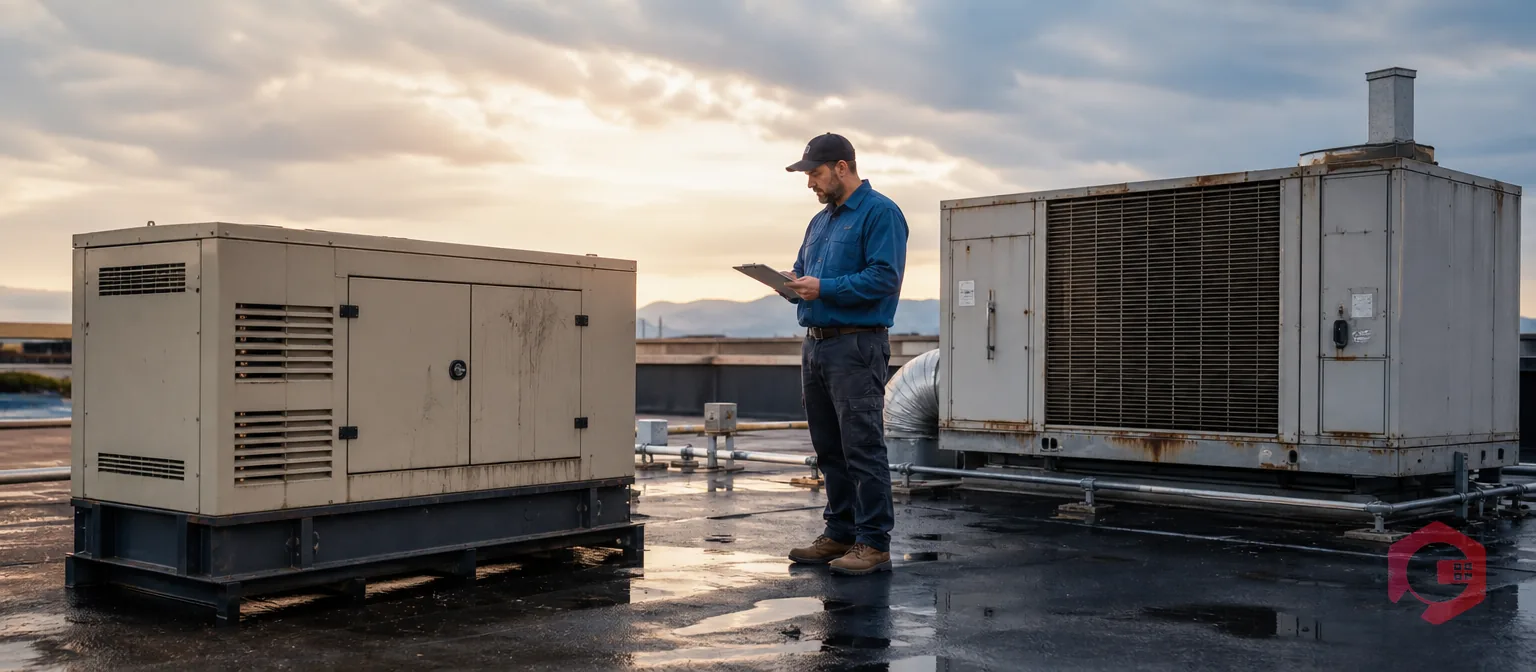
- Actionable Tip: set of planned maintenance of all the critical assets - HVAC, elevators and generators - and reminders, such that there is no missed inspection.
2. Embrace Data-Driven Decision-Making
- The Concept: Get rid of guesswork. Use leverage data to make decisions on budget and labor.
- Key Metrics: Monitor Key Performance Indicators (KPIs) for overall spending on maintenance, patterns of energy usage, and work order response time.
- The Benefit: Data can be used to find some of the inefficiencies that are not clear, to trim unneeded costs and even be able to make correct forecasts in terms of resource allocation in the coming quarter.
3. Centralize Vendor and Inventory Management
- The Concept: Vendor and Spare parts management in silos results in anarchy. Automate the procurement system by handling several vendors and inventory under a unified platform.
- Inventory Control: accurate monitoring of spare parts and consumables will mean that they replenish as needed, and they will not experience the delays caused by stockouts that have left the important machinery offline.
- The Benefit: This will provide you with an edge to negotiate better prices with suppliers and also to have a uniformity in the delivery of the services at all your new locations.
4. Optimize Space Utilization
- The Concept: Real estate is usually the second-largest cost of a company. Manage and plan space efficiently to prevent unnecessary wastage of expensive square space.
- Actionable Tip: Perform space audits on a frequent basis. In case the data depicts underutilization of the desks, then we can think of flex working rooms or renting out so that we can use them fully.
- The Benefit: This directly reduces the number of overheads and enhances employee experience because of designing the spaces that suit their needs.
5. Prioritize Health, Safety, and Compliance
- The Concept: is built in accordance with the building codes, safety standards and environmental standards. There is no compromise as far as compliance is concerned.
- Risk Management: Plan on how to deal with such risks as a fire incident or other security threats instead of responding to the accidents.
- The Benefit: It will save money spent on fines imposed by the government, provide security to the occupants, and enhance the morale of the employees by demonstrating that their welfare is a priority.
6. Foster Strong Communication and Collaboration
- The Concept: Collaboration tools should be used to maintain a balance between staff, tenants, and vendors. Information is going to die on emails and sticky notes.
- Stakeholder Buy-In: Make sure that every stakeholder (employees, customers, management) is not on the wrong page about new initiatives.
- The Benefit: It eliminates bottlenecks, duplication of work, and quick and proper first-time completion of tasks.
7. Leverage Advanced Technology (CMMS)
Important KPIs to Track for Facility Efficiency
The only way to gauge efficiency is to monitor the appropriate metrics. The following are the key KPIs that must be used by every facility manager:
1. Overall Equipment Effectiveness (OEE)
- What it is: The gold standard of productivity. It is estimated as Availability x Performance x Quality.
- The Goal: Global facilities goal is a high OEE score indicating the perfect production: no breakdowns, no defects, no accidents.
2. Maintenance Costs Per Square Foot
- Why track it: This financial measure will assist you to know whether certain buildings or departments are using an excessive amount of your budget relative to the space they occupy.
3. Work Order Response Time
- Why track it: This is gauging agility. A long response time is a frequent sign of a breakdown in the communication process or manpower. The quickest method of enhancing tenant satisfaction is to enhance this metric.
4. The "Six Big Losses"
- What they are: A breakdown of where you lose time and money:
- Equipment Failure (Unplanned stops).
- Setup & Adjustment (Planned stops).
- Idling/Minor Stoppages.
- Reduced Speed.
- Defects.
- Startup Losses.
- Action: Use CMMS data to categorize every stop and attack the root causes.
5. Energy Consumption
- Why track it: Tracking energy use by building or department allows you to validate sustainability initiatives (like LED upgrades) and catch anomalies in asset performance, such as a motor drawing too much power before it fails.
How Cryotos CMMS Streamlines These Practices
The application of these best practices is almost impossible when done manually. Cryotos CMMS is the virtual foundation that facilitates the following strategies:
- Asset Tracking: Cryotos gives you the full database to monitor the location, state and history of assets so that you do not lose the life information of your equipment.
- Work Order Management: Our centralized system enables you to design, delegate, and monitor the maintenance activities digitally, simplifying the workflow, and avoiding the loss of paperwork.
- Preventive Maintenance Automation: Cryotos Preventive Maintenance is an automated work order triggering, which stops the occurrence of sudden equipment failure and transports you to a more proactive model.
- Inventory Management: Monitor the position of spares on demand and get low-stock signals, therefore you will never have to postpone a repair to getting a part.
- Mobile Accessibility: The Cryotos mobile application will enable technicians to update details, close work orders, and add photos in real-time, which will enhance real-time cooperation.
Implementation Hurdles and Common Mistakes
Strategy is important even in the presence of the finest tools. Avoid these common pitfalls:
- Lack of Stakeholder Buy-In: The inability to win the support of employees and management to new processes may be fatal to implementation. You have to explain the objectives of it to them--how this will make their jobs simpler.
- Inadequate Training: Purchasing software is not enough; the employees should be trained on how to identify the symptoms of untimely failure and how to use the digital tools.
- Poor Planning: The lack of direction will be caused by the lack of strategic roadmap or particular goals (including KPIs). Definitely what will be the success.
Conclusion
Operations efficiency is never accidental but one of the strategies of change of reactivity into a data-driven proactive approach. These best practices will not only enhance the experience of the occupants but will also make the occupants observe your facility in its finest potential.
Ready to stop losing money inefficiently? Explore how Cryotos CMMS automates your facility operations to streamline workflows and protect your bottom line.