

Usage-based servicing for heavy equipment means triggering maintenance from an asset's actual hour meter reading instead of a fixed calendar date. An excavator that logs 900 hours a quarter and a backup generator that logs 40 hours in the same window wear at completely different rates. A calendar-only PM schedule can't tell the two apart. Heavy equipment fleets that switch to hour meter tracking catch wear before it becomes a breakdown, instead of guessing from a date on the wall. This matters even more for mixed fleets running excavators, loaders, cranes, and drill rigs side by side, since each machine type wears on its own curve.
Key Takeaways
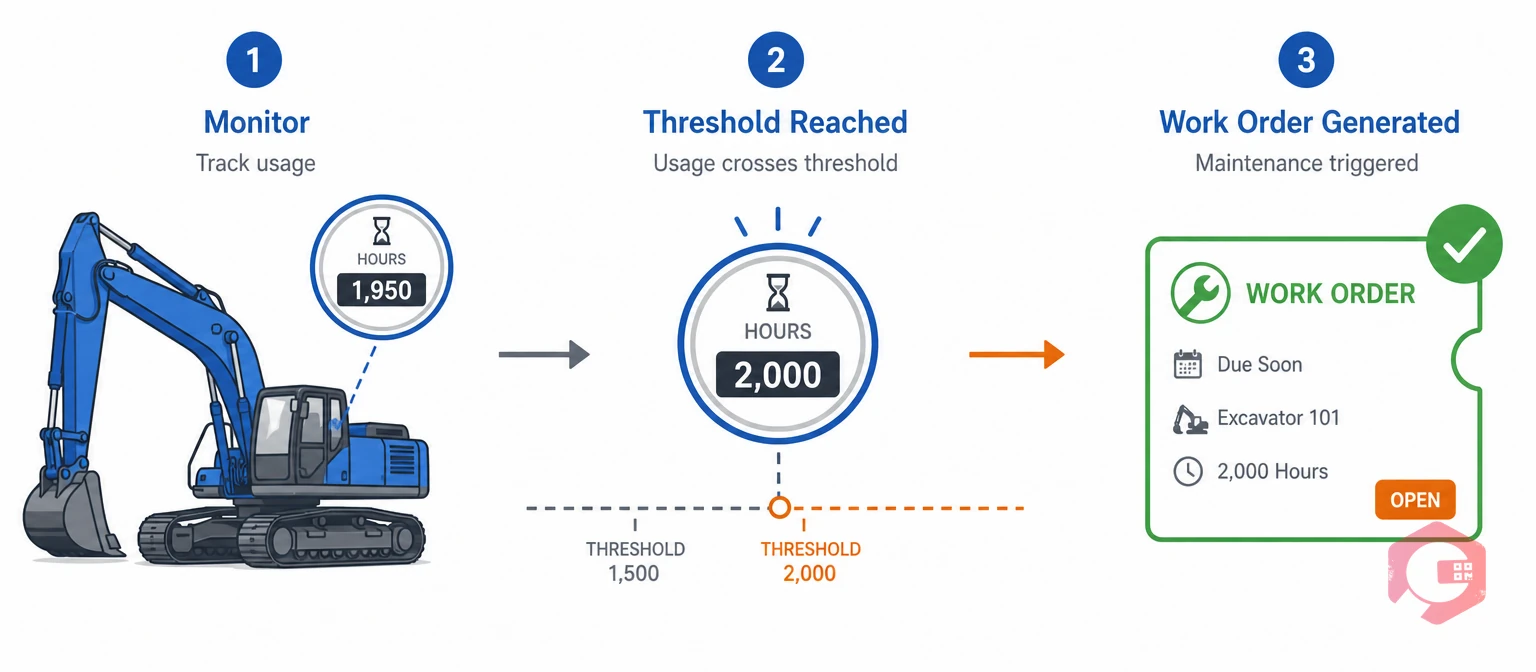
Usage-based servicing is a preventive maintenance approach that opens a work order once an asset crosses a usage threshold, rather than on a fixed date. The threshold can be run hours, mileage, or a cycle count. Cryotos and other platforms document this pattern as meter-based maintenance. The trigger is the reading, not the calendar.
An hour meter is a running clock built into an engine or motor that records total operating time. It works the same way an odometer tracks mileage on a car. Most heavy equipment ships with one installed from the factory.
Most heavy equipment fleets already carry this hardware. The meter isn't the missing piece:
The gap isn't the sensor. It's whether anyone reliably reads that meter and acts on it before the next scheduled teardown.
OSHA's construction equipment standard, 29 CFR 1926.600, already requires that heavy equipment stay in safe operating condition. Most manufacturer service manuals define that condition in hours, not days. An excavator's hydraulic filter change is almost always set by a run-hour interval. Filter loading tracks pump cycles. It does not track the passage of time.
Manual hour meter reading works well for small fleets with disciplined operators. IoT meter reading earns its setup cost once a fleet grows past a handful of machines or spans multiple sites. Neither approach is wrong on its own. The right choice depends on fleet size, site connectivity, and how much a missed reading actually costs you.
| Factor | Manual Meter Reading | IoT Meter Reading |
|---|---|---|
| Setup cost | None — read the existing gauge | Sensor or telematics install per asset |
| Reliability | Depends on operator discipline | Continuous, no missed readings |
| Best fit | Small fleets, single site | Large or multi-site fleets, remote equipment |
| Works offline | Yes, log via mobile app | Yes, syncs once connectivity returns |
Most fleets end up running both approaches at once. Machines with existing telematics feed hours automatically. Everything else gets a manual reading logged through a mobile app during the pre-shift walkaround. That mix covers the whole fleet without forcing every machine onto the same capture method.
See how much unplanned downtime your current fleet is actually losing with the MTBF calculator.
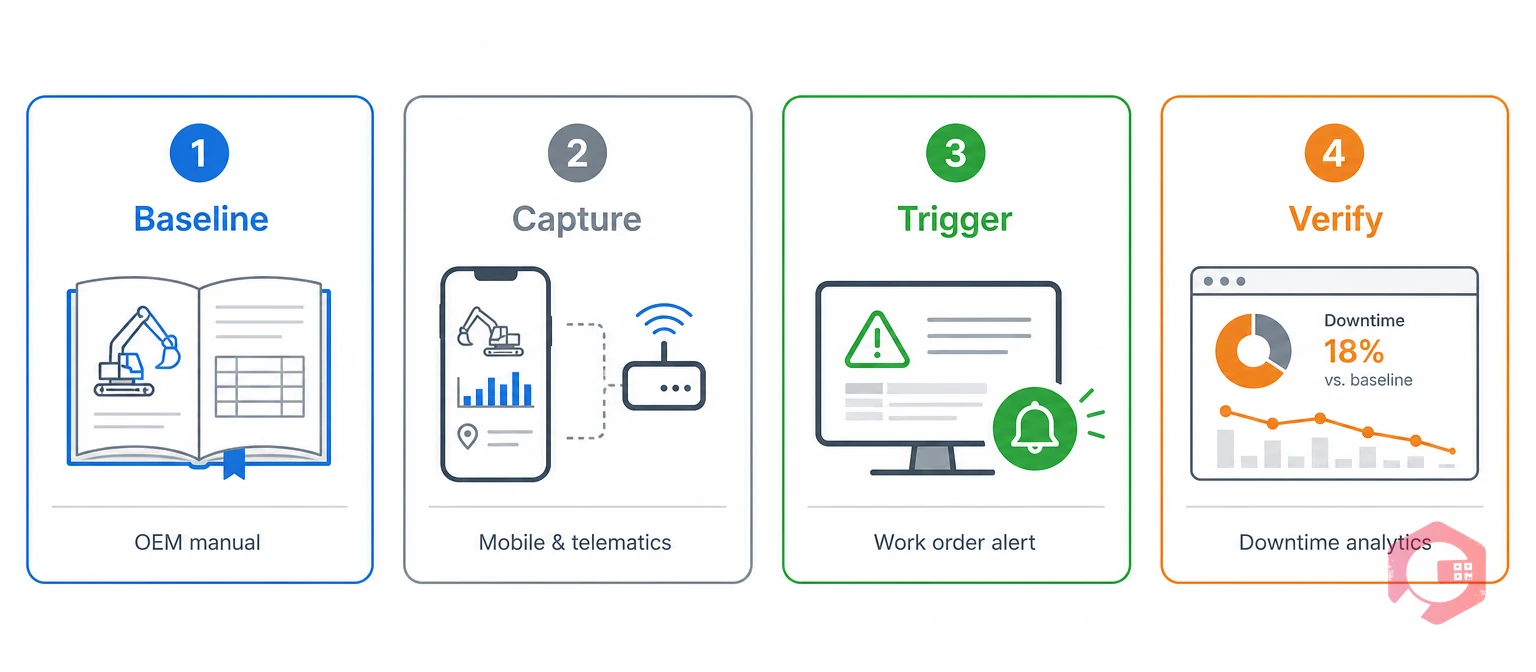
A usage-based servicing program for heavy equipment needs four parts working together, not just a meter and a spreadsheet. Skip one, and the program tends to drift back toward calendar habits within a year.
The Four-Point Hour Meter Program:
Most maintenance teams that skip the verify step end up running usage-based servicing on autopilot. Their thresholds were set once and never checked against real breakdown data. A program with all four points in place keeps improving on its own, because every closed work order feeds back into the next threshold decision.
Fleets running heavy equipment across multiple job sites tend to feel the gap in capture first. A supervisor at one site might read meters every morning, while a crew at a remote site goes weeks without logging a single reading. The Four-Point Program only works if capture is consistent across every site, not just the ones with the most attentive supervisor.
OEM hour-based service intervals vary by equipment type and duty cycle, but most heavy equipment manufacturers publish a similar tier structure. These figures are typical starting points. Always confirm the exact interval against your specific machine's manual before setting a threshold.
| Equipment | Typical Service Trigger | Common Task |
|---|---|---|
| Excavator | Every 250 hours | Hydraulic filter and fluid check |
| Wheel loader | Every 500 hours | Transmission and axle service |
| Mobile crane | Every 250 hours or per lift count | Wire rope and hook inspection |
| Dump truck | Every 5,000 miles or 250 hours | Brake and hoist inspection |
| Drill rig | Every 100 to 150 hours | Rotary head and mast inspection |
Reliability programs built around ISO 55000 asset management principles treat these OEM figures as a starting threshold, not a fixed rule. A site running two shifts a day wears components faster than the OEM's test conditions assumed. The threshold should move to match. The Society for Maintenance and Reliability Professionals points to matching PM intervals with real duty cycle as one of the clearest ways to cut both over-maintenance and unplanned failures.
Cryotos runs usage-based servicing through dynamic preventive maintenance rules that watch each asset's hour meter and open a work order the moment the threshold is crossed. A Computerized Maintenance Management System like Cryotos maps directly onto the Four-Point program above.
Most heavy equipment fleets that make this switch keep their existing OEM checklists and inspection scope. Only the trigger changes. It moves from a date on a spreadsheet to a reading from the machine itself. That single change is usually enough to stop the two failure patterns calendar-only scheduling creates: over-servicing idle machines and under-servicing the ones running double shifts.
A fleet manager doesn't need to touch every module at once. Most sites start with capture and trigger on their busiest machines, then add asset tracking and downtime reporting once the basic meter-to-work-order flow is running cleanly.
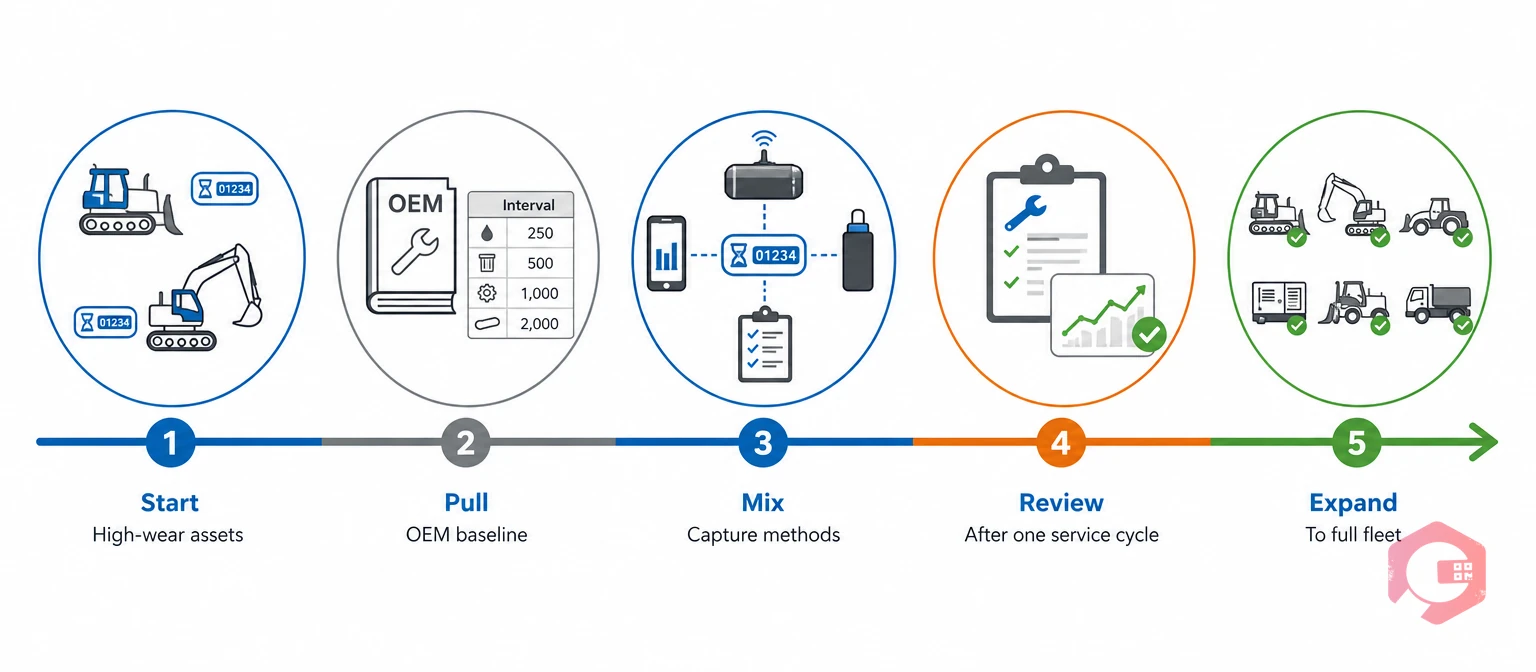
Rolling out hour meter tracking across a heavy equipment fleet works best in stages. Start with the highest-wear assets. Don't switch the whole fleet at once. A staged rollout gives the maintenance team a chance to test thresholds on a smaller group first.
Most fleets that roll this out asset by asset avoid the disruption of a full-fleet cutover. The early wins on high-wear machines build the case for going further. Supervisors can point to real downtime numbers. That beats asking a crew to trust a new process on faith.
A staged rollout also surfaces problems early, while the stakes are still small. If a threshold is set too tight on one excavator, that's a quick fix. If the same mistake ships across forty machines on day one, the maintenance team spends weeks re-tuning triggers instead of one afternoon.
Calendar-based maintenance services equipment on a fixed date regardless of how much it ran. Usage-based servicing triggers service once the hour meter crosses a set threshold, which matches the maintenance schedule to how hard the machine actually worked.
No. Manual hour meter readings logged through a mobile app during a pre-shift check work fine for smaller fleets. IoT meter reading removes the manual step and the risk of a missed reading as a fleet grows.
Start with the manufacturer's published service interval from the OEM manual. Then adjust using your own downtime and failure data once you have a few service cycles logged on that machine. A threshold set too high risks a breakdown before the next scheduled service. A threshold set too low wastes labor and parts on a machine that hasn't earned a teardown yet.
Yes. A daily pre-shift inspection checks whether a machine is safe to operate today. Hour meter tracking decides when a scheduled service is due. The two run in parallel and cover different risks.
Most CMMS platforms, including Cryotos, support combined trigger logic. For example, a rule can service a truck at 250 hours or 5,000 miles, whichever comes first, so neither meter gets ignored in favor of the other.
Heavy equipment keeps wearing out on its own schedule no matter what the calendar says, and every hour meter on the yard already knows it. Schedule a free demo to see how Cryotos turns your fleet's hour meter readings into maintenance that happens exactly when it's due.
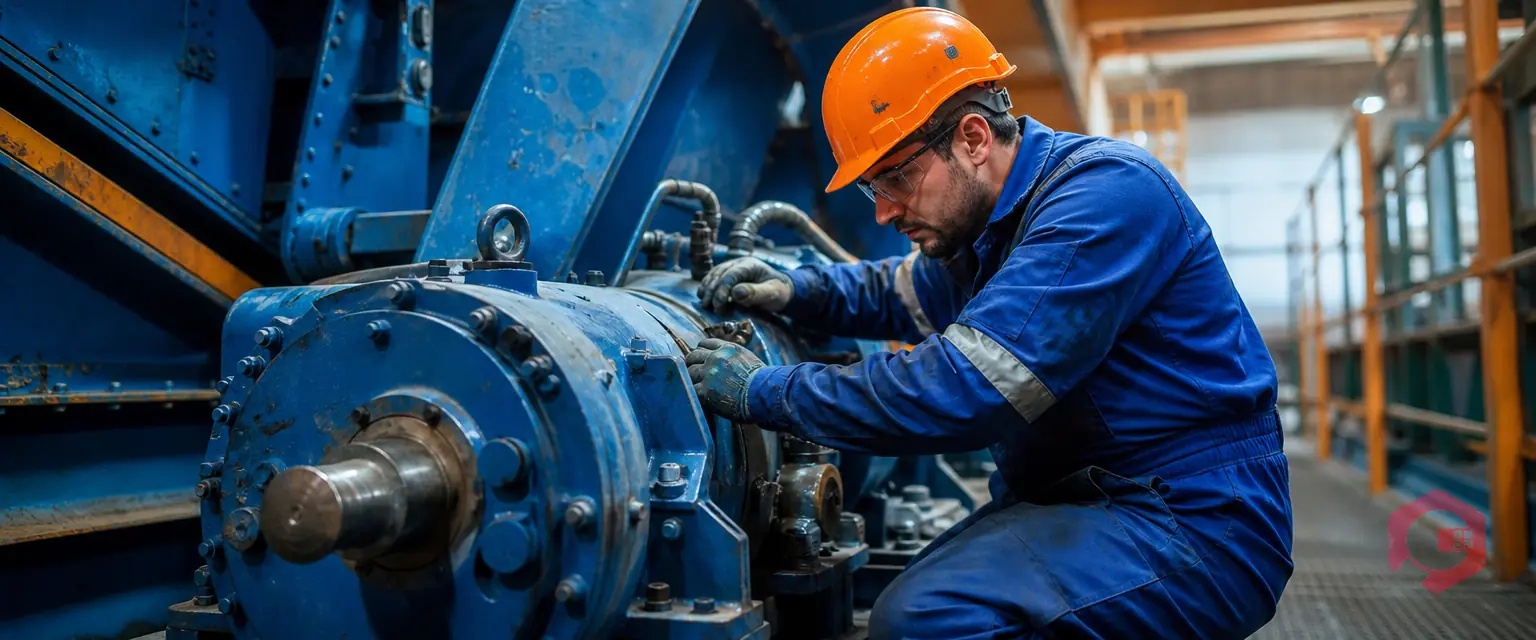


Cryotos AI predicts failures, automates work orders, and simplifies maintenance—before problems slow you down.



