
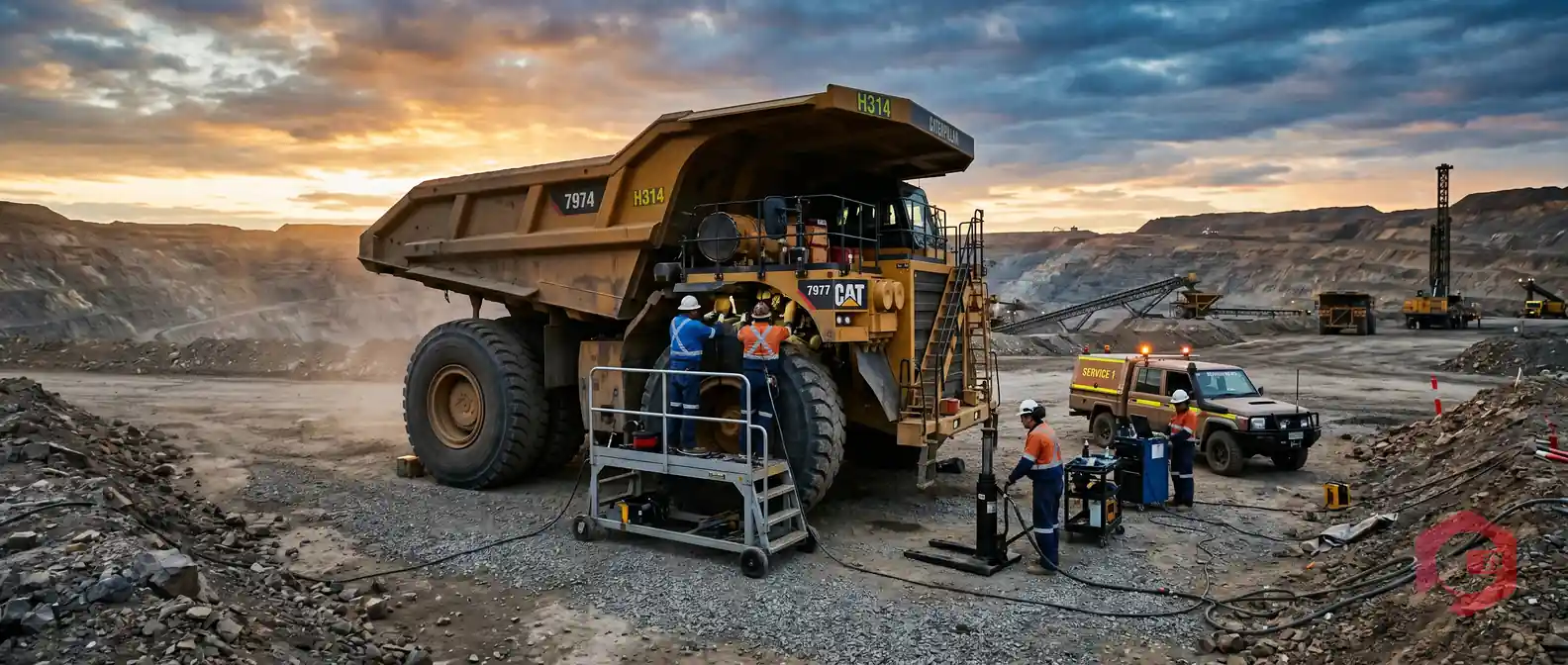
A practical 6-step guide to building a maintenance schedule for a 24/7 mining site. Sample shift matrix, PM frequencies for haul trucks, crushers, and conveyors, plus KPIs that keep the plan alive.
Mines do not stop. Haul trucks run 20 hours a day. Primary crushers chew rock across shift handovers. Conveyors move ore through breakfast and through midnight. So a mining maintenance schedule has to fit around production, not replace it. The plan has to live across three shifts, two crews, and a site that may stretch ten kilometers from the workshop to the pit floor.
The cost of getting this wrong is huge. McKinsey research on mining productivity puts unplanned downtime at $100,000 to $180,000 per hour for open-pit operations once you add lost throughput, idle labor, and emergency parts shipping. Reliable Plant data shows that 70% of mining equipment failures are preventable with a structured PM program, yet fewer than half of mid-size mines run a documented schedule.
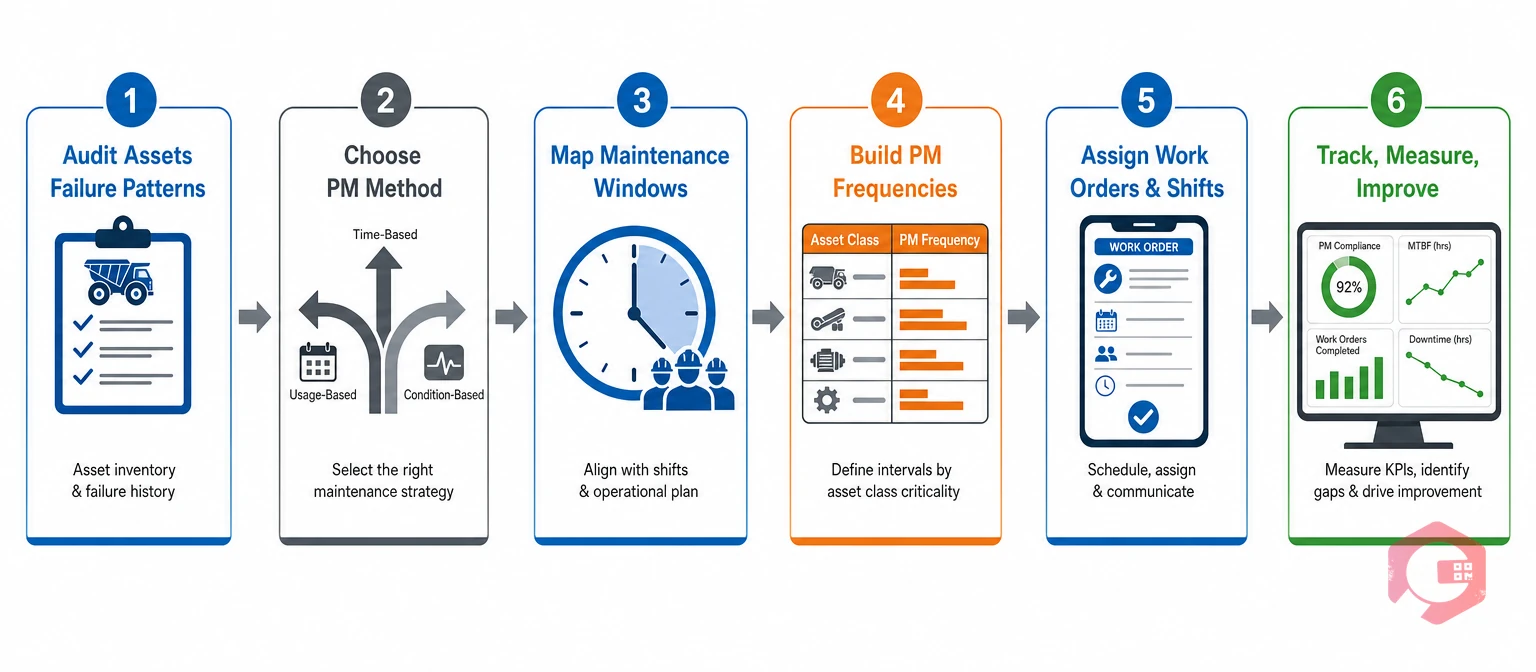
This guide walks you through six practical steps to build a maintenance schedule that fits a 24/7 mining site. You will see a real sample 24/7 shift matrix, PM frequencies for haul trucks, crushers, and conveyors, and the KPIs that keep the plan alive past the first month.
Key Takeaways
Most maintenance frameworks were written for factories that run a single shift or shut down on weekends. A mine has neither luxury. Three things make mining scheduling especially hard:
When a primary crusher fails mid-shift on an open pit, everything stacks up. Trucks idle. Blasting halts. Processing throughput drops. The cost is not only emergency repair. It is overtime, freight on parts, and missed weekly targets.
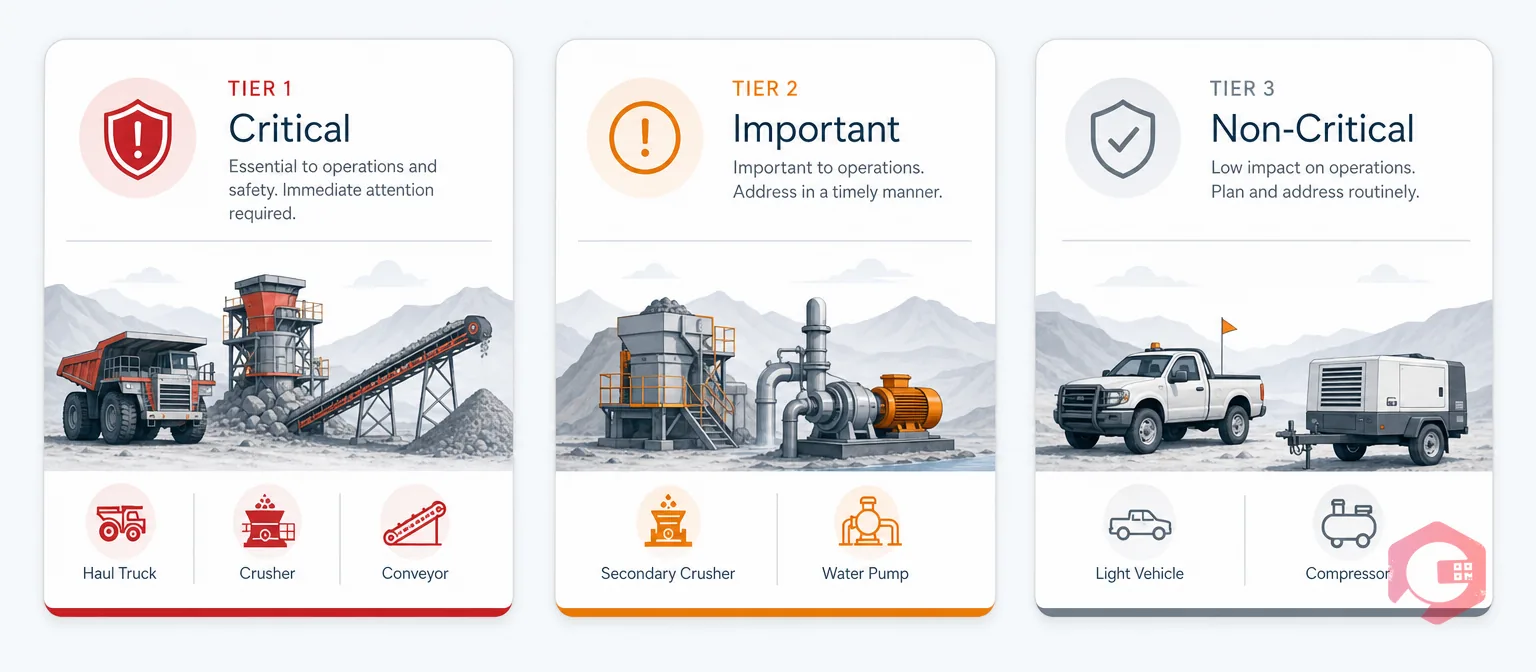
Before you write a single PM task, get a clear picture of what you maintain and how each asset fails. List every piece of equipment by location and assign a criticality rating to each one.
Tier 1 assets get the tightest PM intervals and the strictest compliance tracking. Tier 3 can run on opportunistic PM.
MTBF tells you how often an asset fails. MTTR tells you how long it takes to fix. A 90-day baseline is enough to start. A CMMS like Cryotos calculates both automatically from the work-order history.
Not every asset wants the same PM method. The three core methods each fit different equipment and failure patterns.
Most mines blend all three. Time-based covers fluids and filters. Meter-based covers mobile fleet. Condition-based covers the highest-risk fixed plant assets.
This is the step most operations skip, and it is why their schedules collapse in two weeks. A task that needs the equipment idle must be mapped to the exact window when the equipment is available. The list below shows a working 24/7 shift matrix you can copy into your CMMS.
The matrix is a starting point. Tune it to your blasting cycle, your roster pattern, and the climate. Tropical sites lose hours to heavy rain in the wet season; arctic sites lose hours to wind and ice. A CMMS like Cryotos lets you adjust the matrix in one place and the schedule updates everywhere.
Pull from OEM manuals, then tune with your real failure data. The list below is a reasonable starter for an open-pit operation.
A schedule on paper is only as good as the work orders that execute it. Each scheduled PM task becomes a work order assigned to a technician with the right skills, on the right shift, with the parts kitted ahead of time.
When a task spans shifts (common in mining), the handover protocol must capture what got done, what is open, what readings or abnormalities the team saw, and what parts or tools are staged. Process safety research from ISPE shows that weak shift handover contributes to over 30% of maintenance-related incidents across continuous industries. A digital handover inside Cryotos creates a clean audit trail that paper logs cannot match.
Not every technician should service every asset. Before assigning a work order, confirm the technician holds the required certificate: high-voltage, working at height, confined space entry, hot work. Cryotos uses skill profiles that block unqualified assignments and satisfy OSHA mining competency rules.
A schedule that nobody reviews stops working in six months. Failure patterns change as assets age. Production volumes shift. New equipment arrives. The plan must evolve with the site.
Cryotos breaks each KPI down by department, by site, by shift, and by individual asset, so the planner can spot trouble before it compounds.
Spreadsheets break across multiple shifts and remote pits. Cryotos handles the complexity that mining brings to maintenance:
Operations using Cryotos report about a 30% drop in unplanned downtime within the first six months. For a deeper read, see how smart mines are cutting equipment failures and predictive maintenance in heavy industry.
A mining maintenance schedule is a written plan that says when each asset gets inspected, serviced, or overhauled and which team owns it. It covers daily pre-start checks, weekly inspections, monthly services, and annual statutory work, all mapped to the site's shift pattern.
Haul trucks need a minor service every 250–500 engine hours and a major every 1,000–2,000. Conveyors need weekly belt and idler checks, with a full audit monthly. Primary crushers need a major inspection every quarter and a rebuild every year. Always check OEM manuals against your real operating conditions.
The best mining CMMS supports meter- and condition-based PMs, IoT integration, offline mobile (for underground or remote zones), shift-aware work orders, and live KPI dashboards. Cryotos was built for continuous operations and meets all of those needs.
Use existing windows, not full stops. Map shift changes, meal breaks, and planned slots into the CMMS. Tier the assets, keep a backlog of queued PMs, and train technicians to execute opportunistically when a machine becomes free ahead of plan.
A focused single-pit rollout takes 8 to 12 weeks. Multi-site groups with corporate ERP integration take 4 to 6 months. Cryotos cloud deployments avoid on-site server work, which shortens timelines.
A maintenance schedule wins or fails on the floor. Build it on real asset data, fit it to your shift rhythm, run it through a CMMS that everyone can see, and review the KPIs every month. The plan that survives contact with the pit is the plan that lifts uptime.
Want to see a 24/7 mining schedule live in Cryotos? Book a free 30-minute demo and we will load a sample shift matrix on your top three Tier 1 assets.



Cryotos AI predicts failures, automates work orders, and simplifies maintenance—before problems slow you down.



