
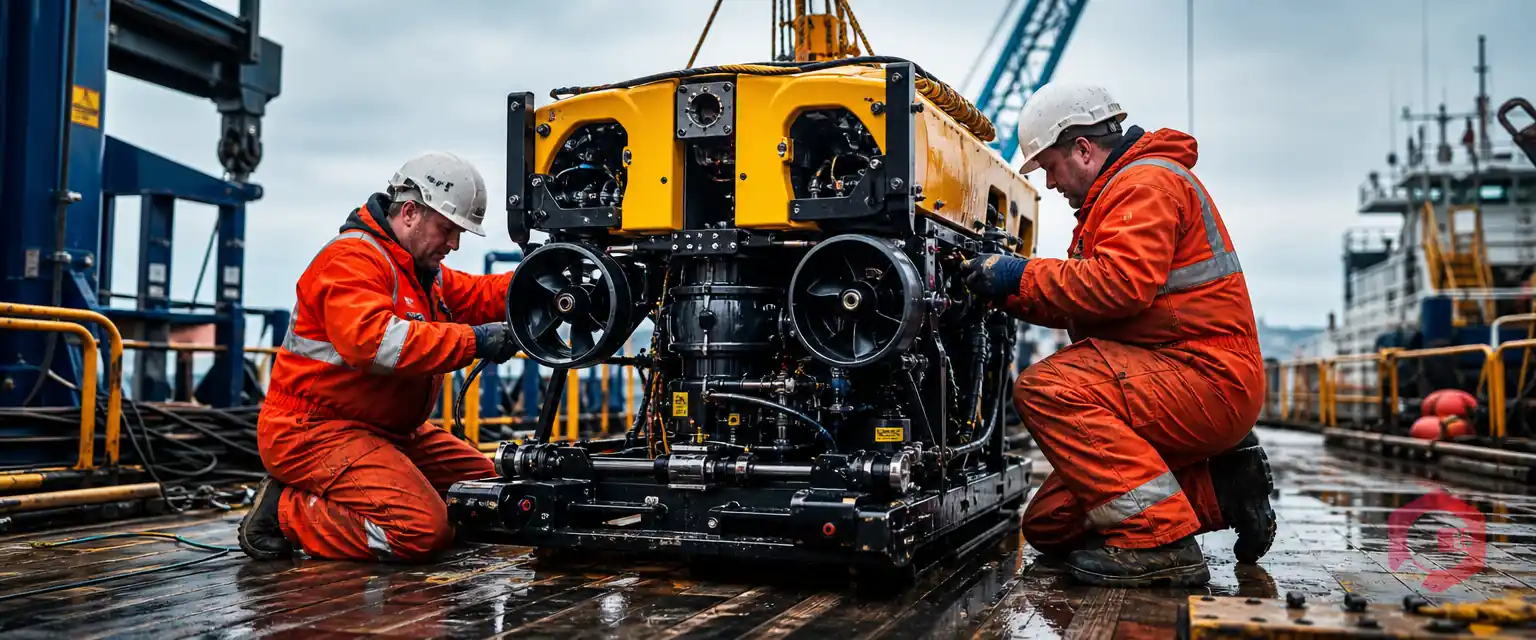
ROV maintenance is the planned and reactive work that keeps a remotely operated vehicle safe to dive. It covers routine thruster and tether checks as well as fast, recorded repairs. When a thruster fails mid-mission, your ROV maintenance process decides how fast the vehicle gets back in the water. It also decides whether the same fault returns on the next job.
This guide follows a real thruster failure through the breakdown workflow of a marine robotics and underwater inspection company. It shows the maintenance challenges the team faced and how Cryotos solved each one, helping its ROV fleet reach 96% asset availability.
Key Takeaways
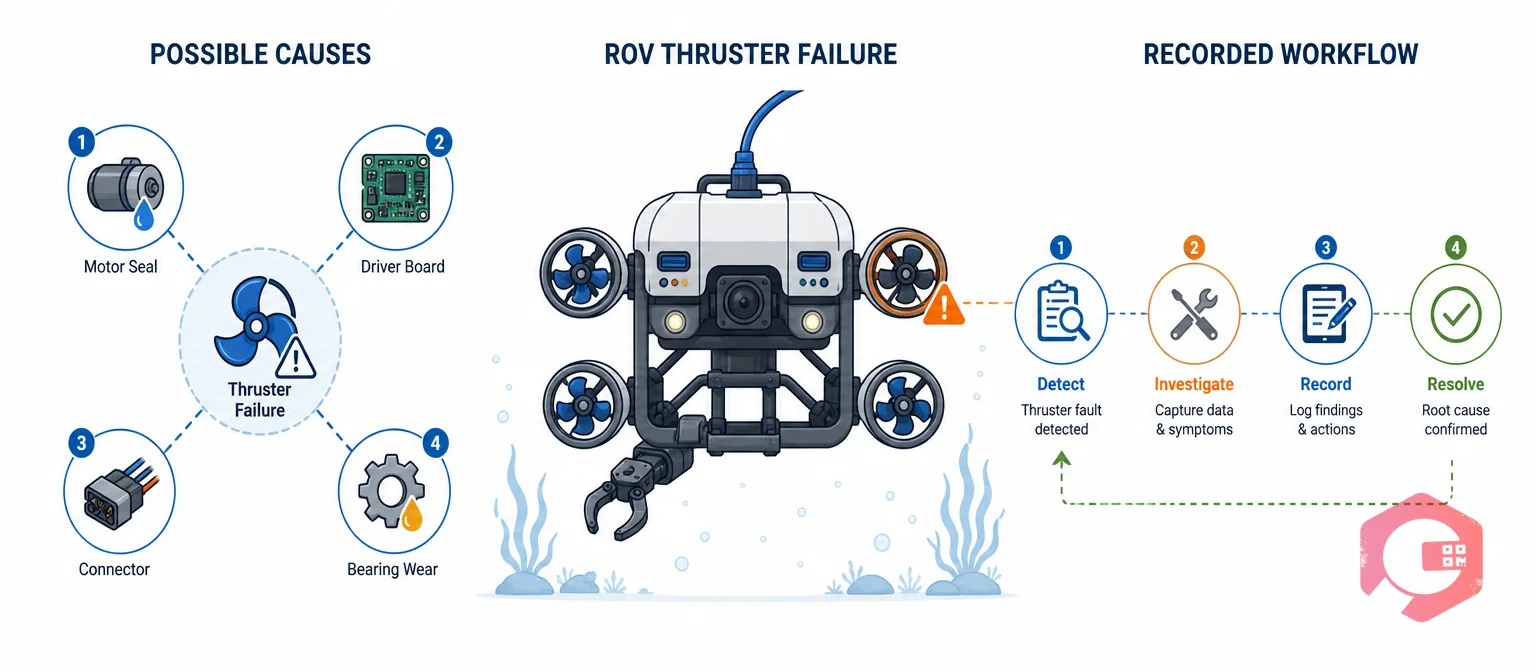
When an ROV thruster fails mid-mission, the pilot loses the ability to hold position, and the dive usually has to stop. The vehicle is recovered, the job is paused, and the clock starts on lost inspection time.
A remotely operated underwater vehicle uses several thrusters to move and hold steady near a dam wall, ship hull, or pipeline. An ROV thruster failure is hard to fix well for three reasons.
Asset management standards such as ISO 55000 expect evidence of how assets fail and how teams respond. Methods such as RCM and FMEA rely on the same data. Good ROV maintenance starts with capturing that evidence at the moment of failure.
The biggest ROV maintenance challenge is that faults happen far from the workshop, and the records that should explain them are often incomplete. The marine robotics company in this story inspects ports, dams, ships, and pipelines. Its workshop holds compressors, CNC routers, 3D printers, and a pressure chamber. Before moving to a Computerized Maintenance Management System (CMMS), it ran maintenance on paper and faced four connected problems.
Each of these gaps made thruster failures slower to fix and more likely to come back.
Cryotos solves each ROV maintenance challenge with a specific workflow built into the same system. The table below maps every problem to the Cryotos solution and the result for the team.
| Challenge | Cryotos Solution | Result |
|---|---|---|
| Paper work orders lose detail | Digital Breakdown Maintenance work order built for the ROV category | Every fault is timestamped and tied to the technician who logged it |
| No downtime visibility | Mandatory downtime field on every ROV breakdown | Availability is measured from real records |
| Repeat thruster failures | RCA Report in 8D format for ROVs | Root causes are removed, not just repaired |
| Spares used without a record | Ops Spare Request and Inventory Request workflows | Every part is linked to the job that used it |
| Safety sign-off on paper | Permit to Work and Job Safety Analysis workflows | Sign-off is recorded before high-risk work starts |
| Mixed fleet and workshop | Separate PM templates for ROVs, winches, tethers, and workshop machines | Each asset gets the right procedure from one system |
Because every solution lives in one place, a single thruster failure produces one complete record instead of scattered notes.
The ROV breakdown workflow in Cryotos runs in five steps: report, log downtime, repair, test, and review. Here is how a thruster failure moves through it.
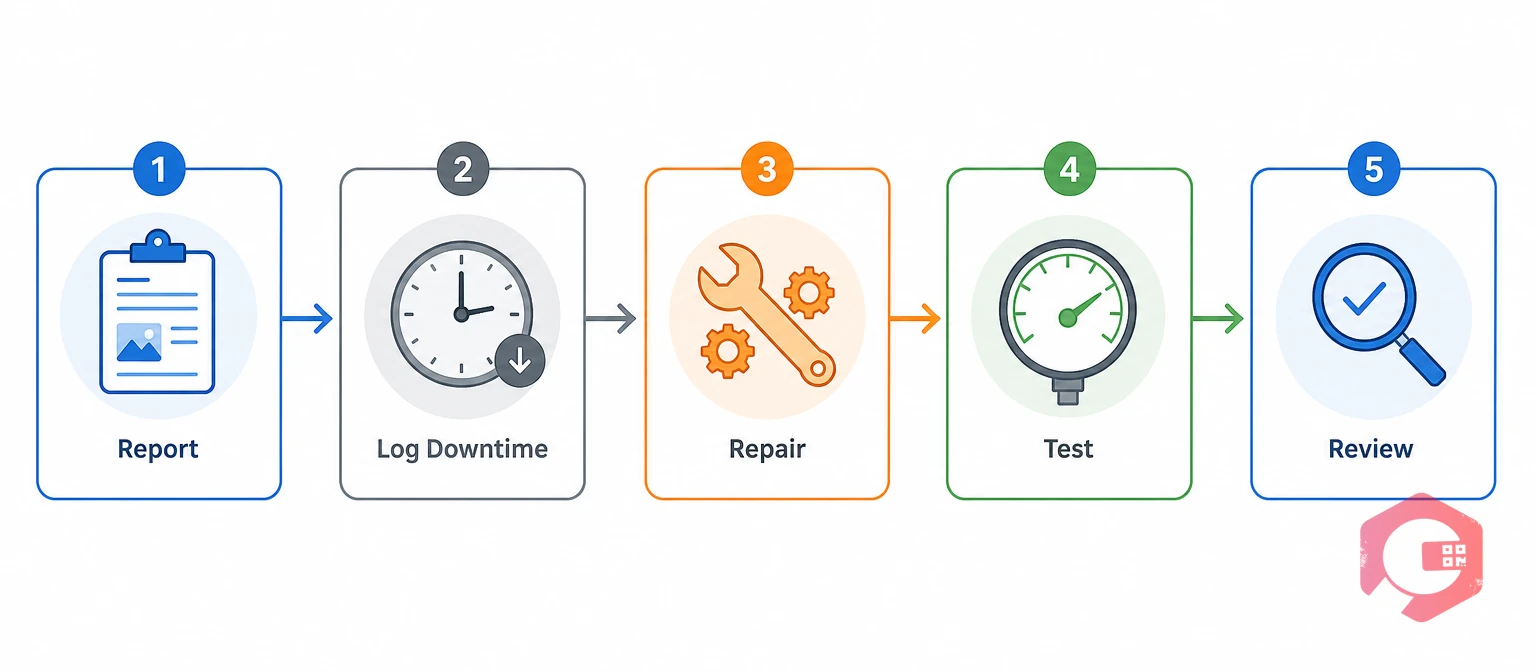
The team opens a Breakdown Maintenance work order built only for ROVs, so the right fields and asset list appear by default. Cryotos work order management records who raised it and when.
Mandatory downtime logging is a rule that stops a work order from closing until the outage time is recorded. Cryotos downtime tracking then turns those records into MTTR, MTBF, and availability for each ROV.
A repaired thruster is not ready until it passes testing. A dedicated Pressure Test workflow gives digital proof that the ROV is fit to dive again.
Small faults go into a lighter ROV Issue Management log. Repeat or critical failures move to an RCA Report in 8D format for a full root cause analysis.
Want to know how long your own repairs take? Try the free MTTR calculator to benchmark your mean time to repair.
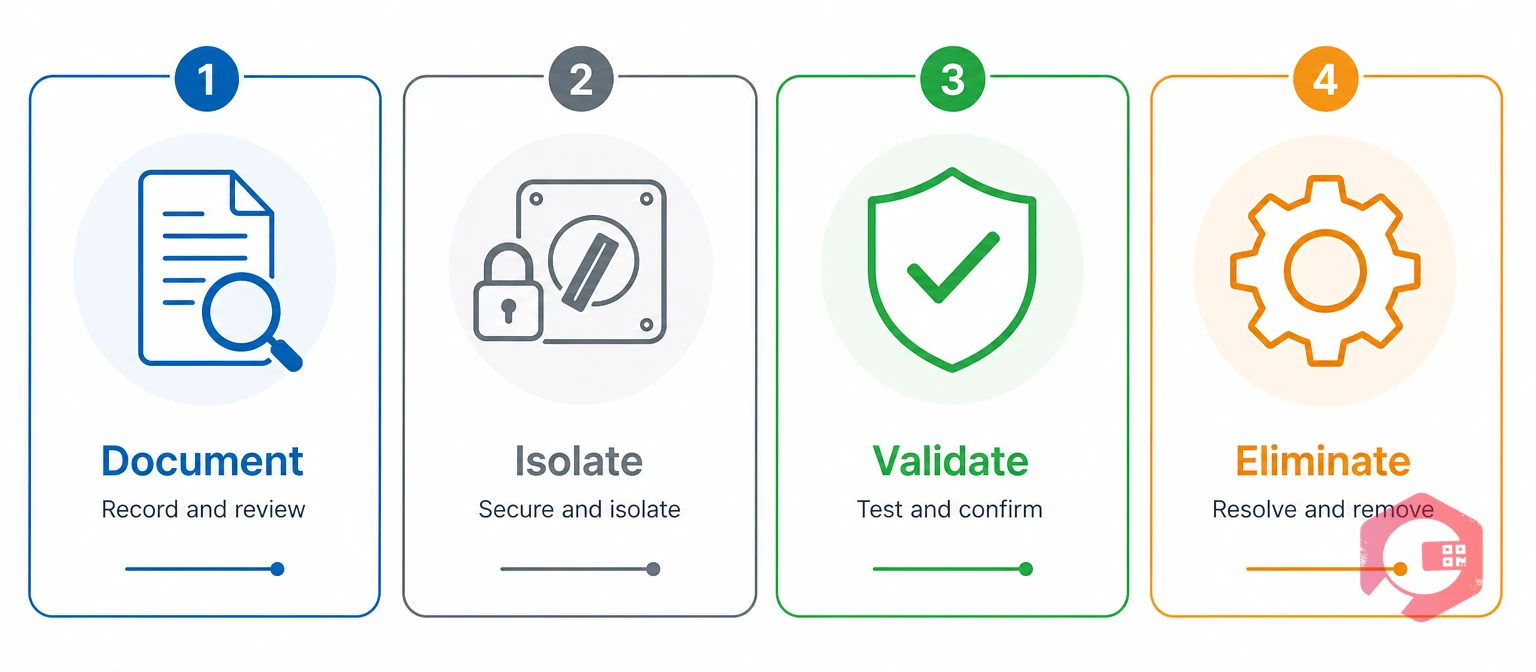
The DIVE Framework is a four-stage model for handling any ROV failure so the fix sticks. Each stage maps to a Cryotos workflow.
The DIVE Framework:
An 8D report is an eight-step problem-solving method that moves from containment to permanent prevention. The eight disciplines approach goes further than the simple 5 Whys found in many maintenance tools. Most maintenance teams handle Document and Isolate well, and Cryotos makes sure Validate and Eliminate are never skipped.
The cheapest ROV thruster failure is the one prevented before the dive. Cryotos preventive maintenance software runs daily, weekly, and per-asset checks. Problems get caught on the bench, not underwater.
A Weekly Maintenance Report pulls functional checks, servicing, and spare replacements into one summary for management. The team also books units through an Internal ROV Booking workflow, so the right ROV is assigned to the right job before work starts. Strong ROV preventive maintenance means fewer emergency repairs in the first place.
Better ROV maintenance shows up in availability, fewer critical breakdowns, and a healthy balance of planned and reactive work. These figures come from the company's live Cryotos account and Cryotos' published customer material.
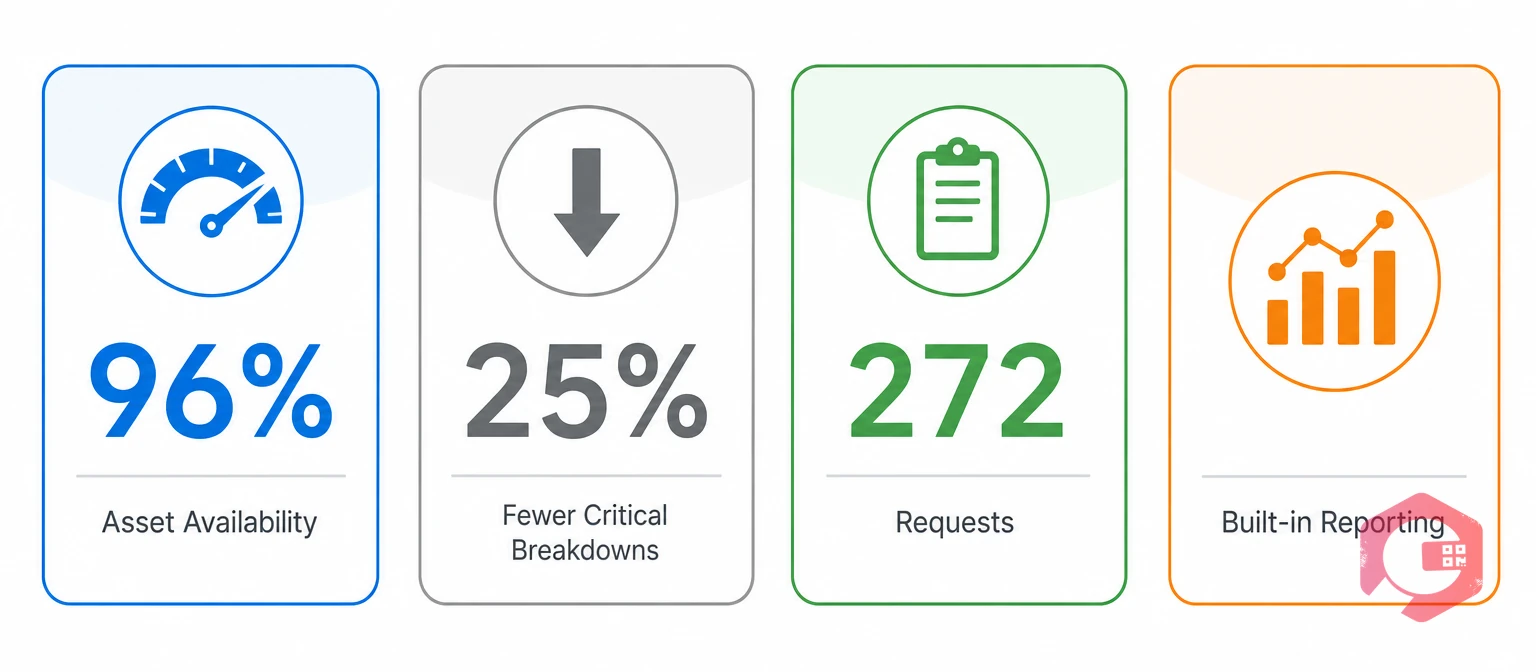
For maintenance teams running underwater fleets, these results come from one habit: every failure is recorded, explained, and prevented next time.
ROV maintenance covers the routine checks, servicing, repairs, and testing that keep a remotely operated vehicle safe and ready to dive. It matters because a failure underwater stops the mission and puts costly work on hold. Recorded, planned maintenance reduces those failures.
Recover the ROV safely, then open a breakdown work order before starting repairs. Record the symptoms, the asset, and the time the fault began so downtime is captured from the start. Repairs that start before the fault is logged often lose the detail needed to find the cause.
Common causes include motor wear, shaft seal leaks that let water in, driver board faults, and damaged connectors or cables. Because the symptoms look similar, a recorded diagnosis and root cause review help the team find the real cause rather than replacing parts by guesswork.
ROV maintenance software such as Cryotos lets teams build ROV breakdown work orders and enforce downtime logging. It links spares and safety permits to each job and runs 8D root cause reports. It also schedules preventive checks for ROVs, tethers, winches, and workshop equipment in one system.
Thruster failures will happen, but repeat failures don't have to. Schedule a free demo to see how Cryotos supports ROV maintenance with breakdown work orders, mandatory downtime logging, preventive checklists, and 8D root cause analysis.
Cryotos AI predicts failures, automates work orders, and simplifies maintenance—before problems slow you down.



