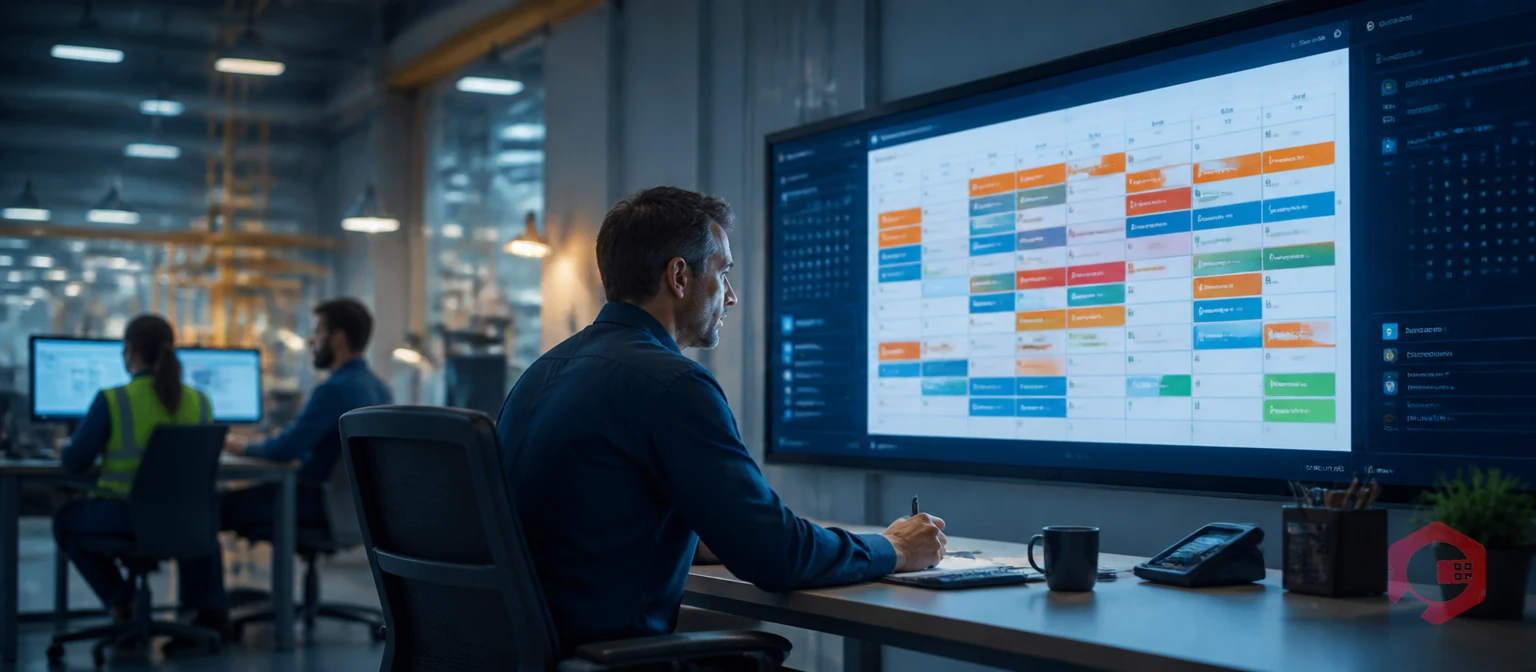
Many organizations continue to struggle in an uphill battle in the complex world of facility and asset management. Do you use disjointed spreadsheets, whiteboard schedules, or paper trails to monitor your maintenance? Provided this is the case, you will probably be well informed of the mayhem that has been caused by firefighting mode, i.e., unforeseen equipment malfunctions, lost work orders, and skyrocketing operational costs. prevention.
The business is shifting on a colossal scale. Run-to-fail days are being phased away, and a new age of digital transformation where decisions are made by data is being brought in. As a means to remain competitive, leaders are shifting to centralized digital platforms, which transform the disjointed data into actionable insights. The Computerized Maintenance Management System (CMMS) comes in here. Organizations bring in reactivity and transform it into pro-activeness, predictability, and efficiency through the bridge of reliability.
This is where Cryotos comes in. We know that implementing a new technology may be overwhelming, and that is why Cryotos CMMS is created in such a manner that it is as user-friendly as it is effective. We do not merely computerise your paperwork but provide and enable your workforce with AI-powered insights, seamless mobile capabilities that are seamless, and real-time asset tracking.
What is a CMMS?
CMMS stands for Computerized Maintenance Management System. At its core, it is a centralized digital platform designed to simplify, automate, and optimize maintenance management.
Consider a CMMS to be the brain of your maintenance activities. It keeps all the important fragments of data- like the specifications of the assets and warranty details, repair records, and spare parts list. Digitization of such records enables a CMMS to eradicate the confusion of manual tracking and enables organizations to cease fire-fighting during maintenance and begin to pursue data-driven strategies.
Why is it essential? In the absence of CMMS, maintenance is usually unstructured and responsive. Through it, you will have a 360-degree view of your facilities, and machinery, fleets, and infrastructure will always be operating at their best.
How Does It Work?
A CMMS operates through the conglomeration of multiple maintenance operations under one ecosystem. It ties together individuals (technicians) and resources (equipment) and operations work orders to facilitate smooth communication and performance.
Here is the typical workflow of a CMMS in action:
- Asset Repository & Data Input: The system begins with the creation of an electronic list of all your assets. Every piece of equipment has a label containing such information as make, model, serial number, and maintenance record.
- Work Order Generation: A Work Order is generated when there is a breakdown or when there is a scheduled service to be completed. A user may cause this manually, or the system may cause it automatically by time (e.g., after every 3 months) or meter readings (e.g., after every 1,000 hours).
- Scheduling & Assignment: The CMMS allocates the work order to the best technician possible in terms of availability and expertise. The technician gets an instant message through a mobile application or dashboard.
- Execution & Documentation: The technician finishes the job, whereby he/she uses his/her mobile CMMS to access manuals, checklists, and safety measures. They enter their time, parts utilized, and the result of repair directly into the system.
- Reporting & Analytics: When the work order is closed, the work order data runs into the analytics engine in the system. This produces reports about such measures as Mean Time Between Failures (MTBF) and total maintenance cost that can assist the managers in making more intelligent decisions in the future.
How to Evaluate a CMMS?
The choice of CMMS is a strategic choice. There's too much to choose from, and it is essential to go beyond the marketing jibber-jabber and consider software in relation to your particular operation requirements.
Here is a framework for evaluating a CMMS solution:
- Define Your Objectives: Do you intend to lower your inventory or enhance your regulatory compliance, or are you just trying to better organize your work orders? The most important features will be determined by what you want and can not compromise on.
- Ease of Use & Mobile Accessibility: A CMMS only works when your staff uses it. Find a user-friendly, intuitive interface that has a powerful Mobile App. technicians would be in a position to update tasks without the necessity to go to a desktop.
- Scalability & Customization: Will the software grow with you? Make sure that the system is able to support multiple sites and able to customize workflows to your unique business without requiring you adapt the software to your business.
- Integration Capabilities: A modern CMMS should not exist in a silo. Check if it integrates with your existing ERP, IoT sensors, or financial software to create a unified technology stack.
- Support & Training: Review the reputation of the vendor with regard to supporting customers. Are they providing full onboarding, training tools, and stress-free help desks?
Key Features and Benefits
Strong CMMS provides a collection of applications that are aimed at addressing the complexity of maintenance management. The following are the features to be had and the physical advantages they present.
Key Features
- Work Order Management: The core of the system. It enables you to develop, monitor, and manage work orders effectively to make sure that nothing falls between the cracks.
- Preventive & Predictive Maintenance: Change from repairing broken tools to avoiding breaks. Automatically schedule tasks or schedule maintenance automatically based on real-time asset health through Integration with IoT.
- Inventory & Spare Parts Management: Track stock levels in real-time. Pre-establish reorder points so that you will never run out of essential parts when doing a repair.
- Mobile Capabilities: Give your field team the freedom to take photos and scan QR codes and to sign off tasks on their phones.
- Asset Lifecycle Tracking: Track an asset through the procurement process to the disposal process to determine the total cost of ownership (TCO) and determine when it is more cost-effective to replace than to repair.
The Benefits
- Reduced Downtime: You ensure that the production lines are constantly running and the facilities are always open by identifying problems before they lead to failures.
- Cost Savings: Streamlined inventory and long-lasting lifespan of assets will result in a significant decrease in operational expenses (OpEX).
- Improved Compliance: Automatically record all the checks and repairs, which leads to an audit trail of safety regulations and industry standards.
- Data-Driven Decisions: Move away from guesswork. Enhance team productivity, justify budgets, and identify bottlenecks on the basis of comprehensive reporting.
Why Choose Cryotos CMMS?
Cryotos is an all-encompassing solution that will transform maintenance operations, although there are numerous alternatives available in the market. We do not simply provide software; we provide a collaboration in operational excellence.
The Cryotos is designed to assist organizations, both in manufacturing plants and facility management companies, to streamline their operations and improve the performance of their assets. The following is the way we make a difference:
- Predictive Maintenance Insights: Not another basic scheduling. Cryotos is an application that combines machine learning with IoT to analyze historical data and real-time sensor data and predict a possible failure in time.
- Seamless IoT Integration: View the health of your equipment in real-time. Our system notifies you when a machine is out of regular operating conditions, and thus, timely action can be taken.
- True Mobility: Our mobile app is not a byproduct but one of its features. Always stay connected with your team by enabling technicians to handle the work orders, change the statuses, and retrieve the essential data everywhere.
- Customizable Power: Cryotos is not the other way around; it can be customized to suit your business requirements (not unlike specific dashboards, detailed reports, or unique workflows).
Conclusion
Maintenance management is no longer a nice thing to do; it is now a strategic requirement in the current competitive world. We have examined the way a CMMS works as the central nervous system of your operations and transforms scattered information into actionable intelligence and reactive chaos into proactive reliability. You are not only fixing machines by automating operations, but also using real-time data to optimize inventory and use it to protect the bottom line of your organization.
Need to lengthen the life of assets, guarantee regulatory compliance, or just provide your staff with superior tools? The appropriate CMMS is the key to making operational perfection.
Ready to take control of your maintenance operations? Contact Cryotos today to schedule a demo and see how our tailored CMMS solutions can drive efficiency for your business.