
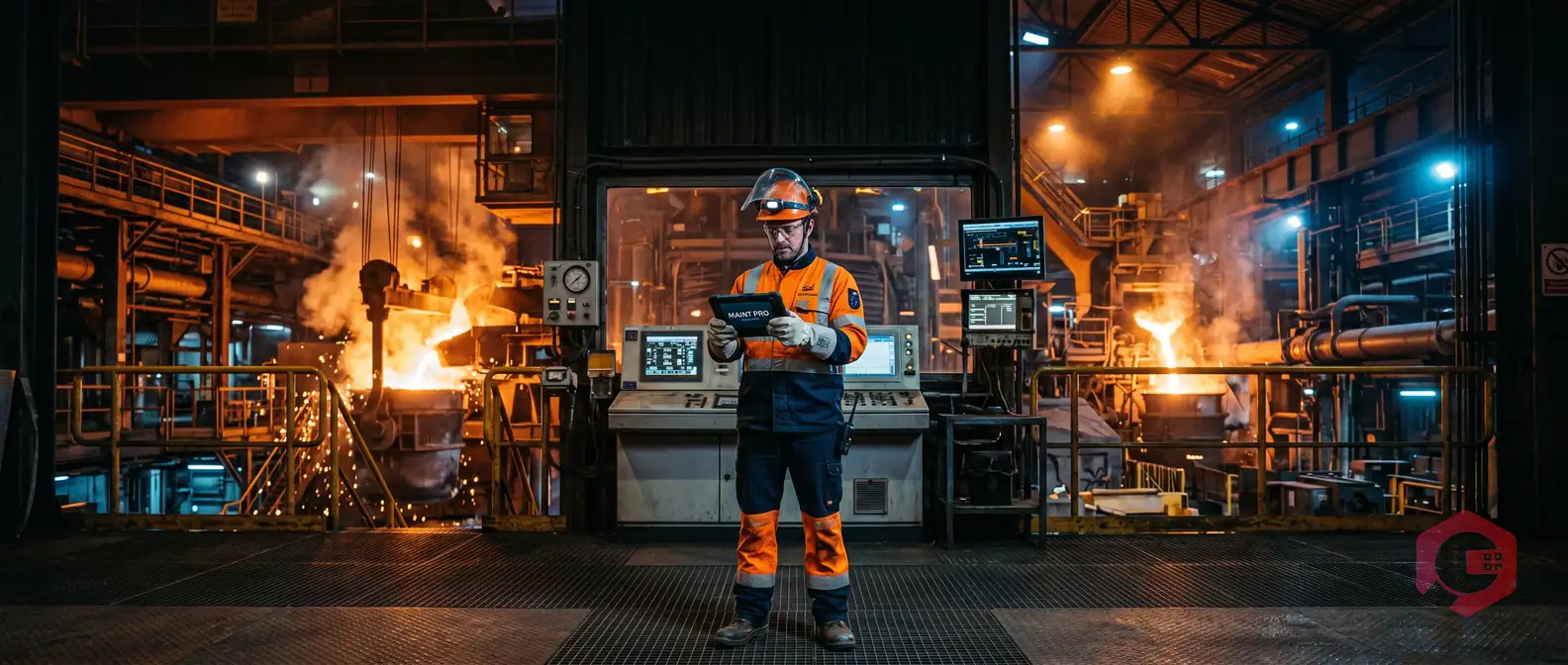
CMMS software for the steel industry is a Computerized Maintenance Management System purpose-built to manage the intense, high-temperature maintenance demands of steel plants, rolling mills, and integrated steel complexes. Steel manufacturing puts more pressure on maintenance teams than almost any other sector — blast furnaces running 24/7, ladle cranes operating under extreme thermal stress, and rolling mills cycling through millions of tons of material every year. When a critical asset fails in a steel plant, the cost is not just a repair bill; it is lost production, damaged refractories, safety incidents, and disrupted delivery schedules that ripple across entire supply chains.
According to industry data, unplanned downtime in steel manufacturing costs between $50,000 and $150,000 per hour depending on the facility. Yet the majority of steel plants still rely on paper-based maintenance logs, siloed spreadsheets, and reactive firefighting. The solution is a CMMS that understands the language of steel — from reheating furnace PM schedules to spare parts management for high-wear consumables like rollers, bearings, and refractory linings.
The steel industry operates under conditions that expose maintenance teams to a unique and unforgiving set of variables. Temperatures inside blast furnaces exceed 1,500°C. Rolling mills exert millions of pounds of force on metal continuously. Cranes carry ladles filled with molten metal. In this environment, maintenance is not an operational preference — it is a non-negotiable safety and production requirement.
A general-purpose CMMS can help track work orders, but steel plants need more. They need a system that can handle complex asset hierarchies, schedule preventive maintenance based on tonnage processed rather than calendar intervals, and integrate with SCADA and PLC systems to receive real-time condition data.
The most common maintenance problems in steel plants that a CMMS directly solves include reactive maintenance culture driven by lack of asset history, fragmented PM scheduling across spreadsheets and paper logs, spare parts stockouts causing extended downtime, and safety documentation gaps creating compliance exposure.
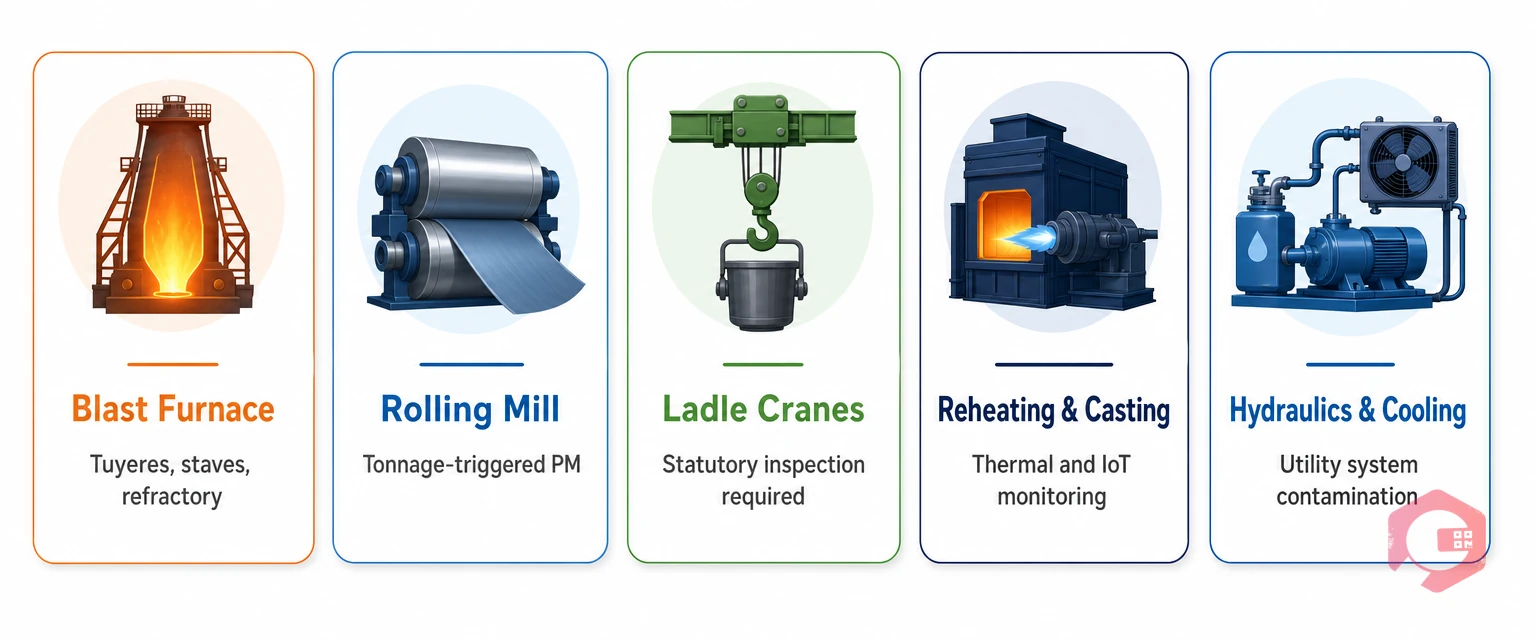
Here is a breakdown of the most critical asset categories in integrated and mini-mill steel plants:
The following capabilities most directly address the operational reality of steel manufacturing: usage-based and condition-based preventive maintenance, work order management with steel-specific safety workflows, real-time asset tracking and hierarchies, IoT and SCADA integration, and a mobile app with offline capability.
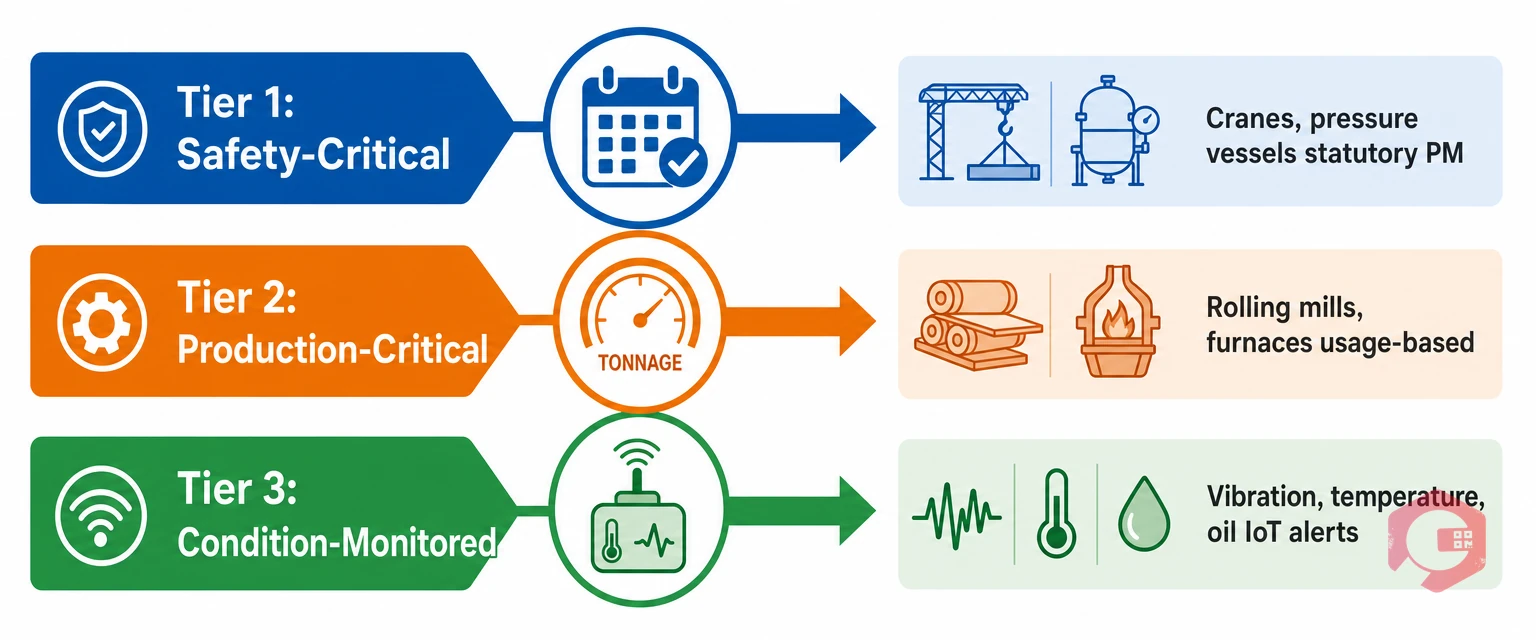
The most effective preventive maintenance strategy for a steel plant combines three tiers: Tier 1 for safety-critical assets (statutory time-based PM), Tier 2 for production-critical assets (usage-based on tonnage/run hours), and Tier 3 for condition-monitored assets (IoT sensor-triggered predictive maintenance).
Implementing this three-tier approach through a CMMS typically delivers a 25–35% reduction in unplanned downtime within the first 12 months.
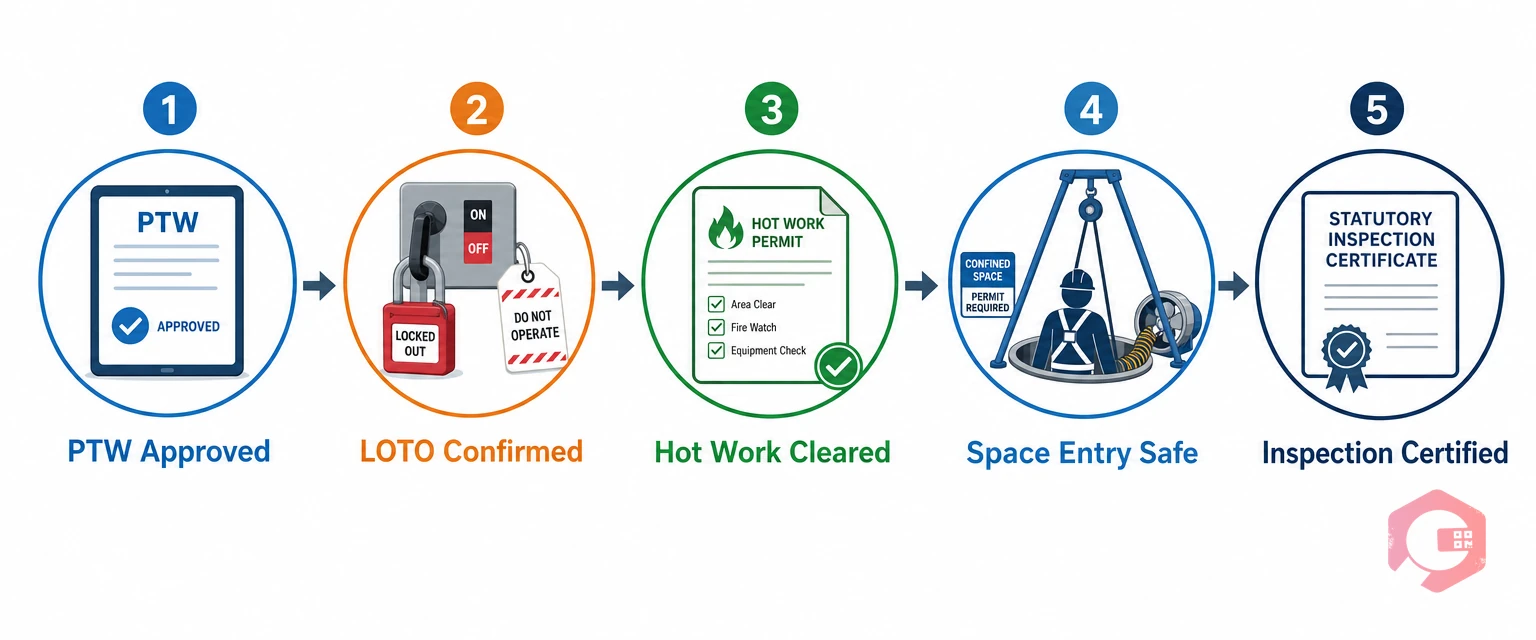
A CMMS built for steel must integrate Permit to Work (PTW) workflows, Lockout/Tagout (LOTO) procedures, hot work and confined space permits, and statutory inspection tracking directly into the maintenance process. When safety documentation lives in a CMMS rather than paper files, the time required to prepare for a regulatory inspection drops from days to hours.
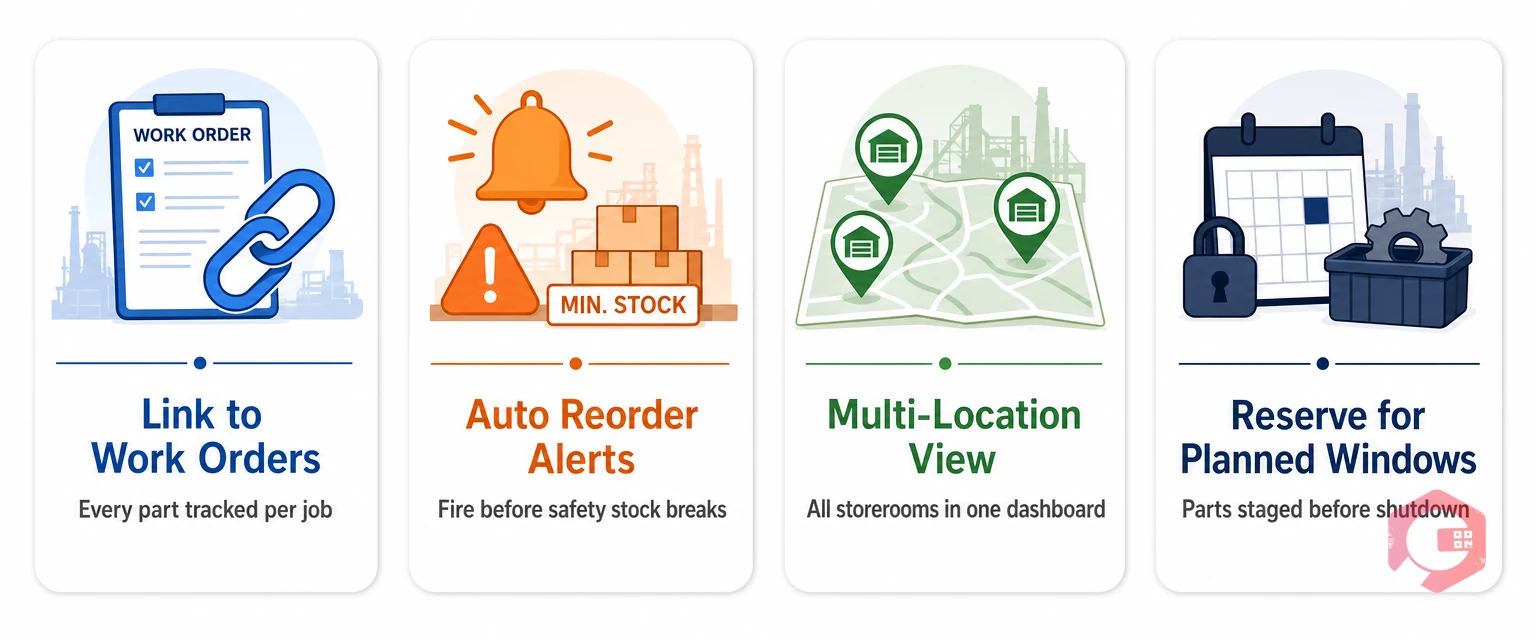
A CMMS with integrated spare parts inventory management enables steel plant maintenance teams to link parts consumption to work orders, set minimum stock levels with automated reorder alerts, manage parts across multiple storerooms, and reserve parts against planned maintenance windows.
Cryotos CMMS brings together work order management with generative AI, dual-trigger PM scheduling (calendar and usage-based), native PTW and LOTO workflows, and integrated spare parts inventory management. Steel plants that have implemented Cryotos report an average 30% reduction in unplanned downtime and 25% improvement in repair turnaround times.
Ready to see what Cryotos can do for your steel plant maintenance operations? Schedule a free demo and speak with a maintenance specialist who understands the demands of the steel industry.
CMMS software for the steel industry is a Computerized Maintenance Management System configured to manage the maintenance of steel plant assets including blast furnaces, rolling mills, ladle cranes, reheating furnaces, and cooling systems.
A CMMS shifts maintenance from reactive to proactive by scheduling PM based on asset usage and condition data from IoT sensors, and ensuring spare parts are available before planned maintenance windows.
Yes. Modern CMMS platforms like Cryotos can integrate with SCADA systems and PLCs to receive real-time process data and automatically generate maintenance work orders when sensor readings exceed defined thresholds.
A CMMS supports safety compliance by digitalizing Permit to Work systems, Lockout/Tagout procedures, and statutory inspection tracking embedded directly into work orders.
All production-critical and safety-critical assets including blast furnaces, ladle cranes, rolling mill equipment, reheating furnaces, cooling water systems, hydraulic systems, and electrical substations.



Cryotos AI predicts failures, automates work orders, and simplifies maintenance—before problems slow you down.



