FDA non-compliance fines now average $14 million per incident. That number is terrifying, but the financial hit is often just the beginning. The real cost goes much deeper-product recalls that halt operations, "Warning Letters" that become public record, and reputational damage that can take years to repair. For maintenance managers and plant heads in pharmaceuticals, healthcare, and food processing, the pressure is constant. You aren't just responsible for keeping machines running; you are the guardian of data integrity. The problem is, traditional methods are failing you.
Paper logbooks are lost or spoilt. Hand scripts are usually not legible. Spreadsheets do not have a version control and fail when they are being updated by more than one individual. Most importantly, paper-based records are incompatible with the stringent electronic signature and traceability provisions of standards, such as 21 CFR Part 11. When an auditor requests to view the calibration history of a particular mixer 2 years ago, and you have to dig through a filing cabinet to do so and spend hours doing, then you are already in trouble.
This is where Computerized Maintenance Management System (CMMS) comes in. It takes you out of the state of messiness of binders and into a simplified, digital workflow. Automation of preventative maintenance schedules, enforcing of strict data logging and instant report generation makes a CMMS not only enable you to live through an audit, but also be audit-ready on a daily basis.
Key FDA Regulations You Need to Know
FDA compliance can also be likened to a drowning pool of acronyms and codes. To the maintenance professional, though, the rules that are most important are reduced to two; data integrity (you did the work) and equipment reliability (the work keeps the product safe).
The following are the exact regulations that have direct effect on your maintenance operations and how a CMMS can resolve them.
1. The "Digital Trust" Standard
If you are moving from paper to software, this is your bible. Part 11 dictates how electronic records and signatures must be managed to be considered as valid as paper records.
- The Requirement: You must limit system access to authorized individuals, use operational system checks, and maintain a secure, computer-generated audit trail.
- The Maintenance Impact: It is not possible to simply delete a work order in case you did something wrong. The system should capture information about the person who changed, his or her time and reason of doing the change.
- The CMMS Solution: Modern CMMS platforms enforce unique logins and automatically timestamp every action. When a technician "signs" a work order digitally, the system links that signature permanently to their user ID, satisfying the Part 11 requirement for irrefutable accountability.
2. Equipment Cleaning and Maintenance (GMP)
To pharmaceutical producers, this is what is causing you to have cleaning schedules. It requires that equipment is to be washed, serviced, and disinfected after reasonable intervals to avoid contamination.
- The Need: You require a set of written cleaning and maintenance procedures (SOPs) along with the responsibility and strictly scheduled cleaning and maintenance processes.
- The Maintenance Impact: "I forgot," is not an acceptable excuse. Failure to clean a mixer at the right time would lead to the whole batch that comes after being considered adulterated.
- The CMMS Solution: A CMMS automates these intervals. It prevents production from starting by flagging equipment as "contamination risk" until the cleaning work order is closed and verified.
3. Inspection, Measuring, and Test Equipment
In the case of medical device manufacturers, this regulation emphasizes on the calibration.
- The Requirement: The manufacturing companies need to make sure that all the inspection, measuring and test equipment used should serve the intended purpose and should be able to yield valid results. Of importance is that you should record calibration standards and dates.
- The Maintenance Impact: In case one of the pressure gauges on a sterilizer went out of limits, you should know when it occurred, as well as which products may have been exposed.
- The CMMS Solution: A CMMS is used to record the particular calibration standards (e.g. NIST-traceable weights) employed on a job. In the event that a device has gone out of calibration, the system is able to activate an automatic workflow of Out of Tolerance to look into previous production runs.
4. Corrective and Preventive Action (CAPA)
While not a single "part" number, CAPA is a core concept across FDA regulations.
- The Requirement: When something falls down (a breakdown halts the production), it is not possible to just repair it. To avoid its occurrence in the future, you should find the cause of the issue.
- The Maintenance Impact: A simple "part replaced" note on a work order is insufficient. You need to document the investigation: Was it operator error? A defective part? A missed service interval?
- The CMMS Solution: Advanced CMMS platforms integrate "5 Whys" or similar root cause analysis forms directly into the corrective work order, forcing technicians to document the cause, not just the cure, before closing the ticket.
How a CMMS Enforces Compliance
Meeting these regulations requires a system designed for rigor. Here is how modern maintenance software aligns your operations with FDA expectations.
1. Unbreakable Audit Trails
The core of compliance is proving that work was done correctly.
- Real-Time Tracking: A strong CMMS records all the interactions. In the case when a technician makes some changes on a work order, the system records the time, the user, and the change. There is no guessing game.
- Digital Signatures: Technicians can sign off on work directly via mobile apps. Since these signatures are linked to unique user IDs, they satisfy the "accountability" requirement.
- Root Cause Analysis: In corrective maintenance, sophisticated systems impose certain techniques such as the 5 Whys. You are not fixing a breakdown, but you are recording the investigation into the cause of the breakdown that is vital in CAPA (Corrective and Preventive Action) reports.
2. Automated Preventive Maintenance (PM) & Calibration
Reliance on human memory for scheduling is a compliance violation waiting to happen.
- Dynamic Scheduling: FDA regulations often require maintenance based on usage, not just time. Look for systems that support dynamic PMs triggered by hours of operation or mileage. If a machine runs double shifts, the maintenance schedule adjusts automatically to keep it compliant.
- No Missed Steps: You may add obligatory checklists to the work orders. A technician is not allowed to close a calibration ticket until all steps such as checking the tolerances, verifying the readings have been ticked. This guarantees a high level of compliance with the Standard Operating Procedures (SOPs).
- Pre-built Templates: The ability to drag and drop schedules using a calendar interface will enable managers to have a visual confirmation of all the PMs in the month before any audit takes place to ensure that the schedules are arranged and set before the audit is carried out.
3. Inventory Control and Part Traceability
Incorporation of the incorrect spare part may and will nullify a warranty or contaminate a batch.
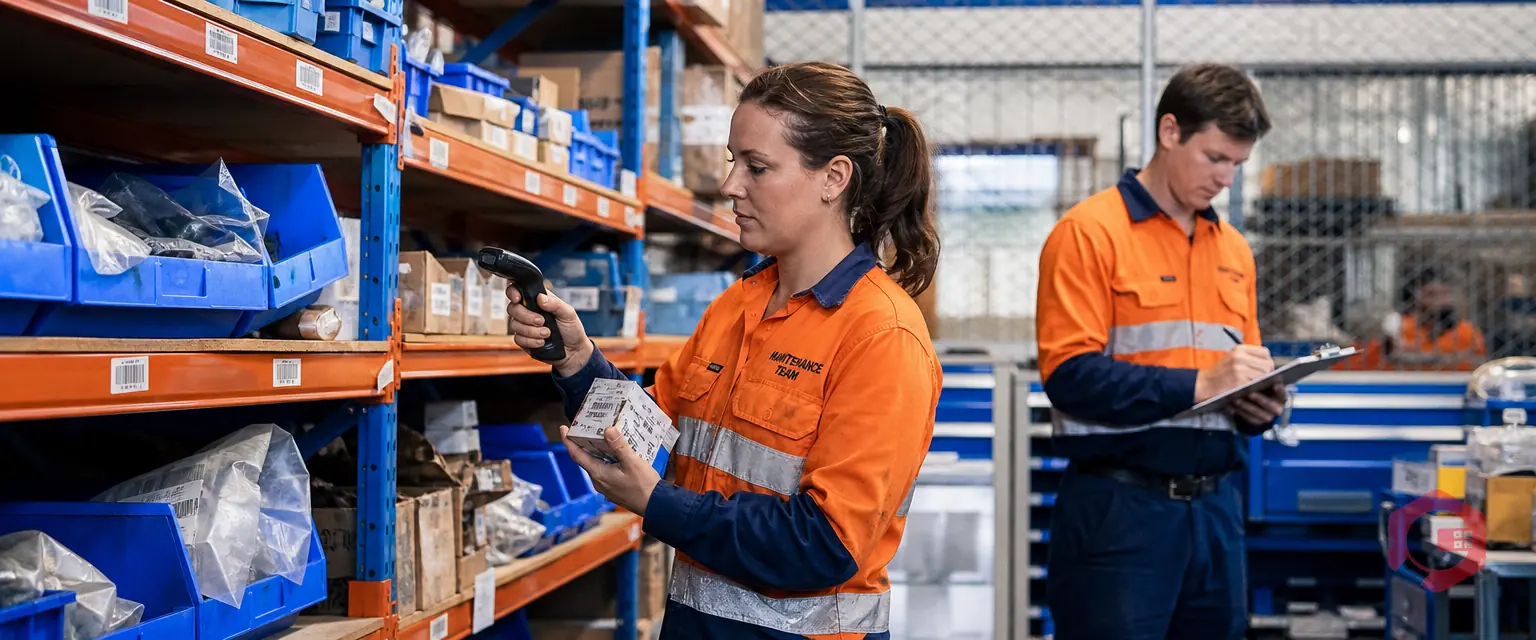
- Batch and Lot Tracking: A CMMS provides real-time tracking of inventory in QR code/ barcode. You will be able to locate parts to certain bin locations within your warehouse design in order to retrieve them immediately.
- FIFO/LIFO Management: To deal with perishable goods (such as some lubricants or seals that have limited shelf life) software aids in inventory valuation and utilization method, such as FIFO (First-In, First-Out), so you do not use a critical machine with old materials.
4. Workflow Automation and Safety
The secret of passing inspections is consistency.
- Permit to Work / LOTO: Safety is not only about not getting injured but it is also about doing things in a controlled manner. Successful systems have Lockout-Tagout (LOTO) steps and work permits in the digital workflow. No job may commence until the compliance is attached to the safety.
- Role-Based Access: You are able to limit sensitive information or granting authorization depending on user roles. A low-level technician is not supposed to be able to modify a master maintenance schedule a safe CMMS is one that is designed to make sure that this is impossible.
Implementation Steps for Compliance
Implementing a CMMS in a regulated environment isn't just about "installing software." It's about validating a process. To ensure your transition from paper to digital satisfies an FDA auditor, follow this structured roadmap.
1. System Selection & Validation (IQ/OQ/PQ)
Before you log a single asset, you must prove the system works as intended. In the FDA world, this is the Validation phase.
- Select a Part 11-Ready System: Ensure your chosen CMMS has built-in compliance features like audit trails, electronic signatures, and time-outs for inactivity.
Execute Validation Protocols:
- Installation Qualification (IQ): Check that the software is correctly installed in your servers or your cloud environment.
- Operation Qualification (OQ): The performance of key features of a test. Does the system indeed lock a user out upon 3 failed attempts to log-in? Does the work order changes get recorded in the audit log?
- Performance Qualification (PQ): Test the system to ensure that it can perform your workload of volume and work under typical operational conditions.
2. Cleanse and Migrate Data
Garbage in, garbage out--unless it is pharma, where a threat of letter is considered garbage in.
- Standardize Asset Tags: Be sure that each and every equipment is assigned a distinct identifier that corresponds to your P&ID (Piping and Instrumentation Diagrams).
- Digitize SOPs: Don't just upload PDFs. Separate your Standard Operating Procedures into line-item checklists in the CMMS. This leaves technicians responding to each step (e.g. Verify temperature is less than 20degC) instead of one "Done" box.
- Define Criticality: Tag assets as "GxP Critical" or "Non-Critical." This would enable you to focus on the validation work on the equipment that has a direct bearing on product safety.
3. Configure Workflows and Permissions
Security is a major part of 21 CFR Part 11. You need to map your physical hierarchy to digital roles.
- Role-Based Access Control (RBAC): Use user roles to set up user roles such that lower-level technicians are allowed to see work and perform work, but only upper-level managers, or Quality Assurance (QA) managers, may approve and close critical work orders.
- Approval Loops: Configure a set of automated processes whereby important alterations (such as the change of a PM schedule) are sent to the Quality department before becoming active.
4. Train and Certify Users
An untrained user is a compliance risk. You must document that every person using the system knows how to use it correctly.
- SOP Training: Develop a particular SOP of using the CMMS.
- Electronic Signature Training: The users are required to be signing a form which states that their electronic signature is equally binding as their handwritten signature.
- Scenario-Based Drills: performing a simulation of the audit, where the technicians are required to access a particular record or a workflow by using their mobile device.
5. Go Live and Monitor
Don't flip the switch overnight.
- Pilot Phase: First implement the system in low risk area (such as utilities or packaging). You have to iron out your workflow before you get to the critical manufacturing lines.
- Hyper-Care Period: For the first 30 days, review 100% of the data entered. Check for "lazy" entries (e.g., "Fixed it" as a solution description) and correct behaviors immediately.
- Periodic Review: Have a schedule of view of the audit trail of the system after every quarter to ascertain that there is no unauthorized activity or anomalies that is taking place.
Best Practices and Case Insights
- Centralize Documentation: Without further ado, end the storage of the manuals in dusty binders. Easily add PDFs, safety certificates and annotated images on to the asset record in your CMMS. When requested by an auditor to provide history of a machine you can recall a lone digital file that has years of maintenance information.
- Pilot High-Risk Areas: Begin with your critical assets- that is, the ones that have direct influence on the quality of products (e.g., sterilization units). Test the digital trail to perfection there and roll it to general facility maintenance.
- The "Pharma" Win: Facilities that switch to digital tracking often reduce audit preparation time from weeks to days. Instead of chasing signatures, managers print a "Compliance Report" from the system's reporting module and hand it over.
Conclusion
The words FDA Audit can be commonly referred to as the most stressful words in English vocabulary of many facility managers. But they don't have to be. The distinction between a scramble to life and a careful, assured examination is sometimes reduced to a single factor, that is, the integrity of the data. By using paper logs, you are putting a lot of hope that all the signatures are readable, all the dates are accurately entered, and they have not lost any binders. You do not have to make that a bet.
By implementing a specialized CMMS, you do more than just digitize your records. You build a digital fortress around your operations. You transform compliance from a reactive administrative burden into a proactive strategy that ensures equipment reliability, product safety, and brand reputation.
A CMMS doesn't just help you survive an audit; it helps you prove that your operation is running at the highest standard of quality every single day.