Mobile CMMS for Mining: Managing Maintenance in Remote Sites

Article Written by:

Created On:

April 8, 2026

Mobile CMMS for Mining: Managing Maintenance in Remote Sites

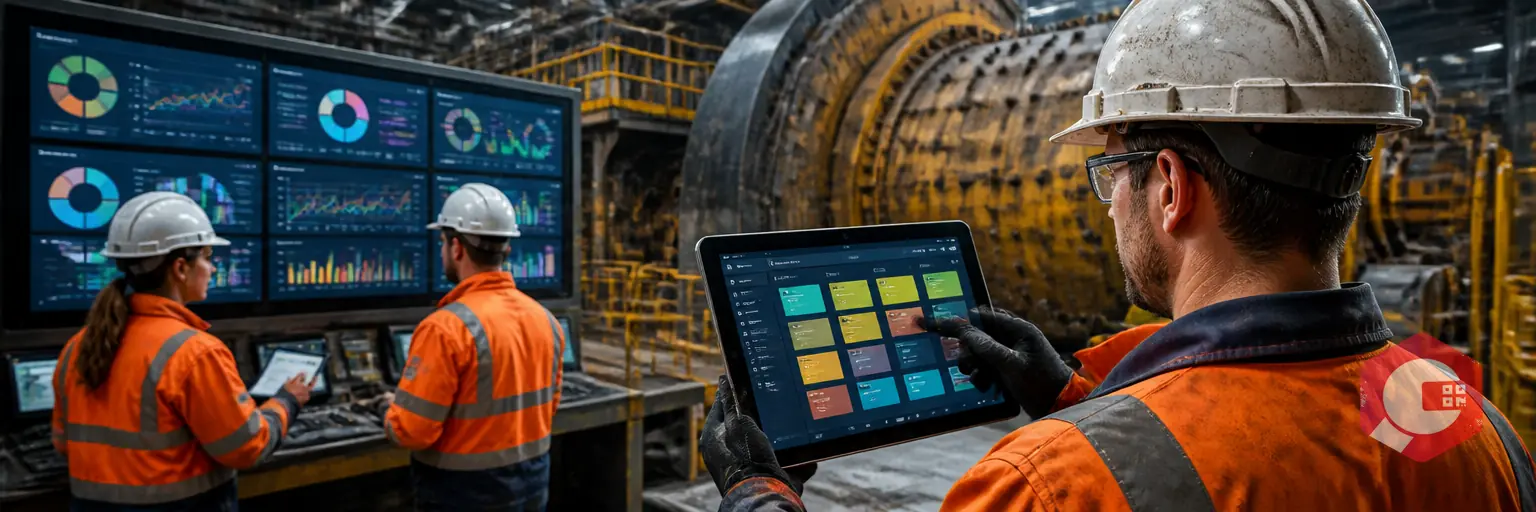
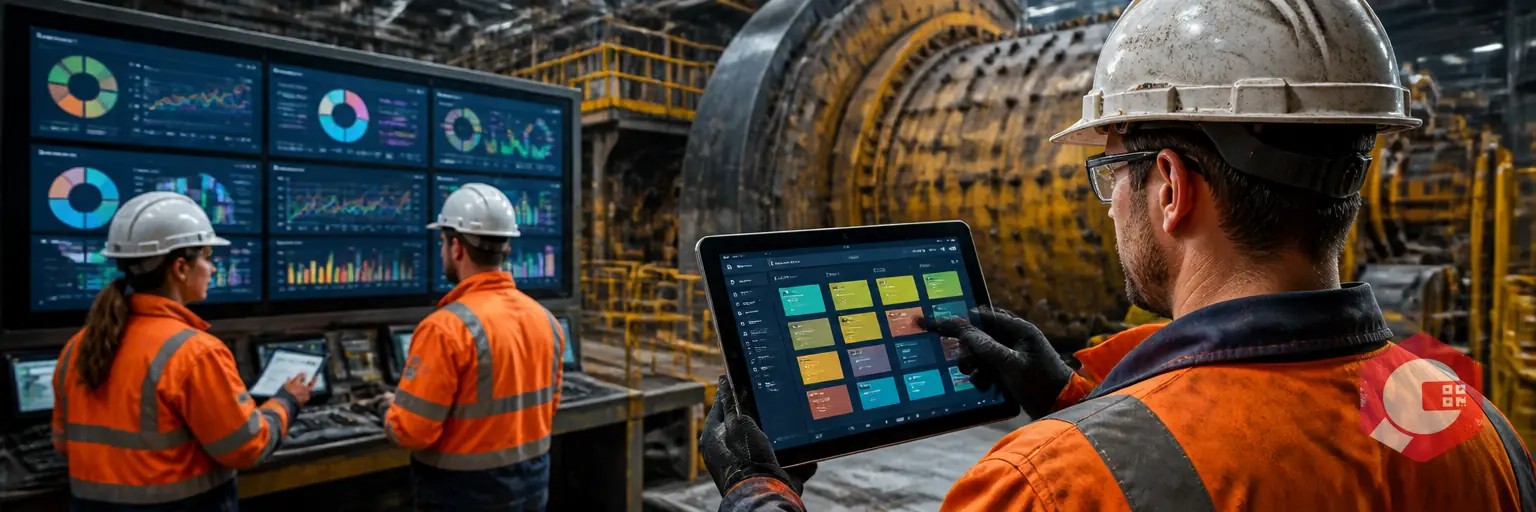
Mining operations run around the clock in some of the world's most isolated locations - open-pit sites hours from the nearest city, underground tunnels with zero connectivity, and remote haul roads where a single equipment breakdown can cost $50,000 per hour in lost production. In these environments, paper-based maintenance logs and desktop CMMS systems simply don't work. Technicians need maintenance data in their hands, at the machine, whether or not there's a signal. That's exactly what a mobile CMMS for mining delivers.

This guide covers everything mining maintenance managers need to know about mobile CMMS software - from the specific challenges of remote-site maintenance to the features that matter most, and how to reduce downtime with the right digital tools.


Why Mining Maintenance Is Uniquely Challenging

Maintenance in a mining environment is not a scaled-up version of factory maintenance - it's an entirely different discipline. Several factors combine to make remote mining sites among the hardest places on earth to keep equipment running reliably.

Geographic Isolation

Many open-pit and underground mines operate 100 to 500 kilometres from the nearest city or service hub. When a haul truck's transmission fails, a spare part may take 24 to 48 hours to arrive. During that window, the entire trucking circuit slows down. The further a mine is from supply chains and technical support, the more critical proactive, data-driven maintenance becomes.

Intermittent or Zero Connectivity

Underground mines frequently have no cellular signal below a certain depth. Even open-pit sites can have dead zones in pits, tunnels, and processing facilities where Wi-Fi and LTE don't reach. If your maintenance software requires a constant internet connection, technicians will default to paper - and all the consistency, traceability, and accountability that comes with digital maintenance disappears with it.

24/7 Operations and Multi-Shift Complexity

Mines don't stop. A typical site runs two 12-hour shifts, meaning that maintenance information must flow seamlessly between crews. If the night shift identifies a developing fault on a SAG mill motor, the day shift needs to know about it the moment they start - with full context, photos, and work order history attached. Without a mobile system, that knowledge transfer relies on verbal handovers and shift logs that are often incomplete.

High-Value, High-Consequence Equipment

The assets involved in mining - haul trucks, excavators, conveyor systems, crushers, and processing plant equipment - carry replacement values in the millions of dollars. An unexpected failure on a primary crusher can halt production across an entire pit. The cost of reactive maintenance in mining far exceeds the investment in any preventive maintenance program.

Strict Safety and Compliance Requirements

Mining is one of the most heavily regulated industries in the world. Permit-to-work systems, LOTO (Lockout/Tagout) procedures, and regulatory inspections are mandatory, not optional. Every maintenance activity that involves high-voltage equipment, confined spaces, or pressurised systems requires documented authorisation. Managing this on paper is slow, error-prone, and creates compliance risk.

What Is a Mobile CMMS and Why Mining Needs It

A Computerized Maintenance Management System (CMMS) is software that centralises all maintenance data - work orders, asset history, preventive maintenance schedules, spare parts inventory, and compliance records. A mobile CMMS extends that capability to a smartphone or tablet, giving field technicians access to everything they need without returning to a control room or office.

For mining operations specifically, a mobile CMMS delivers several immediate advantages. Technicians can receive, complete, and close work orders from anywhere on site. They can scan QR codes on equipment to instantly pull up service history, specs, and checklists. They can photograph defects, add notes, and attach videos to work orders in real time. And they can do all of this offline if connectivity is unavailable, with the data syncing automatically once a signal is restored.

The result is a maintenance operation that is faster, more consistent, and fully traceable - even in the most remote corner of a mine site.
Key Features to Look for in a Mobile CMMS for Mining

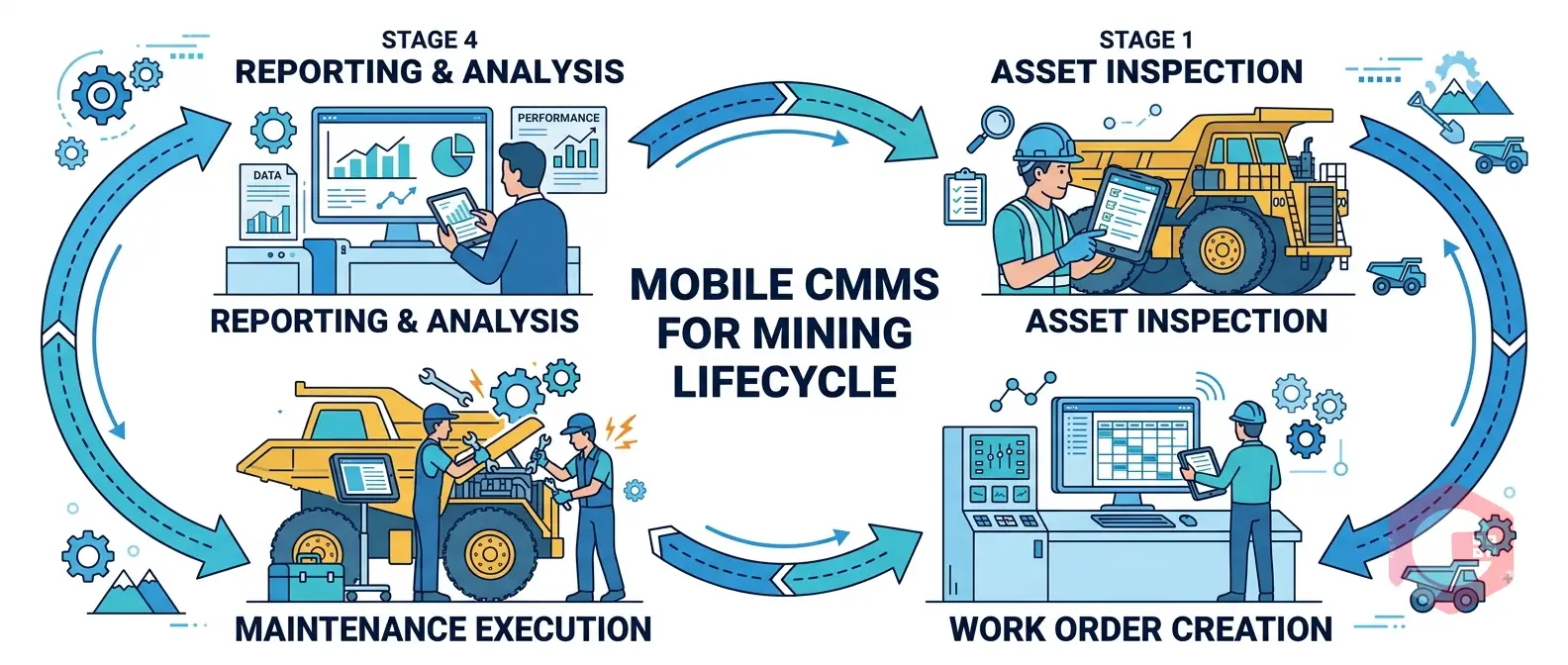
Mobile CMMS for Mining — lifecycle

Not every mobile CMMS is built for the demands of mining. When evaluating options, prioritise these capabilities:

1. Offline Mode with Automatic Sync

This is the single most important feature for mining. Your mobile CMMS must function fully without an internet connection - allowing technicians to create work orders, complete inspection checklists, log defects, and close tasks even in signal-dead zones. When connectivity is restored, the app should sync automatically in the background without any manual action from the technician.

A system that requires connectivity to save data is fundamentally unsuitable for underground mining or remote surface operations. Always test offline capability before committing to any solution.

2. Work Order Management at the Asset

Work order management in a mobile context means technicians can view assigned tasks, see priority levels, access step-by-step instructions, attach photos and videos, and mark work complete - all from the equipment they're working on. Look for systems that support voice-to-text work order creation, so technicians wearing gloves or working in loud environments can log faults hands-free.

3. QR Code and Barcode Asset Scanning

Mining sites have hundreds of individual assets across large geographic areas. Asset management via QR code scanning eliminates the need for technicians to remember asset IDs or navigate through menus to find the right record. A quick scan of the tag on a pump, motor, or conveyor belt instantly brings up its full maintenance history, next scheduled PM, and any open defects - dramatically speeding up the diagnostic and documentation process.

4. Safety Compliance and Permit-to-Work Integration

A mobile CMMS built for mining should include workflow-based safety authorisation. Before a technician can start work on a high-risk task, the app should prompt them to complete the required safety steps - checking isolation certificates, confirming LOTO has been applied, and obtaining digital sign-off from a supervisor. This creates an auditable safety trail for every maintenance job, which is invaluable during regulatory inspections.

Cryotos includes automated Permit to Work and LOTO workflows that ensure safety procedures are followed consistently, with no manual paperwork required.

5. Real-Time Alerts from IoT Sensors

Modern mining equipment is increasingly instrumented with temperature, vibration, pressure, and oil analysis sensors. A mobile CMMS that integrates with IoT devices can push threshold alerts directly to a technician's phone the moment a reading exceeds its normal range. Instead of discovering a bearing failure during a routine inspection, the technician receives an alert and can address it before it leads to a breakdown.

Cryotos integrates with SCADA, PLC, and IoT edge devices to deliver real-time condition monitoring data directly into the maintenance workflow - bridging the gap between equipment telemetry and field action.

6. Preventive Maintenance Scheduling

Preventive maintenance in mining must account for both calendar-based intervals (monthly greasing, quarterly belt inspections) and usage-based triggers (every 250 engine hours, every 50,000 tonnes of material moved). A capable mobile CMMS supports both static and dynamic PM scheduling, automatically generating work orders when the trigger condition is met - with the task pushed directly to the responsible technician's mobile device.
How Mobile CMMS Reduces Downtime in Mining Operations

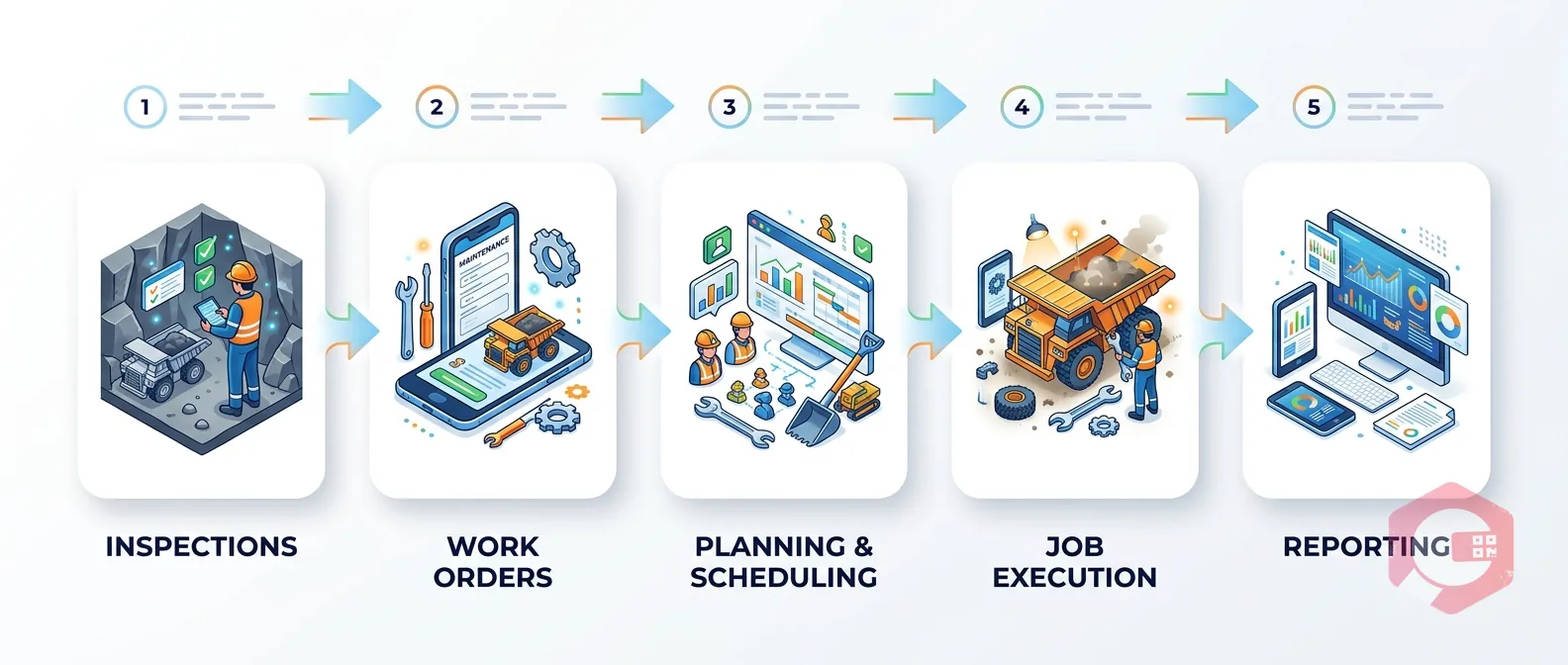
Mobile CMMS for Mining — workflow

The relationship between mobile CMMS adoption and downtime reduction in mining comes down to speed and information quality. Here's how that translates into practice.

Faster fault reporting: When a haul truck operator notices an abnormal vibration, a mobile CMMS lets them log it immediately via their phone - with a photo, a voice note, and the GPS location - before they even reach the end of their shift. Without mobile tools, that observation might wait until the operator gets to the control room and finds time to fill in a paper defect report. Hours pass. The fault worsens.

Smarter parts availability: When a technician opens a work order on their mobile device, the system can simultaneously check whether the required spare parts are in the site warehouse. If they're not, a purchase requisition can be triggered automatically. This eliminates the situation where a technician diagnoses a fault, drives to the warehouse, discovers the part isn't in stock, and loses another half-day waiting for it to arrive.

Reduced MTTR (Mean Time to Repair): Cryotos customers report an average of 25% faster repair times after adopting mobile CMMS. When technicians have access to asset history, fault codes, exploded diagrams, and previous repair notes directly on their device, diagnosis is faster and first-time fix rates improve.

Better MTBF through preventive compliance: When PM tasks are pushed to technicians' devices with clear instructions and digital sign-off, completion rates increase significantly compared to paper-based systems. Higher PM compliance means fewer unexpected failures - directly improving Mean Time Between Failures across the fleet.
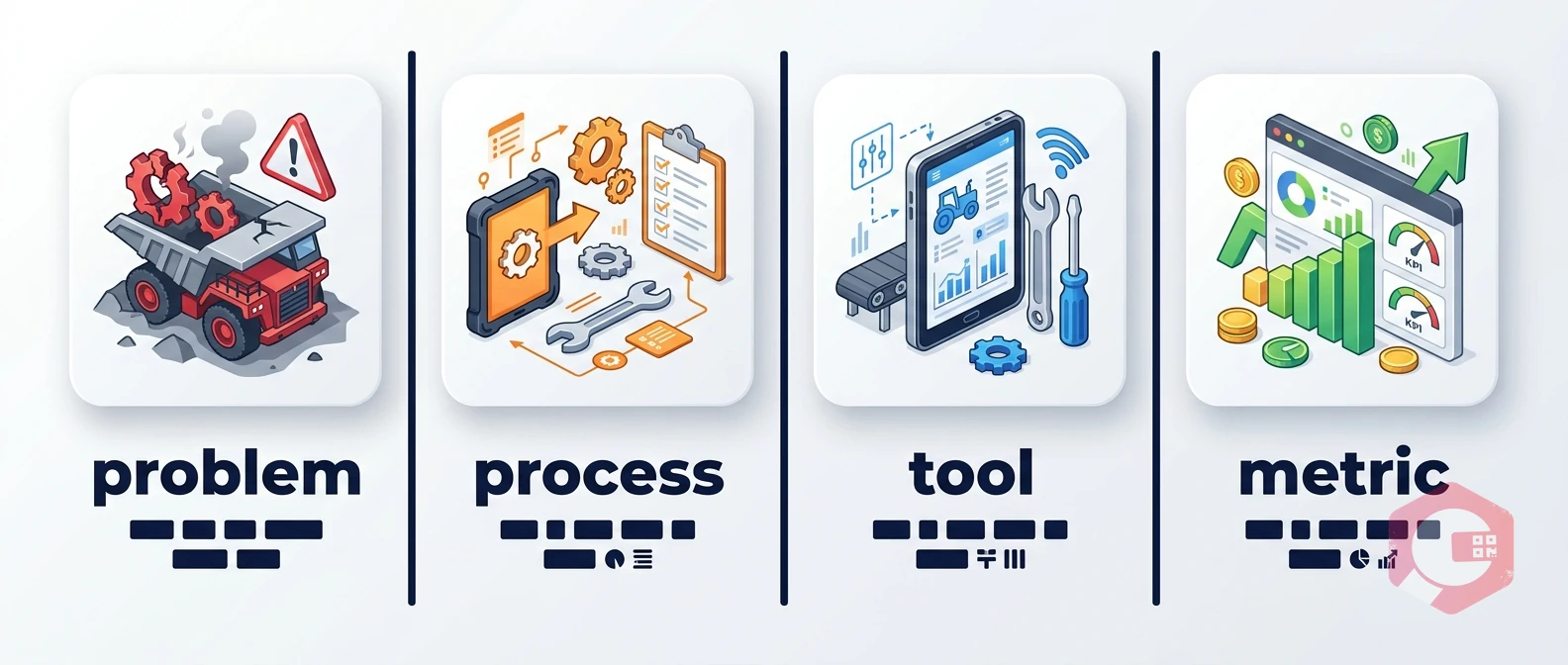
Shift-Change Continuity with Mobile CMMS

Mobile CMMS for Mining — problems grid

One of the least-discussed but most important aspects of mining maintenance is what happens at shift change. In a 24/7 operation, the handover between the outgoing and incoming maintenance crew must transfer not just completed work, but active work orders, pending tasks, developing faults, and safety-critical information.

A mobile CMMS solves the shift-change communication problem by making all active maintenance data instantly visible to whoever logs in - regardless of which shift they're on. The incoming crew sees exactly what was completed overnight, what's still in progress, what defects were flagged, and what PMs are due in the next 12 hours. There's no verbal handover that gets misremembered, and no critical information lost because the outgoing foreman left early.

Cryotos supports real-time communication within work orders through integrated chat, allowing technicians and supervisors to exchange updates, photos, and clarifications without leaving the maintenance platform. Messages are permanently logged as part of the work order history, creating a complete communication trail for every maintenance job.

Inventory Management from the Field

Mobile CMMS for Mining — scenario

Managing spare parts at a remote mining site is a constant balancing act. Stock too little and you face extended downtime waiting for critical parts. Stock too much and you tie up capital in inventory that may sit unused for months. A mobile CMMS with integrated inventory management helps mining operations find the right balance.

When a technician completes a work order that uses parts from the warehouse, the mobile app can automatically update stock levels in real time. When stock drops below the minimum threshold for a critical part, the system generates a reorder alert. This continuous feedback loop keeps inventory data accurate without requiring a dedicated stores person to manually count stock at the end of each day.

QR code and barcode scanning extends to inventory management - technicians can scan a part before they use it, ensuring consumption is tracked accurately even in a busy workshop environment. Cryotos supports warehouse structure mapping down to aisle, rack, shelf, and bin level, making it easy to locate critical parts even in large mine site stores.

How Cryotos Supports Mining Maintenance Teams

Cryotos CMMS is designed for the demands of asset-intensive industries - including mining. The mobile app functions fully offline, syncing automatically when connectivity is restored, making it suitable for underground operations, remote open-pit sites, and processing plants with patchy Wi-Fi coverage.

Key capabilities that mining maintenance teams use in Cryotos include:

  • Mobile work orders with voice input - technicians can create and update work orders hands-free using voice commands or photo analysis, reducing time spent on data entry in demanding conditions.
  • Dynamic and static preventive maintenance scheduling - PMs triggered by calendar intervals or equipment usage hours, with automatic work order generation and mobile delivery to the assigned technician.
  • QR code asset scanning - instant access to asset history, specs, warranty information, and open work orders by scanning a tag on the equipment.
  • IoT integration for condition monitoring - real-time sensor alerts from SCADA, PLC, and edge devices pushed directly to maintenance teams' mobile devices.
  • Automated Permit to Work and LOTO workflows - ensuring safety authorisation is completed and documented for every high-risk maintenance task.
  • Downtime tracking with MTTR, MTBF, and OEE reporting - giving maintenance managers the KPI visibility they need to identify problem assets and justify maintenance investments.
  • Integrated inventory management - real-time stock tracking with automatic reorder alerts and QR-based parts consumption logging.

Cryotos customers in asset-intensive industries report an average 30% reduction in downtime and 25% faster repair times after deployment - outcomes that directly translate to increased production and lower operating costs in mining operations.

If your mine site is still managing maintenance through spreadsheets, paper job cards, or a CMMS that requires a desktop login, you're leaving significant efficiency gains on the table. A mobile-first CMMS purpose-built for remote, asset-intensive environments can transform how your maintenance team operates - from reactive firefighting to proactive, data-driven equipment care.

Ready to see how Cryotos can work for your mining operation? Explore Cryotos CMMS or reach out to discuss your site's specific requirements.

Frequently Asked Questions

What is a mobile CMMS for mining?

A mobile CMMS for mining is maintenance management software that runs on smartphones and tablets, allowing technicians to manage work orders, complete inspection checklists, scan equipment QR codes, and log defects directly from the field - including in areas with no internet connectivity. It gives mining maintenance teams the same data access and traceability as a desktop CMMS system, but available wherever the work actually happens.

Can a CMMS work without internet in underground mining?

Yes - but only if the CMMS is specifically built with an offline-first architecture. A mobile CMMS like Cryotos stores all necessary data locally on the device, allowing full functionality without a signal. Work orders, checklists, and asset records can be created and updated offline, and all data syncs automatically once connectivity is restored - either at the surface or when the device reaches a Wi-Fi zone.

How does mobile CMMS improve safety compliance in mining?

Mobile CMMS improves safety compliance by embedding safety workflows directly into the maintenance process. Before a technician can start a work order for a high-risk task, the app prompts them to complete mandatory steps - verifying isolation, confirming LOTO has been applied, and obtaining digital authorisation. This creates an auditable, timestamped record for every maintenance activity, which is critical for regulatory inspections and incident investigations.

What types of mining equipment can be managed with mobile CMMS?

A mobile CMMS can manage any asset on a mining site - from mobile equipment like haul trucks, excavators, and dozers, to fixed plant such as conveyors, crushers, SAG mills, ball mills, pumps, and processing equipment. Each asset has its own profile in the system with maintenance history, PM schedules, spare parts requirements, and associated documentation, all accessible by scanning a QR code on the equipment.

How do I calculate the ROI of a mobile CMMS for mining?

The ROI of a mobile CMMS in mining is primarily driven by downtime reduction. Start by calculating your current average cost of unplanned downtime per hour (including lost production, emergency labour, and expedited parts). Then estimate the percentage reduction in unplanned breakdowns achievable through better preventive maintenance compliance and faster fault response - typically 20-35% for operations moving from paper-based to mobile CMMS. Multiply the hours saved by your hourly downtime cost to arrive at an annual savings figure, and compare that to the total cost of the CMMS implementation.
Want to Try Cryotos CMMS Today? Lets Connect!
Thank you! Your submission has been received!
Oops! Something went wrong while submitting the form.
Related Post

Mobile CMMS for Mining: Managing Maintenance in Remote Sites

Calendar
Duration:
13 min read
person
calendar today
Published on
April 8, 2026
Featured Image

Mining operations run around the clock in some of the world's most isolated locations - open-pit sites hours from the nearest city, underground tunnels with zero connectivity, and remote haul roads where a single equipment breakdown can cost $50,000 per hour in lost production. In these environments, paper-based maintenance logs and desktop CMMS systems simply don't work. Technicians need maintenance data in their hands, at the machine, whether or not there's a signal. That's exactly what a mobile CMMS for mining delivers.

This guide covers everything mining maintenance managers need to know about mobile CMMS software - from the specific challenges of remote-site maintenance to the features that matter most, and how to reduce downtime with the right digital tools.


Why Mining Maintenance Is Uniquely Challenging

Maintenance in a mining environment is not a scaled-up version of factory maintenance - it's an entirely different discipline. Several factors combine to make remote mining sites among the hardest places on earth to keep equipment running reliably.

Geographic Isolation

Many open-pit and underground mines operate 100 to 500 kilometres from the nearest city or service hub. When a haul truck's transmission fails, a spare part may take 24 to 48 hours to arrive. During that window, the entire trucking circuit slows down. The further a mine is from supply chains and technical support, the more critical proactive, data-driven maintenance becomes.

Intermittent or Zero Connectivity

Underground mines frequently have no cellular signal below a certain depth. Even open-pit sites can have dead zones in pits, tunnels, and processing facilities where Wi-Fi and LTE don't reach. If your maintenance software requires a constant internet connection, technicians will default to paper - and all the consistency, traceability, and accountability that comes with digital maintenance disappears with it.

24/7 Operations and Multi-Shift Complexity

Mines don't stop. A typical site runs two 12-hour shifts, meaning that maintenance information must flow seamlessly between crews. If the night shift identifies a developing fault on a SAG mill motor, the day shift needs to know about it the moment they start - with full context, photos, and work order history attached. Without a mobile system, that knowledge transfer relies on verbal handovers and shift logs that are often incomplete.

High-Value, High-Consequence Equipment

The assets involved in mining - haul trucks, excavators, conveyor systems, crushers, and processing plant equipment - carry replacement values in the millions of dollars. An unexpected failure on a primary crusher can halt production across an entire pit. The cost of reactive maintenance in mining far exceeds the investment in any preventive maintenance program.

Strict Safety and Compliance Requirements

Mining is one of the most heavily regulated industries in the world. Permit-to-work systems, LOTO (Lockout/Tagout) procedures, and regulatory inspections are mandatory, not optional. Every maintenance activity that involves high-voltage equipment, confined spaces, or pressurised systems requires documented authorisation. Managing this on paper is slow, error-prone, and creates compliance risk.

What Is a Mobile CMMS and Why Mining Needs It

A Computerized Maintenance Management System (CMMS) is software that centralises all maintenance data - work orders, asset history, preventive maintenance schedules, spare parts inventory, and compliance records. A mobile CMMS extends that capability to a smartphone or tablet, giving field technicians access to everything they need without returning to a control room or office.

For mining operations specifically, a mobile CMMS delivers several immediate advantages. Technicians can receive, complete, and close work orders from anywhere on site. They can scan QR codes on equipment to instantly pull up service history, specs, and checklists. They can photograph defects, add notes, and attach videos to work orders in real time. And they can do all of this offline if connectivity is unavailable, with the data syncing automatically once a signal is restored.

The result is a maintenance operation that is faster, more consistent, and fully traceable - even in the most remote corner of a mine site.

Key Features to Look for in a Mobile CMMS for Mining

Mobile CMMS for Mining — lifecycle

Not every mobile CMMS is built for the demands of mining. When evaluating options, prioritise these capabilities:

1. Offline Mode with Automatic Sync

This is the single most important feature for mining. Your mobile CMMS must function fully without an internet connection - allowing technicians to create work orders, complete inspection checklists, log defects, and close tasks even in signal-dead zones. When connectivity is restored, the app should sync automatically in the background without any manual action from the technician.

A system that requires connectivity to save data is fundamentally unsuitable for underground mining or remote surface operations. Always test offline capability before committing to any solution.

2. Work Order Management at the Asset

Work order management in a mobile context means technicians can view assigned tasks, see priority levels, access step-by-step instructions, attach photos and videos, and mark work complete - all from the equipment they're working on. Look for systems that support voice-to-text work order creation, so technicians wearing gloves or working in loud environments can log faults hands-free.

3. QR Code and Barcode Asset Scanning

Mining sites have hundreds of individual assets across large geographic areas. Asset management via QR code scanning eliminates the need for technicians to remember asset IDs or navigate through menus to find the right record. A quick scan of the tag on a pump, motor, or conveyor belt instantly brings up its full maintenance history, next scheduled PM, and any open defects - dramatically speeding up the diagnostic and documentation process.

4. Safety Compliance and Permit-to-Work Integration

A mobile CMMS built for mining should include workflow-based safety authorisation. Before a technician can start work on a high-risk task, the app should prompt them to complete the required safety steps - checking isolation certificates, confirming LOTO has been applied, and obtaining digital sign-off from a supervisor. This creates an auditable safety trail for every maintenance job, which is invaluable during regulatory inspections.

Cryotos includes automated Permit to Work and LOTO workflows that ensure safety procedures are followed consistently, with no manual paperwork required.

5. Real-Time Alerts from IoT Sensors

Modern mining equipment is increasingly instrumented with temperature, vibration, pressure, and oil analysis sensors. A mobile CMMS that integrates with IoT devices can push threshold alerts directly to a technician's phone the moment a reading exceeds its normal range. Instead of discovering a bearing failure during a routine inspection, the technician receives an alert and can address it before it leads to a breakdown.

Cryotos integrates with SCADA, PLC, and IoT edge devices to deliver real-time condition monitoring data directly into the maintenance workflow - bridging the gap between equipment telemetry and field action.

6. Preventive Maintenance Scheduling

Preventive maintenance in mining must account for both calendar-based intervals (monthly greasing, quarterly belt inspections) and usage-based triggers (every 250 engine hours, every 50,000 tonnes of material moved). A capable mobile CMMS supports both static and dynamic PM scheduling, automatically generating work orders when the trigger condition is met - with the task pushed directly to the responsible technician's mobile device.

How Mobile CMMS Reduces Downtime in Mining Operations

Mobile CMMS for Mining — workflow

The relationship between mobile CMMS adoption and downtime reduction in mining comes down to speed and information quality. Here's how that translates into practice.

Faster fault reporting: When a haul truck operator notices an abnormal vibration, a mobile CMMS lets them log it immediately via their phone - with a photo, a voice note, and the GPS location - before they even reach the end of their shift. Without mobile tools, that observation might wait until the operator gets to the control room and finds time to fill in a paper defect report. Hours pass. The fault worsens.

Smarter parts availability: When a technician opens a work order on their mobile device, the system can simultaneously check whether the required spare parts are in the site warehouse. If they're not, a purchase requisition can be triggered automatically. This eliminates the situation where a technician diagnoses a fault, drives to the warehouse, discovers the part isn't in stock, and loses another half-day waiting for it to arrive.

Reduced MTTR (Mean Time to Repair): Cryotos customers report an average of 25% faster repair times after adopting mobile CMMS. When technicians have access to asset history, fault codes, exploded diagrams, and previous repair notes directly on their device, diagnosis is faster and first-time fix rates improve.

Better MTBF through preventive compliance: When PM tasks are pushed to technicians' devices with clear instructions and digital sign-off, completion rates increase significantly compared to paper-based systems. Higher PM compliance means fewer unexpected failures - directly improving Mean Time Between Failures across the fleet.

Shift-Change Continuity with Mobile CMMS

Mobile CMMS for Mining — problems grid

One of the least-discussed but most important aspects of mining maintenance is what happens at shift change. In a 24/7 operation, the handover between the outgoing and incoming maintenance crew must transfer not just completed work, but active work orders, pending tasks, developing faults, and safety-critical information.

A mobile CMMS solves the shift-change communication problem by making all active maintenance data instantly visible to whoever logs in - regardless of which shift they're on. The incoming crew sees exactly what was completed overnight, what's still in progress, what defects were flagged, and what PMs are due in the next 12 hours. There's no verbal handover that gets misremembered, and no critical information lost because the outgoing foreman left early.

Cryotos supports real-time communication within work orders through integrated chat, allowing technicians and supervisors to exchange updates, photos, and clarifications without leaving the maintenance platform. Messages are permanently logged as part of the work order history, creating a complete communication trail for every maintenance job.

Inventory Management from the Field

Mobile CMMS for Mining — scenario

Managing spare parts at a remote mining site is a constant balancing act. Stock too little and you face extended downtime waiting for critical parts. Stock too much and you tie up capital in inventory that may sit unused for months. A mobile CMMS with integrated inventory management helps mining operations find the right balance.

When a technician completes a work order that uses parts from the warehouse, the mobile app can automatically update stock levels in real time. When stock drops below the minimum threshold for a critical part, the system generates a reorder alert. This continuous feedback loop keeps inventory data accurate without requiring a dedicated stores person to manually count stock at the end of each day.

QR code and barcode scanning extends to inventory management - technicians can scan a part before they use it, ensuring consumption is tracked accurately even in a busy workshop environment. Cryotos supports warehouse structure mapping down to aisle, rack, shelf, and bin level, making it easy to locate critical parts even in large mine site stores.

How Cryotos Supports Mining Maintenance Teams

Cryotos CMMS is designed for the demands of asset-intensive industries - including mining. The mobile app functions fully offline, syncing automatically when connectivity is restored, making it suitable for underground operations, remote open-pit sites, and processing plants with patchy Wi-Fi coverage.

Key capabilities that mining maintenance teams use in Cryotos include:

  • Mobile work orders with voice input - technicians can create and update work orders hands-free using voice commands or photo analysis, reducing time spent on data entry in demanding conditions.
  • Dynamic and static preventive maintenance scheduling - PMs triggered by calendar intervals or equipment usage hours, with automatic work order generation and mobile delivery to the assigned technician.
  • QR code asset scanning - instant access to asset history, specs, warranty information, and open work orders by scanning a tag on the equipment.
  • IoT integration for condition monitoring - real-time sensor alerts from SCADA, PLC, and edge devices pushed directly to maintenance teams' mobile devices.
  • Automated Permit to Work and LOTO workflows - ensuring safety authorisation is completed and documented for every high-risk maintenance task.
  • Downtime tracking with MTTR, MTBF, and OEE reporting - giving maintenance managers the KPI visibility they need to identify problem assets and justify maintenance investments.
  • Integrated inventory management - real-time stock tracking with automatic reorder alerts and QR-based parts consumption logging.

Cryotos customers in asset-intensive industries report an average 30% reduction in downtime and 25% faster repair times after deployment - outcomes that directly translate to increased production and lower operating costs in mining operations.

If your mine site is still managing maintenance through spreadsheets, paper job cards, or a CMMS that requires a desktop login, you're leaving significant efficiency gains on the table. A mobile-first CMMS purpose-built for remote, asset-intensive environments can transform how your maintenance team operates - from reactive firefighting to proactive, data-driven equipment care.

Ready to see how Cryotos can work for your mining operation? Explore Cryotos CMMS or reach out to discuss your site's specific requirements.

Frequently Asked Questions

What is a mobile CMMS for mining?

A mobile CMMS for mining is maintenance management software that runs on smartphones and tablets, allowing technicians to manage work orders, complete inspection checklists, scan equipment QR codes, and log defects directly from the field - including in areas with no internet connectivity. It gives mining maintenance teams the same data access and traceability as a desktop CMMS system, but available wherever the work actually happens.

Can a CMMS work without internet in underground mining?

Yes - but only if the CMMS is specifically built with an offline-first architecture. A mobile CMMS like Cryotos stores all necessary data locally on the device, allowing full functionality without a signal. Work orders, checklists, and asset records can be created and updated offline, and all data syncs automatically once connectivity is restored - either at the surface or when the device reaches a Wi-Fi zone.

How does mobile CMMS improve safety compliance in mining?

Mobile CMMS improves safety compliance by embedding safety workflows directly into the maintenance process. Before a technician can start a work order for a high-risk task, the app prompts them to complete mandatory steps - verifying isolation, confirming LOTO has been applied, and obtaining digital authorisation. This creates an auditable, timestamped record for every maintenance activity, which is critical for regulatory inspections and incident investigations.

What types of mining equipment can be managed with mobile CMMS?

A mobile CMMS can manage any asset on a mining site - from mobile equipment like haul trucks, excavators, and dozers, to fixed plant such as conveyors, crushers, SAG mills, ball mills, pumps, and processing equipment. Each asset has its own profile in the system with maintenance history, PM schedules, spare parts requirements, and associated documentation, all accessible by scanning a QR code on the equipment.

How do I calculate the ROI of a mobile CMMS for mining?

The ROI of a mobile CMMS in mining is primarily driven by downtime reduction. Start by calculating your current average cost of unplanned downtime per hour (including lost production, emergency labour, and expedited parts). Then estimate the percentage reduction in unplanned breakdowns achievable through better preventive maintenance compliance and faster fault response - typically 20-35% for operations moving from paper-based to mobile CMMS. Multiply the hours saved by your hourly downtime cost to arrive at an annual savings figure, and compare that to the total cost of the CMMS implementation.

Want to Try Cryotos CMMS Today?

Get Free Demo

Let AI Take Control of Your Maintenance

Cryotos AI predicts failures, automates work orders, and simplifies maintenance—before problems slow you down.

Try AI-Powered CMMS
🡢