Predictive Maintenance: The Complete Guide to Reducing Downtime and Cutting Maintenance Costs

Article Written by:

Ganesh Veerappan

Created On:

April 17, 2026

Predictive Maintenance: The Complete Guide to Reducing Downtime and Cutting Maintenance Costs

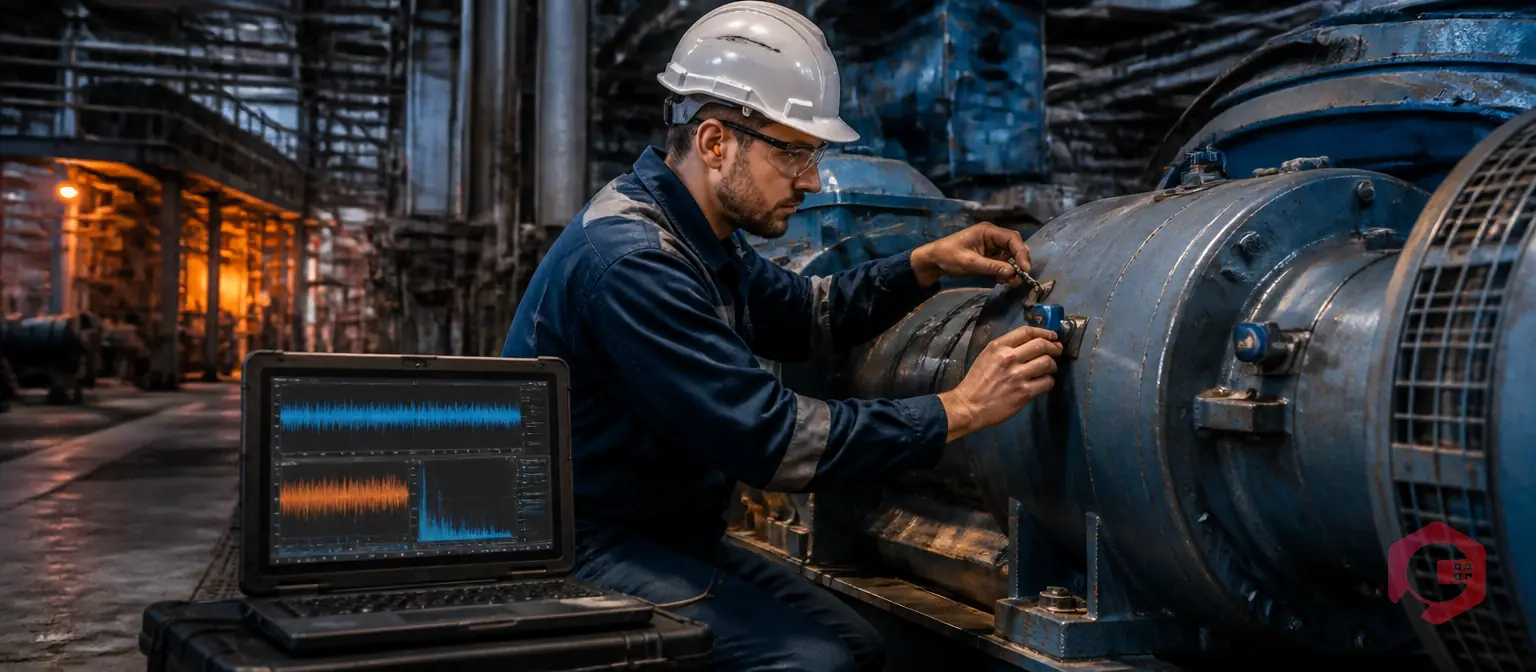
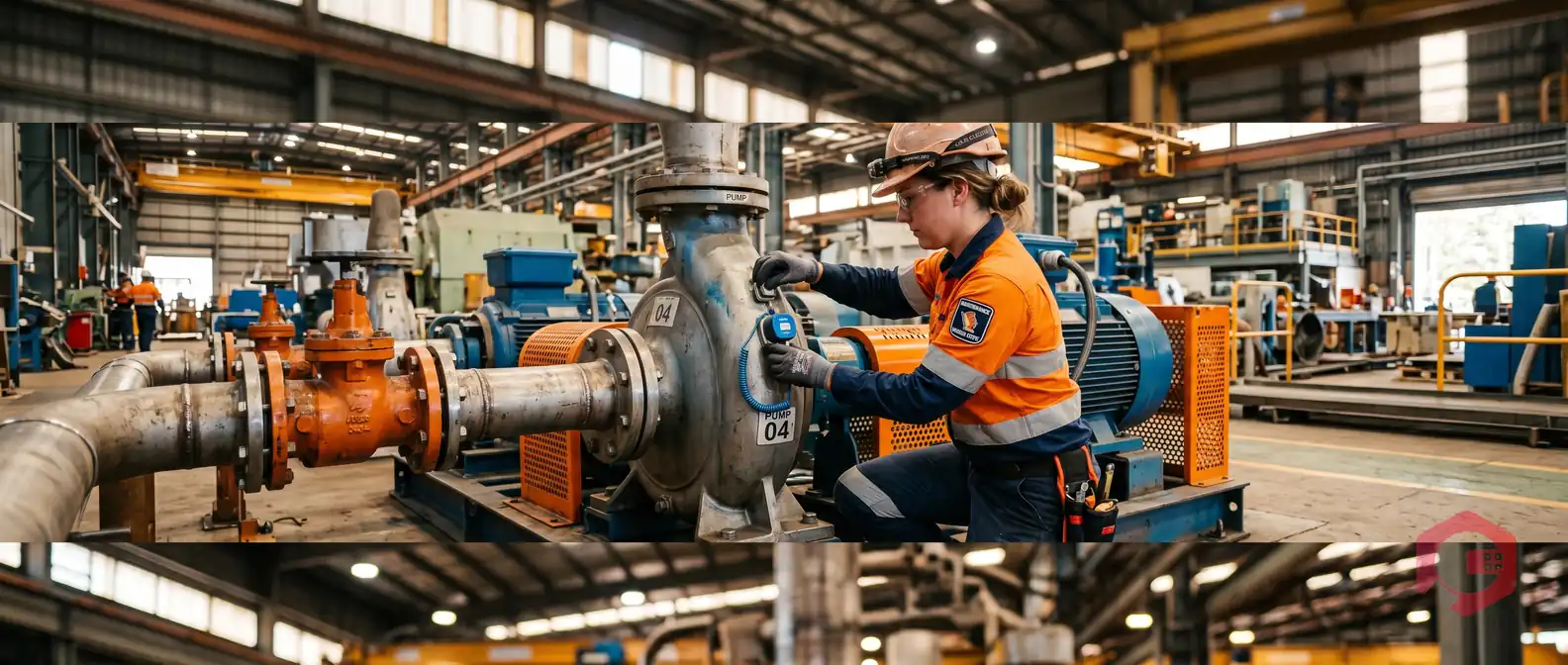
Predictive maintenance is a proactive maintenance strategy that uses real-time data, sensors, and analytics to detect equipment problems before they cause unplanned downtime. Unlike time-based schedules, it triggers maintenance only when the data says a machine actually needs it - saving time, reducing costs, and extending asset life.

Manufacturing plants lose an estimated $50 billion every year to unplanned downtime. The equipment that fails is rarely a surprise - the warning signs are always there. The problem is most teams lack the tools to catch them in time. Predictive maintenance changes that equation entirely by giving your maintenance team the ability to act on machine data before a failure occurs, not after.

This guide covers everything you need to know about predictive maintenance: how it works, the technologies that make it possible, how it compares to other maintenance strategies, and how Cryotos CMMS helps teams put it into practice - without the complexity of an enterprise-grade system.


What Is Predictive Maintenance?

Predictive maintenance (PdM) is a condition-based maintenance strategy that monitors the real-time health of equipment using sensors, IoT devices, and data analytics. The goal is to predict when a component is likely to fail so your team can schedule maintenance at the right moment - not too early (wasting resources) and not too late (risking a breakdown).

The core insight behind predictive maintenance is simple: most equipment failures don't happen suddenly. They announce themselves through measurable signals - rising vibration levels, abnormal temperature readings, unusual acoustic emissions, or subtle changes in power consumption. Predictive maintenance captures those signals continuously and alerts your team when readings cross a threshold that indicates risk.

According to the U.S. Department of Energy, predictive maintenance programs typically deliver a 10-25% reduction in maintenance costs, a 25-30% reduction in breakdowns, and a 70-75% decrease in downtime caused by equipment failure. These numbers explain why predictive maintenance has moved from an enterprise-only practice to a priority for mid-market manufacturers, facilities teams, and plant operators worldwide.
Predictive vs. Preventive vs. Reactive Maintenance

Predictive Maintenance — problems grid

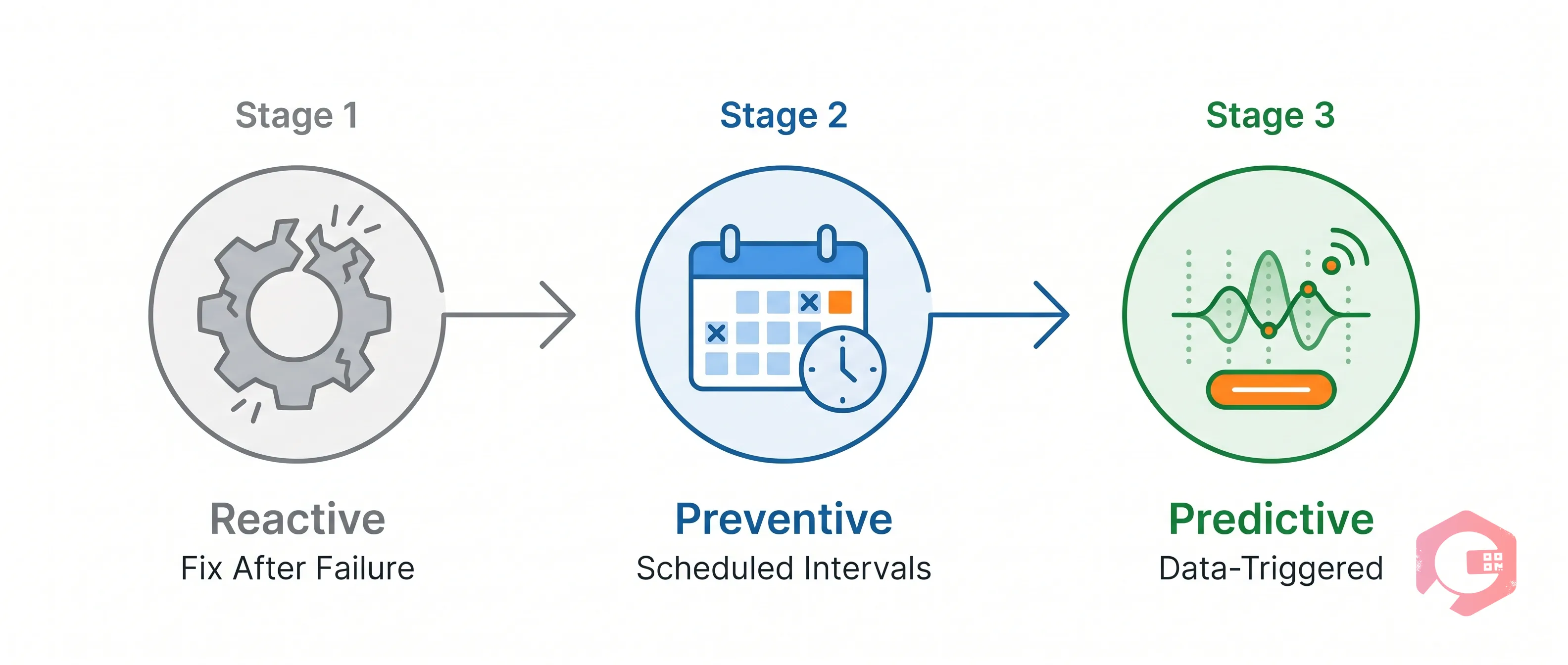
Understanding where predictive maintenance fits means understanding the full spectrum of maintenance strategies. Each approach has its place - but they are not equally effective for high-value assets.

Reactive Maintenance (Run-to-Failure)

Reactive maintenance means fixing equipment only after it breaks. This approach is acceptable for low-cost, non-critical assets where failure has minimal operational impact. However, for critical production equipment, reactive maintenance is expensive. Every unplanned breakdown means emergency labor costs, expedited parts orders, and lost production time. Industry data from Plant Engineering shows that unplanned downtime costs industrial manufacturers an average of $260,000 per hour.

Preventive Maintenance (Time-Based)

Preventive maintenance runs on fixed schedules - monthly oil changes, quarterly belt inspections, annual motor overhauls - regardless of actual equipment condition. It is a significant improvement over reactive maintenance, but it has a built-in inefficiency: you perform maintenance based on time, not need. You may service a machine that doesn't need it and miss one that does because the failure pattern doesn't align with the calendar.

Predictive Maintenance (Condition-Based)

Predictive maintenance replaces the calendar with data. Sensors monitor equipment continuously and maintenance is triggered only when condition thresholds are breached. The result is maintenance performed at exactly the right time - extending asset life, reducing unnecessary service tasks, and dramatically cutting unplanned failures.
  • Reactive Maintenance: Fix after failure. Lowest upfront cost, highest long-term risk for critical assets.
  • Preventive Maintenance: Scheduled intervals. Reduces failures but may over-maintain or miss condition-specific issues.
  • Predictive Maintenance: Data-triggered. Highest accuracy, best ROI for critical equipment, requires sensor infrastructure.

How Predictive Maintenance Works: The 4-Step Process

Predictive Maintenance — workflow

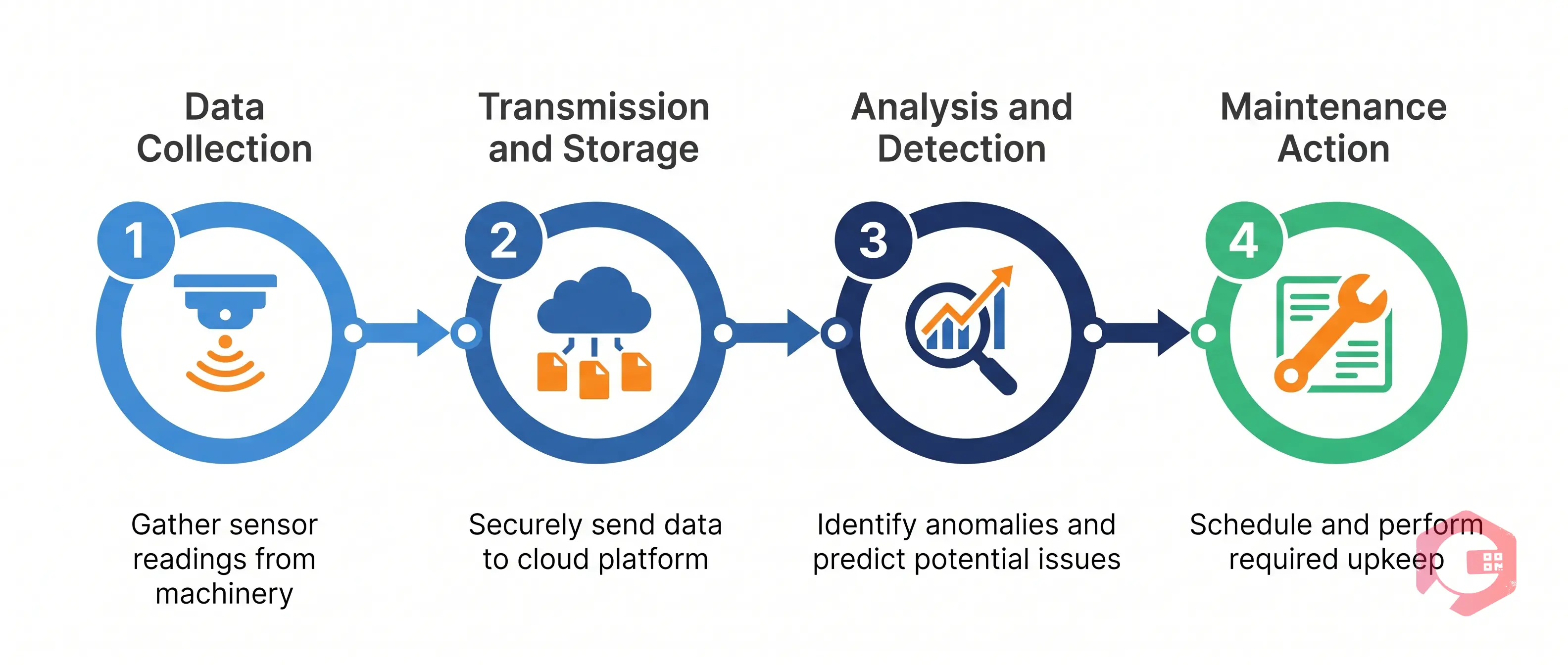
Predictive maintenance is not a single technology - it is a workflow. Understanding the four stages helps you see where data flows and where your maintenance team takes action.

Step 1: Data Collection

IoT sensors and monitoring devices are attached to critical assets. These sensors continuously measure parameters like vibration, temperature, pressure, acoustic emissions, current draw, and oil viscosity. The data is collected in real time - often hundreds of readings per second for high-speed equipment.

Step 2: Data Transmission and Storage

Sensor data is transmitted to a central platform - either cloud-based or on-premises - where it is stored and processed. Edge computing devices can pre-process data locally to reduce latency for time-sensitive alerts, sending only anomalies or summary data to the central system.

Step 3: Analysis and Anomaly Detection

Machine learning algorithms and statistical models analyze the incoming data against baseline readings and historical failure patterns. When a reading deviates from the expected range - say, a bearing's vibration signature increases by 15% over two weeks - the system flags it as an anomaly and generates an alert.

Step 4: Maintenance Action

The alert triggers a work order in your CMMS. A technician is assigned, parts are reserved from inventory, and the maintenance task is scheduled at the next available production window. After the repair, the technician logs the findings, closing the loop and feeding more data back into the model to improve future predictions.

Key Technologies Behind Predictive Maintenance

Modern predictive maintenance programs rely on a combination of hardware sensors and software platforms. Here are the core technologies involved and what each one does.

  • Vibration Analysis Sensors: The most widely used PdM technology. Vibration signatures are highly sensitive indicators of bearing wear, misalignment, imbalance, and gear tooth damage. Even minor changes in vibration frequency or amplitude can predict failure days or weeks in advance.
  • Thermal Imaging (Infrared): Infrared cameras and thermal sensors detect heat signatures caused by electrical faults, friction, blocked cooling, or insulation breakdown. A hot spot on a motor housing that isn't visible to the naked eye shows up clearly in a thermal scan.
  • Ultrasonic Testing: Ultrasonic sensors detect high-frequency sounds produced by friction, arcing, and leaks in compressed air, steam, or hydraulic systems. These sounds occur at frequencies above human hearing but are precisely measurable with ultrasonic instruments.
  • Oil and Fluid Analysis: Sampling lubricants for metal particles, viscosity changes, contamination, and chemical breakdown provides early warning of internal component wear. Elevated iron particles in gear oil, for example, indicate accelerating gear wear before any performance degradation is visible.
  • Machine Learning and AI: The data collected by sensors is only useful when analyzed correctly. Machine learning models learn the normal operating signatures of each asset and detect deviations that pattern-match known failure modes. Over time, the models improve as they accumulate more failure data from your specific equipment.
  • CMMS Integration: Sensor alerts and anomaly detections become actionable only when they flow directly into a Computerized Maintenance Management System (CMMS). Without a CMMS to convert alerts into work orders, assign technicians, and track resolution, predictive maintenance generates data that nobody acts on.

7 Proven Benefits of Predictive Maintenance

Predictive Maintenance — lifecycle

Predictive maintenance delivers financial and operational benefits that go well beyond simply avoiding breakdowns. Here are the seven most impactful outcomes teams consistently report after implementing a PdM program.

1. Dramatically Reduced Unplanned Downtime

The primary promise of predictive maintenance is catching failures before they happen. Plants that implement structured PdM programs report downtime reductions of 30-50% within the first 12 months. A food processing plant using vibration monitoring on its packaging lines, for example, can detect a failing conveyor bearing three weeks before it seizes - scheduling a 45-minute planned replacement instead of a 6-hour emergency repair during peak production.

2. Lower Maintenance Costs

Predictive maintenance eliminates two major sources of maintenance waste: unnecessary scheduled services and expensive emergency repairs. According to a Deloitte analysis, predictive maintenance reduces maintenance costs by 10-40% compared to time-based preventive programs. You stop servicing machines that don't need it and stop paying emergency premiums for parts and labor on machines that fail without warning.

3. Extended Asset Lifespan

Equipment that runs within its healthy operating parameters lasts longer. Predictive maintenance keeps machines in that safe zone by catching early-stage degradation before it accelerates into secondary damage. A bearing caught at the first stage of wear and replaced costs a fraction of what it costs when a failed bearing damages the shaft, housing, and connected components.

4. Improved Technician Productivity

When technicians know exactly which asset needs attention, what the likely fault is, and what parts to bring, they spend their time repairing rather than diagnosing. PdM-equipped teams report significant improvements in wrench time - the percentage of a technician's shift spent on actual maintenance work - because diagnostic guesswork is replaced with targeted, data-confirmed tasks.

5. Better Spare Parts Inventory Control

Reactive maintenance forces you to stockpile parts for every possible failure scenario. Predictive maintenance narrows that uncertainty. When your sensor data tells you a specific motor is showing early bearing wear, you can order that bearing with a lead time of two weeks - not scramble for it on a Sunday night when production is down. This precision reduces inventory carrying costs and eliminates stock obsolescence.

6. Enhanced Safety and Compliance

Equipment failures in industrial environments are not just expensive - they are dangerous. Catastrophic failures in pressure vessels, electrical systems, and rotating machinery can result in injuries, fatalities, and significant regulatory penalties. OSHA and ISO standards increasingly recognize predictive maintenance programs as part of a sound safety management system. Monitoring equipment health continuously helps you maintain compliance and document your proactive safety practices.

7. Higher Overall Equipment Effectiveness (OEE)

OEE - the composite measure of a machine's Availability, Performance, and Quality - improves directly when predictive maintenance reduces unplanned stops. Plants that move from reactive to predictive maintenance typically see OEE gains of 10-20 percentage points, representing thousands of additional production hours per year. That improvement goes straight to throughput capacity and profitability.
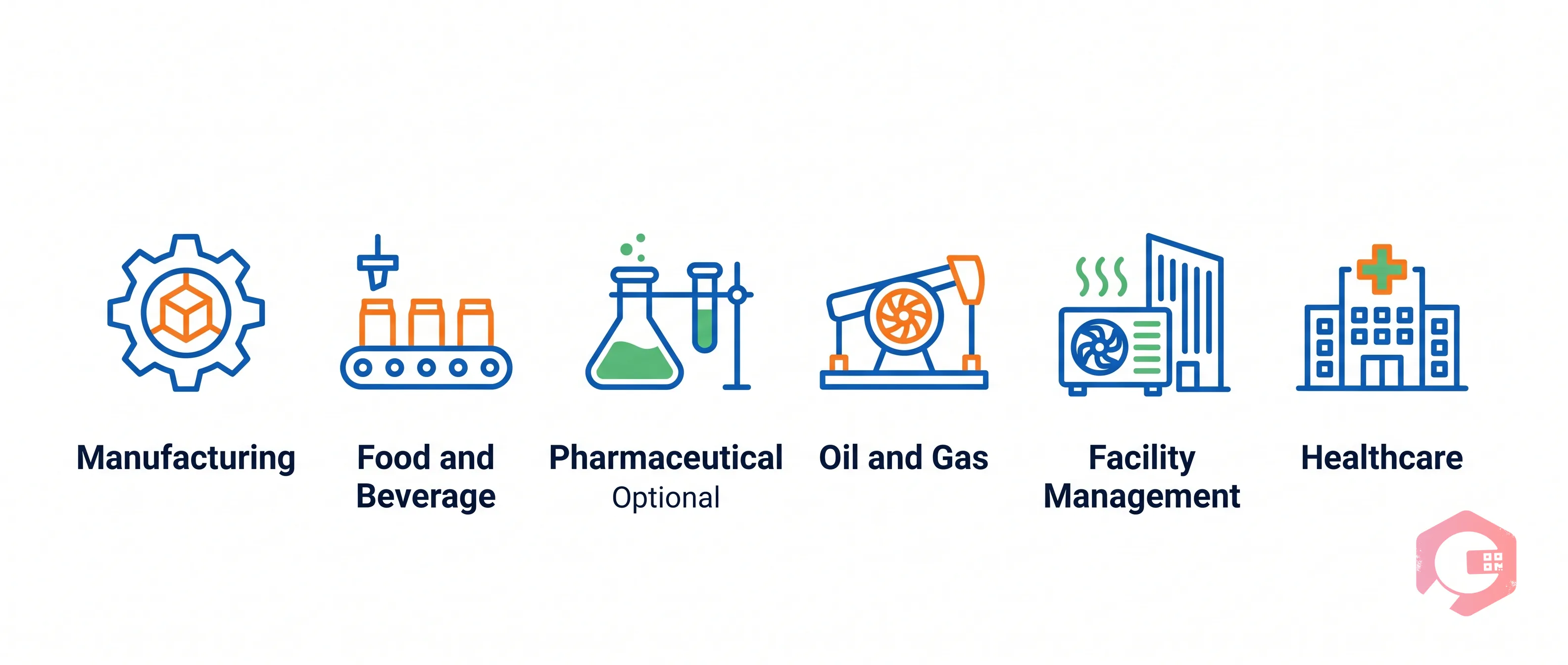
Industries That Benefit Most from Predictive Maintenance

Predictive Maintenance — scenario

Predictive maintenance delivers the greatest ROI where equipment is critical, failures are expensive, and run times are long. Here are the industries where PdM programs have the most proven impact.

  • Manufacturing: High-speed production lines cannot tolerate unplanned stops. CNC machines, conveyors, compressors, pumps, and motors are all strong PdM candidates. A single unplanned stop on an automotive stamping line can cost $1M+ per hour in lost production.
  • Food and Beverage: Cold chain equipment, processing machinery, and packaging lines operate continuously with strict hygiene and uptime requirements. Predictive monitoring of refrigeration compressors and filling equipment prevents both production loss and product spoilage.
  • Pharmaceutical: GMP compliance requires validated maintenance practices and full audit trails. Predictive maintenance provides documented evidence of equipment health monitoring that supports regulatory inspections and reduces the risk of contamination from equipment-related failures.
  • Oil and Gas: Rotating equipment - pumps, compressors, turbines - operates in hazardous environments where failure has both safety and environmental consequences. Remote monitoring allows continuous condition assessment of assets that would be dangerous or impractical to inspect manually.
  • Facility Management: HVAC systems, elevators, electrical panels, and water treatment equipment in commercial and institutional facilities benefit significantly from vibration and thermal monitoring, reducing both emergency repair costs and occupant disruption.
  • Healthcare: Medical imaging equipment, HVAC systems, and critical utility infrastructure in hospitals cannot be allowed to fail unexpectedly. Predictive maintenance ensures patient care environments remain operational and compliant with healthcare facility standards.

How Cryotos CMMS Enables Predictive Maintenance

Sensor data and analytics only deliver results when they connect directly to your maintenance workflow. Cryotos CMMS is the bridge between your condition monitoring data and the maintenance actions that prevent failures. Here is how the platform makes predictive maintenance practical for your team.

IoT Sensor Integration and Automated Work Order Triggers

Cryotos IoT integration connects directly to your condition monitoring sensors and equipment data streams. When a sensor reading crosses a defined threshold - say, vibration on Pump 3 exceeds 7.2 mm/s - Cryotos automatically generates a work order, assigns it to the appropriate technician, and links the relevant asset history, maintenance procedures, and parts inventory. No manual logging. No email chains. The alert becomes an actionable task in under a minute.

Real-Time Equipment Health Dashboards

The Cryotos BI Dashboard gives maintenance managers a live view of every monitored asset's health status. Critical metrics like MTBF (Mean Time Between Failures) and MTTR (Mean Time to Repair) update in real time as work orders are opened and closed. Managers can instantly identify which assets are trending toward failure, prioritize interventions, and report plant health to leadership without pulling data from multiple systems.

Maintenance History and Failure Pattern Analysis

Every work order completed in Cryotos builds a detailed maintenance history for each asset. Over time, this history reveals failure patterns - assets that require the same repair every six months, components that fail together, maintenance tasks that consistently trigger secondary issues. This data helps your team refine PdM thresholds, improve maintenance procedures, and build a knowledge base that makes every technician more effective.

Spare Parts and Inventory Alignment

When a predictive alert fires and Cryotos creates a work order, the platform simultaneously checks inventory for the required parts. If stock is low, it can trigger a purchase request automatically, ensuring the parts arrive before the maintenance window. This tight loop between condition data, work orders, and inventory eliminates the most common PdM frustration: knowing a repair is needed but not having the parts to do it.

Mobile Access for On-Floor Technicians

Cryotos works fully offline on mobile devices, giving technicians on the production floor immediate access to their assigned work orders, asset manuals, historical repair logs, and safety procedures - including LOTO (Lockout/Tagout) requirements - without walking back to a desk or a paper binder. When the repair is complete, they close the work order from the floor, updating the asset history in real time.

How to Get Started with Predictive Maintenance

Many teams are intimidated by predictive maintenance because they imagine it requires a full-scale sensor deployment and months of AI model training before they see any results. In reality, a structured start-up approach delivers early wins and builds capability progressively.

Step 1: Identify Your Critical Assets

Start with a criticality ranking of your equipment. Which assets, if they fail, cause the most production loss, safety risk, or quality impact? Focus your initial PdM investment on the top 10-20 critical assets, not your entire plant. This concentration maximizes early ROI and builds your team's confidence in the data.

Step 2: Select the Right Monitoring Technology

Match the sensor technology to the failure modes you are trying to detect. Rotating equipment with bearing-related failures needs vibration monitoring. Electrical panels and motors benefit from thermal imaging. Hydraulic systems need pressure and fluid analysis. A CMMS vendor or maintenance reliability consultant can help you map failure modes to monitoring technologies for your specific asset mix.

Step 3: Establish Baseline Readings

Deploy sensors and collect baseline data for 4-8 weeks while equipment is in known good condition. These baselines define what "normal" looks like for each asset and become the reference point against which the system detects anomalies. Skipping this step is the most common cause of excessive false alerts in early PdM programs.

Step 4: Connect Alerts to Your CMMS

Configure your monitoring platform to push alerts directly into Cryotos when thresholds are breached. Define alert priority levels, assign default technicians or teams, and link standard operating procedures to common alert types. This configuration ensures that every alert becomes a trackable, accountable work order - not just a notification that gets ignored.

Step 5: Review, Refine, and Expand

After your first 90 days, review the data. Which alerts were accurate? Which were false positives? What did you learn about failure lead times on your specific assets? Use those insights to refine thresholds, improve procedures, and build the case for expanding PdM to additional assets. Predictive maintenance is a continuous improvement program, not a one-time installation.

Frequently Asked Questions

What is the difference between predictive and preventive maintenance?

Preventive maintenance follows fixed time-based schedules regardless of equipment condition, while predictive maintenance uses real-time sensor data and condition monitoring to trigger maintenance only when equipment health data indicates an actual risk of failure. Predictive maintenance is more precise, reduces unnecessary maintenance tasks, and catches condition-specific failures that time-based schedules miss.

How much does it cost to implement predictive maintenance?

Implementation costs vary widely depending on the number of assets monitored, sensor types required, and software platforms used. A focused PdM pilot on 10-15 critical assets using wireless vibration sensors typically costs $15,000-$50,000 in hardware, plus CMMS subscription costs. Most programs achieve full ROI within 12-18 months through reduced downtime and lower emergency maintenance costs. Cloud-based CMMS platforms like Cryotos significantly reduce the software side of that investment.

Can small and mid-sized manufacturers implement predictive maintenance?

Yes. The barrier to entry for predictive maintenance has dropped significantly as wireless sensors, cloud platforms, and affordable CMMS software have become widely available. Small and mid-sized manufacturers can start with a targeted pilot on their most critical assets and expand gradually. You do not need a dedicated reliability engineering team or an enterprise IT infrastructure to run an effective PdM program.

What data does predictive maintenance monitor?

The most commonly monitored parameters include vibration amplitude and frequency, operating temperature, electrical current and voltage signatures, acoustic emissions, pressure readings, and fluid/lubricant quality. The right combination depends on the asset type and its most likely failure modes. A rotating pump, for example, is primarily monitored for vibration and temperature, while an electrical panel focuses on thermal and current signatures.

How does a CMMS help with predictive maintenance?

A CMMS like Cryotos converts predictive maintenance alerts into actionable work orders, assigns technicians, links required parts from inventory, and tracks resolution. Without a CMMS, condition monitoring data generates alerts that teams often struggle to act on consistently. The CMMS closes the loop between the sensor data and the physical maintenance action, creating a full audit trail and continuously building the asset history that improves future predictions.

Conclusion

Predictive maintenance is no longer a capability reserved for large enterprises with dedicated reliability engineering teams and seven-figure technology budgets. Modern IoT sensors, cloud analytics, and platforms like Cryotos CMMS have made condition-based maintenance accessible to any organization that wants to stop reacting to failures and start preventing them.

The result is not just fewer breakdowns. It is lower maintenance costs, longer asset life, safer working environments, and the kind of production reliability that separates top-performing plants from the rest. Teams that implement predictive maintenance consistently report that it becomes one of the most impactful operational decisions they have made - not because the technology is complex, but because the outcome is simple: equipment runs when it should, and maintenance happens when it is needed.

If your team is ready to move beyond reactive firefighting, Cryotos CMMS gives you the IoT integration, automated work order generation, and real-time dashboards to build a predictive maintenance program that delivers measurable ROI from day one. Schedule a personalized demo and see how Cryotos works with your existing equipment and team.


Want to Try Cryotos CMMS Today? Lets Connect!
Thank you! Your submission has been received!
Oops! Something went wrong while submitting the form.
Related Post

Predictive Maintenance: The Complete Guide to Reducing Downtime and Cutting Maintenance Costs

Calendar
Duration:
16 min read
calendar today
Published on
April 17, 2026
Featured Image

Predictive maintenance is a proactive maintenance strategy that uses real-time data, sensors, and analytics to detect equipment problems before they cause unplanned downtime. Unlike time-based schedules, it triggers maintenance only when the data says a machine actually needs it - saving time, reducing costs, and extending asset life.

Manufacturing plants lose an estimated $50 billion every year to unplanned downtime. The equipment that fails is rarely a surprise - the warning signs are always there. The problem is most teams lack the tools to catch them in time. Predictive maintenance changes that equation entirely by giving your maintenance team the ability to act on machine data before a failure occurs, not after.

This guide covers everything you need to know about predictive maintenance: how it works, the technologies that make it possible, how it compares to other maintenance strategies, and how Cryotos CMMS helps teams put it into practice - without the complexity of an enterprise-grade system.


What Is Predictive Maintenance?

Predictive maintenance (PdM) is a condition-based maintenance strategy that monitors the real-time health of equipment using sensors, IoT devices, and data analytics. The goal is to predict when a component is likely to fail so your team can schedule maintenance at the right moment - not too early (wasting resources) and not too late (risking a breakdown).

The core insight behind predictive maintenance is simple: most equipment failures don't happen suddenly. They announce themselves through measurable signals - rising vibration levels, abnormal temperature readings, unusual acoustic emissions, or subtle changes in power consumption. Predictive maintenance captures those signals continuously and alerts your team when readings cross a threshold that indicates risk.

According to the U.S. Department of Energy, predictive maintenance programs typically deliver a 10-25% reduction in maintenance costs, a 25-30% reduction in breakdowns, and a 70-75% decrease in downtime caused by equipment failure. These numbers explain why predictive maintenance has moved from an enterprise-only practice to a priority for mid-market manufacturers, facilities teams, and plant operators worldwide.

Predictive vs. Preventive vs. Reactive Maintenance

Predictive Maintenance — problems grid

Understanding where predictive maintenance fits means understanding the full spectrum of maintenance strategies. Each approach has its place - but they are not equally effective for high-value assets.

Reactive Maintenance (Run-to-Failure)

Reactive maintenance means fixing equipment only after it breaks. This approach is acceptable for low-cost, non-critical assets where failure has minimal operational impact. However, for critical production equipment, reactive maintenance is expensive. Every unplanned breakdown means emergency labor costs, expedited parts orders, and lost production time. Industry data from Plant Engineering shows that unplanned downtime costs industrial manufacturers an average of $260,000 per hour.

Preventive Maintenance (Time-Based)

Preventive maintenance runs on fixed schedules - monthly oil changes, quarterly belt inspections, annual motor overhauls - regardless of actual equipment condition. It is a significant improvement over reactive maintenance, but it has a built-in inefficiency: you perform maintenance based on time, not need. You may service a machine that doesn't need it and miss one that does because the failure pattern doesn't align with the calendar.

Predictive Maintenance (Condition-Based)

Predictive maintenance replaces the calendar with data. Sensors monitor equipment continuously and maintenance is triggered only when condition thresholds are breached. The result is maintenance performed at exactly the right time - extending asset life, reducing unnecessary service tasks, and dramatically cutting unplanned failures.

  • Reactive Maintenance: Fix after failure. Lowest upfront cost, highest long-term risk for critical assets.
  • Preventive Maintenance: Scheduled intervals. Reduces failures but may over-maintain or miss condition-specific issues.
  • Predictive Maintenance: Data-triggered. Highest accuracy, best ROI for critical equipment, requires sensor infrastructure.

How Predictive Maintenance Works: The 4-Step Process

Predictive Maintenance — workflow

Predictive maintenance is not a single technology - it is a workflow. Understanding the four stages helps you see where data flows and where your maintenance team takes action.

Step 1: Data Collection

IoT sensors and monitoring devices are attached to critical assets. These sensors continuously measure parameters like vibration, temperature, pressure, acoustic emissions, current draw, and oil viscosity. The data is collected in real time - often hundreds of readings per second for high-speed equipment.

Step 2: Data Transmission and Storage

Sensor data is transmitted to a central platform - either cloud-based or on-premises - where it is stored and processed. Edge computing devices can pre-process data locally to reduce latency for time-sensitive alerts, sending only anomalies or summary data to the central system.

Step 3: Analysis and Anomaly Detection

Machine learning algorithms and statistical models analyze the incoming data against baseline readings and historical failure patterns. When a reading deviates from the expected range - say, a bearing's vibration signature increases by 15% over two weeks - the system flags it as an anomaly and generates an alert.

Step 4: Maintenance Action

The alert triggers a work order in your CMMS. A technician is assigned, parts are reserved from inventory, and the maintenance task is scheduled at the next available production window. After the repair, the technician logs the findings, closing the loop and feeding more data back into the model to improve future predictions.

Key Technologies Behind Predictive Maintenance

Modern predictive maintenance programs rely on a combination of hardware sensors and software platforms. Here are the core technologies involved and what each one does.

  • Vibration Analysis Sensors: The most widely used PdM technology. Vibration signatures are highly sensitive indicators of bearing wear, misalignment, imbalance, and gear tooth damage. Even minor changes in vibration frequency or amplitude can predict failure days or weeks in advance.
  • Thermal Imaging (Infrared): Infrared cameras and thermal sensors detect heat signatures caused by electrical faults, friction, blocked cooling, or insulation breakdown. A hot spot on a motor housing that isn't visible to the naked eye shows up clearly in a thermal scan.
  • Ultrasonic Testing: Ultrasonic sensors detect high-frequency sounds produced by friction, arcing, and leaks in compressed air, steam, or hydraulic systems. These sounds occur at frequencies above human hearing but are precisely measurable with ultrasonic instruments.
  • Oil and Fluid Analysis: Sampling lubricants for metal particles, viscosity changes, contamination, and chemical breakdown provides early warning of internal component wear. Elevated iron particles in gear oil, for example, indicate accelerating gear wear before any performance degradation is visible.
  • Machine Learning and AI: The data collected by sensors is only useful when analyzed correctly. Machine learning models learn the normal operating signatures of each asset and detect deviations that pattern-match known failure modes. Over time, the models improve as they accumulate more failure data from your specific equipment.
  • CMMS Integration: Sensor alerts and anomaly detections become actionable only when they flow directly into a Computerized Maintenance Management System (CMMS). Without a CMMS to convert alerts into work orders, assign technicians, and track resolution, predictive maintenance generates data that nobody acts on.

7 Proven Benefits of Predictive Maintenance

Predictive Maintenance — lifecycle

Predictive maintenance delivers financial and operational benefits that go well beyond simply avoiding breakdowns. Here are the seven most impactful outcomes teams consistently report after implementing a PdM program.

1. Dramatically Reduced Unplanned Downtime

The primary promise of predictive maintenance is catching failures before they happen. Plants that implement structured PdM programs report downtime reductions of 30-50% within the first 12 months. A food processing plant using vibration monitoring on its packaging lines, for example, can detect a failing conveyor bearing three weeks before it seizes - scheduling a 45-minute planned replacement instead of a 6-hour emergency repair during peak production.

2. Lower Maintenance Costs

Predictive maintenance eliminates two major sources of maintenance waste: unnecessary scheduled services and expensive emergency repairs. According to a Deloitte analysis, predictive maintenance reduces maintenance costs by 10-40% compared to time-based preventive programs. You stop servicing machines that don't need it and stop paying emergency premiums for parts and labor on machines that fail without warning.

3. Extended Asset Lifespan

Equipment that runs within its healthy operating parameters lasts longer. Predictive maintenance keeps machines in that safe zone by catching early-stage degradation before it accelerates into secondary damage. A bearing caught at the first stage of wear and replaced costs a fraction of what it costs when a failed bearing damages the shaft, housing, and connected components.

4. Improved Technician Productivity

When technicians know exactly which asset needs attention, what the likely fault is, and what parts to bring, they spend their time repairing rather than diagnosing. PdM-equipped teams report significant improvements in wrench time - the percentage of a technician's shift spent on actual maintenance work - because diagnostic guesswork is replaced with targeted, data-confirmed tasks.

5. Better Spare Parts Inventory Control

Reactive maintenance forces you to stockpile parts for every possible failure scenario. Predictive maintenance narrows that uncertainty. When your sensor data tells you a specific motor is showing early bearing wear, you can order that bearing with a lead time of two weeks - not scramble for it on a Sunday night when production is down. This precision reduces inventory carrying costs and eliminates stock obsolescence.

6. Enhanced Safety and Compliance

Equipment failures in industrial environments are not just expensive - they are dangerous. Catastrophic failures in pressure vessels, electrical systems, and rotating machinery can result in injuries, fatalities, and significant regulatory penalties. OSHA and ISO standards increasingly recognize predictive maintenance programs as part of a sound safety management system. Monitoring equipment health continuously helps you maintain compliance and document your proactive safety practices.

7. Higher Overall Equipment Effectiveness (OEE)

OEE - the composite measure of a machine's Availability, Performance, and Quality - improves directly when predictive maintenance reduces unplanned stops. Plants that move from reactive to predictive maintenance typically see OEE gains of 10-20 percentage points, representing thousands of additional production hours per year. That improvement goes straight to throughput capacity and profitability.

Industries That Benefit Most from Predictive Maintenance

Predictive Maintenance — scenario

Predictive maintenance delivers the greatest ROI where equipment is critical, failures are expensive, and run times are long. Here are the industries where PdM programs have the most proven impact.

  • Manufacturing: High-speed production lines cannot tolerate unplanned stops. CNC machines, conveyors, compressors, pumps, and motors are all strong PdM candidates. A single unplanned stop on an automotive stamping line can cost $1M+ per hour in lost production.
  • Food and Beverage: Cold chain equipment, processing machinery, and packaging lines operate continuously with strict hygiene and uptime requirements. Predictive monitoring of refrigeration compressors and filling equipment prevents both production loss and product spoilage.
  • Pharmaceutical: GMP compliance requires validated maintenance practices and full audit trails. Predictive maintenance provides documented evidence of equipment health monitoring that supports regulatory inspections and reduces the risk of contamination from equipment-related failures.
  • Oil and Gas: Rotating equipment - pumps, compressors, turbines - operates in hazardous environments where failure has both safety and environmental consequences. Remote monitoring allows continuous condition assessment of assets that would be dangerous or impractical to inspect manually.
  • Facility Management: HVAC systems, elevators, electrical panels, and water treatment equipment in commercial and institutional facilities benefit significantly from vibration and thermal monitoring, reducing both emergency repair costs and occupant disruption.
  • Healthcare: Medical imaging equipment, HVAC systems, and critical utility infrastructure in hospitals cannot be allowed to fail unexpectedly. Predictive maintenance ensures patient care environments remain operational and compliant with healthcare facility standards.

How Cryotos CMMS Enables Predictive Maintenance

Sensor data and analytics only deliver results when they connect directly to your maintenance workflow. Cryotos CMMS is the bridge between your condition monitoring data and the maintenance actions that prevent failures. Here is how the platform makes predictive maintenance practical for your team.

IoT Sensor Integration and Automated Work Order Triggers

Cryotos IoT integration connects directly to your condition monitoring sensors and equipment data streams. When a sensor reading crosses a defined threshold - say, vibration on Pump 3 exceeds 7.2 mm/s - Cryotos automatically generates a work order, assigns it to the appropriate technician, and links the relevant asset history, maintenance procedures, and parts inventory. No manual logging. No email chains. The alert becomes an actionable task in under a minute.

Real-Time Equipment Health Dashboards

The Cryotos BI Dashboard gives maintenance managers a live view of every monitored asset's health status. Critical metrics like MTBF (Mean Time Between Failures) and MTTR (Mean Time to Repair) update in real time as work orders are opened and closed. Managers can instantly identify which assets are trending toward failure, prioritize interventions, and report plant health to leadership without pulling data from multiple systems.

Maintenance History and Failure Pattern Analysis

Every work order completed in Cryotos builds a detailed maintenance history for each asset. Over time, this history reveals failure patterns - assets that require the same repair every six months, components that fail together, maintenance tasks that consistently trigger secondary issues. This data helps your team refine PdM thresholds, improve maintenance procedures, and build a knowledge base that makes every technician more effective.

Spare Parts and Inventory Alignment

When a predictive alert fires and Cryotos creates a work order, the platform simultaneously checks inventory for the required parts. If stock is low, it can trigger a purchase request automatically, ensuring the parts arrive before the maintenance window. This tight loop between condition data, work orders, and inventory eliminates the most common PdM frustration: knowing a repair is needed but not having the parts to do it.

Mobile Access for On-Floor Technicians

Cryotos works fully offline on mobile devices, giving technicians on the production floor immediate access to their assigned work orders, asset manuals, historical repair logs, and safety procedures - including LOTO (Lockout/Tagout) requirements - without walking back to a desk or a paper binder. When the repair is complete, they close the work order from the floor, updating the asset history in real time.

How to Get Started with Predictive Maintenance

Many teams are intimidated by predictive maintenance because they imagine it requires a full-scale sensor deployment and months of AI model training before they see any results. In reality, a structured start-up approach delivers early wins and builds capability progressively.

Step 1: Identify Your Critical Assets

Start with a criticality ranking of your equipment. Which assets, if they fail, cause the most production loss, safety risk, or quality impact? Focus your initial PdM investment on the top 10-20 critical assets, not your entire plant. This concentration maximizes early ROI and builds your team's confidence in the data.

Step 2: Select the Right Monitoring Technology

Match the sensor technology to the failure modes you are trying to detect. Rotating equipment with bearing-related failures needs vibration monitoring. Electrical panels and motors benefit from thermal imaging. Hydraulic systems need pressure and fluid analysis. A CMMS vendor or maintenance reliability consultant can help you map failure modes to monitoring technologies for your specific asset mix.

Step 3: Establish Baseline Readings

Deploy sensors and collect baseline data for 4-8 weeks while equipment is in known good condition. These baselines define what "normal" looks like for each asset and become the reference point against which the system detects anomalies. Skipping this step is the most common cause of excessive false alerts in early PdM programs.

Step 4: Connect Alerts to Your CMMS

Configure your monitoring platform to push alerts directly into Cryotos when thresholds are breached. Define alert priority levels, assign default technicians or teams, and link standard operating procedures to common alert types. This configuration ensures that every alert becomes a trackable, accountable work order - not just a notification that gets ignored.

Step 5: Review, Refine, and Expand

After your first 90 days, review the data. Which alerts were accurate? Which were false positives? What did you learn about failure lead times on your specific assets? Use those insights to refine thresholds, improve procedures, and build the case for expanding PdM to additional assets. Predictive maintenance is a continuous improvement program, not a one-time installation.

Frequently Asked Questions

What is the difference between predictive and preventive maintenance?

Preventive maintenance follows fixed time-based schedules regardless of equipment condition, while predictive maintenance uses real-time sensor data and condition monitoring to trigger maintenance only when equipment health data indicates an actual risk of failure. Predictive maintenance is more precise, reduces unnecessary maintenance tasks, and catches condition-specific failures that time-based schedules miss.

How much does it cost to implement predictive maintenance?

Implementation costs vary widely depending on the number of assets monitored, sensor types required, and software platforms used. A focused PdM pilot on 10-15 critical assets using wireless vibration sensors typically costs $15,000-$50,000 in hardware, plus CMMS subscription costs. Most programs achieve full ROI within 12-18 months through reduced downtime and lower emergency maintenance costs. Cloud-based CMMS platforms like Cryotos significantly reduce the software side of that investment.

Can small and mid-sized manufacturers implement predictive maintenance?

Yes. The barrier to entry for predictive maintenance has dropped significantly as wireless sensors, cloud platforms, and affordable CMMS software have become widely available. Small and mid-sized manufacturers can start with a targeted pilot on their most critical assets and expand gradually. You do not need a dedicated reliability engineering team or an enterprise IT infrastructure to run an effective PdM program.

What data does predictive maintenance monitor?

The most commonly monitored parameters include vibration amplitude and frequency, operating temperature, electrical current and voltage signatures, acoustic emissions, pressure readings, and fluid/lubricant quality. The right combination depends on the asset type and its most likely failure modes. A rotating pump, for example, is primarily monitored for vibration and temperature, while an electrical panel focuses on thermal and current signatures.

How does a CMMS help with predictive maintenance?

A CMMS like Cryotos converts predictive maintenance alerts into actionable work orders, assigns technicians, links required parts from inventory, and tracks resolution. Without a CMMS, condition monitoring data generates alerts that teams often struggle to act on consistently. The CMMS closes the loop between the sensor data and the physical maintenance action, creating a full audit trail and continuously building the asset history that improves future predictions.

Conclusion

Predictive maintenance is no longer a capability reserved for large enterprises with dedicated reliability engineering teams and seven-figure technology budgets. Modern IoT sensors, cloud analytics, and platforms like Cryotos CMMS have made condition-based maintenance accessible to any organization that wants to stop reacting to failures and start preventing them.

The result is not just fewer breakdowns. It is lower maintenance costs, longer asset life, safer working environments, and the kind of production reliability that separates top-performing plants from the rest. Teams that implement predictive maintenance consistently report that it becomes one of the most impactful operational decisions they have made - not because the technology is complex, but because the outcome is simple: equipment runs when it should, and maintenance happens when it is needed.

If your team is ready to move beyond reactive firefighting, Cryotos CMMS gives you the IoT integration, automated work order generation, and real-time dashboards to build a predictive maintenance program that delivers measurable ROI from day one. Schedule a personalized demo and see how Cryotos works with your existing equipment and team.

Want to Try Cryotos CMMS Today?

Get Free Demo

Let AI Take Control of Your Maintenance

Cryotos AI predicts failures, automates work orders, and simplifies maintenance—before problems slow you down.

Try AI-Powered CMMS
🡢