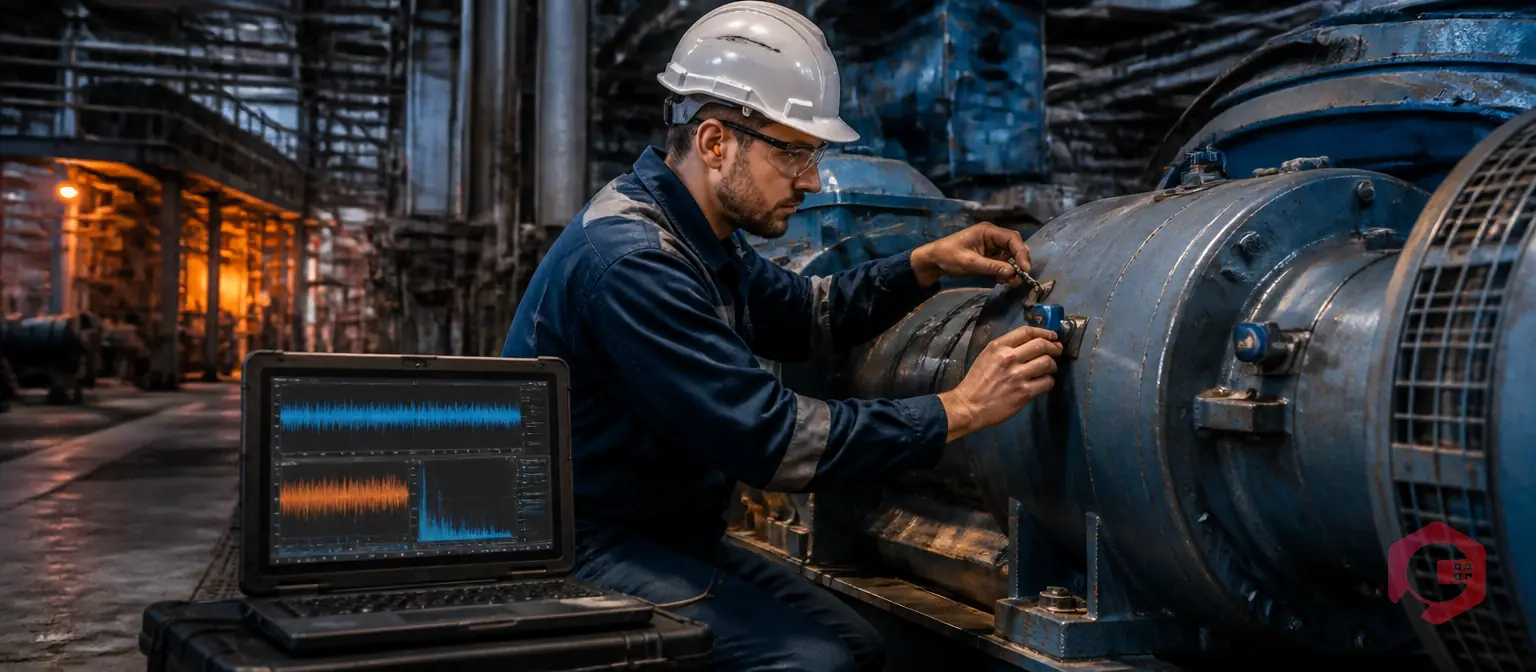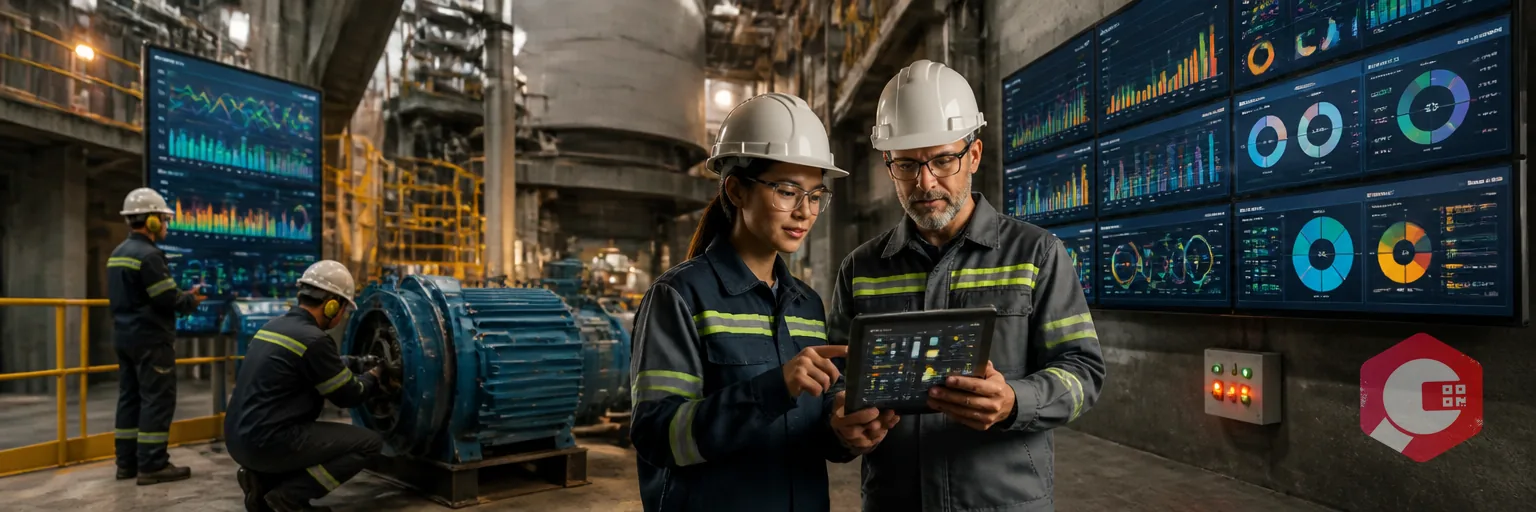
Predictive maintenance in cement industry operations is one of the most effective strategies for reducing unplanned downtime, extending equipment life, and controlling maintenance costs. Unlike reactive approaches - where you fix equipment after it breaks - predictive maintenance (PdM) uses real-time sensor data, condition monitoring, and AI-powered analytics to catch problems before they become failures. For a cement plant where a single kiln shutdown can cost tens of thousands of dollars per hour, the difference between reactive and predictive is the difference between profit and loss.
According to industry research, cement manufacturers that adopt predictive maintenance programs report up to a 30% reduction in unplanned downtime and a 25% decrease in maintenance costs within the first two years. With cement plants running complex, high-load equipment around the clock, the business case for PdM has never been stronger.
Cement manufacturing is one of the most equipment-intensive industries in the world. From raw material crushing to clinker production and final grinding, every step in the process depends on heavy rotating machinery operating under extreme heat, load, and dust conditions. A single unexpected equipment failure doesn't just stop one machine - it can bring an entire production line to a halt.
The consequences are significant: lost production, emergency repair costs, expedited spare parts, and overtime labor. In cement plants operating at high utilization rates, even four hours of unplanned downtime per week adds up to hundreds of hours of lost production annually.
Traditional time-based preventive maintenance helps - but it has a fundamental flaw. It replaces components on a fixed schedule, regardless of their actual condition. That means you're either replacing parts too early (wasting money) or too late (risking failure). Predictive maintenance solves this by monitoring equipment condition in real time and triggering maintenance only when data says it's needed.
Not all equipment in a cement plant carries the same risk. Predictive maintenance delivers the highest ROI when applied to your most critical, highest-failure-impact assets. Here are the machines that should be at the top of your PdM priority list:

Understanding where predictive maintenance fits in relation to other strategies helps you make smarter resource allocation decisions. Here's a clear comparison:
FactorReactive MaintenancePreventive MaintenancePredictive MaintenanceTriggerEquipment failsFixed time/usage intervalSensor data thresholdDowntime RiskVery HighMediumLowParts WasteLow (replaced when failed)High (replaced on schedule)Minimal (replaced when needed)CostHigh (emergency repairs)MediumLow long-termBest ForLow-criticality assetsModerate-criticality assetsHigh-criticality assets
For cement plants, the optimal strategy is a hybrid approach: predictive maintenance on critical rotating equipment like kilns, mills, and fans; preventive maintenance on moderate-criticality assets; and reactive maintenance only on non-critical, easily replaceable components.
Predictive maintenance is only as good as the data behind it. Cement plants use a combination of monitoring techniques depending on the equipment type and failure mode being tracked:

Sensors and monitoring instruments generate the data - but without a system to act on that data, it has no operational value. This is where a CMMS (Computerized Maintenance Management System) becomes essential.
The integration works like this: IoT sensors on critical equipment continuously stream condition data (vibration levels, temperature, current draw) to a central platform. When readings cross a predefined threshold, the CMMS automatically creates a work order, assigns it to the right technician based on availability and skill, and pushes an alert via mobile app, email, or WhatsApp. The entire loop - from sensor alert to technician dispatch - can happen in minutes instead of hours.
Beyond alert-triggered work orders, a CMMS connected to IoT data enables:

Implementing PdM doesn't happen overnight, but a structured approach makes it manageable. Here's a practical roadmap:

When implemented correctly, predictive maintenance delivers measurable, bottom-line impact across every area of cement plant operations:
Cryotos CMMS is built for the complexity of industrial operations like cement manufacturing. Its IoT integration connects directly to SCADA systems, PLC networks, and edge IoT devices, pulling real-time sensor data into the maintenance workflow without requiring expensive middleware.
When a sensor threshold is breached - say, a rotary kiln main bearing vibration level crosses the warning threshold - Cryotos automatically creates a work order, assigns it to the right technician based on location and skill, and sends an alert via mobile app, email, or WhatsApp. The technician arrives on site with the full asset history, previous work orders, and attached maintenance manuals - all accessible from their phone.
Cryotos also supports downtime tracking at the department, plant unit, and individual asset level, with KPIs like MTTR, MTBF, and availability percentage tracked automatically. The built-in BI dashboard gives plant managers a real-time view of equipment health across the entire plant, with drill-down capability from site level to individual asset.
For spare parts management, Cryotos connects predicted maintenance needs to inventory - flagging when critical spares fall below minimum stock levels based on upcoming predicted maintenance events. And for teams already using SAP or Microsoft Dynamics 365, Cryotos integrates natively, eliminating double data entry and keeping your ERP in sync with actual maintenance activities.
Ready to move from reactive to predictive in your cement plant? Book a free demo of Cryotos CMMS and see how our platform can help you cut downtime, reduce maintenance costs, and keep your production lines running at peak efficiency.
Predictive maintenance in the cement industry is a condition-based maintenance strategy that uses real-time sensor data - including vibration analysis, thermal imaging, oil analysis, and process parameter monitoring - to detect equipment degradation before it causes failure. Unlike time-based preventive maintenance, PdM triggers maintenance work only when data indicates a component is approaching the end of its serviceable life, reducing both unnecessary maintenance costs and unplanned downtime.
The highest-value predictive maintenance applications in cement plants are rotary kilns (shell condition, tyre and roller wear, drive gear vibration), ball mills and vertical roller mills (bearing temperature, gearbox vibration, liner wear), main fans and raw mill fans (bearing health, imbalance, motor current), crushers, and bucket elevators. These assets carry the highest downtime impact and benefit most from continuous condition monitoring.
A CMMS acts as the operational hub for a PdM program. It receives real-time condition data from IoT sensors and SCADA systems, automatically generates work orders when threshold limits are exceeded, assigns tasks to the right technicians, tracks MTBF and MTTR by asset, and maintains a complete maintenance history for root cause analysis. Without a CMMS, sensor data has no reliable path to action - which is why CMMS integration is essential for a functional PdM program.
A focused PdM program covering the top 10-15 critical assets in a cement plant can typically be implemented in 3-6 months. This includes asset criticality ranking, sensor installation, baseline establishment, CMMS integration, and team training. Broader plant-wide programs covering all rotating equipment may take 12-18 months to fully deploy. Starting with a pilot on your highest-risk assets - usually the kiln and main mills - allows you to demonstrate ROI quickly and build organizational support for expansion.
Industry data consistently shows that predictive maintenance programs in manufacturing deliver an average ROI of 8-12x over a 3-year period. For cement plants specifically, the primary value drivers are reduced kiln and mill downtime (which directly impacts tonnes produced), lower emergency repair and parts costs, reduced energy consumption from better-maintained equipment, and extended asset life that defers major capital replacement. Most cement plants that implement PdM programs achieve payback within 12-18 months of full deployment.

Predictive maintenance in cement industry operations is one of the most effective strategies for reducing unplanned downtime, extending equipment life, and controlling maintenance costs. Unlike reactive approaches - where you fix equipment after it breaks - predictive maintenance (PdM) uses real-time sensor data, condition monitoring, and AI-powered analytics to catch problems before they become failures. For a cement plant where a single kiln shutdown can cost tens of thousands of dollars per hour, the difference between reactive and predictive is the difference between profit and loss.
According to industry research, cement manufacturers that adopt predictive maintenance programs report up to a 30% reduction in unplanned downtime and a 25% decrease in maintenance costs within the first two years. With cement plants running complex, high-load equipment around the clock, the business case for PdM has never been stronger.
Cement manufacturing is one of the most equipment-intensive industries in the world. From raw material crushing to clinker production and final grinding, every step in the process depends on heavy rotating machinery operating under extreme heat, load, and dust conditions. A single unexpected equipment failure doesn't just stop one machine - it can bring an entire production line to a halt.
The consequences are significant: lost production, emergency repair costs, expedited spare parts, and overtime labor. In cement plants operating at high utilization rates, even four hours of unplanned downtime per week adds up to hundreds of hours of lost production annually.
Traditional time-based preventive maintenance helps - but it has a fundamental flaw. It replaces components on a fixed schedule, regardless of their actual condition. That means you're either replacing parts too early (wasting money) or too late (risking failure). Predictive maintenance solves this by monitoring equipment condition in real time and triggering maintenance only when data says it's needed.
Not all equipment in a cement plant carries the same risk. Predictive maintenance delivers the highest ROI when applied to your most critical, highest-failure-impact assets. Here are the machines that should be at the top of your PdM priority list:

Understanding where predictive maintenance fits in relation to other strategies helps you make smarter resource allocation decisions. Here's a clear comparison:
FactorReactive MaintenancePreventive MaintenancePredictive MaintenanceTriggerEquipment failsFixed time/usage intervalSensor data thresholdDowntime RiskVery HighMediumLowParts WasteLow (replaced when failed)High (replaced on schedule)Minimal (replaced when needed)CostHigh (emergency repairs)MediumLow long-termBest ForLow-criticality assetsModerate-criticality assetsHigh-criticality assets
For cement plants, the optimal strategy is a hybrid approach: predictive maintenance on critical rotating equipment like kilns, mills, and fans; preventive maintenance on moderate-criticality assets; and reactive maintenance only on non-critical, easily replaceable components.
Predictive maintenance is only as good as the data behind it. Cement plants use a combination of monitoring techniques depending on the equipment type and failure mode being tracked:

Sensors and monitoring instruments generate the data - but without a system to act on that data, it has no operational value. This is where a CMMS (Computerized Maintenance Management System) becomes essential.
The integration works like this: IoT sensors on critical equipment continuously stream condition data (vibration levels, temperature, current draw) to a central platform. When readings cross a predefined threshold, the CMMS automatically creates a work order, assigns it to the right technician based on availability and skill, and pushes an alert via mobile app, email, or WhatsApp. The entire loop - from sensor alert to technician dispatch - can happen in minutes instead of hours.
Beyond alert-triggered work orders, a CMMS connected to IoT data enables:

Implementing PdM doesn't happen overnight, but a structured approach makes it manageable. Here's a practical roadmap:

When implemented correctly, predictive maintenance delivers measurable, bottom-line impact across every area of cement plant operations:
Cryotos CMMS is built for the complexity of industrial operations like cement manufacturing. Its IoT integration connects directly to SCADA systems, PLC networks, and edge IoT devices, pulling real-time sensor data into the maintenance workflow without requiring expensive middleware.
When a sensor threshold is breached - say, a rotary kiln main bearing vibration level crosses the warning threshold - Cryotos automatically creates a work order, assigns it to the right technician based on location and skill, and sends an alert via mobile app, email, or WhatsApp. The technician arrives on site with the full asset history, previous work orders, and attached maintenance manuals - all accessible from their phone.
Cryotos also supports downtime tracking at the department, plant unit, and individual asset level, with KPIs like MTTR, MTBF, and availability percentage tracked automatically. The built-in BI dashboard gives plant managers a real-time view of equipment health across the entire plant, with drill-down capability from site level to individual asset.
For spare parts management, Cryotos connects predicted maintenance needs to inventory - flagging when critical spares fall below minimum stock levels based on upcoming predicted maintenance events. And for teams already using SAP or Microsoft Dynamics 365, Cryotos integrates natively, eliminating double data entry and keeping your ERP in sync with actual maintenance activities.
Ready to move from reactive to predictive in your cement plant? Book a free demo of Cryotos CMMS and see how our platform can help you cut downtime, reduce maintenance costs, and keep your production lines running at peak efficiency.
Predictive maintenance in the cement industry is a condition-based maintenance strategy that uses real-time sensor data - including vibration analysis, thermal imaging, oil analysis, and process parameter monitoring - to detect equipment degradation before it causes failure. Unlike time-based preventive maintenance, PdM triggers maintenance work only when data indicates a component is approaching the end of its serviceable life, reducing both unnecessary maintenance costs and unplanned downtime.
The highest-value predictive maintenance applications in cement plants are rotary kilns (shell condition, tyre and roller wear, drive gear vibration), ball mills and vertical roller mills (bearing temperature, gearbox vibration, liner wear), main fans and raw mill fans (bearing health, imbalance, motor current), crushers, and bucket elevators. These assets carry the highest downtime impact and benefit most from continuous condition monitoring.
A CMMS acts as the operational hub for a PdM program. It receives real-time condition data from IoT sensors and SCADA systems, automatically generates work orders when threshold limits are exceeded, assigns tasks to the right technicians, tracks MTBF and MTTR by asset, and maintains a complete maintenance history for root cause analysis. Without a CMMS, sensor data has no reliable path to action - which is why CMMS integration is essential for a functional PdM program.
A focused PdM program covering the top 10-15 critical assets in a cement plant can typically be implemented in 3-6 months. This includes asset criticality ranking, sensor installation, baseline establishment, CMMS integration, and team training. Broader plant-wide programs covering all rotating equipment may take 12-18 months to fully deploy. Starting with a pilot on your highest-risk assets - usually the kiln and main mills - allows you to demonstrate ROI quickly and build organizational support for expansion.
Industry data consistently shows that predictive maintenance programs in manufacturing deliver an average ROI of 8-12x over a 3-year period. For cement plants specifically, the primary value drivers are reduced kiln and mill downtime (which directly impacts tonnes produced), lower emergency repair and parts costs, reduced energy consumption from better-maintained equipment, and extended asset life that defers major capital replacement. Most cement plants that implement PdM programs achieve payback within 12-18 months of full deployment.
Cryotos AI predicts failures, automates work orders, and simplifies maintenance—before problems slow you down.