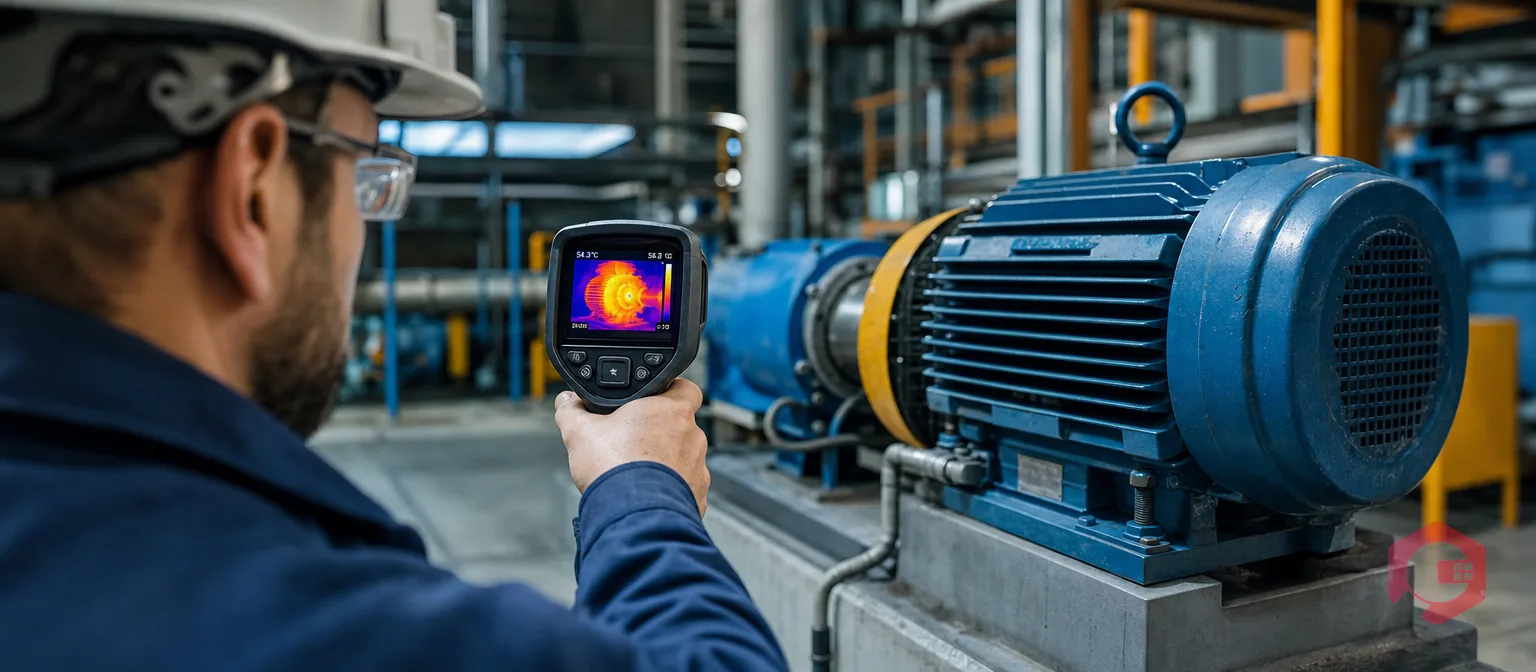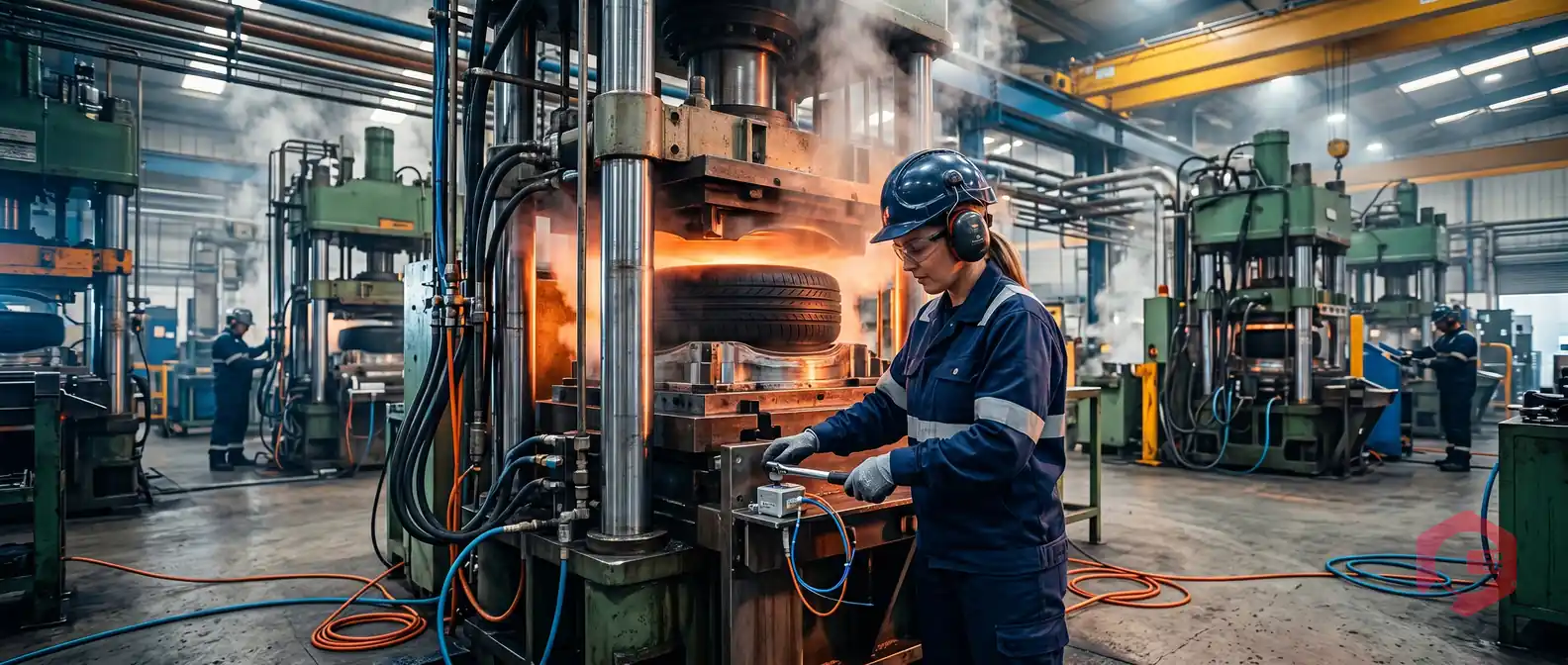
Predictive maintenance for tyre manufacturing equipment is the practice of using real-time sensor data, condition monitoring, and AI-driven analytics to identify equipment failures before they disrupt production. In an industry where a single unplanned stoppage of a curing press can cost tens of thousands of dollars in lost output, rejected batches, and overtime labour, predictive maintenance has shifted from a luxury to a competitive necessity.
The global tyre manufacturing sector operates some of the most demanding machinery in heavy industry - mixing mills, calenders, bead winding machines, tyre building machines (TBMs), and autoclave-style vulcanization presses. These assets run continuously, often 24/7, under high heat and pressure. When one fails unexpectedly, it doesn't just stop a machine - it triggers a cascade that halts entire production lines, wastes uncured compounds, and breaks delivery commitments.
This guide breaks down how tyre plants can implement a practical predictive maintenance strategy, the specific equipment that benefits most, and how a CMMS like Cryotos ties it all together.
The tyre manufacturing process is uniquely punishing on equipment. Mixing mills process highly abrasive rubber compounds at elevated temperatures. Calenders apply precise pressure through heavy rollers that cycle thousands of times per shift. Curing presses operate at pressures exceeding 200 bar and temperatures above 180�C. Every piece of equipment in the production chain is subject to extreme stress - and when it fails, the impact is immediate and costly.
Industry data consistently shows that unplanned equipment downtime in manufacturing costs an average of $50,000 per hour when you account for lost production, wasted materials, emergency labour, and expedited parts. In tyre manufacturing, the stakes are even higher because of the continuous-flow nature of the process. A stopped curing press means partially cured tyres that must be scrapped, raw compound that degrades if left idle, and a bottleneck that ripples downstream to shipping and delivery schedules.
Traditional time-based preventive maintenance helps, but it has critical gaps. A curing press serviced every 500 hours regardless of actual wear can still fail at hour 480 due to a bearing issue that developed after the last service. Predictive maintenance closes this gap by watching the asset continuously, detecting the early warning signs of degradation, and triggering maintenance only when - and exactly when - it is needed.

Not all equipment benefits equally from predictive maintenance investment. In a tyre plant, the highest-priority assets are those where a failure causes immediate production loss or poses safety risks. The following are the most critical:
Curing presses are the heart of tyre manufacturing. They apply heat and pressure to mould the tyre's final shape and vulcanize the rubber compound. A press failure mid-cycle ruins the tyre in the mould, damages the bladder, and can take hours to recover. Vibration sensors on press motors, temperature sensors on heating platens, and pressure transducers on hydraulic circuits give early warning of bladder wear, hydraulic seal degradation, and motor bearing issues before they cause a shutdown.
Banbury internal mixers are used to compound raw rubber with carbon black, sulphur, and other chemicals. These machines run at high torque and generate enormous heat. Rotor bearings, seals, and drive gears are subject to accelerated wear. Vibration analysis on rotors and thermal imaging on gearboxes allow maintenance teams to detect bearing deterioration and overheating weeks before failure - typically giving 8 to 12 days of advance notice, which is enough time to schedule a planned repair during a shift break or weekend shutdown.
Calendering machines apply rubber to textile or steel cord reinforcement through precision-ground rollers. Roller bearings, hydraulic gap-control systems, and drive motors are the most failure-prone components. Unplanned calender downtime is particularly costly because the coated cord material may need to be scrapped if it cools outside specification. Condition monitoring on roller bearing temperatures and vibration patterns allows plants to prevent these costly interruptions.
TBMs assemble the various layers of a tyre - inner liner, body plies, beads, sidewalls, and tread - on a rotating drum. These machines have complex pneumatic, hydraulic, and servo-driven systems. Servo motor health, pneumatic pressure stability, and drum concentricity are key monitoring parameters. Predictive monitoring of servo drives helps detect encoder drift and motor degradation before precision is lost.
Semi-finished tyre components are transported between production stages on conveyors. A seized conveyor bearing at the wrong moment can stop an entire production cell. Acoustic emission sensors and vibration monitors on conveyor drive motors are cost-effective ways to prevent these "minor but critical" failures.
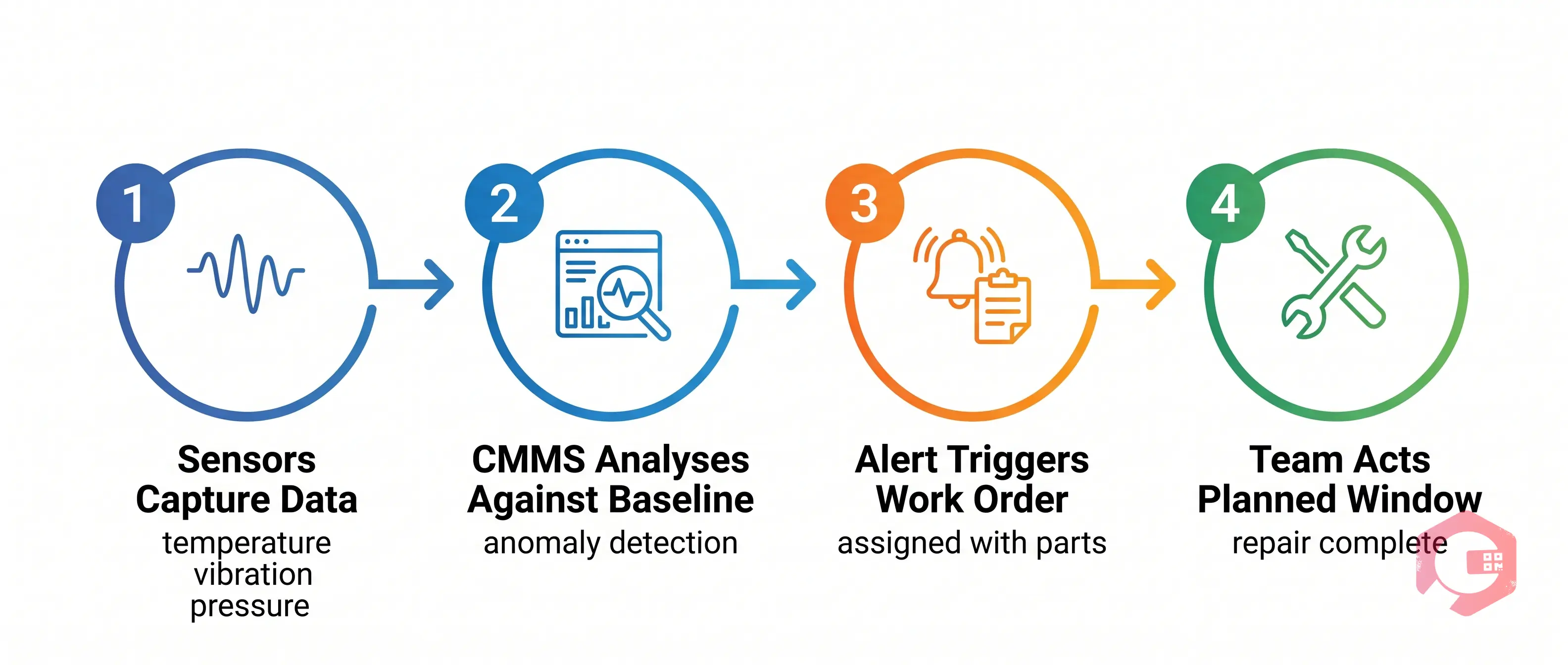
Predictive maintenance in a tyre plant follows a clear workflow from data collection to maintenance action. Understanding this workflow helps plant managers and maintenance teams deploy the strategy effectively.
The first stage is data collection. IoT sensors are attached to or embedded in critical equipment to continuously monitor operating parameters. In a tyre plant, the most commonly used sensor types include vibration accelerometers (to detect bearing wear, imbalance, and misalignment), temperature sensors (to monitor motor windings, gearbox oil, and press platens), pressure transducers (for hydraulic circuits in curing presses), ultrasonic sensors (to detect air leaks in pneumatic systems), and current monitoring sensors (to detect motor overload and developing electrical faults).
The second stage is data analysis. Raw sensor readings are compared against established baseline signatures for each machine. When anomalies are detected - for example, a gradual increase in vibration frequency on a curing press motor bearing - the system generates an alert. Advanced platforms use machine learning to distinguish normal operational variation from genuine early-stage failure signals, dramatically reducing false alarms.
The third stage is triggered maintenance action. When a predictive alert is generated, it flows directly into the maintenance management system as a work order. A technician is assigned, spare parts are confirmed in stock, and the repair is scheduled for the next planned window - before the equipment fails. This is the critical difference from reactive maintenance: the decision to act is driven by data, not by failure.

Tyre plant maintenance teams typically operate across three maintenance strategies simultaneously. Understanding where each strategy belongs is essential to getting the most value from your maintenance budget.
Reactive maintenance - fixing equipment after it fails - is unavoidable for low-cost, easily replaceable components like light bulbs and basic conveyor belts. For these assets, the cost of failure is low and replacement is fast. But applying reactive maintenance to a curing press or Banbury mixer is a financial and operational risk that most plants can no longer afford.
Time-based preventive maintenance is the current standard in most tyre plants. It improves reliability compared to reactive maintenance, but it is inefficient in two ways: it replaces parts that still have useful life remaining (wasting money and labour), and it can still miss random failures that occur between scheduled services. Industry estimates suggest that time-based PM prevents fewer than 30% of equipment failures in complex manufacturing environments.
Predictive maintenance addresses both weaknesses. It monitors actual equipment condition and intervenes only when data indicates a developing problem. Studies across heavy manufacturing sectors show that PdM programs reduce unplanned downtime by 30% to 50%, cut overall maintenance costs by 20% to 35%, and extend equipment lifespan by 20% to 25% compared to time-based PM alone. For a tyre plant running multiple curing presses around the clock, these savings translate directly to improved production throughput and profitability.
The right approach for a tyre plant is a hybrid strategy: apply predictive monitoring to high-criticality, high-cost assets like curing presses, Banbury mixers, and calenders; use time-based preventive maintenance for medium-priority equipment like general conveyor motors and auxiliary pumps; and allow low-cost, easily replaceable components to run to failure.

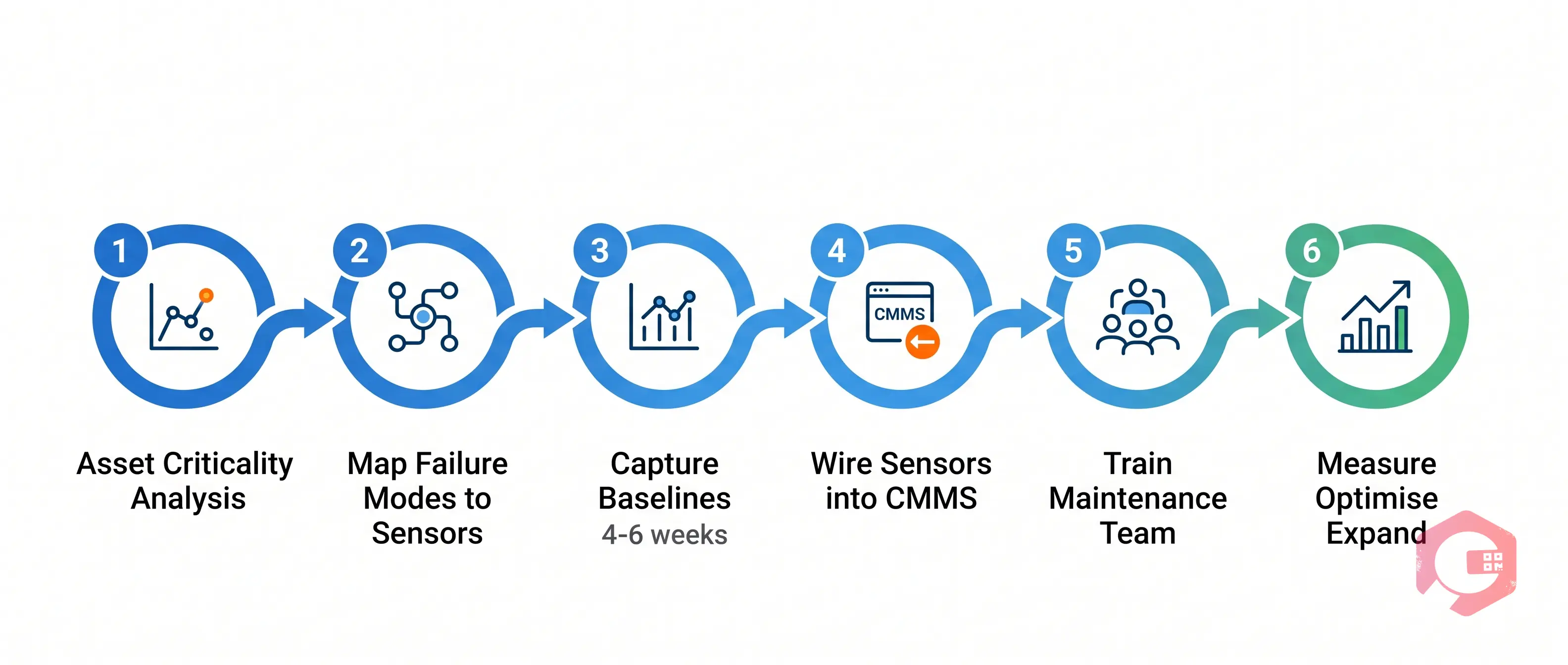
A successful predictive maintenance implementation in a tyre plant doesn't happen overnight. The following phased approach helps maintenance teams and plant managers build a sustainable program that delivers measurable results.
Start by ranking all equipment in the plant by the impact of failure. The highest-priority assets are those where a failure stops production, creates safety hazards, or results in significant scrap. Curing presses and Banbury mixers typically rank at the top. Use your historical maintenance records and downtime logs to support this prioritization - a CMMS with downtime tracking makes this analysis significantly faster and more accurate than paper-based records.
For each critical asset, identify the most likely failure modes based on manufacturer recommendations and your own maintenance history. A curing press bladder typically fails due to fatigue; detect this via pressure consistency monitoring. A Banbury rotor bearing fails due to contamination or lubrication breakdown; detect this via vibration analysis and oil temperature monitoring. Matching sensor type to failure mode is essential - deploying the wrong sensor gives you data that cannot detect the problem you are trying to prevent.
Before predictive alerts can be configured, you need to know what "normal" looks like for each asset. Run each monitored machine for 4 to 6 weeks under normal operating conditions to capture baseline signatures. Record vibration amplitude, temperature ranges, and pressure levels across different operating loads and shift conditions. These baselines become the reference against which future readings are compared.
Raw sensor data is only useful when it triggers action. Integrating your IoT sensors with a CMMS allows the system to automatically create work orders when sensor readings exceed defined thresholds. This closes the gap between "the data says there is a problem" and "a technician has been assigned to fix it." Without this integration, sensor alerts frequently go unacted upon because they arrive in a separate monitoring dashboard that maintenance staff don't check frequently enough.
Technology adoption without team buy-in fails. Train your maintenance technicians on what the sensor data means, how to interpret vibration signatures, and how to use the mobile CMMS application to receive, execute, and close predictive maintenance work orders. Field technicians who understand the "why" behind the data engage with the program far more effectively than those who see it as additional administrative burden.
After 3 to 6 months, review your results. Has MTBF improved on monitored assets? Has unplanned downtime decreased? Are the alerts you are receiving actionable, or are there too many false positives? Use this data to refine your alert thresholds, update your PM schedules, and make the business case for expanding the program to additional assets.

The most advanced sensor network in the world delivers limited value if the data it generates does not reach the right person at the right time with enough context to act. This is the specific problem that a CMMS built for predictive maintenance solves.
Cryotos CMMS integrates directly with IoT sensors, SCADA systems, and PLCs to receive real-time equipment health data. When a sensor reading on a curing press exceeds the defined threshold - say, a hydraulic pressure drop that indicates a developing seal failure - Cryotos automatically generates a high-priority work order. The work order is populated with the asset's full maintenance history, the relevant sensor readings, and a link to the equipment manual. The assigned technician receives an instant notification via the mobile app or WhatsApp, with everything they need to diagnose and resolve the issue without making a trip back to the maintenance office.
Beyond automated work order creation, Cryotos provides tyre plant maintenance teams with several capabilities that are essential for a mature predictive maintenance program. The asset management module stores the complete service history of every press, mixer, and calender in the plant - including all sensor-triggered work orders, parts replaced, and technician notes. This historical data is what feeds the continuous improvement cycle, allowing maintenance managers to refine their alert thresholds and failure mode predictions over time.
The downtime management module records every unplanned stoppage with timestamp accuracy, categorized by asset and failure type. This provides plant managers with the granular data needed to calculate the true cost of downtime by equipment type, measure the impact of the predictive maintenance program, and prioritize future sensor investments based on where failures are still occurring most frequently.
The inventory management module ensures that when a predictive alert triggers a work order, the required spare parts - replacement hydraulic seals, bearing kits, bladder materials - are confirmed in stock before the technician is dispatched. Automatic low-stock alerts prevent the situation where a timely predictive alert is rendered useless because the required part is not available.
Measuring the success of your predictive maintenance program requires tracking the right performance indicators. These KPIs allow plant managers to quantify the value of the program, demonstrate ROI to leadership, and identify areas where the program needs to be refined.
Mean Time Between Failures (MTBF) measures the average operating time between equipment breakdowns. As your predictive maintenance program matures, MTBF should increase - indicating that you are catching failures earlier and extending the interval between disruptive breakdowns. A curing press with an MTBF of 1,200 hours at the start of your program should ideally reach 1,800 to 2,000 hours after 12 months of systematic predictive monitoring.
Mean Time To Repair (MTTR) measures how quickly the maintenance team resolves failures once they occur. Predictive maintenance improves MTTR because technicians arrive at the job with advance knowledge of the problem, the right parts in hand, and the asset's full history available on their mobile device. Cryotos customers consistently report 25% faster repair times after implementing mobile CMMS with automated work order dispatch.
Overall Equipment Effectiveness (OEE) is the gold standard metric for manufacturing equipment performance, combining availability, performance rate, and quality rate. Predictive maintenance primarily improves the availability component by reducing unplanned downtime. A tyre plant targeting 85% OEE on curing presses - considered world-class - needs to limit unplanned stoppages to under 3 hours per 100 hours of scheduled production. Predictive monitoring makes this target achievable.
Planned Maintenance Percentage (PMP) tracks the proportion of all maintenance work that is planned versus reactive. Best-in-class maintenance organizations target 80% or more planned maintenance. Predictive maintenance contributes directly to this metric by converting what would have been emergency reactive responses into planned, scheduled repairs.
Maintenance Cost as a Percentage of Asset Replacement Value (MARC) is a financial KPI that shows whether your maintenance investment is proportionate to the value of the asset being maintained. Industry benchmarks for tyre manufacturing suggest a target MARC of 2% to 4%. Plants operating purely reactively often see MARC exceed 8%, reflecting the premium cost of emergency repairs and premature component replacement.
Curing presses and Banbury mixers are typically the most failure-prone and highest-impact assets in a tyre plant due to the extreme heat, pressure, and continuous-cycle operation they endure. Calender rollers and tyre building machine servo systems are also high-priority targets for predictive monitoring. These assets should be the first to receive IoT sensor investment in any predictive maintenance program.
Industry data across heavy manufacturing environments shows that mature predictive maintenance programs reduce unplanned downtime by 30% to 50% compared to time-based preventive maintenance alone. The exact improvement for a specific tyre plant depends on the baseline condition of equipment, the criticality of assets monitored, and the quality of sensor integration with the maintenance management system. Most plants see measurable improvement within the first 6 months of deployment.
For curing press monitoring, the most effective sensors are hydraulic pressure transducers (to detect developing seal failures and pressure inconsistency), temperature sensors on heating platens (to identify hot spots and element failures), vibration accelerometers on drive motors (to monitor bearing condition), and bladder pressure sensors (to detect early bladder fatigue before rupture). Together, these sensors give maintenance teams a comprehensive picture of press health across all critical failure modes.
Yes. Cryotos CMMS is designed to integrate with IoT sensors, SCADA systems, and PLCs through standard API connections. When sensor data from your existing SCADA infrastructure crosses a defined threshold, Cryotos can automatically generate a work order, notify the assigned technician, and log the event in the asset's maintenance history - creating a seamless bridge between equipment monitoring and maintenance execution without replacing your existing SCADA investment.
A phased predictive maintenance implementation in a tyre plant typically takes 3 to 6 months to reach initial operational status for high-priority assets. This includes the asset criticality analysis (2 to 4 weeks), sensor procurement and installation (4 to 8 weeks), baseline data collection (4 to 6 weeks), CMMS integration and configuration (2 to 4 weeks), and technician training (1 to 2 weeks). Full program maturity - where AI-driven alert thresholds are refined and the program covers all critical assets - typically takes 12 to 18 months.
The tyre industry operates at the intersection of precision chemistry, extreme mechanical stress, and continuous-flow production. Equipment failures in this environment are not minor inconveniences - they are expensive, quality-compromising, and in some cases safety-critical events. Predictive maintenance, supported by a CMMS that connects real-time sensor data to fast, intelligent maintenance action, is the most effective strategy available to tyre plant managers who want to protect their production targets and reduce their total maintenance cost. Schedule a free Cryotos demo to see how leading tyre manufacturers are using connected maintenance to transform their operations.
Predictive maintenance for tyre manufacturing equipment is the practice of using real-time sensor data, condition monitoring, and AI-driven analytics to identify equipment failures before they disrupt production. In an industry where a single unplanned stoppage of a curing press can cost tens of thousands of dollars in lost output, rejected batches, and overtime labour, predictive maintenance has shifted from a luxury to a competitive necessity.
The global tyre manufacturing sector operates some of the most demanding machinery in heavy industry - mixing mills, calenders, bead winding machines, tyre building machines (TBMs), and autoclave-style vulcanization presses. These assets run continuously, often 24/7, under high heat and pressure. When one fails unexpectedly, it doesn't just stop a machine - it triggers a cascade that halts entire production lines, wastes uncured compounds, and breaks delivery commitments.
This guide breaks down how tyre plants can implement a practical predictive maintenance strategy, the specific equipment that benefits most, and how a CMMS like Cryotos ties it all together.
The tyre manufacturing process is uniquely punishing on equipment. Mixing mills process highly abrasive rubber compounds at elevated temperatures. Calenders apply precise pressure through heavy rollers that cycle thousands of times per shift. Curing presses operate at pressures exceeding 200 bar and temperatures above 180�C. Every piece of equipment in the production chain is subject to extreme stress - and when it fails, the impact is immediate and costly.
Industry data consistently shows that unplanned equipment downtime in manufacturing costs an average of $50,000 per hour when you account for lost production, wasted materials, emergency labour, and expedited parts. In tyre manufacturing, the stakes are even higher because of the continuous-flow nature of the process. A stopped curing press means partially cured tyres that must be scrapped, raw compound that degrades if left idle, and a bottleneck that ripples downstream to shipping and delivery schedules.
Traditional time-based preventive maintenance helps, but it has critical gaps. A curing press serviced every 500 hours regardless of actual wear can still fail at hour 480 due to a bearing issue that developed after the last service. Predictive maintenance closes this gap by watching the asset continuously, detecting the early warning signs of degradation, and triggering maintenance only when - and exactly when - it is needed.

Not all equipment benefits equally from predictive maintenance investment. In a tyre plant, the highest-priority assets are those where a failure causes immediate production loss or poses safety risks. The following are the most critical:
Curing presses are the heart of tyre manufacturing. They apply heat and pressure to mould the tyre's final shape and vulcanize the rubber compound. A press failure mid-cycle ruins the tyre in the mould, damages the bladder, and can take hours to recover. Vibration sensors on press motors, temperature sensors on heating platens, and pressure transducers on hydraulic circuits give early warning of bladder wear, hydraulic seal degradation, and motor bearing issues before they cause a shutdown.
Banbury internal mixers are used to compound raw rubber with carbon black, sulphur, and other chemicals. These machines run at high torque and generate enormous heat. Rotor bearings, seals, and drive gears are subject to accelerated wear. Vibration analysis on rotors and thermal imaging on gearboxes allow maintenance teams to detect bearing deterioration and overheating weeks before failure - typically giving 8 to 12 days of advance notice, which is enough time to schedule a planned repair during a shift break or weekend shutdown.
Calendering machines apply rubber to textile or steel cord reinforcement through precision-ground rollers. Roller bearings, hydraulic gap-control systems, and drive motors are the most failure-prone components. Unplanned calender downtime is particularly costly because the coated cord material may need to be scrapped if it cools outside specification. Condition monitoring on roller bearing temperatures and vibration patterns allows plants to prevent these costly interruptions.
TBMs assemble the various layers of a tyre - inner liner, body plies, beads, sidewalls, and tread - on a rotating drum. These machines have complex pneumatic, hydraulic, and servo-driven systems. Servo motor health, pneumatic pressure stability, and drum concentricity are key monitoring parameters. Predictive monitoring of servo drives helps detect encoder drift and motor degradation before precision is lost.
Semi-finished tyre components are transported between production stages on conveyors. A seized conveyor bearing at the wrong moment can stop an entire production cell. Acoustic emission sensors and vibration monitors on conveyor drive motors are cost-effective ways to prevent these "minor but critical" failures.
Predictive maintenance in a tyre plant follows a clear workflow from data collection to maintenance action. Understanding this workflow helps plant managers and maintenance teams deploy the strategy effectively.
The first stage is data collection. IoT sensors are attached to or embedded in critical equipment to continuously monitor operating parameters. In a tyre plant, the most commonly used sensor types include vibration accelerometers (to detect bearing wear, imbalance, and misalignment), temperature sensors (to monitor motor windings, gearbox oil, and press platens), pressure transducers (for hydraulic circuits in curing presses), ultrasonic sensors (to detect air leaks in pneumatic systems), and current monitoring sensors (to detect motor overload and developing electrical faults).
The second stage is data analysis. Raw sensor readings are compared against established baseline signatures for each machine. When anomalies are detected - for example, a gradual increase in vibration frequency on a curing press motor bearing - the system generates an alert. Advanced platforms use machine learning to distinguish normal operational variation from genuine early-stage failure signals, dramatically reducing false alarms.
The third stage is triggered maintenance action. When a predictive alert is generated, it flows directly into the maintenance management system as a work order. A technician is assigned, spare parts are confirmed in stock, and the repair is scheduled for the next planned window - before the equipment fails. This is the critical difference from reactive maintenance: the decision to act is driven by data, not by failure.

Tyre plant maintenance teams typically operate across three maintenance strategies simultaneously. Understanding where each strategy belongs is essential to getting the most value from your maintenance budget.
Reactive maintenance - fixing equipment after it fails - is unavoidable for low-cost, easily replaceable components like light bulbs and basic conveyor belts. For these assets, the cost of failure is low and replacement is fast. But applying reactive maintenance to a curing press or Banbury mixer is a financial and operational risk that most plants can no longer afford.
Time-based preventive maintenance is the current standard in most tyre plants. It improves reliability compared to reactive maintenance, but it is inefficient in two ways: it replaces parts that still have useful life remaining (wasting money and labour), and it can still miss random failures that occur between scheduled services. Industry estimates suggest that time-based PM prevents fewer than 30% of equipment failures in complex manufacturing environments.
Predictive maintenance addresses both weaknesses. It monitors actual equipment condition and intervenes only when data indicates a developing problem. Studies across heavy manufacturing sectors show that PdM programs reduce unplanned downtime by 30% to 50%, cut overall maintenance costs by 20% to 35%, and extend equipment lifespan by 20% to 25% compared to time-based PM alone. For a tyre plant running multiple curing presses around the clock, these savings translate directly to improved production throughput and profitability.
The right approach for a tyre plant is a hybrid strategy: apply predictive monitoring to high-criticality, high-cost assets like curing presses, Banbury mixers, and calenders; use time-based preventive maintenance for medium-priority equipment like general conveyor motors and auxiliary pumps; and allow low-cost, easily replaceable components to run to failure.

A successful predictive maintenance implementation in a tyre plant doesn't happen overnight. The following phased approach helps maintenance teams and plant managers build a sustainable program that delivers measurable results.
Start by ranking all equipment in the plant by the impact of failure. The highest-priority assets are those where a failure stops production, creates safety hazards, or results in significant scrap. Curing presses and Banbury mixers typically rank at the top. Use your historical maintenance records and downtime logs to support this prioritization - a CMMS with downtime tracking makes this analysis significantly faster and more accurate than paper-based records.
For each critical asset, identify the most likely failure modes based on manufacturer recommendations and your own maintenance history. A curing press bladder typically fails due to fatigue; detect this via pressure consistency monitoring. A Banbury rotor bearing fails due to contamination or lubrication breakdown; detect this via vibration analysis and oil temperature monitoring. Matching sensor type to failure mode is essential - deploying the wrong sensor gives you data that cannot detect the problem you are trying to prevent.
Before predictive alerts can be configured, you need to know what "normal" looks like for each asset. Run each monitored machine for 4 to 6 weeks under normal operating conditions to capture baseline signatures. Record vibration amplitude, temperature ranges, and pressure levels across different operating loads and shift conditions. These baselines become the reference against which future readings are compared.
Raw sensor data is only useful when it triggers action. Integrating your IoT sensors with a CMMS allows the system to automatically create work orders when sensor readings exceed defined thresholds. This closes the gap between "the data says there is a problem" and "a technician has been assigned to fix it." Without this integration, sensor alerts frequently go unacted upon because they arrive in a separate monitoring dashboard that maintenance staff don't check frequently enough.
Technology adoption without team buy-in fails. Train your maintenance technicians on what the sensor data means, how to interpret vibration signatures, and how to use the mobile CMMS application to receive, execute, and close predictive maintenance work orders. Field technicians who understand the "why" behind the data engage with the program far more effectively than those who see it as additional administrative burden.
After 3 to 6 months, review your results. Has MTBF improved on monitored assets? Has unplanned downtime decreased? Are the alerts you are receiving actionable, or are there too many false positives? Use this data to refine your alert thresholds, update your PM schedules, and make the business case for expanding the program to additional assets.

The most advanced sensor network in the world delivers limited value if the data it generates does not reach the right person at the right time with enough context to act. This is the specific problem that a CMMS built for predictive maintenance solves.
Cryotos CMMS integrates directly with IoT sensors, SCADA systems, and PLCs to receive real-time equipment health data. When a sensor reading on a curing press exceeds the defined threshold - say, a hydraulic pressure drop that indicates a developing seal failure - Cryotos automatically generates a high-priority work order. The work order is populated with the asset's full maintenance history, the relevant sensor readings, and a link to the equipment manual. The assigned technician receives an instant notification via the mobile app or WhatsApp, with everything they need to diagnose and resolve the issue without making a trip back to the maintenance office.
Beyond automated work order creation, Cryotos provides tyre plant maintenance teams with several capabilities that are essential for a mature predictive maintenance program. The asset management module stores the complete service history of every press, mixer, and calender in the plant - including all sensor-triggered work orders, parts replaced, and technician notes. This historical data is what feeds the continuous improvement cycle, allowing maintenance managers to refine their alert thresholds and failure mode predictions over time.
The downtime management module records every unplanned stoppage with timestamp accuracy, categorized by asset and failure type. This provides plant managers with the granular data needed to calculate the true cost of downtime by equipment type, measure the impact of the predictive maintenance program, and prioritize future sensor investments based on where failures are still occurring most frequently.
The inventory management module ensures that when a predictive alert triggers a work order, the required spare parts - replacement hydraulic seals, bearing kits, bladder materials - are confirmed in stock before the technician is dispatched. Automatic low-stock alerts prevent the situation where a timely predictive alert is rendered useless because the required part is not available.
Measuring the success of your predictive maintenance program requires tracking the right performance indicators. These KPIs allow plant managers to quantify the value of the program, demonstrate ROI to leadership, and identify areas where the program needs to be refined.
Mean Time Between Failures (MTBF) measures the average operating time between equipment breakdowns. As your predictive maintenance program matures, MTBF should increase - indicating that you are catching failures earlier and extending the interval between disruptive breakdowns. A curing press with an MTBF of 1,200 hours at the start of your program should ideally reach 1,800 to 2,000 hours after 12 months of systematic predictive monitoring.
Mean Time To Repair (MTTR) measures how quickly the maintenance team resolves failures once they occur. Predictive maintenance improves MTTR because technicians arrive at the job with advance knowledge of the problem, the right parts in hand, and the asset's full history available on their mobile device. Cryotos customers consistently report 25% faster repair times after implementing mobile CMMS with automated work order dispatch.
Overall Equipment Effectiveness (OEE) is the gold standard metric for manufacturing equipment performance, combining availability, performance rate, and quality rate. Predictive maintenance primarily improves the availability component by reducing unplanned downtime. A tyre plant targeting 85% OEE on curing presses - considered world-class - needs to limit unplanned stoppages to under 3 hours per 100 hours of scheduled production. Predictive monitoring makes this target achievable.
Planned Maintenance Percentage (PMP) tracks the proportion of all maintenance work that is planned versus reactive. Best-in-class maintenance organizations target 80% or more planned maintenance. Predictive maintenance contributes directly to this metric by converting what would have been emergency reactive responses into planned, scheduled repairs.
Maintenance Cost as a Percentage of Asset Replacement Value (MARC) is a financial KPI that shows whether your maintenance investment is proportionate to the value of the asset being maintained. Industry benchmarks for tyre manufacturing suggest a target MARC of 2% to 4%. Plants operating purely reactively often see MARC exceed 8%, reflecting the premium cost of emergency repairs and premature component replacement.
Curing presses and Banbury mixers are typically the most failure-prone and highest-impact assets in a tyre plant due to the extreme heat, pressure, and continuous-cycle operation they endure. Calender rollers and tyre building machine servo systems are also high-priority targets for predictive monitoring. These assets should be the first to receive IoT sensor investment in any predictive maintenance program.
Industry data across heavy manufacturing environments shows that mature predictive maintenance programs reduce unplanned downtime by 30% to 50% compared to time-based preventive maintenance alone. The exact improvement for a specific tyre plant depends on the baseline condition of equipment, the criticality of assets monitored, and the quality of sensor integration with the maintenance management system. Most plants see measurable improvement within the first 6 months of deployment.
For curing press monitoring, the most effective sensors are hydraulic pressure transducers (to detect developing seal failures and pressure inconsistency), temperature sensors on heating platens (to identify hot spots and element failures), vibration accelerometers on drive motors (to monitor bearing condition), and bladder pressure sensors (to detect early bladder fatigue before rupture). Together, these sensors give maintenance teams a comprehensive picture of press health across all critical failure modes.
Yes. Cryotos CMMS is designed to integrate with IoT sensors, SCADA systems, and PLCs through standard API connections. When sensor data from your existing SCADA infrastructure crosses a defined threshold, Cryotos can automatically generate a work order, notify the assigned technician, and log the event in the asset's maintenance history - creating a seamless bridge between equipment monitoring and maintenance execution without replacing your existing SCADA investment.
A phased predictive maintenance implementation in a tyre plant typically takes 3 to 6 months to reach initial operational status for high-priority assets. This includes the asset criticality analysis (2 to 4 weeks), sensor procurement and installation (4 to 8 weeks), baseline data collection (4 to 6 weeks), CMMS integration and configuration (2 to 4 weeks), and technician training (1 to 2 weeks). Full program maturity - where AI-driven alert thresholds are refined and the program covers all critical assets - typically takes 12 to 18 months.
The tyre industry operates at the intersection of precision chemistry, extreme mechanical stress, and continuous-flow production. Equipment failures in this environment are not minor inconveniences - they are expensive, quality-compromising, and in some cases safety-critical events. Predictive maintenance, supported by a CMMS that connects real-time sensor data to fast, intelligent maintenance action, is the most effective strategy available to tyre plant managers who want to protect their production targets and reduce their total maintenance cost. Schedule a free Cryotos demo to see how leading tyre manufacturers are using connected maintenance to transform their operations.
Cryotos AI predicts failures, automates work orders, and simplifies maintenance—before problems slow you down.