Pharmaceutical manufacturers turn to a Computerized Maintenance Management System (CMMS) for the same reason every regulated plant does: uptime and audit-readiness run on the same maintenance data. Paper logbooks can't track a calibration deadline, prove a cleaning event happened, or calculate equipment performance in real time. A CMMS does all three. For plants also running Total Productive Maintenance (TPM), a CMMS solves an even bigger problem — it keeps autonomous checks, planned schedules, and performance data alive long after the pillars are introduced in a training room.
Key Takeaways
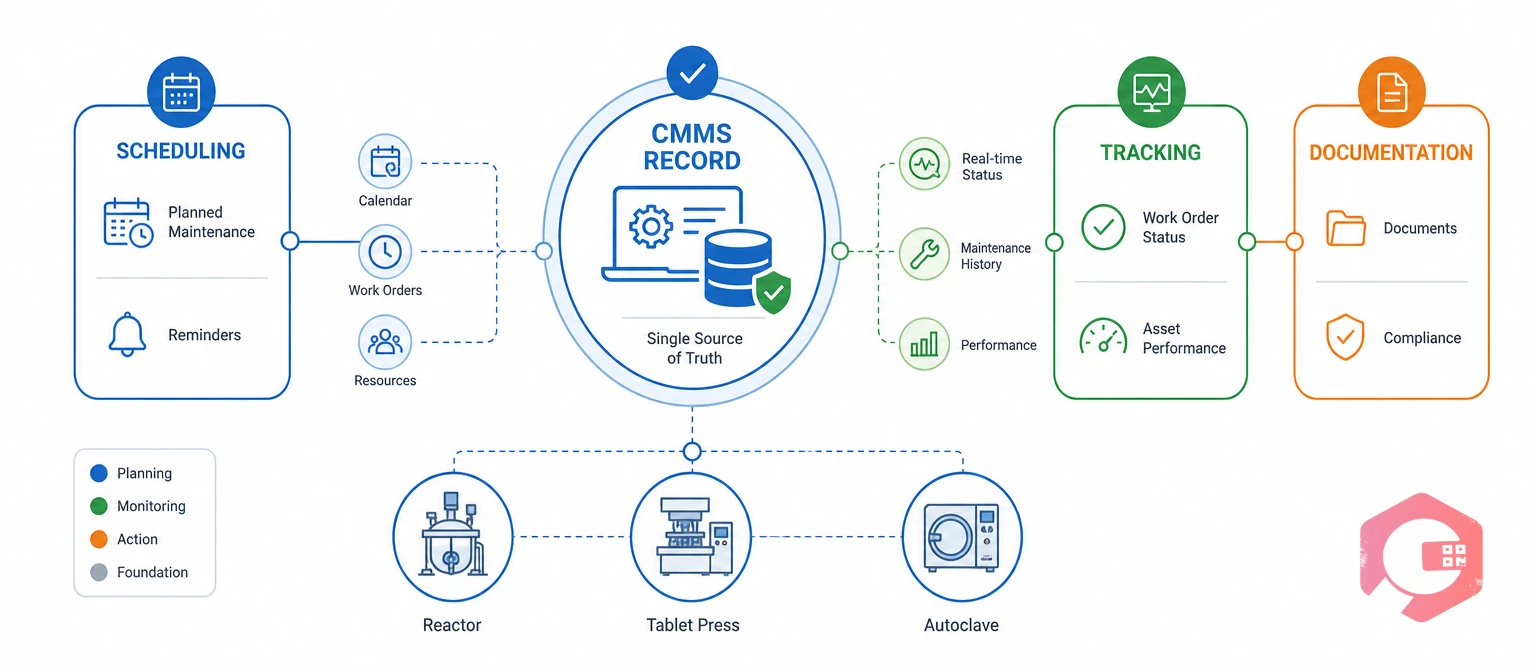
CMMS software schedules, tracks, and documents every maintenance activity on a production line. It gives pharma manufacturers one record that regulators, quality teams, and maintenance managers all rely on — replacing spreadsheets, paper logs, and disconnected systems with a single source of truth.
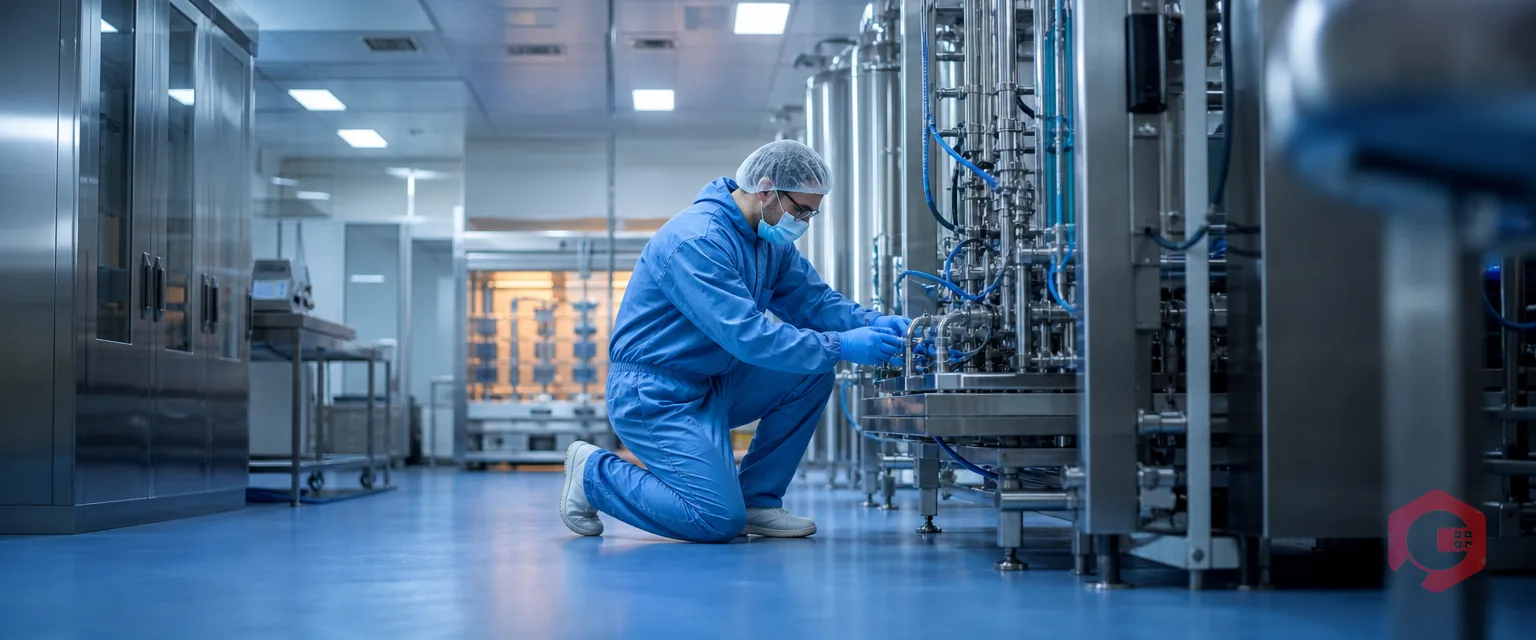
Pharma runs equipment that directly affects product quality and patient safety: reactors, tablet presses, autoclaves, HVAC systems, and water-for-injection units. When any of these fail without proper documentation, the batch can be deemed non-conforming under Good Manufacturing Practice rules. A CMMS ties every maintenance record to the equipment's history, so a work order becomes a quality document as much as a maintenance one.
Many plants also run Total Productive Maintenance as their maintenance philosophy. None of that holds together on paper once a plant scales past a handful of lines. A CMMS built for pharmaceutical manufacturing is what makes it sustainable.
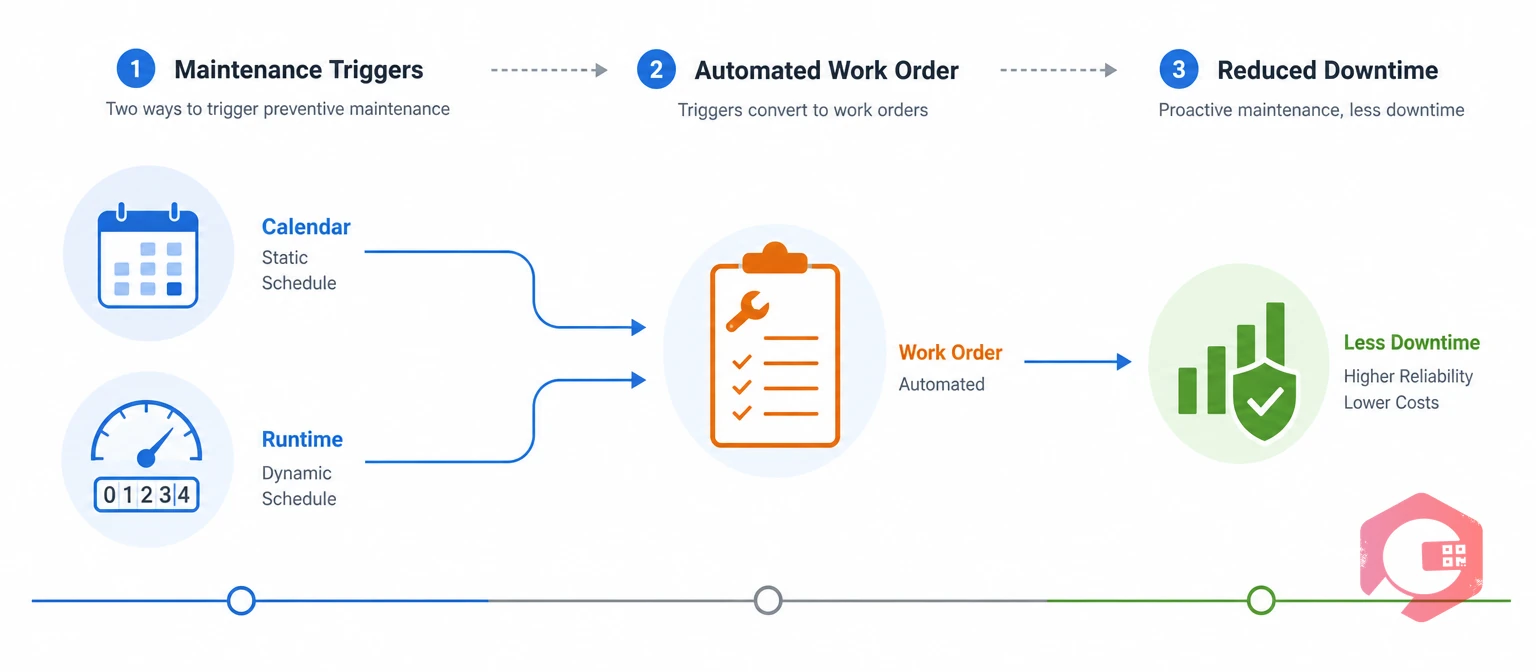
Unplanned downtime in pharma costs more than lost output. A reactor that trips mid-cycle can force a full batch rejection. Most facilities relying on reactive maintenance have no feedback loop into future PM schedules.
Cryotos closes that gap two ways:
A preventive maintenance platform can also flag equipment overdue for calibration and block it from production until a qualified technician signs off. Maintenance teams using Cryotos have reported up to 30% reduction in unplanned downtime and 25% faster repair turnaround — gains that trace directly back to catching problems before they become batch-affecting failures.
A CMMS supports GMP compliance by creating a timestamped, tamper-evident record of every maintenance activity. That record shows who did the work, what procedure they followed, and what parts they used — exactly what FDA's CGMP regulations expect.
Paper-based systems fail here consistently. Records go missing. Entries get skipped under production pressure. Pulling two years of history for one piece of equipment can take hours during an inspection.
With Cryotos, that same request takes minutes. Filter by asset, date range, or technician and pull a complete record covering operator checks, planned PMs, calibration events, and deviations — all in one place. The regulatory compliance checklist helps spot documentation gaps before your next audit.
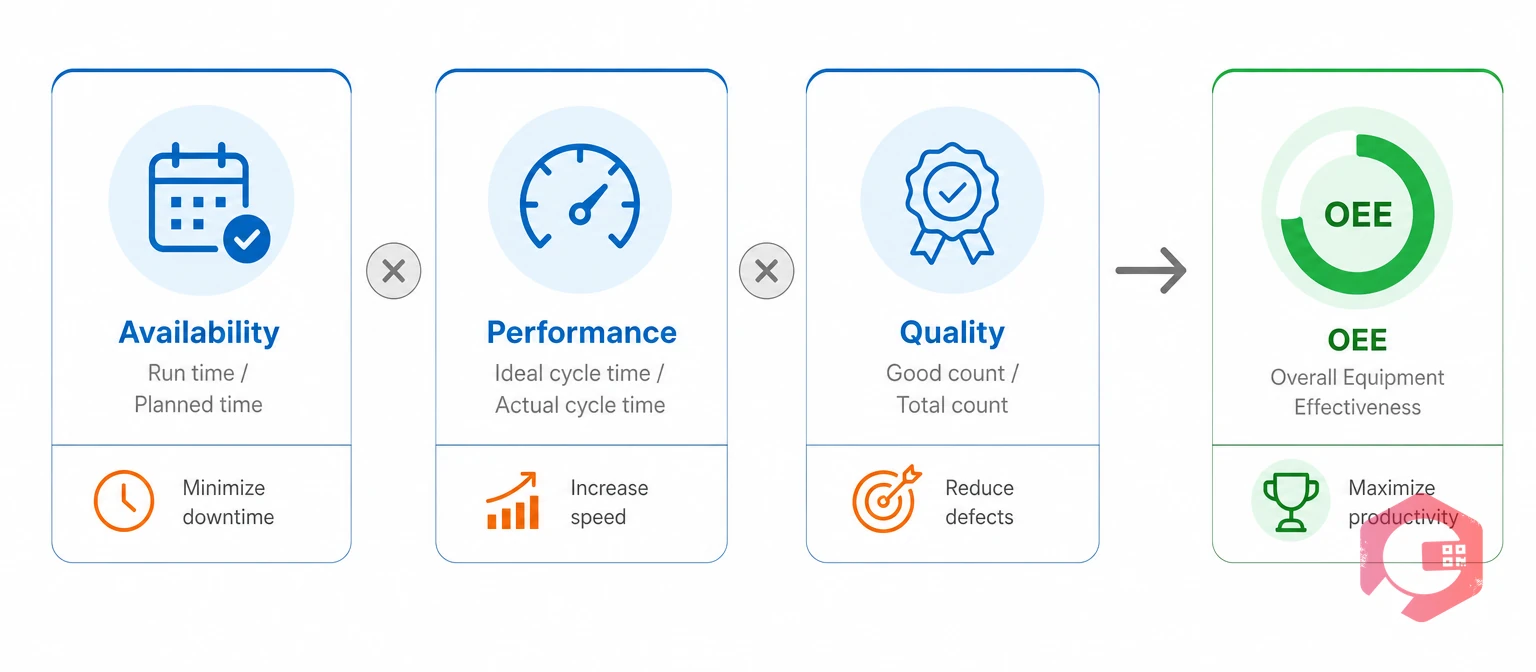
Overall Equipment Effectiveness (OEE) is the product of availability, performance, and quality rates. It gives maintenance and quality teams one shared number instead of two separate stories. A tablet press can run at rated speed and still produce batches that fail in-process testing. OEE catches all three factors at once.
Calculating OEE by hand once a quarter only tells you what already happened. The Cryotos BI dashboard calculates it continuously from live work order, downtime, and output data. A maintenance manager and a QA lead looking at the same asset see the same number — no arguing from different spreadsheets.
Most pharma plants that adopt TPM don't fail because the pillars are wrong. They fail because nothing holds the pillars together once the training posters come down. Plants that have successfully achieved zero breakdowns through TPM focused improvement did so by keeping every phase tracked in one system.
The CMMS-TPM Sustainment Framework maps each pharma-relevant TPM pillar to the Cryotos feature that keeps it running day to day:
| TPM Pillar | Cryotos Feature That Sustains It | Why It Keeps Running |
|---|---|---|
| Autonomous Maintenance | Mobile operator checklists with photo-tagged defect capture | Every check logged automatically — nothing to misplace or forget to file |
| Planned Maintenance | Static and dynamic PM scheduling with meter-based triggers | Work orders generate on their own — the schedule can't quietly lapse |
| Quality Maintenance | Work orders linked to 5 Whys root-cause analysis and deviation tags | Equipment condition and batch quality stay connected in one record |
| Education and Training | SOP-linked digital checklists with role-based access control | Only trained, qualified technicians can complete each task |
| Focused Improvement | BI dashboard trend analysis on MTBF, MTTR, and recurring defects | Teams see what's actually improving — momentum doesn't stall out |
That last column is the real answer to why TPM programs stall. Nothing was tracking whether the pillars were still being followed. A system that logs every check, schedules every PM, and reports every trend automatically removes that failure point. The same principle applies beyond the shop floor — plants that extend TPM discipline to office and administrative functions report more consistent results across departments.
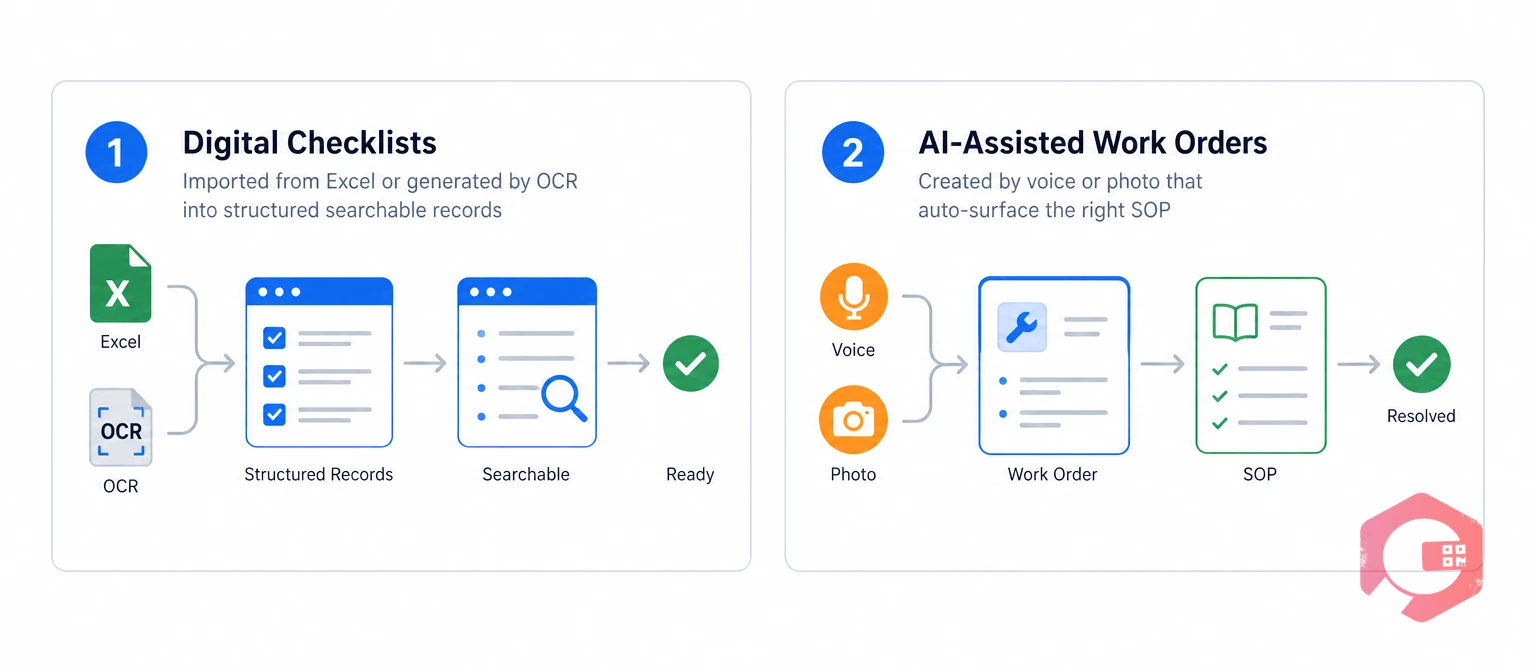
Two features are changing how pharma maintenance teams handle daily documentation.
Cryotos can import an existing Excel-based checklist directly or generate one via OCR from a scanned paper form. A plant doesn't rebuild years of validated SOPs from scratch. Every field completed on a mobile maintenance checklist becomes a structured, searchable record instead of a scanned image nobody can query.
Instead of typing a work order after a breakdown, a technician can describe it out loud or snap a photo and the work order writes itself. An AI-powered knowledge base surfaces the right SOP or a similar past repair automatically — cutting the time technicians spend hunting for the right procedure mid-repair. None of this removes a step from the audit trail. It just removes the manual typing between the event and the record.
Reduced unplanned downtime, faster repairs, and audit-ready documentation that satisfies FDA and EU GMP requirements. A CMMS also gives maintenance and quality teams a shared, real-time view of equipment performance.
By creating a complete, timestamped audit trail for every maintenance activity. During an inspection, this record can be filtered by asset, date, or technician and produced in minutes instead of hours.
Most TPM programs fade because nothing tracks whether the pillars are still being followed. A CMMS logs autonomous checks automatically, generates planned maintenance on schedule, and reports equipment-effectiveness trends without manual data chasing.
Yes. The Cryotos BI dashboard calculates OEE continuously from live work order, downtime, and output data. No manual quarterly calculation from separate spreadsheets.
Running maintenance on paper works right up until the plant scales, an auditor asks a hard question, or a batch sits on hold while someone hunts for a record. Schedule a free demo to see how Cryotos helps pharmaceutical manufacturers cut downtime, stay audit-ready, and keep every TPM pillar running long after launch.



Cryotos AI predicts failures, automates work orders, and simplifies maintenance—before problems slow you down.