
Facility maintenance teams are under more pressure than ever. They're expected to respond faster, document everything, prevent failures before they happen, and do it all with leaner crews and tighter budgets. Yet most teams are still operating on fragmented communication - phone calls, paper logs, whiteboard updates, and emails that go unanswered for hours.
The missing piece isn't more technicians or bigger budgets. It's a real-time feedback system that connects every layer of the operation - from the sensor on a cooling unit to the facility manager's dashboard - in a continuous, closed loop.
This guide breaks down exactly what real-time feedback systems are, why traditional approaches fall short, and how modern CMMS platforms like Cryotos are helping facility maintenance teams finally get ahead of problems instead of chasing them.
A real-time feedback system in facility maintenance is a continuous information loop that connects field technicians, equipment sensors, work order systems, and management dashboards - delivering live status updates, alerts, and performance data without delay.
Unlike traditional reporting that relies on end-of-shift logs or weekly meetings, a real-time system captures what's happening right now: a technician completes a repair and marks it done in the mobile app; the system automatically notifies the manager, updates the asset's maintenance history, and triggers the next scheduled PM task. No phone calls. No paperwork. No lost updates.
At its core, a real-time feedback system has three defining characteristics:
This is fundamentally different from a simple notification tool or a basic work order system. A real-time feedback system is an operational nerve centre for your entire maintenance function.

Most facility maintenance teams didn't grow into their communication problems - they were built that way. The tools came first (clipboards, radios, spreadsheets), and the processes grew around them. Now, as facilities scale and asset complexity increases, those legacy communication habits are creating invisible but costly failures.
When a technician identifies a fault, the classic response chain looks like this: spot the issue → write it down → call or radio the supervisor → wait for a callback → receive verbal instruction → attempt repair → write up the outcome → file it somewhere. Each handoff introduces delay, and each verbal exchange creates an opportunity for miscommunication or omission.
In a large facility with dozens of assets and multiple shifts, this chain breaks constantly. Critical updates get lost between shifts. Overnight repairs go undocumented until someone asks about them the next morning. Managers make decisions based on information that's hours - or days - old.
Maintenance teams rarely operate in isolation. They interact with operations, safety, procurement, and sometimes tenants or facility users. When feedback systems don't cross departmental lines, maintenance data lives in maintenance-only spreadsheets while everyone else operates blind.
Operations managers can't see whether that HVAC repair has been completed. Procurement doesn't know a critical spare part was just used and needs reordering. Safety teams aren't notified when a high-risk repair is in progress. The lack of shared real-time feedback creates coordination failures that a simple interdepartmental notification would have prevented.
Without real-time feedback loops, maintenance remains reactive by default. You find out something has failed when it stops working - not before. Teams that operate this way spend the majority of their time on emergency repairs, which are consistently more expensive, more disruptive, and harder to staff for than planned work.
Research consistently shows that reactive maintenance costs 3 to 5 times more per repair than preventive maintenance. For facilities running on tight margins, this isn't just an operational inefficiency - it's a financial risk.

A well-designed real-time feedback system for facility maintenance isn't a single tool - it's an interconnected stack of capabilities. Understanding its components helps you evaluate what you already have and what gaps need to be filled.
Field technicians need the ability to receive, update, and close work orders from the job site. Mobile-first CMMS apps allow technicians to check in when they arrive at an asset, log what they find, record the parts used, upload photos of the issue and resolution, and mark the task complete - all from a smartphone or tablet. This eliminates the paper trail and ensures every action is timestamped and traceable.
Not every issue requires the same response. A real-time feedback system should intelligently route alerts based on severity, asset criticality, and response SLAs. A low-priority lighting fault in a storage room can wait until morning. A cooling failure in a server room or cold storage facility requires an immediate escalation - automatically - to the on-call engineer and the facility manager simultaneously.
Management visibility depends on dashboards that refresh in real time. Facility managers should be able to see, at any moment, how many work orders are open, which assets are under repair, where technicians are deployed, and what's scheduled for the next 24 hours. Static weekly reports can't support this level of operational awareness.
Real-time feedback isn't just about data flowing up. Managers must be able to push updates, clarifications, and priority changes directly to technicians in the field. Built-in commenting, task notes, and photo sharing within the work order itself keep all communication contextual - tied to the specific asset and job rather than scattered across email threads or text messages.
For facilities with critical equipment, manual inspection cycles are no longer sufficient. Integrating temperature sensors, vibration monitors, power meters, and occupancy sensors into your CMMS creates automated feedback triggers - assets report their own status before a human ever needs to walk by to check.
Every feedback loop must produce a permanent record. Regulatory environments - healthcare, food processing, pharmaceuticals - require documented proof of every maintenance action. A real-time system that logs every update, every status change, and every resolution automatically becomes a powerful compliance tool, not just an operational one.
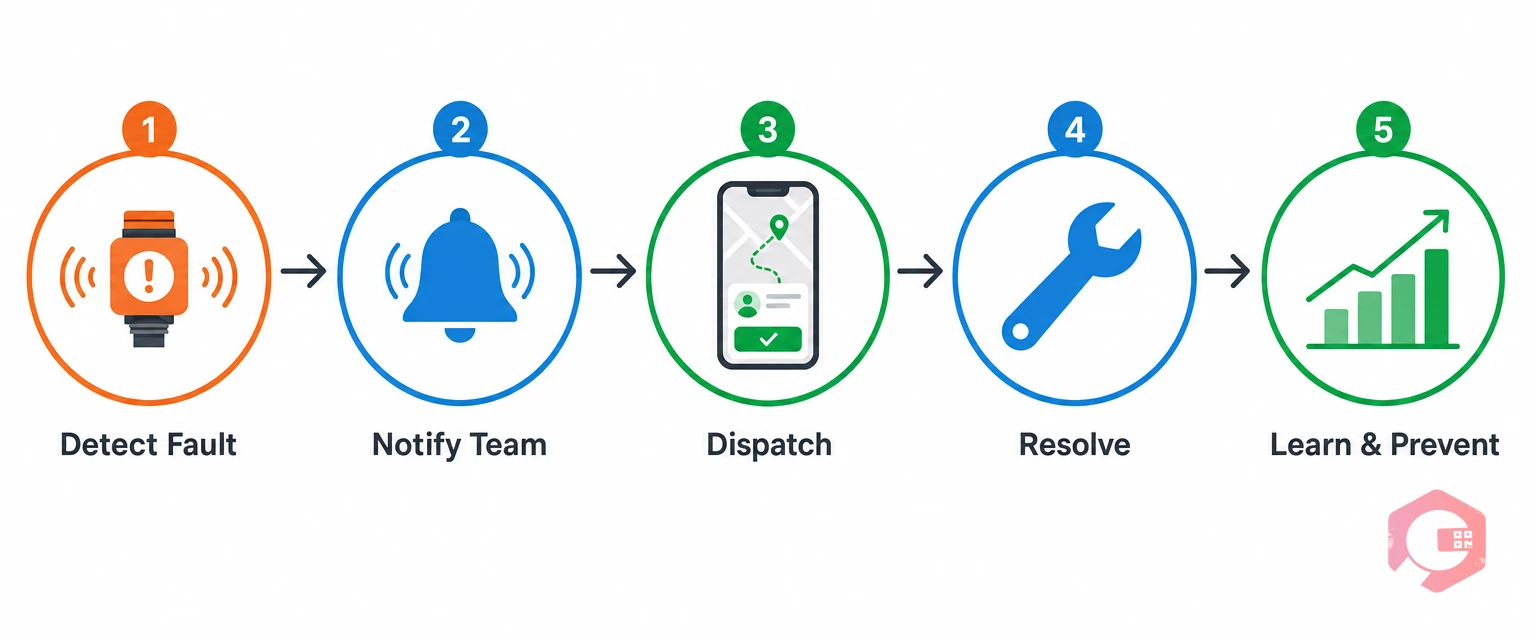
The direct operational benefit of real-time feedback systems is measurable and significant: faster response times and less unplanned downtime. But understanding the mechanism - not just the outcome - helps teams build the right system from the start.
In a traditional maintenance operation, the time between a fault occurring and a technician being dispatched can range from 30 minutes to several hours. The fault has to be noticed, reported to a supervisor, assessed, and then assigned. In a real-time system, sensor alerts or technician reports trigger automatic work order creation and immediate assignment - collapsing this gap from hours to minutes.
For high-value assets where every hour of downtime costs thousands of dollars, this isn't an incremental improvement. It's a structural change in how quickly your team can respond to the unexpected.
When every work order competes equally for attention, technicians default to what's easiest, what's most visible, or what their supervisor last mentioned. A real-time feedback system with intelligent prioritisation logic ensures that the most critical assets get attention first - regardless of who spotted the issue or how loudly someone called about it.
Asset criticality scores, SLA timers, and real-time team availability data allow the system to make smart dispatch decisions automatically, ensuring no critical repair waits behind a low-priority painting job.
The most powerful feedback loops don't just close work orders - they learn from them. When a repair is completed, the system captures what failed, what was done, what parts were used, and how long it took. Over time, this data reveals patterns: which assets fail most frequently, which failure modes are most common, and where the preventive maintenance schedule should be adjusted.
This transforms the feedback loop from a reactive tool into a continuous improvement engine. Each resolved issue makes your team smarter about the next one.
The relationship between field technicians and facility managers is the beating heart of any maintenance operation. When that communication is clean, fast, and accurate, the whole team performs better. When it's broken - or just slow - the consequences ripple through every corner of operations.
Technicians need clarity. They need to know exactly which jobs are assigned to them, in what priority order, with enough context to do the work correctly the first time. They also need to know that what they report back actually reaches someone who acts on it - that their field observations about deteriorating equipment or unsafe conditions are heard and addressed.
When technicians see their feedback being acted on - a maintenance schedule adjusted based on something they flagged, a part reordered because they noted its depletion - engagement and accountability increase. The feedback loop becomes a motivational tool as much as an operational one.
Managers need accuracy and completeness. They need to know what's been done, what's in progress, what's been deferred and why, and what's coming up. They need to catch bottlenecks - a technician stuck waiting on a part, a job that's taking twice as long as expected, an asset that keeps failing despite multiple repairs - in time to intervene.
Real-time dashboards showing open work orders, technician location and availability, and SLA compliance rates give managers the situational awareness they need to make smart decisions rather than reactive ones.
One underappreciated benefit of a strong feedback loop is the trust it builds between management and field teams. When technicians can see that their reports are received, acknowledged, and actioned in the system, they stop relying on informal channels - phone calls to get things done faster, or silence when they know nothing will happen anyway.
Transparency in both directions - managers can see what technicians are doing, and technicians can see how their work contributes to broader facility performance - creates a culture of accountability that drives long-term operational improvement.
The most advanced real-time feedback systems extend beyond human input entirely. IoT sensors transform passive equipment into active participants in the feedback loop - continuously reporting on their own condition and triggering maintenance actions when needed.
Sensors installed on critical equipment - HVAC units, pumps, motors, electrical panels, refrigeration systems - continuously monitor parameters like temperature, vibration, pressure, and power consumption. These readings feed into the CMMS in real time. When a reading drifts outside predefined thresholds, the system automatically generates a work order, assigns it to the nearest available technician, and notifies the facility manager - all before a human has detected the problem manually.
Consider a commercial kitchen's refrigeration unit. Without sensor integration, a temperature drift might go unnoticed for hours - until food safety is compromised. With a real-time sensor loop, the system detects the drift within minutes, dispatches a technician, and logs the event for compliance reporting. The problem is addressed before it becomes a crisis.
Traditional preventive maintenance runs on fixed schedules - inspect every 90 days, replace filters every 6 months. This approach is better than reactive maintenance, but it's still imprecise. A motor running in a dusty environment may need attention in 30 days; one in a clean room might be fine for 6 months.
Condition-based maintenance, enabled by IoT feedback loops, replaces fixed schedules with dynamic ones. Maintenance happens when the equipment's actual condition indicates it's needed - reducing unnecessary maintenance on healthy equipment and preventing failures in deteriorating equipment before they happen.
Many facility managers see "smart facility" and "IoT integration" as large, expensive, and disruptive projects. In practice, sensor-driven feedback loops can be built incrementally. Start with your most critical assets - the ones whose failure causes the most disruption or cost. Add basic temperature or vibration sensors. Connect them to your CMMS. Expand once you've seen the value in that first layer.
The key is choosing a CMMS platform that's built for integration from the ground up - not one where IoT connectivity is a bolt-on afterthought.
Cryotos CMMS is designed around the premise that maintenance teams perform best when they have complete, real-time visibility into every aspect of their operation. Every feature in the platform contributes to a tighter, faster, more reliable feedback loop between field teams and management.
Cryotos provides technicians with a mobile app that gives them everything they need in the field: assigned work orders with full asset history, step-by-step task checklists, photo capture for before-and-after documentation, parts usage logging, and one-tap completion with automatic manager notification. Every update is timestamped, every action is logged, and nothing gets lost between shifts.
The Cryotos management dashboard gives facility managers a live view of the entire operation: open work orders by priority, technician deployment status, SLA compliance rates, asset health indicators, and PM schedule adherence. Filters by location, asset type, or technician allow managers to drill down instantly without waiting for a weekly report.
Cryotos allows facility teams to configure intelligent escalation rules: if a critical work order isn't acknowledged within 15 minutes, escalate to the senior technician; if it's still open after 2 hours, notify the facility manager. These rules eliminate the need for manual chasing and ensure that nothing falls through the cracks based on shift timing, individual responsiveness, or communication gaps.
Beyond reactive feedback, Cryotos supports full preventive maintenance scheduling with automated work order generation, technician assignment, and completion tracking. For facilities with IoT infrastructure, Cryotos integrates with sensor data to trigger condition-based maintenance - ensuring your feedback loop extends all the way down to the equipment level.
Every update logged through Cryotos - from initial fault detection to final resolution - is permanently recorded and easily retrievable. For regulated industries like healthcare, food processing, and pharmaceuticals, this creates a complete, tamper-proof maintenance history that satisfies auditors and supports continuous compliance.
Transitioning from a fragmented maintenance communication system to a real-time feedback loop doesn't require a complete operational overhaul. A phased approach allows teams to build confidence, demonstrate early wins, and expand systematically.
Before implementing anything new, map your current flow. How does a fault get reported today? How long does it typically take from detection to dispatch? Where do updates get lost? Which types of jobs most frequently fall through the cracks? This audit gives you a clear baseline to measure against - and helps you prioritise which communication gaps to close first.
The single highest-impact step for most teams is eliminating paper-based work orders and replacing them with mobile digital ones. Deploy a CMMS mobile app to all technicians, train them on job receipt and completion workflows, and establish the expectation that every job begins and ends in the system. Within weeks, you'll have better data, faster updates, and more reliable documentation than you've ever had before.
With digital work orders in place, configure your alert and escalation logic. Set response SLAs by asset criticality. Define who gets notified for which type of fault. Build escalation chains for overdue tasks. This step transforms your system from a passive record-keeper into an active feedback engine that alerts the right people at the right time.
Train facility managers to use live dashboards as their primary visibility tool - not weekly spreadsheet reports. Establish a daily dashboard review habit. Use the data to lead maintenance team stand-ups. Begin making scheduling, staffing, and resource decisions based on live operational data rather than lagging reports.
Once your human feedback loop is running cleanly, identify the assets where sensor-driven automation would reduce the most risk or cost. Install condition monitoring on those assets first. Connect sensor alerts to your CMMS. Validate that automated triggers work correctly before expanding. Build your IoT layer incrementally, with clear ROI validation at each step.
Any operational improvement needs to be measured. For real-time feedback systems in facility maintenance, the following KPIs provide the clearest picture of whether your loop is actually closing - and how quickly.
Review these KPIs monthly as your system matures. Set improvement targets. Share results with the maintenance team so everyone can see the impact of the feedback loop they're contributing to.
A real-time feedback system in facility management is a continuous communication and data loop that connects field technicians, equipment, and management. It delivers instant updates on work order status, asset condition, and team deployment - enabling faster responses, better decisions, and fewer missed issues compared to traditional paper-based or end-of-shift reporting.
Real-time feedback reduces maintenance costs by enabling faster fault detection, reducing emergency repair frequency, improving first-time fix rates, and allowing condition-based maintenance instead of fixed schedules. Each of these improvements cuts the overall cost per repair and reduces the frequency of expensive unplanned breakdowns.
Yes - in fact, small teams often benefit most. With fewer technicians covering more ground, missed communications and delayed responses have an outsized impact. A real-time CMMS mobile app allows even a two-person maintenance team to operate with the visibility and coordination of a much larger operation.
A standard CMMS manages maintenance records and schedules. A real-time feedback system - powered by a modern CMMS like Cryotos - goes further by delivering live alerts, mobile field updates, automated escalation, IoT sensor integration, and live management dashboards. It's the difference between a record system and an operational nerve centre.
Most facility teams can be operational with basic mobile work orders and manager dashboards within 2 to 4 weeks of onboarding a modern CMMS platform. Full implementation including IoT integration and advanced analytics typically takes 3 to 6 months depending on facility size and complexity.
Yes. Cryotos CMMS supports integration with IoT sensors and condition monitoring systems, allowing facility teams to trigger automated work orders based on live equipment data. This extends the feedback loop beyond human reporting to include continuous, automated equipment monitoring.

Facility maintenance teams don't fail because their technicians aren't skilled or their managers aren't committed. They fail because the information they need doesn't reach the right people at the right time. Real-time feedback systems fix this at the root - creating continuous, closed loops that connect the sensor on the floor to the decision-maker at the desk.
The shift from reactive maintenance to real-time operational intelligence isn't a technology project. It's an operational philosophy - one that says every issue deserves a documented response, every technician deserves clear assignments, and every manager deserves accurate visibility. The technology just makes it practical at scale.
Whether your facility is a hospital, a commercial building, a manufacturing plant, or a logistics hub, the same principles apply: faster feedback means faster response, faster response means less downtime, and less downtime means better outcomes for everyone who depends on your facility to function.
Connect with the Cryotos team to see how real-time feedback systems work in action - and how quickly your maintenance operation can start feeling the difference.

Facility maintenance teams are under more pressure than ever. They're expected to respond faster, document everything, prevent failures before they happen, and do it all with leaner crews and tighter budgets. Yet most teams are still operating on fragmented communication - phone calls, paper logs, whiteboard updates, and emails that go unanswered for hours.
The missing piece isn't more technicians or bigger budgets. It's a real-time feedback system that connects every layer of the operation - from the sensor on a cooling unit to the facility manager's dashboard - in a continuous, closed loop.
This guide breaks down exactly what real-time feedback systems are, why traditional approaches fall short, and how modern CMMS platforms like Cryotos are helping facility maintenance teams finally get ahead of problems instead of chasing them.
A real-time feedback system in facility maintenance is a continuous information loop that connects field technicians, equipment sensors, work order systems, and management dashboards - delivering live status updates, alerts, and performance data without delay.
Unlike traditional reporting that relies on end-of-shift logs or weekly meetings, a real-time system captures what's happening right now: a technician completes a repair and marks it done in the mobile app; the system automatically notifies the manager, updates the asset's maintenance history, and triggers the next scheduled PM task. No phone calls. No paperwork. No lost updates.
At its core, a real-time feedback system has three defining characteristics:
This is fundamentally different from a simple notification tool or a basic work order system. A real-time feedback system is an operational nerve centre for your entire maintenance function.

Most facility maintenance teams didn't grow into their communication problems - they were built that way. The tools came first (clipboards, radios, spreadsheets), and the processes grew around them. Now, as facilities scale and asset complexity increases, those legacy communication habits are creating invisible but costly failures.
When a technician identifies a fault, the classic response chain looks like this: spot the issue → write it down → call or radio the supervisor → wait for a callback → receive verbal instruction → attempt repair → write up the outcome → file it somewhere. Each handoff introduces delay, and each verbal exchange creates an opportunity for miscommunication or omission.
In a large facility with dozens of assets and multiple shifts, this chain breaks constantly. Critical updates get lost between shifts. Overnight repairs go undocumented until someone asks about them the next morning. Managers make decisions based on information that's hours - or days - old.
Maintenance teams rarely operate in isolation. They interact with operations, safety, procurement, and sometimes tenants or facility users. When feedback systems don't cross departmental lines, maintenance data lives in maintenance-only spreadsheets while everyone else operates blind.
Operations managers can't see whether that HVAC repair has been completed. Procurement doesn't know a critical spare part was just used and needs reordering. Safety teams aren't notified when a high-risk repair is in progress. The lack of shared real-time feedback creates coordination failures that a simple interdepartmental notification would have prevented.
Without real-time feedback loops, maintenance remains reactive by default. You find out something has failed when it stops working - not before. Teams that operate this way spend the majority of their time on emergency repairs, which are consistently more expensive, more disruptive, and harder to staff for than planned work.
Research consistently shows that reactive maintenance costs 3 to 5 times more per repair than preventive maintenance. For facilities running on tight margins, this isn't just an operational inefficiency - it's a financial risk.

A well-designed real-time feedback system for facility maintenance isn't a single tool - it's an interconnected stack of capabilities. Understanding its components helps you evaluate what you already have and what gaps need to be filled.
Field technicians need the ability to receive, update, and close work orders from the job site. Mobile-first CMMS apps allow technicians to check in when they arrive at an asset, log what they find, record the parts used, upload photos of the issue and resolution, and mark the task complete - all from a smartphone or tablet. This eliminates the paper trail and ensures every action is timestamped and traceable.
Not every issue requires the same response. A real-time feedback system should intelligently route alerts based on severity, asset criticality, and response SLAs. A low-priority lighting fault in a storage room can wait until morning. A cooling failure in a server room or cold storage facility requires an immediate escalation - automatically - to the on-call engineer and the facility manager simultaneously.
Management visibility depends on dashboards that refresh in real time. Facility managers should be able to see, at any moment, how many work orders are open, which assets are under repair, where technicians are deployed, and what's scheduled for the next 24 hours. Static weekly reports can't support this level of operational awareness.
Real-time feedback isn't just about data flowing up. Managers must be able to push updates, clarifications, and priority changes directly to technicians in the field. Built-in commenting, task notes, and photo sharing within the work order itself keep all communication contextual - tied to the specific asset and job rather than scattered across email threads or text messages.
For facilities with critical equipment, manual inspection cycles are no longer sufficient. Integrating temperature sensors, vibration monitors, power meters, and occupancy sensors into your CMMS creates automated feedback triggers - assets report their own status before a human ever needs to walk by to check.
Every feedback loop must produce a permanent record. Regulatory environments - healthcare, food processing, pharmaceuticals - require documented proof of every maintenance action. A real-time system that logs every update, every status change, and every resolution automatically becomes a powerful compliance tool, not just an operational one.

The direct operational benefit of real-time feedback systems is measurable and significant: faster response times and less unplanned downtime. But understanding the mechanism - not just the outcome - helps teams build the right system from the start.
In a traditional maintenance operation, the time between a fault occurring and a technician being dispatched can range from 30 minutes to several hours. The fault has to be noticed, reported to a supervisor, assessed, and then assigned. In a real-time system, sensor alerts or technician reports trigger automatic work order creation and immediate assignment - collapsing this gap from hours to minutes.
For high-value assets where every hour of downtime costs thousands of dollars, this isn't an incremental improvement. It's a structural change in how quickly your team can respond to the unexpected.
When every work order competes equally for attention, technicians default to what's easiest, what's most visible, or what their supervisor last mentioned. A real-time feedback system with intelligent prioritisation logic ensures that the most critical assets get attention first - regardless of who spotted the issue or how loudly someone called about it.
Asset criticality scores, SLA timers, and real-time team availability data allow the system to make smart dispatch decisions automatically, ensuring no critical repair waits behind a low-priority painting job.
The most powerful feedback loops don't just close work orders - they learn from them. When a repair is completed, the system captures what failed, what was done, what parts were used, and how long it took. Over time, this data reveals patterns: which assets fail most frequently, which failure modes are most common, and where the preventive maintenance schedule should be adjusted.
This transforms the feedback loop from a reactive tool into a continuous improvement engine. Each resolved issue makes your team smarter about the next one.
The relationship between field technicians and facility managers is the beating heart of any maintenance operation. When that communication is clean, fast, and accurate, the whole team performs better. When it's broken - or just slow - the consequences ripple through every corner of operations.
Technicians need clarity. They need to know exactly which jobs are assigned to them, in what priority order, with enough context to do the work correctly the first time. They also need to know that what they report back actually reaches someone who acts on it - that their field observations about deteriorating equipment or unsafe conditions are heard and addressed.
When technicians see their feedback being acted on - a maintenance schedule adjusted based on something they flagged, a part reordered because they noted its depletion - engagement and accountability increase. The feedback loop becomes a motivational tool as much as an operational one.
Managers need accuracy and completeness. They need to know what's been done, what's in progress, what's been deferred and why, and what's coming up. They need to catch bottlenecks - a technician stuck waiting on a part, a job that's taking twice as long as expected, an asset that keeps failing despite multiple repairs - in time to intervene.
Real-time dashboards showing open work orders, technician location and availability, and SLA compliance rates give managers the situational awareness they need to make smart decisions rather than reactive ones.
One underappreciated benefit of a strong feedback loop is the trust it builds between management and field teams. When technicians can see that their reports are received, acknowledged, and actioned in the system, they stop relying on informal channels - phone calls to get things done faster, or silence when they know nothing will happen anyway.
Transparency in both directions - managers can see what technicians are doing, and technicians can see how their work contributes to broader facility performance - creates a culture of accountability that drives long-term operational improvement.
The most advanced real-time feedback systems extend beyond human input entirely. IoT sensors transform passive equipment into active participants in the feedback loop - continuously reporting on their own condition and triggering maintenance actions when needed.
Sensors installed on critical equipment - HVAC units, pumps, motors, electrical panels, refrigeration systems - continuously monitor parameters like temperature, vibration, pressure, and power consumption. These readings feed into the CMMS in real time. When a reading drifts outside predefined thresholds, the system automatically generates a work order, assigns it to the nearest available technician, and notifies the facility manager - all before a human has detected the problem manually.
Consider a commercial kitchen's refrigeration unit. Without sensor integration, a temperature drift might go unnoticed for hours - until food safety is compromised. With a real-time sensor loop, the system detects the drift within minutes, dispatches a technician, and logs the event for compliance reporting. The problem is addressed before it becomes a crisis.
Traditional preventive maintenance runs on fixed schedules - inspect every 90 days, replace filters every 6 months. This approach is better than reactive maintenance, but it's still imprecise. A motor running in a dusty environment may need attention in 30 days; one in a clean room might be fine for 6 months.
Condition-based maintenance, enabled by IoT feedback loops, replaces fixed schedules with dynamic ones. Maintenance happens when the equipment's actual condition indicates it's needed - reducing unnecessary maintenance on healthy equipment and preventing failures in deteriorating equipment before they happen.
Many facility managers see "smart facility" and "IoT integration" as large, expensive, and disruptive projects. In practice, sensor-driven feedback loops can be built incrementally. Start with your most critical assets - the ones whose failure causes the most disruption or cost. Add basic temperature or vibration sensors. Connect them to your CMMS. Expand once you've seen the value in that first layer.
The key is choosing a CMMS platform that's built for integration from the ground up - not one where IoT connectivity is a bolt-on afterthought.
Cryotos CMMS is designed around the premise that maintenance teams perform best when they have complete, real-time visibility into every aspect of their operation. Every feature in the platform contributes to a tighter, faster, more reliable feedback loop between field teams and management.
Cryotos provides technicians with a mobile app that gives them everything they need in the field: assigned work orders with full asset history, step-by-step task checklists, photo capture for before-and-after documentation, parts usage logging, and one-tap completion with automatic manager notification. Every update is timestamped, every action is logged, and nothing gets lost between shifts.
The Cryotos management dashboard gives facility managers a live view of the entire operation: open work orders by priority, technician deployment status, SLA compliance rates, asset health indicators, and PM schedule adherence. Filters by location, asset type, or technician allow managers to drill down instantly without waiting for a weekly report.
Cryotos allows facility teams to configure intelligent escalation rules: if a critical work order isn't acknowledged within 15 minutes, escalate to the senior technician; if it's still open after 2 hours, notify the facility manager. These rules eliminate the need for manual chasing and ensure that nothing falls through the cracks based on shift timing, individual responsiveness, or communication gaps.
Beyond reactive feedback, Cryotos supports full preventive maintenance scheduling with automated work order generation, technician assignment, and completion tracking. For facilities with IoT infrastructure, Cryotos integrates with sensor data to trigger condition-based maintenance - ensuring your feedback loop extends all the way down to the equipment level.
Every update logged through Cryotos - from initial fault detection to final resolution - is permanently recorded and easily retrievable. For regulated industries like healthcare, food processing, and pharmaceuticals, this creates a complete, tamper-proof maintenance history that satisfies auditors and supports continuous compliance.
Transitioning from a fragmented maintenance communication system to a real-time feedback loop doesn't require a complete operational overhaul. A phased approach allows teams to build confidence, demonstrate early wins, and expand systematically.
Before implementing anything new, map your current flow. How does a fault get reported today? How long does it typically take from detection to dispatch? Where do updates get lost? Which types of jobs most frequently fall through the cracks? This audit gives you a clear baseline to measure against - and helps you prioritise which communication gaps to close first.
The single highest-impact step for most teams is eliminating paper-based work orders and replacing them with mobile digital ones. Deploy a CMMS mobile app to all technicians, train them on job receipt and completion workflows, and establish the expectation that every job begins and ends in the system. Within weeks, you'll have better data, faster updates, and more reliable documentation than you've ever had before.
With digital work orders in place, configure your alert and escalation logic. Set response SLAs by asset criticality. Define who gets notified for which type of fault. Build escalation chains for overdue tasks. This step transforms your system from a passive record-keeper into an active feedback engine that alerts the right people at the right time.
Train facility managers to use live dashboards as their primary visibility tool - not weekly spreadsheet reports. Establish a daily dashboard review habit. Use the data to lead maintenance team stand-ups. Begin making scheduling, staffing, and resource decisions based on live operational data rather than lagging reports.
Once your human feedback loop is running cleanly, identify the assets where sensor-driven automation would reduce the most risk or cost. Install condition monitoring on those assets first. Connect sensor alerts to your CMMS. Validate that automated triggers work correctly before expanding. Build your IoT layer incrementally, with clear ROI validation at each step.
Any operational improvement needs to be measured. For real-time feedback systems in facility maintenance, the following KPIs provide the clearest picture of whether your loop is actually closing - and how quickly.
Review these KPIs monthly as your system matures. Set improvement targets. Share results with the maintenance team so everyone can see the impact of the feedback loop they're contributing to.
A real-time feedback system in facility management is a continuous communication and data loop that connects field technicians, equipment, and management. It delivers instant updates on work order status, asset condition, and team deployment - enabling faster responses, better decisions, and fewer missed issues compared to traditional paper-based or end-of-shift reporting.
Real-time feedback reduces maintenance costs by enabling faster fault detection, reducing emergency repair frequency, improving first-time fix rates, and allowing condition-based maintenance instead of fixed schedules. Each of these improvements cuts the overall cost per repair and reduces the frequency of expensive unplanned breakdowns.
Yes - in fact, small teams often benefit most. With fewer technicians covering more ground, missed communications and delayed responses have an outsized impact. A real-time CMMS mobile app allows even a two-person maintenance team to operate with the visibility and coordination of a much larger operation.
A standard CMMS manages maintenance records and schedules. A real-time feedback system - powered by a modern CMMS like Cryotos - goes further by delivering live alerts, mobile field updates, automated escalation, IoT sensor integration, and live management dashboards. It's the difference between a record system and an operational nerve centre.
Most facility teams can be operational with basic mobile work orders and manager dashboards within 2 to 4 weeks of onboarding a modern CMMS platform. Full implementation including IoT integration and advanced analytics typically takes 3 to 6 months depending on facility size and complexity.
Yes. Cryotos CMMS supports integration with IoT sensors and condition monitoring systems, allowing facility teams to trigger automated work orders based on live equipment data. This extends the feedback loop beyond human reporting to include continuous, automated equipment monitoring.

Facility maintenance teams don't fail because their technicians aren't skilled or their managers aren't committed. They fail because the information they need doesn't reach the right people at the right time. Real-time feedback systems fix this at the root - creating continuous, closed loops that connect the sensor on the floor to the decision-maker at the desk.
The shift from reactive maintenance to real-time operational intelligence isn't a technology project. It's an operational philosophy - one that says every issue deserves a documented response, every technician deserves clear assignments, and every manager deserves accurate visibility. The technology just makes it practical at scale.
Whether your facility is a hospital, a commercial building, a manufacturing plant, or a logistics hub, the same principles apply: faster feedback means faster response, faster response means less downtime, and less downtime means better outcomes for everyone who depends on your facility to function.
Connect with the Cryotos team to see how real-time feedback systems work in action - and how quickly your maintenance operation can start feeling the difference.
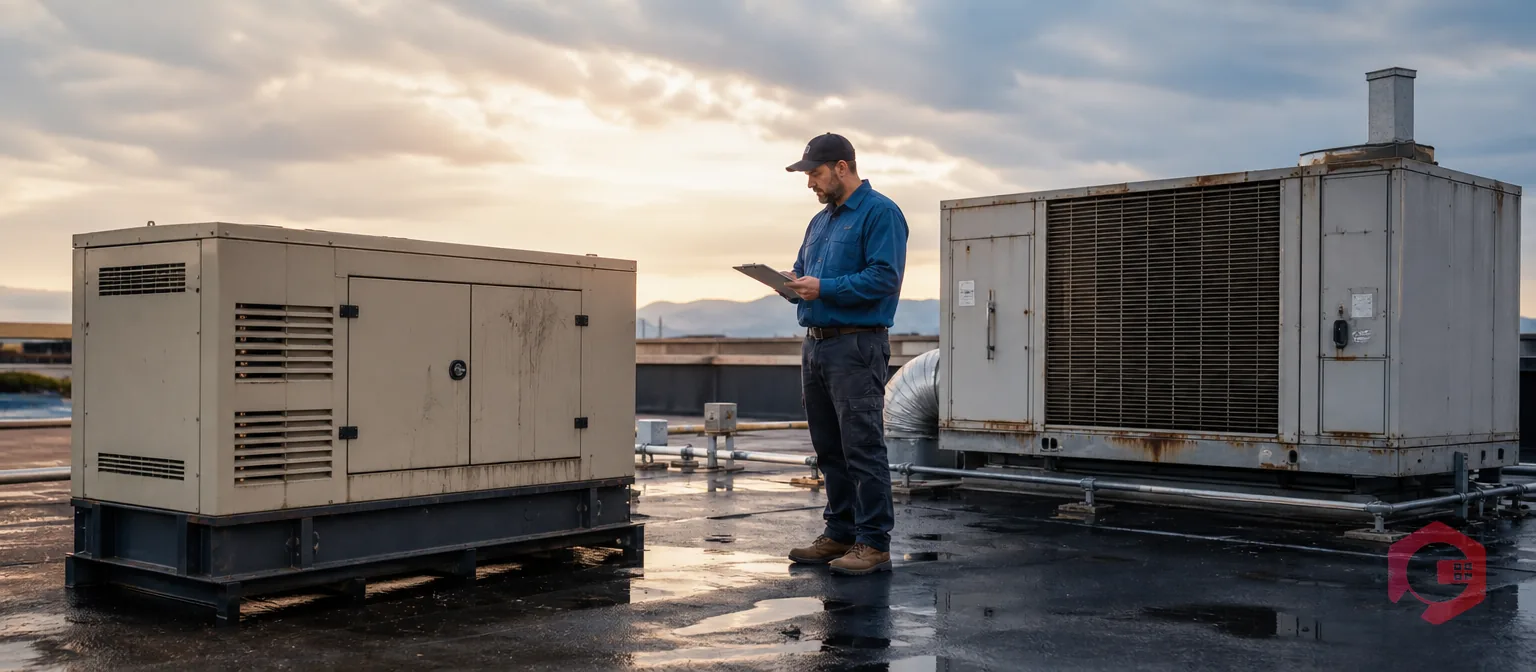
Cryotos AI predicts failures, automates work orders, and simplifies maintenance—before problems slow you down.

