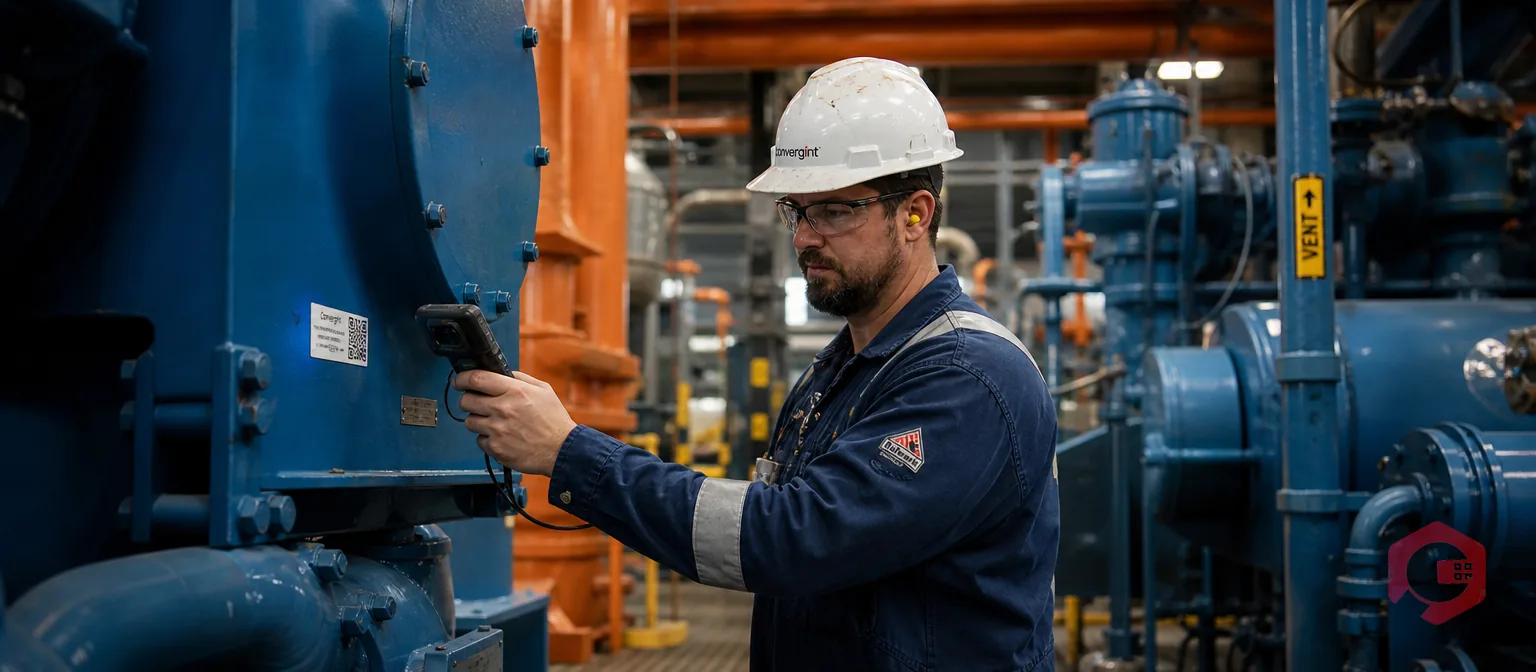
Asset Maintenance Management: The Complete Guide for 2026

Article Written by:

Ganesh Veerappan

Created On:

March 26, 2026

A single hour of unplanned downtime can cost a manufacturing plant anywhere from $10,000 to $250,000. Multiply that across a year, and the numbers get painful fast. This guide breaks down everything you need to know about asset maintenance management — from the core strategies and KPIs to a step-by-step program you can start building today.

Asset Maintenance Management: The Complete Guide for 2026

A single hour of unplanned downtime can cost a manufacturing plant anywhere from $10,000 to $250,000. Multiply that across a year, and the numbers get painful fast. The root cause? Poor asset maintenance management.

Whether you run a food processing line, manage a hospital campus, or oversee a fleet of HVAC units, keeping your physical assets running smoothly isn’t optional — it’s the backbone of your operation. But here’s the problem: too many teams still rely on spreadsheets, sticky notes, or memory to track maintenance tasks.

This guide breaks down everything you need to know about asset maintenance management — from the core strategies and KPIs to a step-by-step program you can start building today. You’ll also get a ready-to-use checklist and practical tips that go beyond the basics.

What Is Asset Maintenance Management?

Asset maintenance management is the process of planning, scheduling, tracking, and optimizing the upkeep of physical assets like machines, vehicles, buildings, and infrastructure. The goal is simple: keep your equipment running safely, reliably, and cost-effectively for as long as possible.

In practice, it covers everything from scheduling routine oil changes on a compressor to using sensor data to predict when a conveyor belt motor will fail. It’s not just about fixing things when they break. It’s about building a system that prevents breakdowns in the first place.

Strong asset maintenance management ties together people (your technicians and operators), processes (your maintenance workflows and schedules), and technology (your CMMS software and IoT sensors). When all three work together, you get fewer surprises, lower costs, and equipment that lasts years longer than it would otherwise.

Why Asset Maintenance Management Matters

Let’s start with the cost of getting it wrong. According to a Deloitte study on predictive maintenance, unplanned downtime costs industrial manufacturers roughly $50 billion each year. Equipment failure alone accounts for nearly half of those losses.

But the damage goes beyond repair bills. When a critical asset goes down unexpectedly, you’re also dealing with missed production targets, overtime labor costs, rush-ordered parts at premium prices, and safety risks for your crew.

On the flip side, organizations with mature maintenance programs see real results. A study by McKinsey found that predictive maintenance alone can cut machine downtime by 30–50% and extend equipment life by 20–40%.

Here’s what a well-run asset maintenance management program actually delivers:

  • Less unplanned downtime — Catching problems before they cause failures keeps your lines running and your team productive.
  • Lower total cost of ownership — Regular maintenance extends asset life, which means you replace expensive equipment less often.
  • Better safety and compliance — Well-maintained equipment is safer equipment. And when auditors show up, you have the records to prove it.
  • Smarter budgeting — When you know the condition of every asset, you can plan capital expenditures instead of reacting to emergencies.
  • Higher team morale — Technicians hate firefighting. A proactive program gives them structure, predictability, and fewer late-night callouts.

6 Types of Asset Maintenance Strategies

Six asset maintenance strategies — preventive, predictive, reactive, CBM, RCM, TPM

There’s no single “best” maintenance strategy. Most organizations use a mix, tailored to each asset’s criticality, cost, and failure patterns. Here’s how the six main approaches compare:

1. Preventive Maintenance (PM)

Preventive maintenance follows a set schedule — think oil changes every 3 months or filter replacements every 500 operating hours. It’s the most widely used approach, with Plant Engineering reporting that 80% of facilities rely on PM as their primary strategy.

PM works best for assets with predictable wear patterns. The risk? Over-maintenance. If you’re replacing parts too early, you’re wasting money. The trick is tuning your PM schedules based on actual equipment data, not just OEM recommendations.

2. Predictive Maintenance (PdM)

Predictive maintenance uses real-time data — vibration analysis, thermal imaging, oil analysis, ultrasonic testing — to forecast when a failure is likely to happen. Instead of replacing a bearing every 6 months regardless of condition, PdM tells you to replace it when the vibration data shows it’s actually wearing out.

It’s more expensive to set up than PM because it requires sensors and analytics tools. But the payoff is significant. McKinsey estimates that PdM can reduce maintenance costs by 10–20% compared to time-based PM alone.

3. Reactive (Run-to-Failure) Maintenance

This is the “fix it when it breaks” approach. And despite its bad reputation, it’s actually the right call for some assets — specifically, low-cost, non-critical equipment where the cost of preventive maintenance exceeds the cost of replacement.

The problem is when reactive maintenance becomes your default strategy. Emergency repairs typically cost 3–5x more than planned work, and they disrupt everything around them.

4. Condition-Based Maintenance (CBM)

Condition-based maintenance sits between PM and PdM. Instead of following a fixed calendar, you monitor specific indicators — vibration, temperature, pressure, noise — and perform maintenance only when those indicators cross a predefined threshold.

CBM cuts out unnecessary servicing while still catching problems before they escalate. It’s a practical middle ground for teams that aren’t ready for a full PdM program but want to move beyond pure calendar-based PM.

5. Reliability-Centered Maintenance (RCM)

RCM is a decision framework, not a maintenance type. It asks: “What’s the most cost-effective maintenance strategy for each specific asset, given its function, failure modes, and consequences of failure?”

For a critical production line motor, RCM might recommend PdM with continuous vibration monitoring. For a break room refrigerator, it might say run-to-failure is fine. RCM helps you allocate your maintenance resources where they’ll have the biggest impact.

6. Total Productive Maintenance (TPM)

TPM makes maintenance everyone’s responsibility — not just the maintenance team’s. Operators perform basic daily checks (cleaning, inspecting, tightening, lubricating), which frees up technicians for more complex work.

The philosophy is straightforward: operators know their machines better than anyone. They notice the weird noise, the slight vibration change, the small oil drip. TPM harnesses that knowledge before small issues become big problems.

Strategy Comparison ‍

  • Preventive Maintenance: Time/usage-based schedules. Best for assets with predictable wear. Moderate cost. Risk of over-maintenance.
  • Predictive Maintenance: Data-driven forecasting. Best for critical, high-cost assets. Higher setup cost. Highest ROI long-term.
  • Reactive Maintenance: Fix after failure. Best for low-cost, non-critical items. Low upfront cost. Highest emergency repair costs.
  • Condition-Based: Threshold-triggered action. Best for measurable degradation patterns. Moderate cost. Good balance of effort vs. results.
  • RCM: Decision framework applied per asset. Best for mixed-criticality environments. Requires analysis investment upfront. Optimizes total program cost.
  • TPM: Operator-involved daily care. Best for production environments. Low incremental cost. Requires cultural buy-in.

How to Build an Asset Maintenance Management Program (Step-by-Step)

Asset maintenance program workflow — register, classify, strategy, schedule, track

If you’re starting from scratch — or rebuilding a program that isn’t working — here’s a practical roadmap. Each step builds on the one before it.

Step 1: Build Your Asset Register

You can’t maintain what you don’t know you have. Start by documenting every asset that matters. For each one, record the asset name and ID, location, manufacturer, model, and serial number, installation date, purchase cost and current replacement value, criticality rating (more on this in Step 2), and any existing warranty or service contract details.

This doesn’t need to be perfect on day one. Start with your most critical assets and expand from there. A CMMS with asset hierarchy features makes this much easier — you can organize assets by location, system, and parent-child relationships.

Step 2: Classify Assets by Criticality

Not all assets deserve the same level of attention. Criticality analysis helps you figure out which ones matter most. Score each asset based on its impact on production (if it fails, does the line stop?), safety risk (could failure injure someone?), regulatory impact (does failure create a compliance violation?), and repair cost and lead time (how expensive and slow is the fix?).

Group assets into three tiers: Critical (high impact, needs PdM or tight PM), Important (moderate impact, standard PM schedules), and Low-priority (minimal impact, run-to-failure is acceptable). This classification drives every maintenance decision that follows.

Step 3: Define Maintenance Strategies Per Asset

Using your criticality ratings, assign a maintenance strategy to each asset. Critical assets typically get predictive or condition-based maintenance. Important assets get scheduled preventive maintenance. Low-priority assets get reactive maintenance.

Don’t overthink this initially. You can always refine strategies later as you collect performance data.

Step 4: Set Up Preventive Maintenance Schedules

For every asset on a PM plan, define what needs to be done (the task), how often (the frequency — time-based, usage-based, or both), who does it (the assigned technician or team), and what parts and tools are needed.

Start with OEM recommendations, then adjust based on your operating conditions. A machine running two shifts in a dusty environment needs more frequent filter changes than the manufacturer’s default. Read our guide on creating effective preventive maintenance schedules for detailed templates.

Step 5: Choose and Implement a CMMS

Trying to manage all of this with spreadsheets is a losing battle once you get past 50 assets. A CMMS centralizes everything: asset records, work orders, PM schedules, parts inventory, and maintenance history.

When evaluating a CMMS, look for work order management with mobile access, automated PM scheduling and notifications, asset hierarchy and tracking, spare parts and inventory management, reporting and KPI dashboards, and QR code/barcode scanning for field use.

Most teams can be fully onboarded to a CMMS in 2–6 weeks for small operations, or 2–4 months for large multi-site organizations.

Step 6: Track KPIs and Continuously Optimize

Once your program is running, measure it. Use KPIs (covered in the next section) to spot what’s working and what isn’t. Adjust PM frequencies, refine your criticality ratings, and move high-value assets toward predictive strategies as your data matures.

This isn’t a “set it and forget it” exercise. The best maintenance teams review their metrics monthly and adjust quarterly.

Asset Maintenance KPIs You Should Track

You can’t improve what you don’t measure. These are the KPIs that maintenance managers at top-performing organizations track regularly. For a deeper dive into each one, check out our guide to asset maintenance KPIs.

  • Mean Time Between Failures (MTBF): The average time an asset runs before it fails. Higher is better. Track this per asset to identify your most (and least) reliable equipment.
  • Mean Time to Repair (MTTR): The average time it takes to get an asset back online after a failure. Lower is better. If MTTR is climbing, look at parts availability, technician skill gaps, or poor documentation.
  • Overall Equipment Effectiveness (OEE): A composite metric that multiplies availability x performance x quality. World-class OEE is 85%+. Most plants sit between 60–70%. Learn more about OEE measurement and optimization.
  • PM Compliance Rate: What percentage of scheduled preventive maintenance tasks are completed on time? Target: 90%+ for critical assets. If compliance is low, investigate whether the issue is scheduling, staffing, or parts availability.
  • Planned vs. Unplanned Maintenance Ratio: Industry best practice is 80% planned, 20% unplanned. If more than 30% of your work orders are reactive, your PM program needs attention.
  • Asset Uptime Percentage: Total available hours minus downtime, divided by total available hours. For critical production assets, target 95%+ uptime.
  • Maintenance Cost as % of Replacement Asset Value (RAV): A benchmarking metric. According to SMRP best practices, maintenance costs should be 2–5% of RAV for most industries. If you’re spending 8% or more, something’s off.

Asset Management Checklist

Use this checklist to audit your current program or build a new one from the ground up. Check off each item as you go.

Asset Inventory and Documentation

  • All physical assets are documented in a central system (CMMS or asset register)
  • Each asset has a unique ID, location, and responsible team assigned
  • OEM manuals, warranty documents, and service contracts are digitally stored and linked to assets
  • Asset hierarchy (parent-child relationships) is mapped for every facility

Criticality and Risk Assessment

  • Every asset has a criticality rating (Critical / Important / Low-priority)
  • Failure modes and consequences are documented for critical assets
  • Maintenance strategy is assigned based on criticality (PdM, PM, or run-to-failure)

Preventive Maintenance Program

  • PM schedules are created for all critical and important assets
  • Task descriptions, frequencies, and required parts are documented
  • Automated reminders and work order generation are configured in CMMS
  • PM compliance rate is tracked and reviewed monthly

Work Order Management

  • All maintenance work (planned and unplanned) is captured through work orders
  • Work orders include asset ID, problem description, priority, assigned technician, and parts used
  • Completed work orders are closed with notes on what was done and time spent

Parts and Inventory

  • Critical spare parts are identified and stocked
  • Reorder points and minimum stock levels are set
  • Parts usage is linked to work orders for cost tracking

Data and Continuous Improvement

  • KPIs (MTBF, MTTR, OEE, PM compliance) are tracked in dashboards
  • Monthly maintenance reviews are held to analyze trends
  • Maintenance strategies are adjusted quarterly based on data
  • Root cause analysis is performed after every significant failure

How a CMMS Transforms Asset Maintenance Management

Asset lifecycle — Acquire → Operate → Maintain → Retire

Managing asset maintenance with paper forms and spreadsheets works until it doesn’t. And for most teams, the breaking point comes around 50–100 assets. That’s when work orders start falling through the cracks, PM schedules get missed, and nobody knows the maintenance history of that critical pump in Building 3.

A CMMS (Computerized Maintenance Management System) solves this by putting everything in one place. Here’s what changes when you move to a CMMS like Cryotos:

  • Automated PM scheduling: Set it once, and your CMMS generates work orders automatically based on time, meter readings, or condition triggers. No more relying on someone’s memory or a whiteboard calendar.
  • Complete asset history: Every repair, inspection, part replacement, and cost is logged against the asset. When it’s time to decide “repair or replace,” you have the data to back up the decision.
  • Mobile access for field teams: Technicians update work orders from their phone or tablet — right at the machine. No walking back to the office to fill out paperwork. This alone can recover 30–60 minutes per technician per day.
  • Real-time visibility: Dashboards show you open work orders, overdue PMs, asset downtime, and team workload — all in real time. You stop flying blind and start managing proactively.
  • Spare parts integration: When a technician completes a work order, the parts they used are automatically deducted from inventory. When stock hits the reorder point, the system flags it. No more “we don’t have that bearing in stock” surprises.
  • QR code and barcode scanning: Stick a QR code on an asset, scan it with a phone, and instantly see its maintenance history, open work orders, and attached documents. It’s the fastest way to access asset information in the field.

Industry Applications

Asset maintenance team monitoring industrial assets across industries | Cryotos

Manufacturing

In manufacturing, every minute of downtime hits the bottom line directly. Asset maintenance management focuses on keeping production lines running at peak OEE. The biggest gains come from moving critical equipment — CNC machines, hydraulic presses, packaging lines — from reactive to predictive maintenance.

Plants that implement structured PM programs with a CMMS typically see a 25–40% reduction in unplanned downtime within the first year.

Facility Management

Hospitals, universities, office campuses, and commercial buildings manage hundreds of assets: HVAC systems, elevators, fire suppression equipment, electrical panels, plumbing. The challenge is volume and variety — and the fact that many of these assets have regulatory inspection requirements.

A CMMS helps facility teams stay ahead of inspections, schedule seasonal maintenance (like pre-winter HVAC prep), and track energy consumption patterns to identify failing equipment early.

Food and Beverage

Asset management in food and beverage carries extra weight because of food safety regulations. A failed refrigeration unit doesn’t just mean downtime — it could mean a product recall. Equipment that contacts food must meet strict FDA sanitation standards, and maintenance records need to be audit-ready at all times.

Healthcare

Medical equipment — MRI machines, ventilators, sterilizers, patient monitors — requires precise, documented maintenance for patient safety and Joint Commission compliance. Asset maintenance management in healthcare isn’t about cost savings first. It’s about reliability and traceability. Every maintenance activity needs a complete audit trail.

Utilities and Energy

Power plants, water treatment facilities, and grid infrastructure operate under strict regulatory oversight. Equipment failures can affect entire communities. Maintenance programs in this sector prioritize reliability above all else, with heavy use of condition monitoring and predictive analytics on critical assets like transformers, turbines, and pumping stations.

Best Practices for Asset Maintenance Management

Start With Your Most Critical Assets

Don’t try to build a perfect maintenance program for every asset overnight. Start with the 10–20% of assets that cause 80% of your downtime and costs. Build solid PM schedules, track their KPIs, and expand from there. Trying to do everything at once is the fastest way to do nothing well.

Centralize All Asset Data in One System

If your asset records live in spreadsheets, your work orders are on paper, and your parts inventory is “whatever’s on the shelf,” you’ve got a data problem that no amount of effort will fix. Get everything into a single CMMS. The initial setup takes time, but it pays off every day after.

Make Maintenance Everyone’s Job

Operators should be your first line of defense. Train them to spot early warning signs — unusual sounds, vibrations, leaks, odors — and give them a simple way to report issues (a mobile app works great). The fastest way to reduce reactive maintenance is to catch problems before they escalate.

Track Costs at the Asset Level

Knowing that you spent $2 million on maintenance last year is useful. Knowing that Machine #7 consumed $180,000 of that — and had 14 unplanned failures — is actionable. Asset-level cost tracking helps you make smart repair-or-replace decisions and identify your worst-performing equipment.

Review and Adjust Quarterly

PM schedules shouldn’t be static. Review your KPIs every quarter. If an asset hasn’t had a failure in 18 months, maybe the PM frequency can be extended. If another asset keeps failing between PMs, the interval needs to be shortened — or the strategy needs to change to condition-based monitoring.

Invest in Training

The best CMMS in the world is useless if your team doesn’t know how to use it — or doesn’t trust it. Budget for initial training and ongoing refreshers. And when you roll out a new process, explain the “why.” Technicians who understand the purpose behind data entry are far more likely to do it consistently.

Frequently Asked Questions

What is asset maintenance management?

Asset maintenance management is the practice of planning, scheduling, and tracking the upkeep of physical equipment and infrastructure. It includes everything from routine preventive maintenance to data-driven predictive strategies. The goal is to maximize equipment uptime, extend asset life, and minimize total maintenance costs.

What is the difference between preventive, predictive, and corrective maintenance?

Preventive maintenance follows a fixed schedule (e.g., inspect every 30 days). Predictive maintenance uses sensor data and analytics to forecast when a failure will happen, so you fix things at the optimal time. Corrective maintenance is reactive — you fix the equipment after it breaks. Most organizations use a mix of all three, applied differently based on each asset’s criticality.

How does a CMMS help with asset maintenance management?

A CMMS centralizes your entire maintenance operation — asset records, work orders, PM schedules, parts inventory, and reporting — in one system. It automates recurring tasks, provides mobile access for technicians in the field, and gives managers real-time dashboards to track KPIs. Teams using a CMMS typically see 20–30% reductions in reactive maintenance within the first year.

How long does it take to set up an asset maintenance management program?

For small operations (under 200 assets), you can have a basic program running with a CMMS in 2–4 weeks. Mid-size organizations (200–1,000 assets) typically take 1–3 months to import asset data, set up PM schedules, and train staff. Large multi-site operations may need 3–6 months for full rollout, including integration with ERP or IoT systems.

What are the most important asset maintenance KPIs?

The top KPIs to track are MTBF (Mean Time Between Failures), MTTR (Mean Time to Repair), OEE (Overall Equipment Effectiveness), PM compliance rate, and the planned vs. unplanned maintenance ratio. Together, these metrics tell you how reliable your assets are, how efficiently you’re maintaining them, and where to focus improvement efforts.

Ready to build a smarter asset maintenance management program? Cryotos CMMS gives your team the tools to track every asset, automate preventive maintenance, and turn maintenance data into actionable insights. Start your free trial today and see the difference a data-driven approach makes.

Want to Try Cryotos CMMS Today? Lets Connect!
Thank you! Your submission has been received!
Oops! Something went wrong while submitting the form.
Related Post

Asset Maintenance Management: The Complete Guide for 2026

Calendar
Duration:
18 min read
calendar today
Published on
March 26, 2026
Featured Image

A single hour of unplanned downtime can cost a manufacturing plant anywhere from $10,000 to $250,000. Multiply that across a year, and the numbers get painful fast. The root cause? Poor asset maintenance management.

Whether you run a food processing line, manage a hospital campus, or oversee a fleet of HVAC units, keeping your physical assets running smoothly isn’t optional — it’s the backbone of your operation. But here’s the problem: too many teams still rely on spreadsheets, sticky notes, or memory to track maintenance tasks.

This guide breaks down everything you need to know about asset maintenance management — from the core strategies and KPIs to a step-by-step program you can start building today. You’ll also get a ready-to-use checklist and practical tips that go beyond the basics.

What Is Asset Maintenance Management?

Asset maintenance management is the process of planning, scheduling, tracking, and optimizing the upkeep of physical assets like machines, vehicles, buildings, and infrastructure. The goal is simple: keep your equipment running safely, reliably, and cost-effectively for as long as possible.

In practice, it covers everything from scheduling routine oil changes on a compressor to using sensor data to predict when a conveyor belt motor will fail. It’s not just about fixing things when they break. It’s about building a system that prevents breakdowns in the first place.

Strong asset maintenance management ties together people (your technicians and operators), processes (your maintenance workflows and schedules), and technology (your CMMS software and IoT sensors). When all three work together, you get fewer surprises, lower costs, and equipment that lasts years longer than it would otherwise.

Why Asset Maintenance Management Matters

Let’s start with the cost of getting it wrong. According to a Deloitte study on predictive maintenance, unplanned downtime costs industrial manufacturers roughly $50 billion each year. Equipment failure alone accounts for nearly half of those losses.

But the damage goes beyond repair bills. When a critical asset goes down unexpectedly, you’re also dealing with missed production targets, overtime labor costs, rush-ordered parts at premium prices, and safety risks for your crew.

On the flip side, organizations with mature maintenance programs see real results. A study by McKinsey found that predictive maintenance alone can cut machine downtime by 30–50% and extend equipment life by 20–40%.

Here’s what a well-run asset maintenance management program actually delivers:

  • Less unplanned downtime — Catching problems before they cause failures keeps your lines running and your team productive.
  • Lower total cost of ownership — Regular maintenance extends asset life, which means you replace expensive equipment less often.
  • Better safety and compliance — Well-maintained equipment is safer equipment. And when auditors show up, you have the records to prove it.
  • Smarter budgeting — When you know the condition of every asset, you can plan capital expenditures instead of reacting to emergencies.
  • Higher team morale — Technicians hate firefighting. A proactive program gives them structure, predictability, and fewer late-night callouts.

6 Types of Asset Maintenance Strategies

Six asset maintenance strategies — preventive, predictive, reactive, CBM, RCM, TPM

There’s no single “best” maintenance strategy. Most organizations use a mix, tailored to each asset’s criticality, cost, and failure patterns. Here’s how the six main approaches compare:

1. Preventive Maintenance (PM)

Preventive maintenance follows a set schedule — think oil changes every 3 months or filter replacements every 500 operating hours. It’s the most widely used approach, with Plant Engineering reporting that 80% of facilities rely on PM as their primary strategy.

PM works best for assets with predictable wear patterns. The risk? Over-maintenance. If you’re replacing parts too early, you’re wasting money. The trick is tuning your PM schedules based on actual equipment data, not just OEM recommendations.

2. Predictive Maintenance (PdM)

Predictive maintenance uses real-time data — vibration analysis, thermal imaging, oil analysis, ultrasonic testing — to forecast when a failure is likely to happen. Instead of replacing a bearing every 6 months regardless of condition, PdM tells you to replace it when the vibration data shows it’s actually wearing out.

It’s more expensive to set up than PM because it requires sensors and analytics tools. But the payoff is significant. McKinsey estimates that PdM can reduce maintenance costs by 10–20% compared to time-based PM alone.

3. Reactive (Run-to-Failure) Maintenance

This is the “fix it when it breaks” approach. And despite its bad reputation, it’s actually the right call for some assets — specifically, low-cost, non-critical equipment where the cost of preventive maintenance exceeds the cost of replacement.

The problem is when reactive maintenance becomes your default strategy. Emergency repairs typically cost 3–5x more than planned work, and they disrupt everything around them.

4. Condition-Based Maintenance (CBM)

Condition-based maintenance sits between PM and PdM. Instead of following a fixed calendar, you monitor specific indicators — vibration, temperature, pressure, noise — and perform maintenance only when those indicators cross a predefined threshold.

CBM cuts out unnecessary servicing while still catching problems before they escalate. It’s a practical middle ground for teams that aren’t ready for a full PdM program but want to move beyond pure calendar-based PM.

5. Reliability-Centered Maintenance (RCM)

RCM is a decision framework, not a maintenance type. It asks: “What’s the most cost-effective maintenance strategy for each specific asset, given its function, failure modes, and consequences of failure?”

For a critical production line motor, RCM might recommend PdM with continuous vibration monitoring. For a break room refrigerator, it might say run-to-failure is fine. RCM helps you allocate your maintenance resources where they’ll have the biggest impact.

6. Total Productive Maintenance (TPM)

TPM makes maintenance everyone’s responsibility — not just the maintenance team’s. Operators perform basic daily checks (cleaning, inspecting, tightening, lubricating), which frees up technicians for more complex work.

The philosophy is straightforward: operators know their machines better than anyone. They notice the weird noise, the slight vibration change, the small oil drip. TPM harnesses that knowledge before small issues become big problems.

Strategy Comparison ‍

  • Preventive Maintenance: Time/usage-based schedules. Best for assets with predictable wear. Moderate cost. Risk of over-maintenance.
  • Predictive Maintenance: Data-driven forecasting. Best for critical, high-cost assets. Higher setup cost. Highest ROI long-term.
  • Reactive Maintenance: Fix after failure. Best for low-cost, non-critical items. Low upfront cost. Highest emergency repair costs.
  • Condition-Based: Threshold-triggered action. Best for measurable degradation patterns. Moderate cost. Good balance of effort vs. results.
  • RCM: Decision framework applied per asset. Best for mixed-criticality environments. Requires analysis investment upfront. Optimizes total program cost.
  • TPM: Operator-involved daily care. Best for production environments. Low incremental cost. Requires cultural buy-in.

How to Build an Asset Maintenance Management Program (Step-by-Step)

Asset maintenance program workflow — register, classify, strategy, schedule, track

If you’re starting from scratch — or rebuilding a program that isn’t working — here’s a practical roadmap. Each step builds on the one before it.

Step 1: Build Your Asset Register

You can’t maintain what you don’t know you have. Start by documenting every asset that matters. For each one, record the asset name and ID, location, manufacturer, model, and serial number, installation date, purchase cost and current replacement value, criticality rating (more on this in Step 2), and any existing warranty or service contract details.

This doesn’t need to be perfect on day one. Start with your most critical assets and expand from there. A CMMS with asset hierarchy features makes this much easier — you can organize assets by location, system, and parent-child relationships.

Step 2: Classify Assets by Criticality

Not all assets deserve the same level of attention. Criticality analysis helps you figure out which ones matter most. Score each asset based on its impact on production (if it fails, does the line stop?), safety risk (could failure injure someone?), regulatory impact (does failure create a compliance violation?), and repair cost and lead time (how expensive and slow is the fix?).

Group assets into three tiers: Critical (high impact, needs PdM or tight PM), Important (moderate impact, standard PM schedules), and Low-priority (minimal impact, run-to-failure is acceptable). This classification drives every maintenance decision that follows.

Step 3: Define Maintenance Strategies Per Asset

Using your criticality ratings, assign a maintenance strategy to each asset. Critical assets typically get predictive or condition-based maintenance. Important assets get scheduled preventive maintenance. Low-priority assets get reactive maintenance.

Don’t overthink this initially. You can always refine strategies later as you collect performance data.

Step 4: Set Up Preventive Maintenance Schedules

For every asset on a PM plan, define what needs to be done (the task), how often (the frequency — time-based, usage-based, or both), who does it (the assigned technician or team), and what parts and tools are needed.

Start with OEM recommendations, then adjust based on your operating conditions. A machine running two shifts in a dusty environment needs more frequent filter changes than the manufacturer’s default. Read our guide on creating effective preventive maintenance schedules for detailed templates.

Step 5: Choose and Implement a CMMS

Trying to manage all of this with spreadsheets is a losing battle once you get past 50 assets. A CMMS centralizes everything: asset records, work orders, PM schedules, parts inventory, and maintenance history.

When evaluating a CMMS, look for work order management with mobile access, automated PM scheduling and notifications, asset hierarchy and tracking, spare parts and inventory management, reporting and KPI dashboards, and QR code/barcode scanning for field use.

Most teams can be fully onboarded to a CMMS in 2–6 weeks for small operations, or 2–4 months for large multi-site organizations.

Step 6: Track KPIs and Continuously Optimize

Once your program is running, measure it. Use KPIs (covered in the next section) to spot what’s working and what isn’t. Adjust PM frequencies, refine your criticality ratings, and move high-value assets toward predictive strategies as your data matures.

This isn’t a “set it and forget it” exercise. The best maintenance teams review their metrics monthly and adjust quarterly.

Asset Maintenance KPIs You Should Track

You can’t improve what you don’t measure. These are the KPIs that maintenance managers at top-performing organizations track regularly. For a deeper dive into each one, check out our guide to asset maintenance KPIs.

  • Mean Time Between Failures (MTBF): The average time an asset runs before it fails. Higher is better. Track this per asset to identify your most (and least) reliable equipment.
  • Mean Time to Repair (MTTR): The average time it takes to get an asset back online after a failure. Lower is better. If MTTR is climbing, look at parts availability, technician skill gaps, or poor documentation.
  • Overall Equipment Effectiveness (OEE): A composite metric that multiplies availability x performance x quality. World-class OEE is 85%+. Most plants sit between 60–70%. Learn more about OEE measurement and optimization.
  • PM Compliance Rate: What percentage of scheduled preventive maintenance tasks are completed on time? Target: 90%+ for critical assets. If compliance is low, investigate whether the issue is scheduling, staffing, or parts availability.
  • Planned vs. Unplanned Maintenance Ratio: Industry best practice is 80% planned, 20% unplanned. If more than 30% of your work orders are reactive, your PM program needs attention.
  • Asset Uptime Percentage: Total available hours minus downtime, divided by total available hours. For critical production assets, target 95%+ uptime.
  • Maintenance Cost as % of Replacement Asset Value (RAV): A benchmarking metric. According to SMRP best practices, maintenance costs should be 2–5% of RAV for most industries. If you’re spending 8% or more, something’s off.

Asset Management Checklist

Use this checklist to audit your current program or build a new one from the ground up. Check off each item as you go.

Asset Inventory and Documentation

  • All physical assets are documented in a central system (CMMS or asset register)
  • Each asset has a unique ID, location, and responsible team assigned
  • OEM manuals, warranty documents, and service contracts are digitally stored and linked to assets
  • Asset hierarchy (parent-child relationships) is mapped for every facility

Criticality and Risk Assessment

  • Every asset has a criticality rating (Critical / Important / Low-priority)
  • Failure modes and consequences are documented for critical assets
  • Maintenance strategy is assigned based on criticality (PdM, PM, or run-to-failure)

Preventive Maintenance Program

  • PM schedules are created for all critical and important assets
  • Task descriptions, frequencies, and required parts are documented
  • Automated reminders and work order generation are configured in CMMS
  • PM compliance rate is tracked and reviewed monthly

Work Order Management

  • All maintenance work (planned and unplanned) is captured through work orders
  • Work orders include asset ID, problem description, priority, assigned technician, and parts used
  • Completed work orders are closed with notes on what was done and time spent

Parts and Inventory

  • Critical spare parts are identified and stocked
  • Reorder points and minimum stock levels are set
  • Parts usage is linked to work orders for cost tracking

Data and Continuous Improvement

  • KPIs (MTBF, MTTR, OEE, PM compliance) are tracked in dashboards
  • Monthly maintenance reviews are held to analyze trends
  • Maintenance strategies are adjusted quarterly based on data
  • Root cause analysis is performed after every significant failure

How a CMMS Transforms Asset Maintenance Management

Asset lifecycle — Acquire → Operate → Maintain → Retire

Managing asset maintenance with paper forms and spreadsheets works until it doesn’t. And for most teams, the breaking point comes around 50–100 assets. That’s when work orders start falling through the cracks, PM schedules get missed, and nobody knows the maintenance history of that critical pump in Building 3.

A CMMS (Computerized Maintenance Management System) solves this by putting everything in one place. Here’s what changes when you move to a CMMS like Cryotos:

  • Automated PM scheduling: Set it once, and your CMMS generates work orders automatically based on time, meter readings, or condition triggers. No more relying on someone’s memory or a whiteboard calendar.
  • Complete asset history: Every repair, inspection, part replacement, and cost is logged against the asset. When it’s time to decide “repair or replace,” you have the data to back up the decision.
  • Mobile access for field teams: Technicians update work orders from their phone or tablet — right at the machine. No walking back to the office to fill out paperwork. This alone can recover 30–60 minutes per technician per day.
  • Real-time visibility: Dashboards show you open work orders, overdue PMs, asset downtime, and team workload — all in real time. You stop flying blind and start managing proactively.
  • Spare parts integration: When a technician completes a work order, the parts they used are automatically deducted from inventory. When stock hits the reorder point, the system flags it. No more “we don’t have that bearing in stock” surprises.
  • QR code and barcode scanning: Stick a QR code on an asset, scan it with a phone, and instantly see its maintenance history, open work orders, and attached documents. It’s the fastest way to access asset information in the field.

Industry Applications

Asset maintenance team monitoring industrial assets across industries | Cryotos

Manufacturing

In manufacturing, every minute of downtime hits the bottom line directly. Asset maintenance management focuses on keeping production lines running at peak OEE. The biggest gains come from moving critical equipment — CNC machines, hydraulic presses, packaging lines — from reactive to predictive maintenance.

Plants that implement structured PM programs with a CMMS typically see a 25–40% reduction in unplanned downtime within the first year.

Facility Management

Hospitals, universities, office campuses, and commercial buildings manage hundreds of assets: HVAC systems, elevators, fire suppression equipment, electrical panels, plumbing. The challenge is volume and variety — and the fact that many of these assets have regulatory inspection requirements.

A CMMS helps facility teams stay ahead of inspections, schedule seasonal maintenance (like pre-winter HVAC prep), and track energy consumption patterns to identify failing equipment early.

Food and Beverage

Asset management in food and beverage carries extra weight because of food safety regulations. A failed refrigeration unit doesn’t just mean downtime — it could mean a product recall. Equipment that contacts food must meet strict FDA sanitation standards, and maintenance records need to be audit-ready at all times.

Healthcare

Medical equipment — MRI machines, ventilators, sterilizers, patient monitors — requires precise, documented maintenance for patient safety and Joint Commission compliance. Asset maintenance management in healthcare isn’t about cost savings first. It’s about reliability and traceability. Every maintenance activity needs a complete audit trail.

Utilities and Energy

Power plants, water treatment facilities, and grid infrastructure operate under strict regulatory oversight. Equipment failures can affect entire communities. Maintenance programs in this sector prioritize reliability above all else, with heavy use of condition monitoring and predictive analytics on critical assets like transformers, turbines, and pumping stations.

Best Practices for Asset Maintenance Management

Start With Your Most Critical Assets

Don’t try to build a perfect maintenance program for every asset overnight. Start with the 10–20% of assets that cause 80% of your downtime and costs. Build solid PM schedules, track their KPIs, and expand from there. Trying to do everything at once is the fastest way to do nothing well.

Centralize All Asset Data in One System

If your asset records live in spreadsheets, your work orders are on paper, and your parts inventory is “whatever’s on the shelf,” you’ve got a data problem that no amount of effort will fix. Get everything into a single CMMS. The initial setup takes time, but it pays off every day after.

Make Maintenance Everyone’s Job

Operators should be your first line of defense. Train them to spot early warning signs — unusual sounds, vibrations, leaks, odors — and give them a simple way to report issues (a mobile app works great). The fastest way to reduce reactive maintenance is to catch problems before they escalate.

Track Costs at the Asset Level

Knowing that you spent $2 million on maintenance last year is useful. Knowing that Machine #7 consumed $180,000 of that — and had 14 unplanned failures — is actionable. Asset-level cost tracking helps you make smart repair-or-replace decisions and identify your worst-performing equipment.

Review and Adjust Quarterly

PM schedules shouldn’t be static. Review your KPIs every quarter. If an asset hasn’t had a failure in 18 months, maybe the PM frequency can be extended. If another asset keeps failing between PMs, the interval needs to be shortened — or the strategy needs to change to condition-based monitoring.

Invest in Training

The best CMMS in the world is useless if your team doesn’t know how to use it — or doesn’t trust it. Budget for initial training and ongoing refreshers. And when you roll out a new process, explain the “why.” Technicians who understand the purpose behind data entry are far more likely to do it consistently.

Frequently Asked Questions

What is asset maintenance management?

Asset maintenance management is the practice of planning, scheduling, and tracking the upkeep of physical equipment and infrastructure. It includes everything from routine preventive maintenance to data-driven predictive strategies. The goal is to maximize equipment uptime, extend asset life, and minimize total maintenance costs.

What is the difference between preventive, predictive, and corrective maintenance?

Preventive maintenance follows a fixed schedule (e.g., inspect every 30 days). Predictive maintenance uses sensor data and analytics to forecast when a failure will happen, so you fix things at the optimal time. Corrective maintenance is reactive — you fix the equipment after it breaks. Most organizations use a mix of all three, applied differently based on each asset’s criticality.

How does a CMMS help with asset maintenance management?

A CMMS centralizes your entire maintenance operation — asset records, work orders, PM schedules, parts inventory, and reporting — in one system. It automates recurring tasks, provides mobile access for technicians in the field, and gives managers real-time dashboards to track KPIs. Teams using a CMMS typically see 20–30% reductions in reactive maintenance within the first year.

How long does it take to set up an asset maintenance management program?

For small operations (under 200 assets), you can have a basic program running with a CMMS in 2–4 weeks. Mid-size organizations (200–1,000 assets) typically take 1–3 months to import asset data, set up PM schedules, and train staff. Large multi-site operations may need 3–6 months for full rollout, including integration with ERP or IoT systems.

What are the most important asset maintenance KPIs?

The top KPIs to track are MTBF (Mean Time Between Failures), MTTR (Mean Time to Repair), OEE (Overall Equipment Effectiveness), PM compliance rate, and the planned vs. unplanned maintenance ratio. Together, these metrics tell you how reliable your assets are, how efficiently you’re maintaining them, and where to focus improvement efforts.

Ready to build a smarter asset maintenance management program? Cryotos CMMS gives your team the tools to track every asset, automate preventive maintenance, and turn maintenance data into actionable insights. Start your free trial today and see the difference a data-driven approach makes.

Want to Try Cryotos CMMS Today?

Get Free Demo

Let AI Take Control of Your Maintenance

Cryotos AI predicts failures, automates work orders, and simplifies maintenance—before problems slow you down.

Try AI-Powered CMMS
🡢