

Digitizing maintenance operations in the leather industry means replacing paper-based logs, manual inspection sheets, and verbal work orders with a centralized CMMS (Computerized Maintenance Management System) that tracks every machine, task, and technician in real time. For leather manufacturers and tanneries, where equipment like rotary drums, splitting machines, and embossing presses run continuously across multiple shifts, a single unplanned breakdown can halt an entire production line and cost thousands of dollars per hour. According to industry estimates, unplanned downtime in manufacturing costs companies an average of $260,000 per hour - yet most leather plants still manage maintenance with spreadsheets or handwritten registers.
This guide walks you through why digital maintenance is critical for leather manufacturing, which equipment demands the most attention, how a CMMS transforms day-to-day maintenance workflows, and how to implement one in your plant without disrupting production.
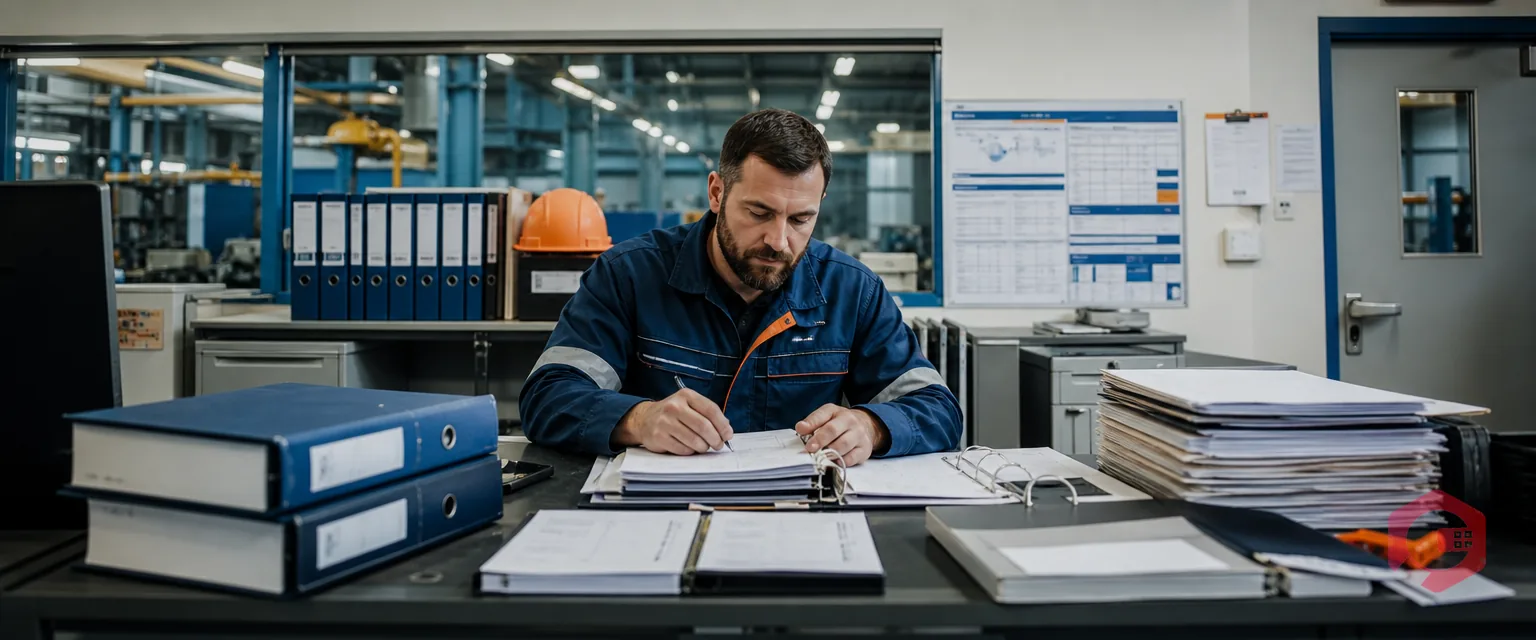
In a traditional leather plant, maintenance is reactive: a drum machine breaks down, a supervisor shouts for a technician, someone scribbles a work order on paper, and a spare part is tracked down from a storeroom with no inventory system. Hours pass. Production stops. The root cause goes undocumented, and the same failure happens again three months later.
Digitizing maintenance flips this model. Instead of reacting to failures, a CMMS enables your team to schedule inspections, trigger automated alerts before equipment degrades, and maintain a complete digital history for every asset on the floor. For leather manufacturers, this means:

Leather manufacturing presents a unique combination of mechanical complexity, chemical exposure, and environmental regulation that makes maintenance harder than in most other industries. One proven approach for diagnosing recurring failures systematically is using fishbone diagrams to eliminate maintenance problems. Understanding these challenges is the first step to solving them.
The tanning process - whether chrome-based or vegetable-based - exposes equipment to acids, alkalis, salts, and tanning agents continuously. These chemicals accelerate corrosion of metal components, degrade rubber seals and gaskets, and contaminate lubrication systems. Maintenance teams often discover this damage only when a machine fails, because there's no systematic inspection schedule tracking seal conditions or corrosion levels on drum interiors.
Most leather plants run two or three shifts, and maintenance coverage rarely matches production hours. Without a digital system, the outgoing shift technician's verbal handover is the only record of what was repaired, what's still pending, and what's about to fail. Critical information vanishes at shift change, and the incoming team starts blind - a major cause of repeat breakdowns and missed PMs.
Many tanneries operate machinery that is 15-30 years old. Without digital records, there is no way to track the cumulative maintenance history of a rotary drum or a hydraulic press. Technicians can't predict failure patterns, justify equipment replacement, or identify which assets are consuming the most maintenance resources.
Leather demand spikes seasonally - ahead of fashion industry cycles and festive periods. During peak production, every hour of downtime is amplified. Plants that haven't pre-scheduled maintenance during low-demand windows end up doing emergency repairs mid-peak, at the worst possible time.
Tanneries must comply with strict effluent discharge standards, Chrome VI regulations, and workplace safety requirements. Documenting maintenance on effluent treatment plant (ETP) equipment, chemical storage, and ventilation systems is mandatory - yet most plants do it manually, creating audit risk whenever records are incomplete or inconsistent.
A CMMS is most valuable when it covers all critical assets - not just the obvious ones. Here are the key equipment categories in a typical leather manufacturing facility that require structured maintenance programs:
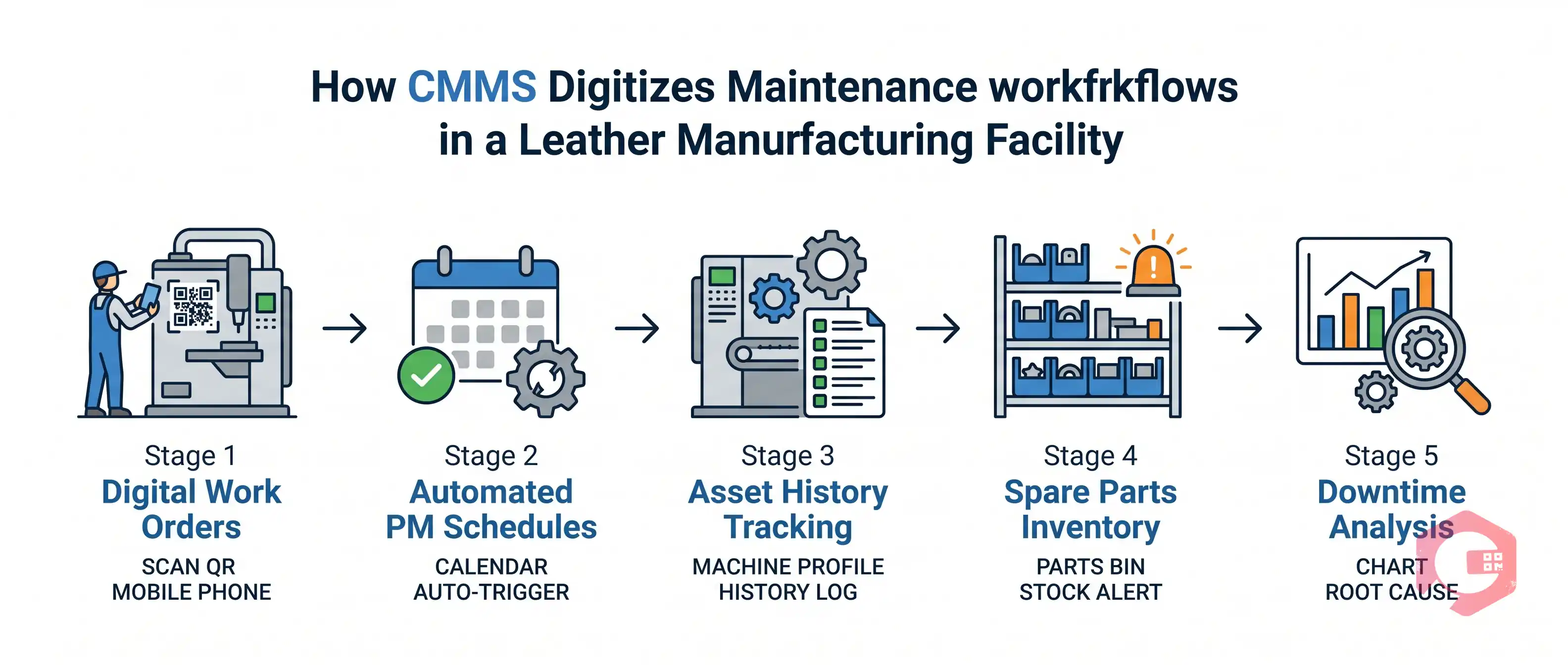
A modern CMMS like Cryotos transforms every aspect of how leather plant maintenance is planned, executed, and recorded. The structured PM approach used in heavy manufacturing is equally applicable here — see how it is applied in preventive maintenance in steel plants for a comparable industry reference. Here's how it works in practice across the key maintenance workflows:
Work order management is the foundation of any CMMS. In a leather plant, a technician can raise a work order by scanning a QR code on a drum machine with their mobile phone, describing the fault by voice or photo, and submitting it instantly. The system assigns it to the right technician based on skills and location, notifies them via mobile or WhatsApp, and tracks every step from creation to completion - with timestamps, photos, and technician notes all stored in a permanent digital record.
With preventive maintenance software, you set up PM schedules for every piece of equipment once - and the system handles the rest. For a tanning drum, you might schedule bearing inspection every 500 operating hours and full drum lining inspection quarterly. The CMMS automatically generates the PM work order when due, assigns it to the appropriate technician, and sends reminders if it's not completed on time. Nothing falls through the cracks at shift change.
Asset management in a CMMS gives every machine in your leather plant its own digital profile - complete with specifications, warranty details, maintenance history, downtime events, and cost records. When your splitting machine has its third bearing failure in six months, the data is right there to make the case for replacement or redesign. Real-time tracking via QR codes and NFC tags means technicians can pull up a machine's full history before they even open the panel.
Inventory management ensures that the right parts are always available when needed. Leather plants typically stock hundreds of spare parts - belts, seals, bearings, chemical dosing pump components, and spray nozzles. A CMMS tracks stock levels in real time, sends alerts when inventory drops below the minimum threshold, and links spare part consumption directly to the work orders that used them. You always know what you have, where it is, and what it cost.
Downtime tracking is where a CMMS pays for itself most visibly. Every time a machine goes down, the CMMS records the start time, end time, cause, and cost. Over weeks and months, this data reveals your biggest downtime contributors - the assets, failure modes, and time periods driving the most production loss. Leather plant managers can use this insight to re-prioritize maintenance resources, adjust PM intervals, and build a case for capital investment in aging equipment.

The business case for digitizing maintenance in a leather plant is compelling across multiple dimensions - from operational efficiency to quality control and regulatory compliance.
The leather industry operates under some of the strictest environmental regulations in manufacturing. Effluent discharge standards, Chrome VI limits, and chemical storage requirements create a compliance burden that paper-based maintenance systems simply cannot meet reliably.
Your Effluent Treatment Plant is not optional equipment - it's a legal requirement. ETP pumps, aerators, chemical dosing units, and clarifiers must be maintained to a documented standard. A CMMS creates a complete, timestamped maintenance log for every ETP asset. If the State Pollution Control Board or an ISO auditor asks for your ETP maintenance records for the past 24 months, you can generate the report in seconds.
Chrome-based tanning requires careful handling and disposal protocols. A CMMS supports compliance by scheduling regular inspection of chemical storage tanks, documenting calibration of dosing equipment, and maintaining records of chemical handling procedures linked to specific work orders. When something goes wrong, the root cause is traceable - protecting your team and your business.
Maintenance on high-voltage equipment, pressurized systems, and chemical-handling machinery requires formal Lockout/Tagout (LOTO) and Permit to Work (PTW) procedures. Cryotos automates PTW issuance within the work order workflow - ensuring that no technician begins work on a hazardous asset without the proper authorization in place. This reduces safety incidents and protects the organization from liability.
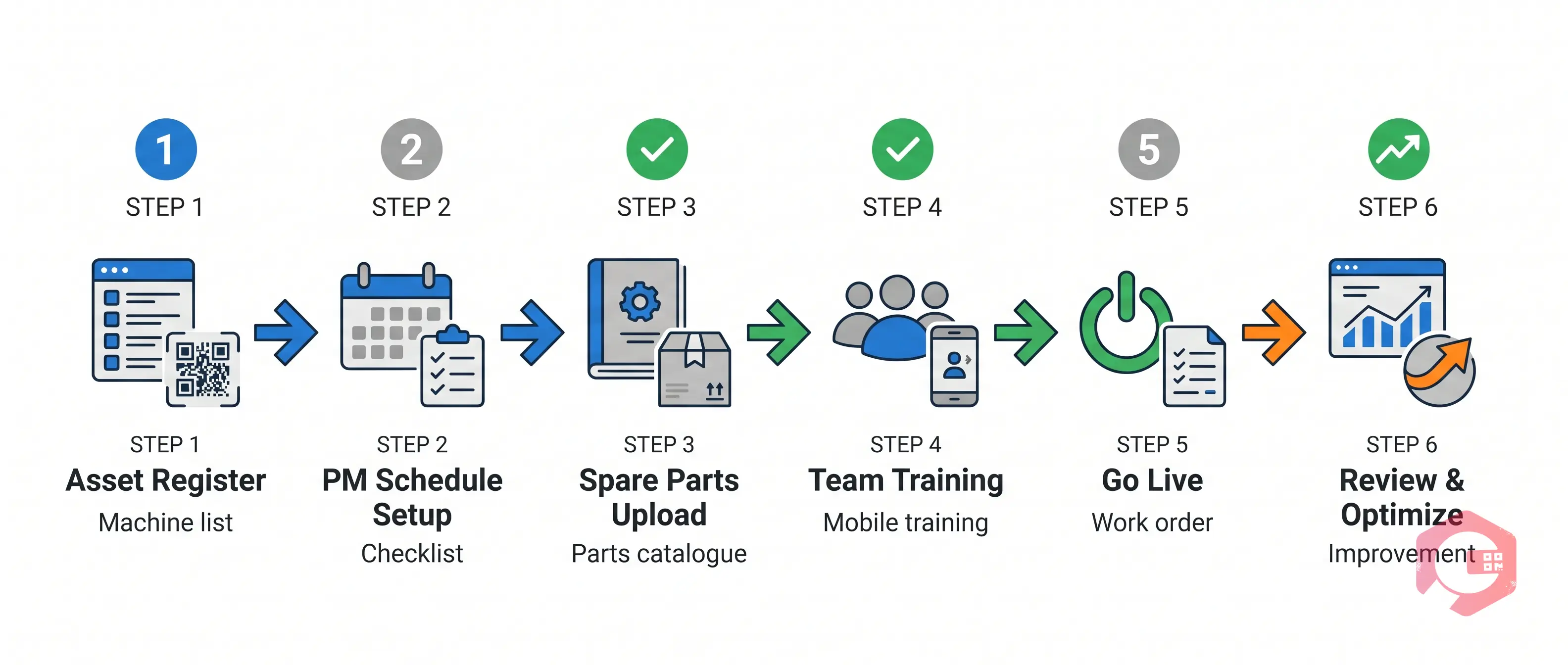
Transitioning from paper-based to digital maintenance doesn't happen overnight - but with the right approach, most leather plants can be fully operational on a CMMS within 4-8 weeks. Here's a proven implementation roadmap:
A CMMS (Computerized Maintenance Management System) is software that digitizes all maintenance operations - work orders, preventive schedules, asset tracking, spare parts, and reporting - in a single platform. For leather manufacturers, it eliminates paper-based maintenance logs, reduces unplanned breakdowns by enabling proactive maintenance, and provides the digital audit trail needed for environmental and quality compliance.
All equipment benefits, but the highest ROI typically comes from high-criticality assets: rotary tanning drums, splitting machines, embossing presses, and ETP pumps. These are the machines whose failure has the greatest production impact and where systematic PM schedules prevent the most costly breakdowns.
Most leather plants can complete basic CMMS implementation in 4-8 weeks. This includes building the asset register, configuring PM schedules, uploading spare parts inventory, and training the maintenance team. The timeline depends on the size of the facility and the completeness of existing asset data.
Yes - this is one of the most important use cases in the leather industry. A CMMS maintains timestamped maintenance records for ETP equipment, chemical storage systems, and ventilation - all areas that environmental regulators inspect. Having complete digital records readily available is far more reliable than paper-based documentation.
Absolutely. Modern CMMS platforms like Cryotos are designed to scale - from a single-facility tannery with 20 assets to a large multi-plant leather group with thousands. Small manufacturers benefit immediately from organized PM schedules and digital work orders, without needing complex infrastructure or large IT teams to deploy the system.
Leather manufacturers who digitize their maintenance operations today are building a competitive advantage that compounds over time - lower costs, better quality, stronger compliance, and longer-lived equipment. Cryotos CMMS is purpose-built for industrial manufacturers like you, with the mobile-first interface, automation capabilities, and reporting depth that leather plants need to move from reactive chaos to proactive control. Book a free demo to see how Cryotos can be configured for your leather manufacturing operations in just a few weeks.



Cryotos AI predicts failures, automates work orders, and simplifies maintenance—before problems slow you down.



